Palm Scale Treatment in Cape Coral: Signs and Options
A palm can look thirsty, sunburned, or nutrient-starved when scale insects are the real problem. The right palm scale treatment depends on identifying the insect, finding where it is feeding, and matching the response to the infestation.
Cape Coral's warm climate allows scale insects to remain active throughout the year. Homeowners should inspect palms before yellowing spreads, especially when several fronds show the same pattern. Start by learning what scale damage looks like and which treatments are safe for Florida yards.
Signs of Palm Scale on Cape Coral Trees
Scale insects are small, so early infestations often go unnoticed. A close inspection of the fronds can reveal the problem before the palm loses much of its canopy.
Check for speckling, yellowing, and attached scales
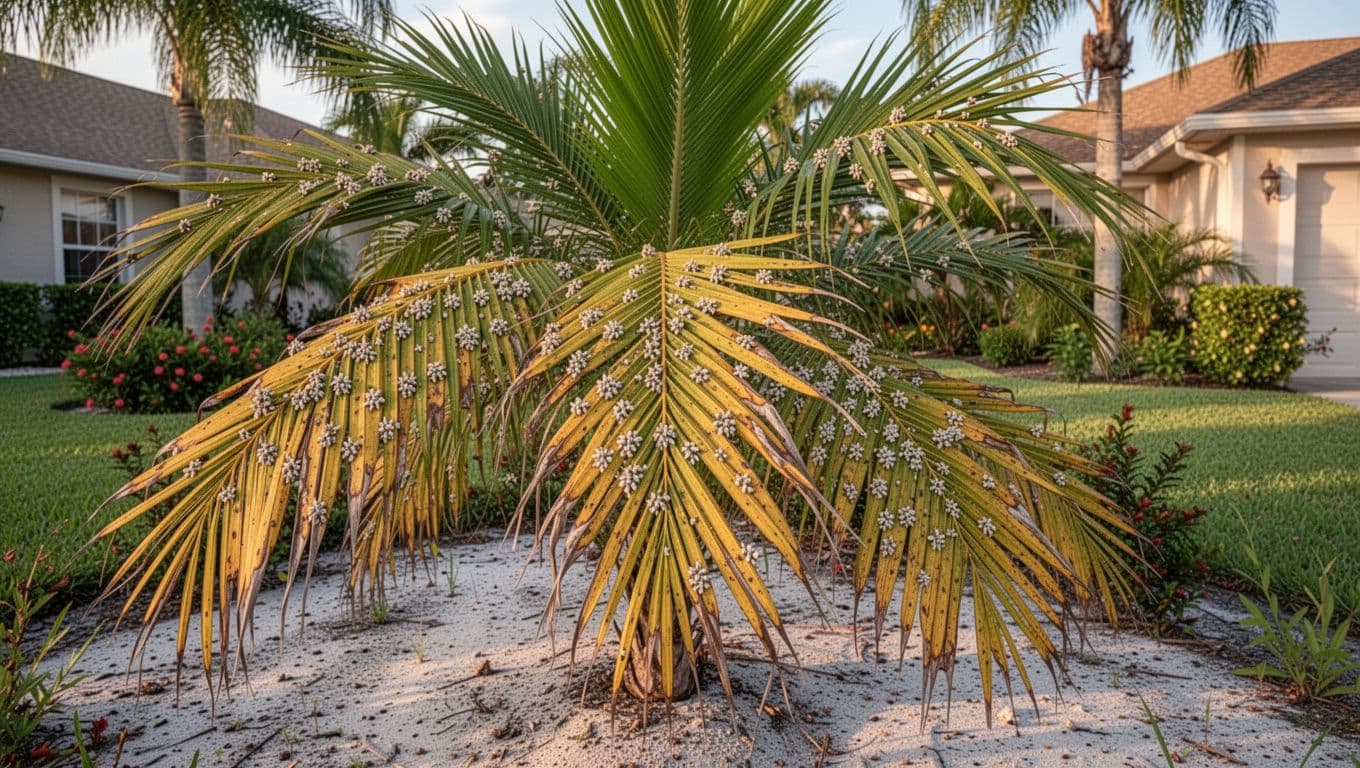
Look for clusters of tiny, round insects on the upper and lower surfaces of each leaflet. Florida red scale, a common armored scale known as Chrysomphalus aonidum , often has dark reddish-brown armor with a lighter center. Adults measure only about 2 to 2.2 millimeters across.
Other signs include:
- Small yellow spots that spread across the leaflets
- Brown or drying sections on otherwise green fronds
- Premature frond decline
- Dense scale clusters along the midrib or leaflet edges
- Reduced vigor and slower production of healthy foliage
- Scale on green twigs, leaf stems, or fruiting structures
Heavy feeding can cause an entire frond to yellow and decline. However, yellow leaves alone don't confirm scale. Irrigation problems, nutrient deficiencies, mites, fungal diseases, and salt exposure can create similar symptoms.
Inspect the parts of the palm that scales prefer
Armored scales feed with piercing mouthparts. They settle on plant tissue and remain under a protective waxy cover. On palms, the most visible damage usually appears on the leaves, but some scale species also attack green twigs and fruit.
Inspect new and older growth. Check nearby palms as well, since crawlers can move to neighboring plants through wind, contact between fronds, or movement of infested plant material.
Don't remove every discolored frond immediately. A palm needs enough healthy foliage to produce energy and recover. Pruning is more useful when it removes heavily infested sections and improves air movement through the canopy.
Why Accurate Identification Changes Palm Scale Treatment
Several pests can look like small dots on palm leaves. Treating the wrong insect wastes time and may harm beneficial insects without addressing the cause.
Confirm that the scale is alive
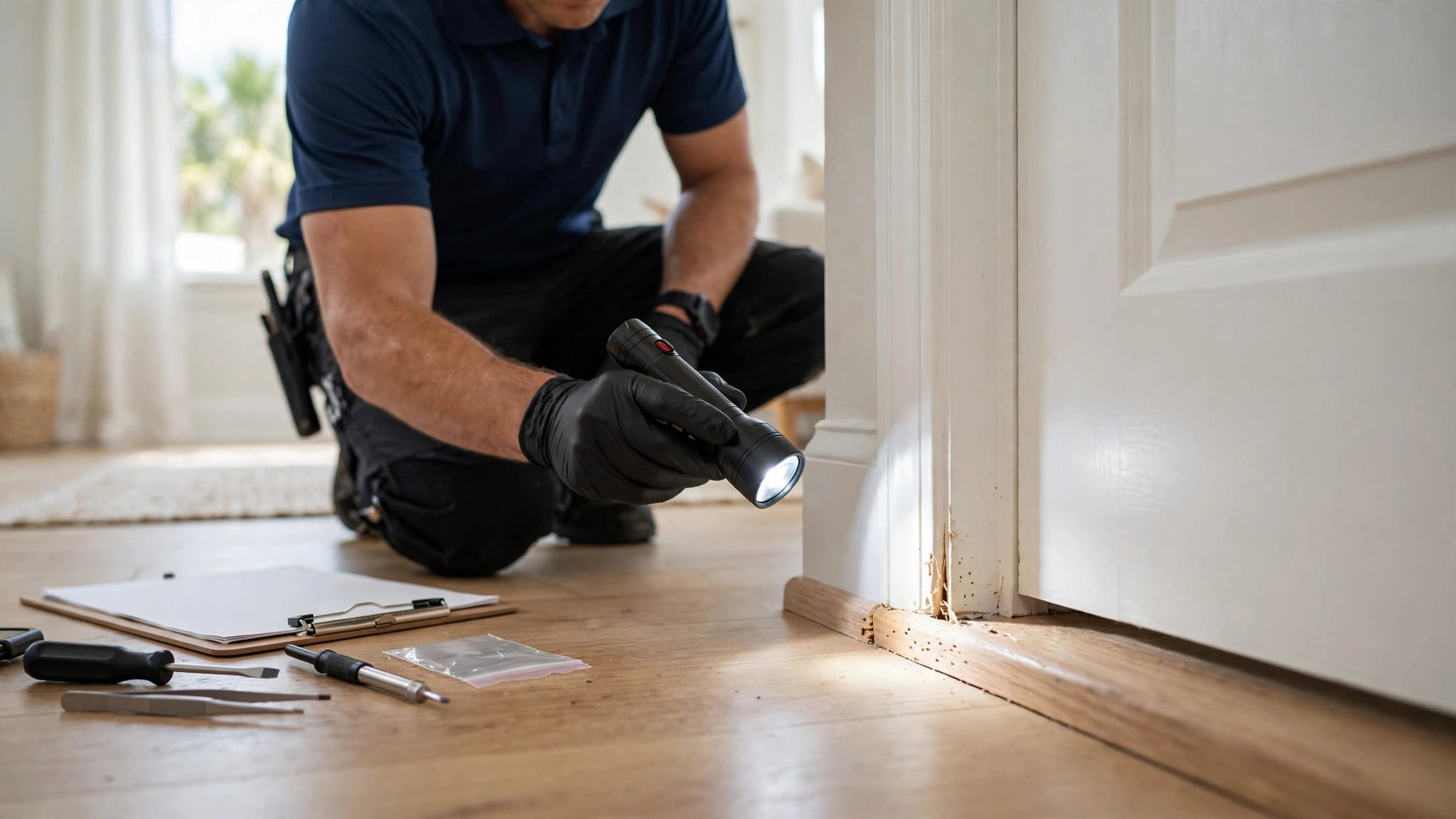
UF/IFAS recommends checking whether attached scales are still active. Crush the waxy cover gently with a tool. A live scale may release moisture or body fluid, while a dead scale remains dry. Dead covers can stay attached long after the insect has died, so their presence doesn't prove that treatment failed.
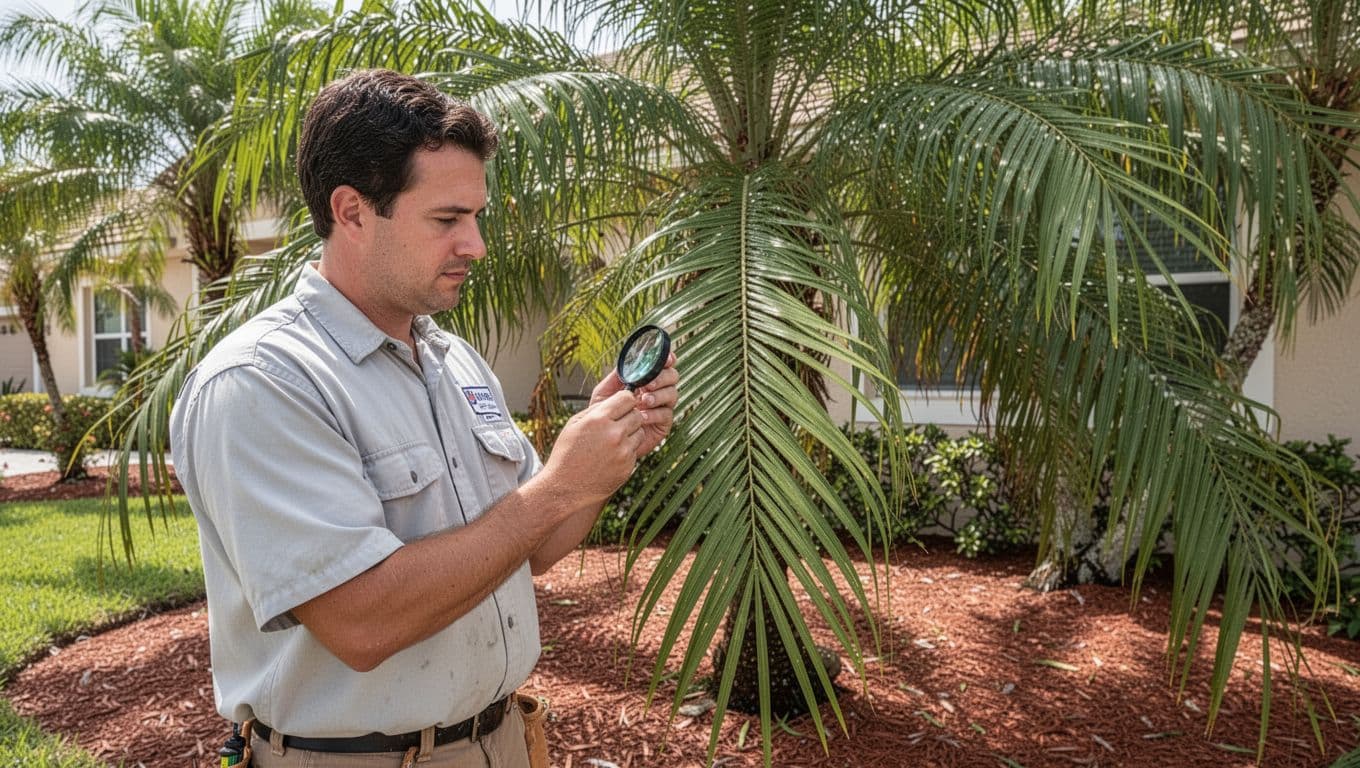
Inspect both sides of the leaf. If the pest is difficult to identify, place a sample with attached insects and plant tissue in a sealed container for identification through a local UF/IFAS Extension office or Florida diagnostic service.
Florida red scale is an armored scale. Armored scales generally don't produce honeydew because they feed differently from soft scales and whiteflies. Sticky leaves, black sooty mold, or a white waxy coating may point to another pest.
For comparison, homeowners can review information about identifying whiteflies on palms and shrubs before choosing a treatment.
Separate palm scale from cycad scale
Sago palms have a different concern called cycad aulacaspis scale. It can cover fronds, stems, and roots, and severe infestations can kill a mature sago palm within about 24 months without effective management.
That pest should not be treated as an ordinary Florida red scale problem. The host plant, scale appearance, location on the plant, and damage pattern all matter. A professional or diagnostic specialist can distinguish these pests and identify a plan that fits the palm.
Palm Scale Treatment Options for Cape Coral Homeowners
Small infestations may respond to sanitation and close monitoring. Larger infestations often need carefully timed products or professional treatment.
| Treatment approach | Best fit | Main limitation |
|---|---|---|
| Pruning and sanitation | A few infested fronds or small branches | Won't solve a widespread infestation |
| Horticultural oil | Many adult armored scales | Heat, coverage, and plant-sensitivity limits apply |
| Insecticidal soap | Exposed crawlers and light infestations | Has little effect under mature armor |
| Labeled systemic treatment | Established or difficult infestations | Requires correct identification and label approval |
Start with pruning and cultural controls
When only a few leaves or branches have scale, prune those parts and remove them from the property. UF/IFAS guidance recommends soaking removed material in soapy water before disposal. Bag the debris instead of leaving it beneath the palm, where crawlers may return to the plant or spread to nearby palms.
Clean pruning tools between plants, particularly when several palms show symptoms. Remove only the affected growth and avoid stripping the canopy. Excessive pruning can stress a palm and leave its remaining fronds exposed to sun and wind.
Cultural care won't kill a mature scale population by itself, but it can reduce pressure. Keep the canopy from becoming crowded, correct irrigation problems, and avoid overfertilizing. Too much nitrogen can encourage tender growth and make some landscape plants more attractive to sap-feeding pests.
Use oils or soaps with care
Horticultural oil is often one of the stronger options for adult armored scale because it can smother exposed insects when coverage is complete. Insecticidal soap is more useful against exposed crawlers and other soft-bodied stages. Neither product works well when the spray misses the insect or cannot reach it through dense foliage.
Palm fronds have many narrow leaflets, so coverage matters. Read the current label for the exact palm, application site, temperature limits, protective equipment, and reapplication directions. Don't mix products or increase the concentration beyond the label.
Cape Coral heat creates an added concern. UF/IFAS guidance warns against applying horticultural oil when temperatures are above 94 degrees Fahrenheit because foliage injury can occur. Avoid treating heat-stressed, drought-stressed, or recently transplanted palms unless the label and a qualified professional indicate that treatment is appropriate.
Consider systemic treatment for established infestations
A licensed professional may recommend a labeled systemic treatment when scale covers much of the palm or returns after pruning and contact treatments. Florida IFAS materials discuss active ingredients such as acetamiprid, imidacloprid, thiamethoxam, buprofezin, and spirotetramat for certain scale-management situations.
Those ingredients aren't interchangeable, and a product approved for one ornamental plant may not be approved for another. The current label must allow the product's use on the specific palm, at the property type, and in the intended application method.
Systemic treatment also isn't a substitute for identification. The pest must be susceptible to the chosen product, and the palm must be healthy enough to transport the active ingredient. A professional should also consider nearby flowering plants, waterways, soil conditions, and the risk to non-target organisms.
Timing, Safety, and Realistic Results in Florida
Treatment timing matters more than repeated spraying. Armored scale insects are protected as adults, while the crawler stage is more exposed and easier to control.
Watch for crawlers instead of relying on the calendar
Florida's warm conditions allow multiple life stages to occur during the same season. Florida red scale eggs can hatch within roughly 24 to 48 hours, and crawlers may settle soon after emerging.
A professional can monitor for crawler activity and time treatment accordingly. This approach usually works better than applying a broad-spectrum insecticide after the scales have formed mature armor.
UF/IFAS notes that established infestations may require a second application about two weeks later. That timing isn't a universal prescription. The product label, pest species, weather, palm condition, and first treatment results determine the next step.
Protect bees, waterways, and the palm itself
Follow every product label, including instructions for personal protective equipment, reentry, temperature restrictions, flowering plants, and disposal. Keep spray and runoff away from canals, storm drains, ponds, and other water sources. Many Cape Coral properties sit close to drainage areas, so application boundaries matter.
Avoid treating palms while bees are actively foraging nearby. Choose products with the least effect on beneficial insects when effective options are available. Horticultural oils often have less residual impact on beneficial organisms than some broad-spectrum products, but they still require careful use.
Don't expect the old scale covers to disappear right away. Dead insects can remain attached to the fronds. A better sign of progress is reduced spread, healthier new growth, and fewer live scales during follow-up inspections. Visible recovery often takes weeks or longer, depending on how much foliage the palm lost.
Mature armored scales are difficult to control because their protective covers block many contact sprays. The best treatment window is often the crawler stage.
When to Hire a Palm Pest Professional
Call a licensed pest-control operator or qualified tree-care professional when the infestation covers several palms, the canopy is tall, or the pest remains uncertain after inspection. Ladder work and canopy pruning can cause serious injuries, especially around pool decks, pavers, wet grass, and uneven ground.
Professional help also makes sense when:
- The palm is valuable, mature, or difficult to replace
- Scale has spread to nearby palms and shrubs
- The palm continues declining after pruning
- You suspect cycad aulacaspis scale
- Repeated treatments are needed
- You need a labeled systemic option
- The infestation is close to pollinator plants, canals, or other sensitive areas
A tree-care specialist can assess pruning and canopy health. A licensed pest-control company can identify treatment options and apply products according to Florida requirements. Ask what pest they found, whether it is alive, which treatment category they recommend, and how they will monitor the result.
Homeowners seeking broader help can also review residential pest control in Cape Coral when palm insects appear alongside other yard or exterior pest issues.
Conclusion
Palm scale treatment works best when you confirm the insect before choosing a product. Inspect both leaf surfaces, check whether the scales are alive, prune and dispose of small infestations, and monitor for crawlers.
For larger or recurring problems, a licensed professional can match the treatment to the palm, weather, site, and pest species. In Cape Coral, careful timing and label-compliant applications protect the palm while reducing risks to bees, beneficial insects, and nearby waterways.
Schedule a Free Inspection: