Rugose Spiraling Whiteflies on Cape Coral Palms and Shrubs
A white film on your palm fronds may be more than dust or mildew. Rugose spiraling whiteflies can coat Cape Coral palms and shrubs with wax, sticky honeydew, and black sooty mold.
These pests are easier to control when you identify them early. Before spraying, check the undersides of leaves and look for the spiral patterns that separate this whitefly from scale, mealybugs, and other plant problems. The right treatment depends on the plant, infestation size, and how long the pest has been active.
How to Identify rugose spiraling whiteflies
Rugose spiraling whiteflies, known scientifically as Aleurodicus rugioperculatus , are small insects that feed on plant sap. Adults may rise in a white cloud when you disturb an infested frond. Immature stages stay on the undersides of leaves, where they feed and leave behind waxy material.
The name comes from the rough, spiral-shaped wax deposits associated with their egg-laying activity. On palms, you may see white swirls along the underside of leaflets. On shrubs, the residue can cover broad leaves and collect around stems.
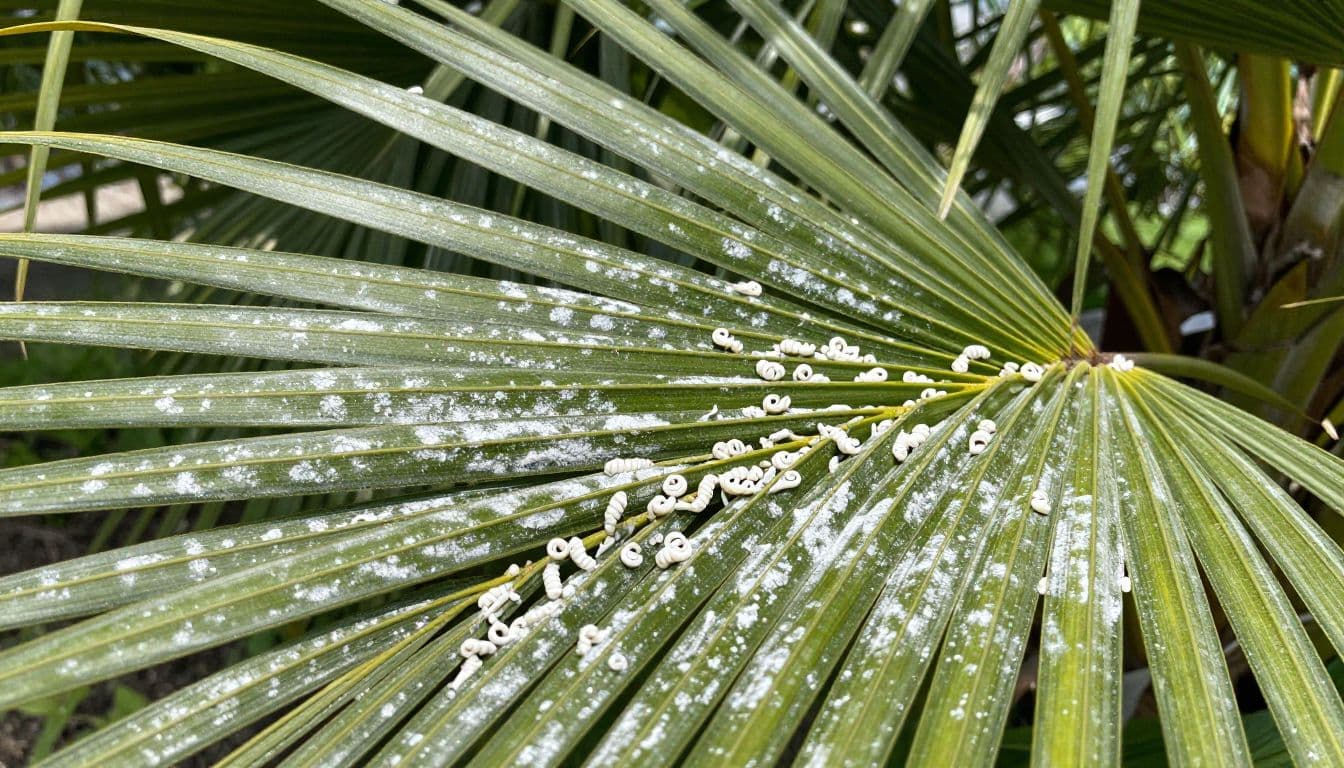
The pest also produces honeydew , a clear, sticky substance that falls onto lower fronds, shrubs, pool cages, patios, vehicles, and outdoor furniture. A dark fungus called sooty mold grows on that residue. The mold can make leaves look dirty and may reduce the amount of light reaching the leaf surface.
Damage often appears as yellowing, weak growth, premature leaf drop, or a general decline in appearance. Still, damage alone doesn't confirm a rugose spiraling whitefly infestation. Scale insects remain attached to plant surfaces, while mealybugs usually look like cottony clusters. Other whitefly species may lack the heavy spiral wax pattern.
Check several leaves before deciding what to do. Look at both sides of the foliage, shake a frond gently, and inspect nearby shrubs. One affected plant may point to a larger problem in the same planting bed.
Why Cape Coral palms and shrubs are vulnerable
Southwest Florida's warm climate allows many ornamental pests to remain active for much of the year. Palms and tropical shrubs also produce dense foliage, which gives whiteflies many protected feeding sites. A small population can spread across neighboring plants before the first visible decline appears.
Coconut palms are common hosts, but rugose spiraling whiteflies can also affect other palms and broadleaf ornamentals. Large fronds make inspection difficult, especially when the canopy is too high to reach safely. Shrubs create a similar problem because thick growth hides the insects underneath the leaves.
Honeydew creates a second layer of trouble. The sticky residue attracts ants, and ants may protect sap-feeding insects from natural predators. Sooty mold then spreads over the leaves and nearby surfaces. Washing away the mold helps improve the plant's appearance, but it won't stop the source until the whiteflies are controlled.
Plant stress can make recovery harder. Poor irrigation, root damage, compacted soil, and excessive pruning all reduce a plant's ability to replace damaged foliage. High-nitrogen fertilizer can also push tender new growth that attracts whitefly activity.
How to Treat rugose spiraling whiteflies on palms and shrubs
Treatment should match the infestation rather than follow a one-size-fits-all schedule. A reachable shrub with a few affected leaves needs a different plan than a tall coconut palm covered in honeydew.
For small infestations, UF/IFAS guidance recommends starting with physical removal. Use a strong stream of water to wash adults, nymphs, wax, honeydew, and some eggs from the undersides of reachable leaves. Repeat the process regularly because one washing won't remove every life stage.
Insecticidal soap or horticultural oil can help on small shrubs and low palms. These products need thorough coverage, especially beneath the leaves. Extension guidance commonly recommends repeated applications at seven-to-ten-day intervals for three or four weeks, but the product label always controls the schedule.
Apply soap or oil during cooler parts of the day and avoid treating drought-stressed plants. Hot weather can increase the risk of leaf injury. Test the product on a small area first, then wait to check for damage before treating the whole plant. Never mix products unless the label allows it.
When systemic treatment may be needed
Large palms, heavy infestations, and recurring problems often require a systemic insecticide. Systemic products move through the plant after a soil, trunk, or other labeled application. They can reach insects that contact sprays miss, including pests high in a palm canopy.
Florida Extension materials commonly discuss active ingredients such as imidacloprid and dinotefuran for whitefly management. Product names, legal uses, application rates, and plant restrictions can change, so select a product only after reading the current label. A licensed professional can determine whether soil treatment, trunk injection, basal bark application, or another method fits the plant.
Foliar sprays may knock down exposed adults more quickly, but their control often lasts for a shorter period. South Florida guidance reports that some imidacloprid trunk-injection treatments can begin working within 24 to 72 hours and provide a year or more of control under suitable conditions. Results vary with palm size, species, soil moisture, tree health, and the product label.
Avoid drilling into a palm trunk or applying a concentrated pesticide without training. Incorrect treatment can injure the palm, contaminate soil, or expose people and pets. Tall palms also create fall hazards when homeowners try to spray from ladders.
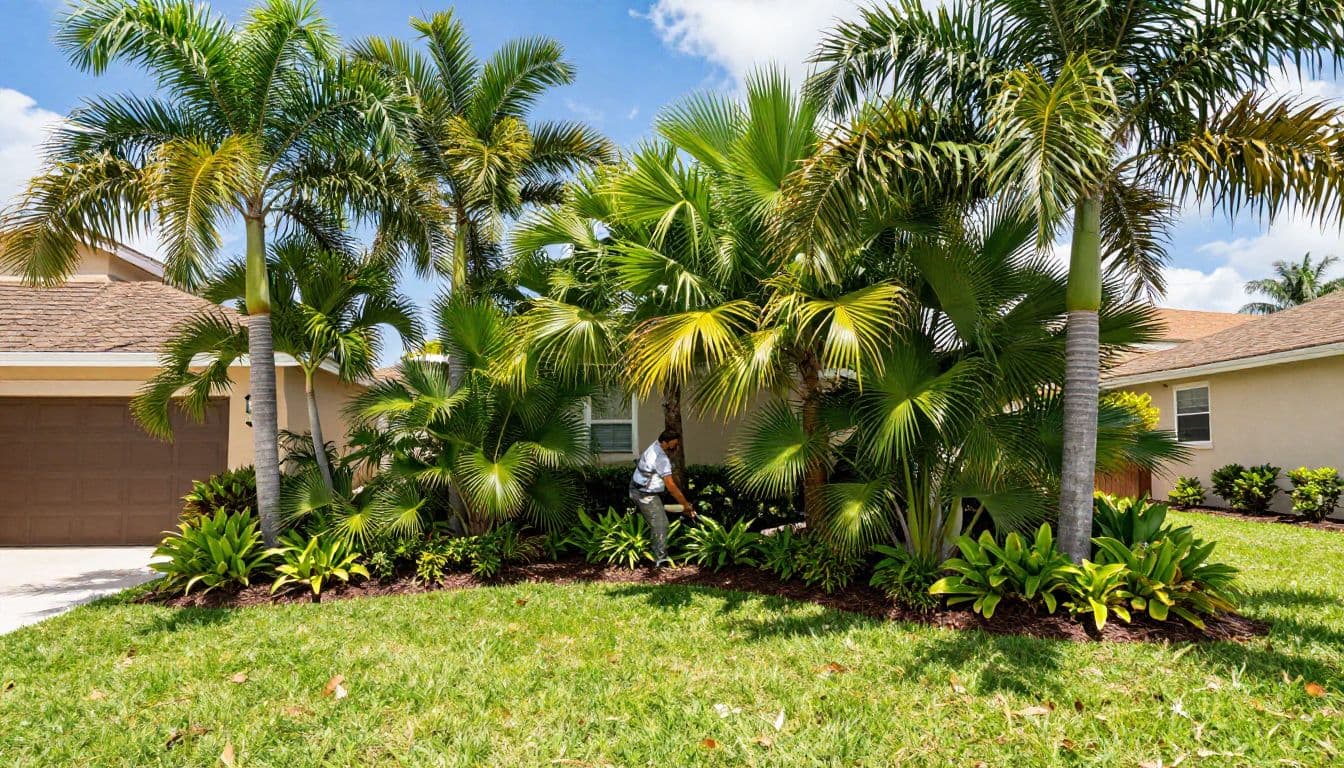
A professional evaluation is the right choice when whiteflies cover several plants, the canopy is inaccessible, the infestation returns after repeated treatment, or yellowing and defoliation are spreading. Shield's Cape Coral residential pest control team can inspect the property and recommend a treatment plan based on the affected plants and surrounding conditions.
A practical seasonal plan for Cape Coral yards
Regular inspection gives you more options than waiting for black mold or major leaf loss. Walk the property at least once a month during the warm growing season. Check new growth, the undersides of older fronds, and shrubs beneath infested palms.
In spring, inspect before heavy new growth develops. Wash reachable plants and correct irrigation problems early. If a palm needs a systemic treatment, a professional may consider spring or fall applications when the tree is actively moving water. Dry soil and extreme heat can reduce uptake and increase plant stress.
During summer, inspect after periods of rapid growth and heavy rain. Water washing may need to be repeated, while contact products may require reapplication according to the label. Avoid spraying in strong wind, during extreme heat, or when rain will immediately wash the product away.
Fall is a good time to assess whether the infestation has truly declined. Remove dead or badly damaged material with clean tools, but don't strip healthy green fronds from a palm. Place infested cuttings in appropriate disposal rather than moving them to another part of the neighborhood.
Winter doesn't guarantee that whiteflies are gone. Cape Coral landscapes can still contain active adults and immature insects during mild weather. Keep checking plants, especially sheltered palms and dense shrubs.
Healthy care supports recovery. Irrigate according to the plant's needs, keep mulch around the root zone without piling it against the trunk, and avoid excessive nitrogen fertilizer. A mulch layer of about three inches can help retain soil moisture under the drip line.
Protecting pollinators, pets, and nearby waterways
Pesticides can affect more than the target insect. Read the entire label before mixing or applying any product. Follow the listed rate, protective equipment, re-entry period, disposal instructions, and restrictions for palms, shrubs, flowering plants, and water.
Avoid spraying open flowers when bees and other pollinators are foraging. Some systemic insecticides can move into pollen or nectar, so don't treat flowering ornamentals unless the label permits that use. Preserve natural enemies when possible. Lacewings, parasitic wasps such as Encarsia , and Delphastus lady beetles can help suppress whiteflies.
Broad-spectrum insecticides may kill beneficial insects along with pests. For that reason, use the least disruptive labeled option that fits the situation. A professional can also account for nearby flowering plants, vegetable gardens, pets, children, and sensitive waterways.
Cape Coral properties often sit near canals, ponds, or drainage areas. Keep pesticide mixtures, rinse water, and granules away from storm drains and surface water. Never increase the dose because an infestation looks severe. More product doesn't guarantee better control and can increase plant and environmental damage.
Conclusion
White wax, spiral deposits, sticky honeydew, and sooty mold point toward a possible rugose spiraling whitefly problem, but accurate identification should come before treatment. Water washing and labeled soap or oil products may help on small, reachable plants, while tall palms and widespread infestations often need professional evaluation.
Inspect palms and shrubs through the warm season, avoid high-nitrogen overfertilization, and protect pollinators by following every pesticide label. Early attention can keep a few affected fronds from becoming a property-wide problem.
Schedule a Free Inspection: