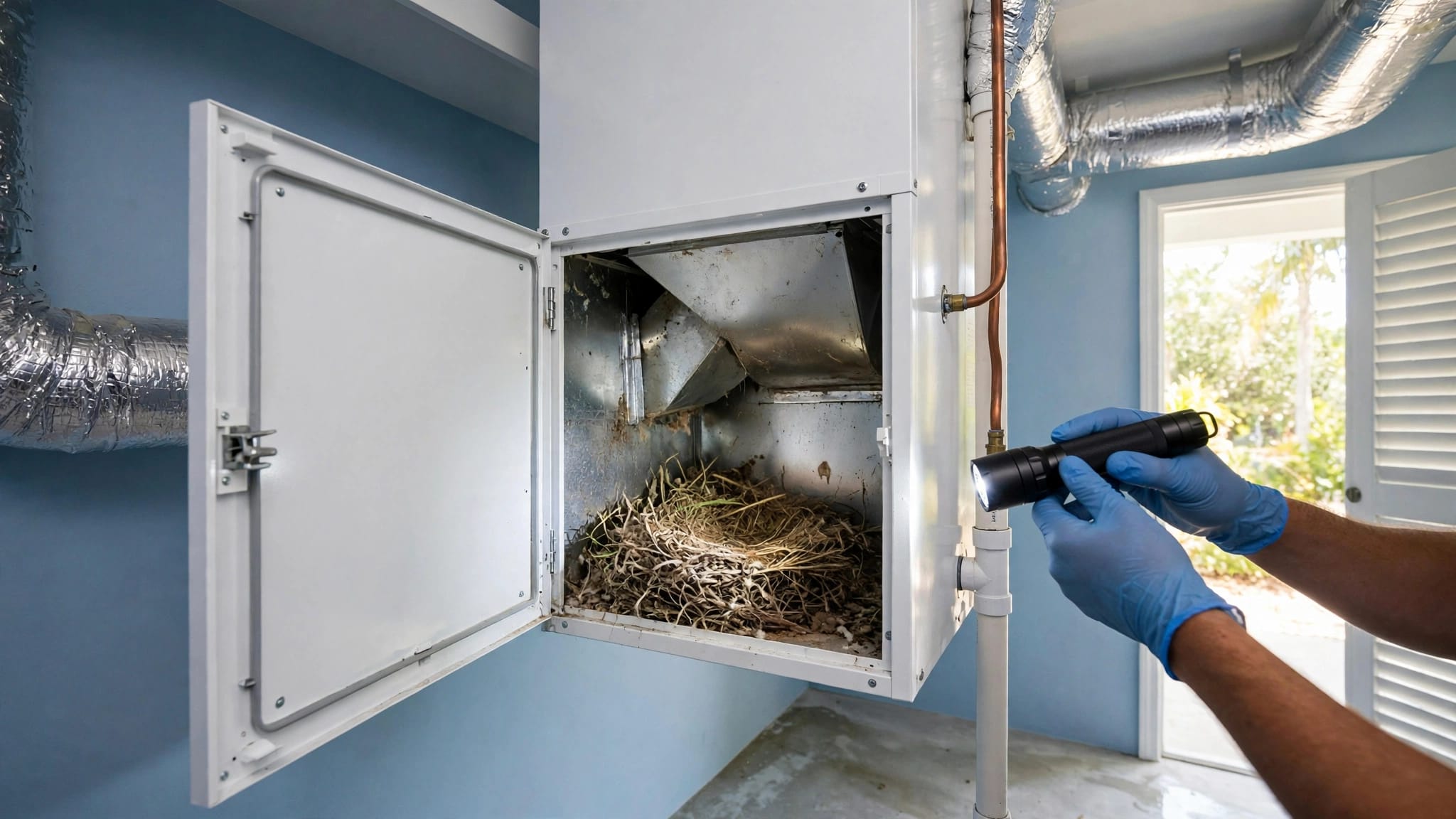
Raccoons Under Sheds: Signs and Safe Exclusion
A shed can look secure while raccoons under sheds use the hidden space beneath it as a den. In Cape Coral, raised sheds, loose skirting, storm damage, and nearby food sources can create an easy shelter for wildlife.
Scratching at night, a strong odor, disturbed soil, or droppings near the foundation may point to raccoons. However, removal should never begin by sealing the opening right away. You must first confirm that no adult, young raccoons, or other animals remain underneath. Start with the signs that separate an active den from an old entry point.
How to Confirm Raccoons Under Sheds
Raccoons are most active after dark, so you may hear movement when the yard is quiet. Scraping, heavy footsteps, chittering, or repeated thumping under a shed can indicate an animal moving inside. A raccoon den may also produce a musky odor, especially when the space stays damp after rain.
During daylight, inspect the shed from a safe distance. Look for a low opening near the corners, damaged lattice, bent metal edging, or soil pushed away from the foundation. Raccoons can widen weak spots with their claws, so an entry hole may look larger after several nights.
Other common signs include:
- Dark, greasy rub marks around an opening where the animal's fur contacts wood or plastic.
- Tracks in damp soil, with five long toes that may look similar to small handprints.
- Scratched ground, overturned objects, or displaced mulch near the shed.
- Droppings in a repeated area, such as a corner, roof surface, or nearby tree base.
- Torn garbage bags, scattered pet food, or damaged containers around the property.
- Fresh nesting material, including leaves, grass, insulation, or shredded fabric.
Raccoon feces can contain harmful organisms and parasite eggs. Keep children and pets away from the area, and don't sweep or hose the waste into the yard. If you find droppings, avoid touching them until you know how they should be removed safely.
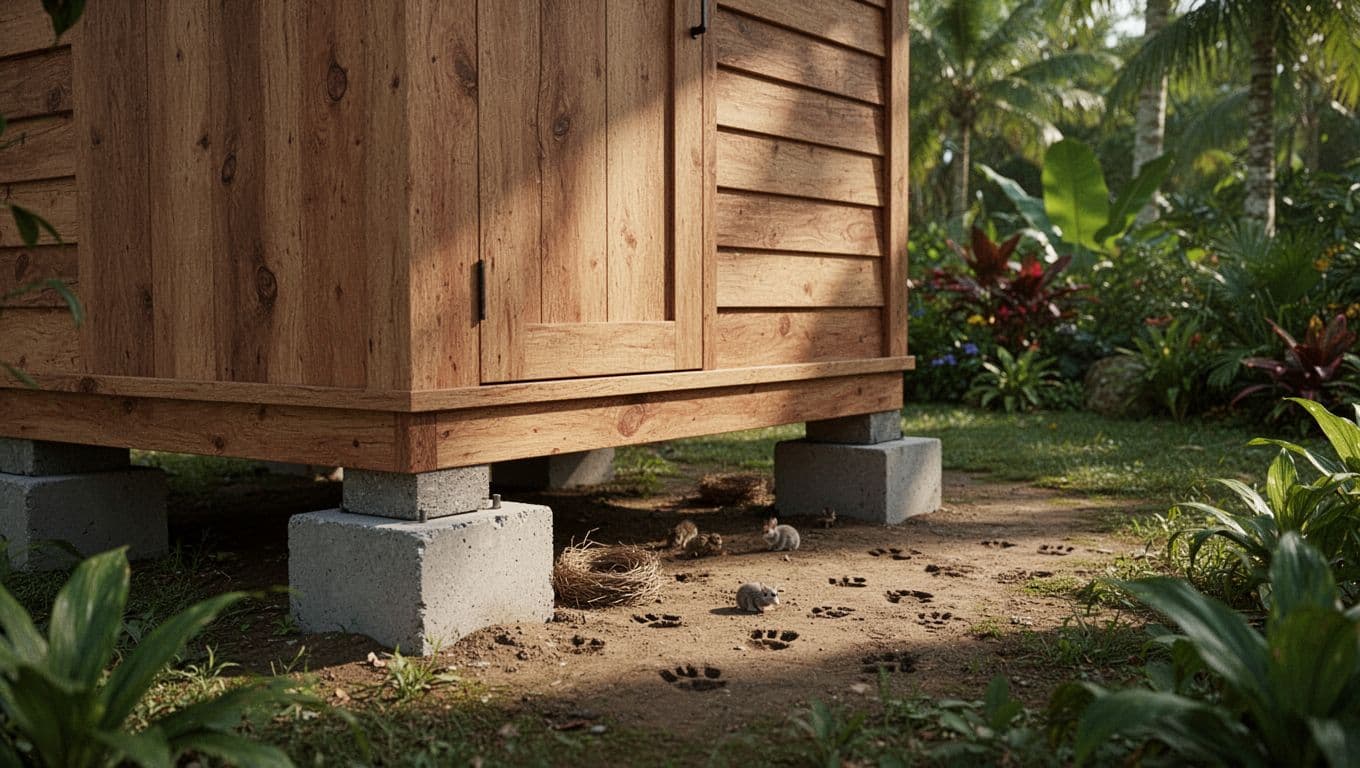
Some signs overlap with rats, opossums, armadillos, or feral cats. For a useful comparison of entry points and contaminated areas, review this Cape Coral attic rodent control guide. A correct identification prevents you from choosing the wrong exclusion method.
Check for Young Before Sealing the Opening
A mother raccoon may leave the shed during the night to search for food. If you seal the opening while she is outside, her young could remain trapped inside. That can lead to prolonged distress, odors, property damage, and an adult raccoon trying to break back through the barrier.
Young raccoons may make faint chirping, squeaking, or whining sounds. You might also hear movement beneath the shed during the day, when an adult would usually be resting. The absence of noise doesn't prove the space is empty, especially if the young are small.
Watch the opening from inside your home or from a distant part of the yard. Use daylight hours to look for fresh tracks, but don't crawl under the shed or reach into a dark space. A motion-activated camera can help show whether an adult enters or exits, though it doesn't replace a careful inspection.
A professional wildlife technician can assess the den without forcing an animal into a corner. If young are present, the humane plan may require waiting until they can leave with the mother, then installing an appropriate exclusion device. The timing depends on what the inspection finds.
Never close a raccoon entry point based on one quiet afternoon. A den can appear inactive while the mother is outside feeding.
Do not use smoke, fire, bright chemicals, or loud tools to force an animal out. These methods can injure wildlife and push a frightened raccoon into the shed, wall, or another part of the property.
Humane Exclusion for Shed Entry Points
Once an inspection confirms that no raccoons or young remain, exclusion can begin. The goal is to block access without trapping an animal inside. A durable repair also needs to withstand rain, humidity, lawn equipment, and the occasional storm.
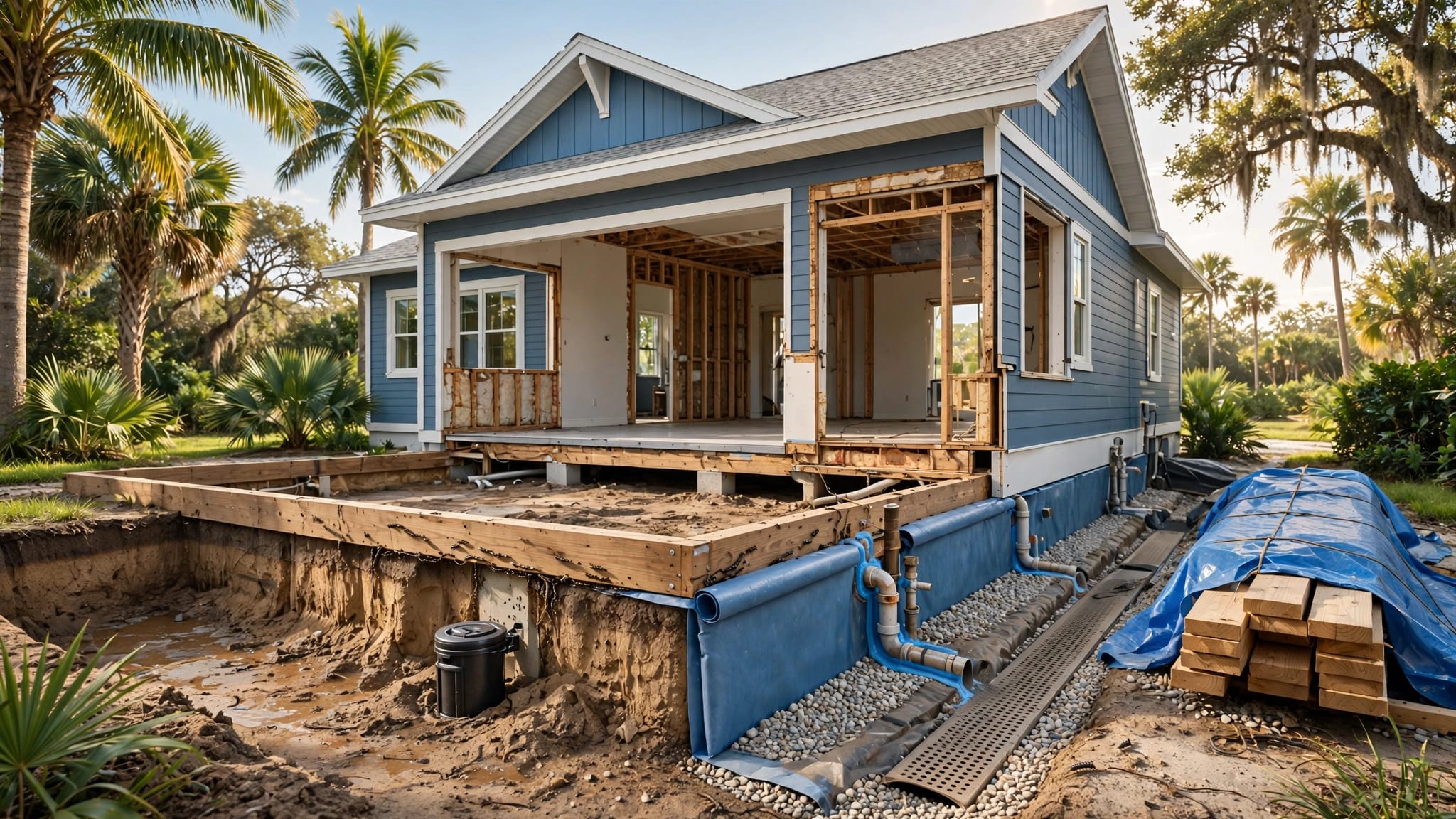
First, remove loose debris around the shed and identify every possible opening. Closing the largest gap won't solve the problem if a second entrance remains hidden behind a corner or under a ramp. Check the full perimeter, including the rear wall, doors, vents, utility penetrations, and areas where the shed meets the ground.
For many sheds, sturdy galvanized hardware cloth works better than thin chicken wire. The material should attach firmly to sound framing or the foundation. Where practical, installers can bury or angle part of the barrier outward to discourage digging. The exact design depends on the shed's construction and the soil around it.
A proper repair may include:
- Confirming that the shed is empty and checking for dependent young.
- Removing nesting material only when it is safe to do so.
- Repairing damaged skirting, doors, vents, and foundation gaps.
- Securing hardware cloth or another durable barrier to the structure.
- Sealing smaller gaps around pipes and utility lines with suitable materials.
- Checking the finished work for loose edges or a new digging route.
Avoid relying on expanding foam alone. Raccoons can tear through weak materials, and foam doesn't provide a strong physical barrier at ground level. Also, don't install a one-way door without confirming that every animal is outside. A device that works for an empty structure can create a serious welfare problem when young are inside.
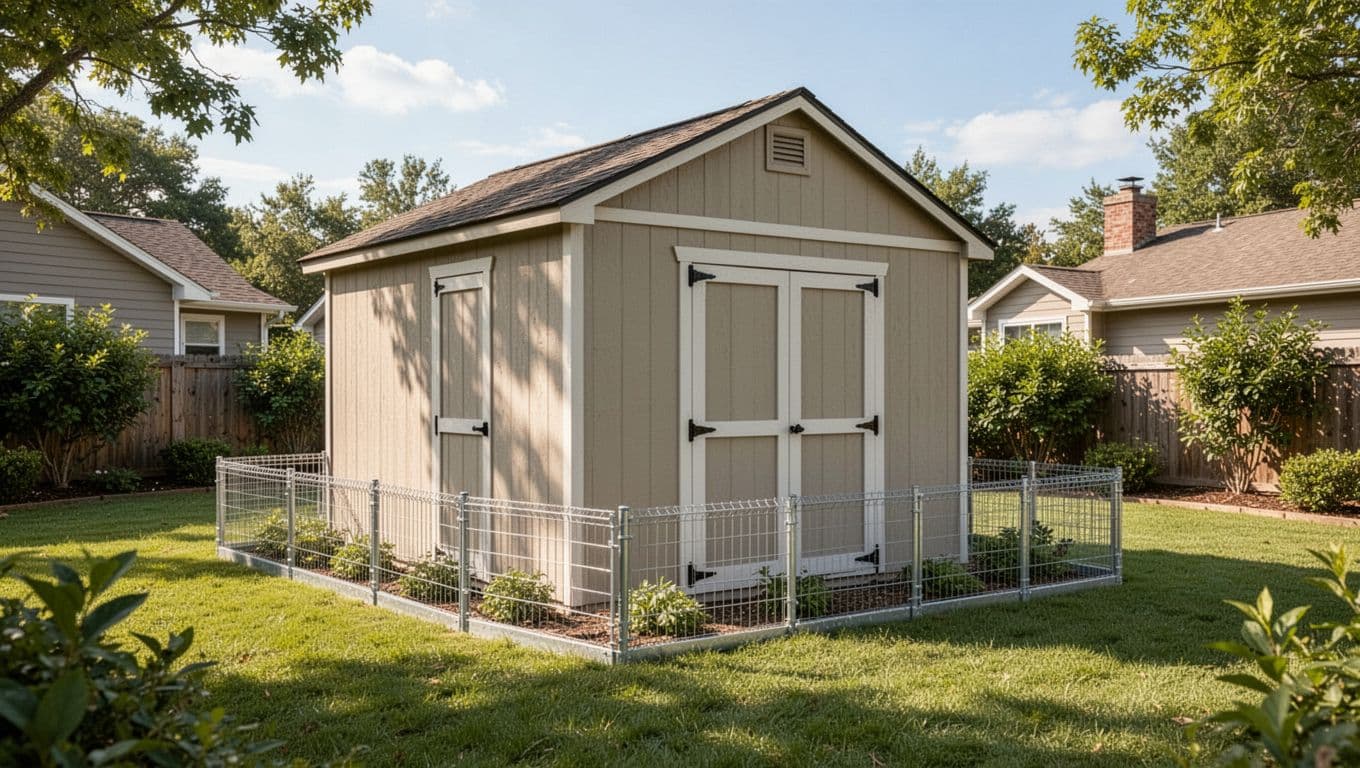
Cape Coral properties also need repairs that account for heavy rain and tropical weather. A shifted shed, flooded floor, or broken fence can reopen a route that seemed secure. These hurricane pest prep steps for Southwest Florida include practical shed measures such as closing gaps and storing attractants in sealed containers.
After exclusion, monitor the perimeter for several nights. Fresh digging, new tracks, or claw marks show that the repair needs another inspection. Don't remove a barrier simply because you hear scratching. The sound may come from an animal testing the blocked route or from another pest nearby.
Stay Safe Around Raccoons and Contaminated Areas
Raccoons can bite or scratch when cornered, sick, injured, or protecting young. Keep your distance, especially if an animal approaches during the day, staggers, circles, makes unusual sounds, or fails to retreat. Bring pets indoors and keep children away from the shed until the issue is resolved.
Never handle a raccoon, living or dead. Don't place your hands under the shed, use a broom to push an animal out, or attempt to move a den. Trapping can also create risks when you lack the right equipment, permits, or plan for the animal afterward.
Wear protective clothing only when a trained professional has confirmed that cleanup is safe. Raccoon waste can spread contamination through dust, water, shoes, and tools. Avoid sweeping, pressure washing, or using a leaf blower near droppings. Wash contaminated clothing separately, and clean shoes before bringing them indoors.
Contact a qualified professional when the shed contains an active den, young raccoons, or a raccoon that acts aggressively or appears ill. Get medical advice promptly after a bite, scratch, or contact between saliva and broken skin. Wash the area with soap and running water right away, then contact a healthcare provider or the Lee County health department for guidance about possible rabies exposure.
If you find a dead raccoon, keep people and pets away and call animal control or a wildlife professional. Don't put the animal in a trash container unless local authorities give you clear instructions.
Prevent Raccoons from Returning
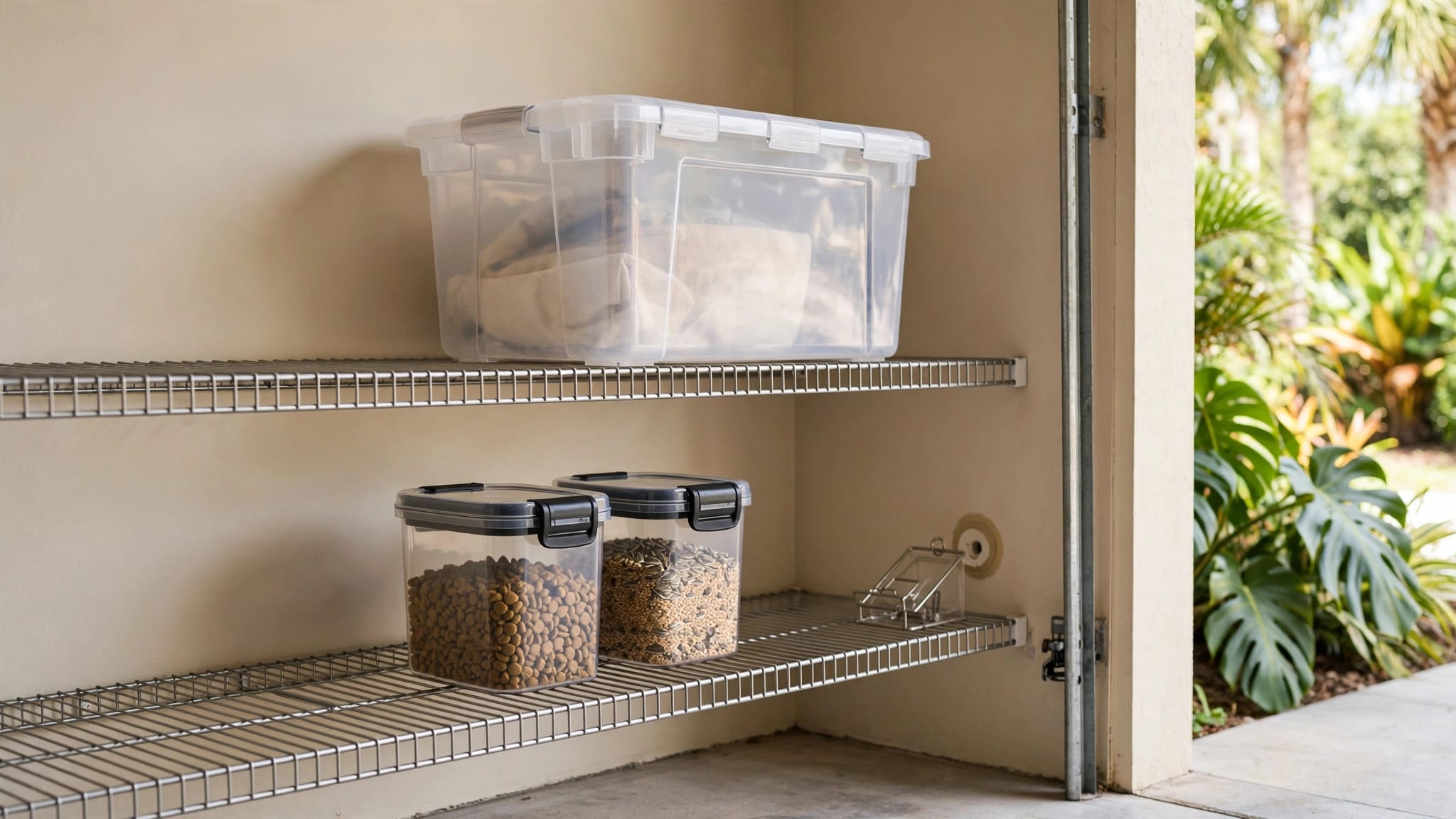
Exclusion works best when the yard offers fewer reasons for raccoons to investigate. Store garbage in tightly closed containers, secure lids with straps when needed, and avoid leaving pet food outside overnight. Clean spilled birdseed and keep compost in a wildlife-resistant container.
Trim dense vegetation near the shed so you can see the foundation. Remove stacked lumber, unused containers, and piles of branches that provide cover beside the structure. Repair leaky outdoor faucets and drainage problems that leave a dependable water source near the shed.
Inspect the building after strong storms. Cape Coral wind and rain can loosen skirting, shift lightweight structures, and expose gaps below doors. A quick check after storm cleanup can prevent a temporary opening from becoming a new den site.
Raccoons may also be attracted by roof access, palm debris, fruit, and open crawl spaces. If activity continues after the shed is secured, inspect the rest of the property rather than focusing on one opening. A local pest professional can help separate raccoon activity from rodent activity and recommend repairs that match the animal involved.
Conclusion
Raccoons under sheds often leave clear evidence before homeowners see the animal itself. Tracks, digging, droppings, odors, and nighttime sounds can reveal an active den, but sealing the opening too soon may trap a mother or her young.
Inspect from a safe distance, keep people and pets away, and treat all waste as contaminated. After confirming the shed is empty, use strong physical barriers and address nearby food, water, and shelter sources. When an active den, aggressive raccoon, or possible rabies exposure is involved, professional help is the safest next step.
Schedule a Free Inspection: