Mosquito Repellent Clothing for Florida Yard Work
A Florida yard can look calm while mosquitoes wait in shaded grass, shrubs, gutters, and containers nearby. The right mosquito repellent clothing helps reduce bites while you mow, trim plants, pull weeds, or clear storm debris.
Regular long sleeves and pants create a useful barrier, but treated garments add another layer. The best choice depends on heat, fabric, fit, and how long you plan to work outside. Start with the parts of your yard routine that expose the most skin.
Why Florida yard work attracts mosquitoes
Yard work puts you close to the places mosquitoes rest and reproduce. Overgrown vegetation gives adult mosquitoes shade, while clogged gutters, plant saucers, buckets, toys, and low areas can hold the water their larvae need.
Southwest Florida also has a mix of mosquito species with different feeding patterns. Some are more active around dawn and dusk, while Aedes mosquitoes can bite during daylight. That means a midday gardening session still deserves protection, especially after rain or near dense vegetation.
Pay attention to the work area
Before starting, walk through the yard and look for puddles or containers that have collected water. Empty plant saucers, turn over buckets, clear debris, and check gutters and downspouts. After storms or high tides, inspect low spots where water may remain for several days.
You can find more practical mosquito prevention for Florida homeowners, including steps for reducing standing water and keeping vegetation manageable.
Cover the places mosquitoes reach first
An open collar, loose sleeve, exposed ankle, or gap between a shirt and waistband can give mosquitoes easy access. Wear a long-sleeve shirt, full-length pants, socks, and closed shoes for mowing and trimming.
Choose light-colored clothing when possible. It can make mosquitoes easier to spot and usually absorbs less sunlight than dark fabric. Tuck pants into socks when working in tall grass or mulch, but avoid tight clothing that holds heat against your skin.
How mosquito repellent clothing compares with ordinary clothing
Mosquito repellent clothing usually contains a factory-applied insect treatment, commonly permethrin. The treatment stays in the fabric and can repel or kill mosquitoes when the garment label supports those claims. Ordinary clothing relies only on the physical barrier created by the material.
| Feature | Treated clothing | Ordinary long sleeves |
|---|---|---|
| Main protection | Fabric treatment plus coverage | Coverage and fabric weave |
| Heat management | Depends on fabric and design | Wide range, based on material |
| Cost | Usually higher | Often less expensive |
| Care | Must follow treatment instructions | Standard laundering, unless the label says otherwise |
| Best use | Longer outdoor work or heavy mosquito activity | Short jobs and routine coverage |
A treated shirt doesn't replace skin repellent or yard management. It can help when mosquitoes land on the garment, but exposed hands, neck, face, and ankles still need attention.
When treated garments make sense
Factory-treated clothing is useful for repeated outdoor work, especially when you spend an hour or more mowing, clearing brush, or maintaining plants. It can also help when mosquito activity stays high despite reducing standing water.
Read the label before buying. Check the active ingredient, treatment claims, washing instructions, and any limits on use. Never apply permethrin clothing treatment to your skin. Use separate EPA-registered skin repellent only according to its product directions.
When ordinary clothing is enough
A tightly woven, loose-fitting long-sleeve shirt can provide good coverage for a quick chore. Lightweight work pants, socks, and closed shoes may be all you need for tasks that take a few minutes in a maintained yard.
Thin athletic fabric deserves more caution. Mosquitoes may bite through material that is tight against the skin, especially where a backpack strap, waistband, or bent knee presses fabric inward. Hold the shirt up to light before using it. A dense weave offers more physical protection than an extremely open knit.
Stay covered without overheating
Florida heat and humidity can turn protective clothing into a burden. Overheating may cause you to remove sleeves, loosen coverage, or rush through the work. Good clothing choices and shorter work periods help you keep protection in place.
Choose breathable fabrics and a relaxed fit
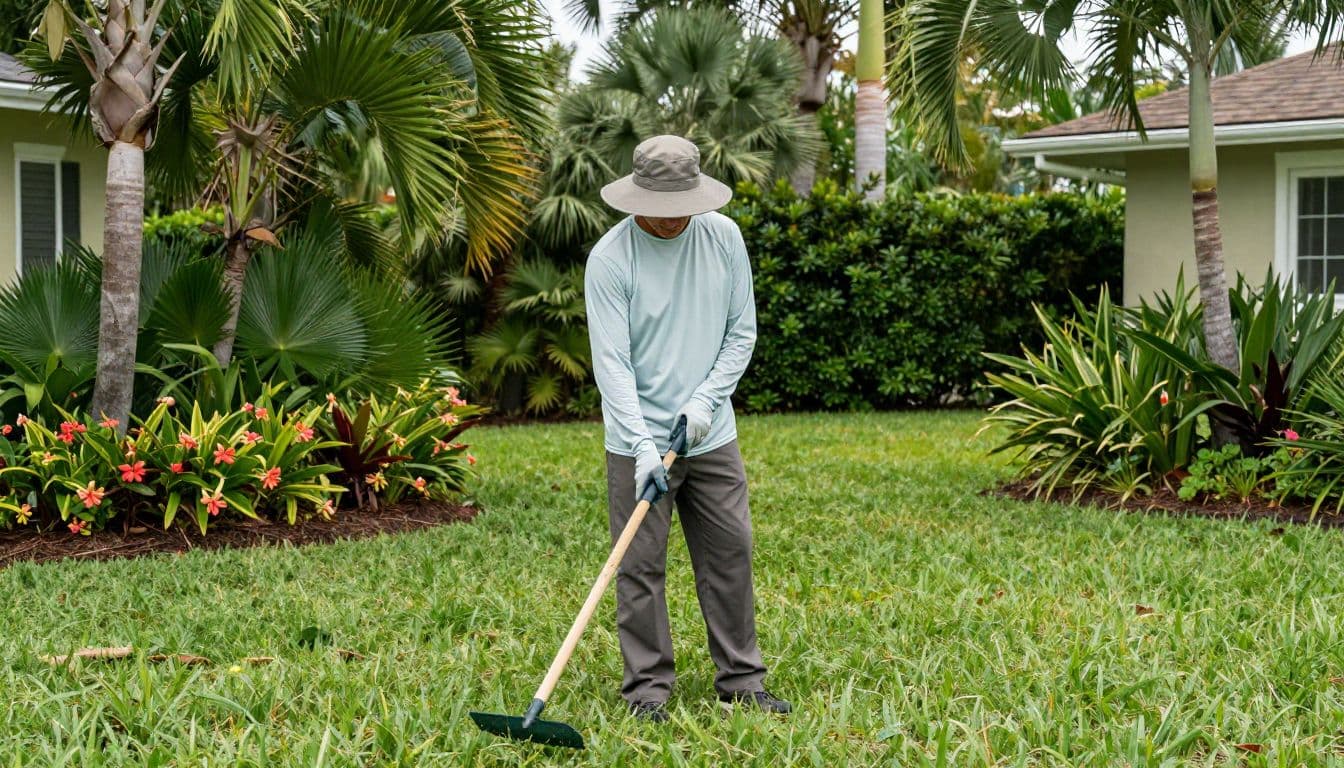
Look for lightweight, quick-drying fabric that allows air movement. A loose fit creates space between the cloth and your skin, which can improve comfort and make it harder for mosquitoes to bite through the material.
A shirt with a vented back, mesh panels in appropriate areas, or roll-tab sleeves can help during hot chores. However, don't roll sleeves above the elbow while working in mosquito-heavy areas. Choose a collar that covers the neck without feeling tight.
Lightweight pants with a durable weave work better than shorts for mowing, edging, and gardening. A breathable hat with a brim protects your face and neck from sun exposure, while gloves cover your hands during pruning and cleanup.
Work in shorter blocks
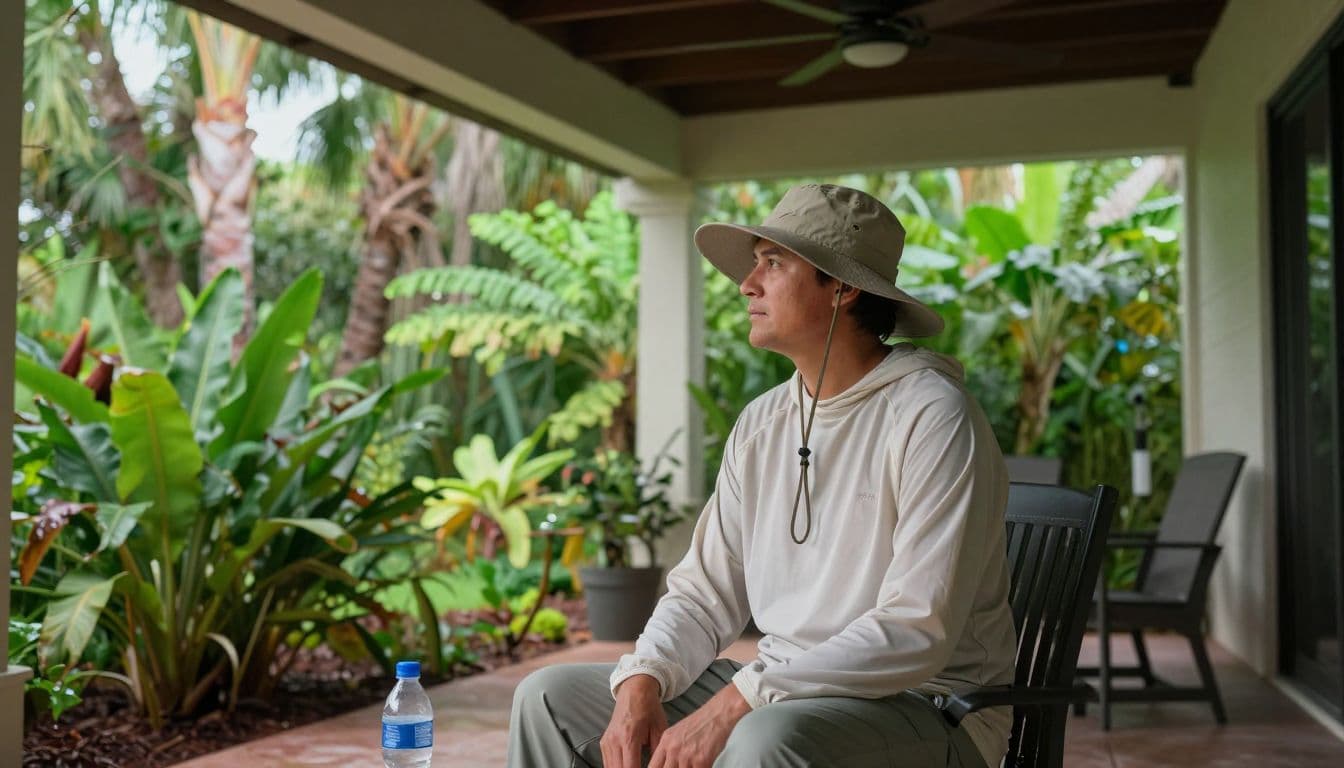
Plan demanding chores during the cooler parts of the day, but remember that mosquitoes may still feed at those times. Take breaks in a screened area, indoors, or beside a fan. Drink water before you feel thirsty, and remove damp clothing once the work is finished.
Use a mower or trimmer with the right protective clothing rather than adding heavy layers. Cotton may feel comfortable at first, but it can stay wet after absorbing sweat. Moisture-wicking fabric dries faster, although the weave still matters for bite protection.
Build a complete mosquito protection routine
Clothing is only one layer of protection. Mosquitoes can reach skin above the collar, around the wrists, through footwear gaps, and on the face. A complete routine combines coverage, repellent, yard maintenance, and sensible timing.
Protect exposed skin
Apply an EPA-registered insect repellent to exposed skin when the product label recommends it. Common active ingredients include DEET and picaridin. Oil of lemon eucalyptus products are another option for some adults, but always check the age and use directions.
Keep repellent away from the eyes and mouth. If you also use sunscreen, apply sunscreen first and insect repellent afterward. Wash treated skin when you finish outdoor work, following the product directions.
Don't spray a skin product onto clothing unless its label specifically permits that use. Some clothing treatments have separate instructions, and mixing products can damage fabric or change how the treatment works.
Reduce mosquitoes around the house
Protective clothing works better when the yard produces fewer mosquitoes. Empty containers after rainfall, keep screens in good repair, and remove leaves or debris that block drainage. Trim dense vegetation near sitting areas, while taking care not to create new piles that hold moisture.
A fan can make a screened patio more comfortable and may disrupt mosquito flight near the seating area. Still, airflow around a patio won't solve breeding areas across the property. Persistent activity may require a property inspection and targeted mosquito service.
Check yourself before coming indoors
Mosquitoes aren't the only pests around Florida lawns and mulch. Shake out shoes and gloves, check pant cuffs, and change clothes after yard work. A shower also helps remove sweat and any insects that may remain on your skin or clothing.
Keep work clothes in a separate laundry load when the garment label recommends it. Don't leave damp clothing in a hamper for days, because odor and fabric damage can develop quickly.
Mosquito repellent clothing buying and care checklist
Use this short checklist before purchasing or washing a garment:
- Choose a loose-fitting long-sleeve shirt and full-length pants with coverage at the wrists and ankles.
- Look for lightweight, breathable fabric that dries quickly in humid weather.
- Check whether the garment is factory-treated and identify the active ingredient listed on its label.
- Confirm that the treatment claims match your needs, such as mosquito, tick, or chigger protection.
- Pick light colors and a weave that isn't so thin mosquitoes can bite through it.
- Inspect cuffs, seams, zippers, and hems for gaps or damage.
- Buy enough pieces to rotate clothing while wet garments dry.
- Wash and dry the garment exactly as directed on its label.
- Don't use bleach, fabric softener, ironing, or hot drying unless the instructions allow it.
- Don't add another insecticide treatment unless the product and garment instructions permit it.
Store garments correctly
After washing, let clothing dry completely before storing it. Keep treated garments away from direct heat and follow the manufacturer's storage instructions. If the fabric develops holes or the fit changes, replace it rather than relying on incomplete coverage.
A garment's treatment life varies by product. Some labels provide a wash-count estimate, while others give different care limits. The label is the reliable source for that specific shirt or pair of pants.
Know when clothing isn't enough
Frequent bites can indicate a yard problem rather than a clothing problem. Check areas near irrigation, drainage outlets, pool equipment, rain barrels, and storm debris. If water remains after routine cleanup, a pest professional can identify conditions that are easy to miss during a quick inspection.
Mosquito service can also help when adults remain active around the property after standing water has been addressed. Clothing protects the person doing the work, while yard treatment addresses mosquitoes around the home.
Conclusion
The best mosquito repellent clothing for Florida yard work combines full coverage with a loose, breathable fit. Treated garments add insect protection, while ordinary long sleeves and pants can work well for shorter jobs when the fabric is dense and the fit leaves no easy gaps.
Keep water and dense shelter under control, protect exposed skin, take cooling breaks, and follow every garment and repellent label. Clothing can reduce bites during yard work, but lasting relief depends on protecting yourself and reducing mosquitoes around the property.
Schedule a Free Inspection: