Asian Tiger Mosquitoes in Cape Coral Birdbaths and Bromeliads
Picture this: you're sipping coffee on your lanai in Cape Coral, enjoying the morning sun. Then a sharp bite hits your ankle. That's the Asian tiger mosquito at work. These striped pests bite during the day and breed in tiny water pockets right in your yard.
Cape Coral's humid climate and frequent rains make them thrive. They need just a bottle cap's worth of standing water to start a family. Birdbaths and bromeliads top their list of favorites. Homeowners face constant battles because these spots stay wet too long.
You can fight back with simple steps. Let's break down where they hide and how to stop them.
Spotting Asian Tiger Mosquitoes in Your Yard
Asian tiger mosquitoes stand out with bold black-and-white stripes on legs and body. They buzz aggressively in daylight hours. Unlike nighttime biters, these fellows attack when you're gardening or relaxing outdoors.
In Southwest Florida, they arrived years ago and spread fast. Females lay eggs in any still water. Eggs hatch quick in our warmth. Larvae wiggle for a week, then adults emerge ready to bite.
Check your property often. Look for them near patios and plants. They rest in shady spots under leaves during hot afternoons. Early spotting helps you act before numbers grow.
Local data shows they're active now in April 2026. Lee County tracks them closely. Their daytime habits catch people off guard. You might notice more itches after yard work.
For a full profile, see the University of Florida's fact sheet on Asian tiger mosquitoes.
Birdbaths as Hidden Hotspots
Birdbaths draw songbirds but also mosquitoes. Stagnant water inside turns into a nursery fast. Just a few days without refresh, and larvae fill the bowl.
Empty them twice weekly. Scrub sides with a brush to remove eggs. Refill with fresh water. Add a small fountain pump if birds visit often. Moving water stops breeding.
In Cape Coral yards, these features sit on patios or lawns. Sun warms the water, speeding mosquito growth. Check after rains too. Puddles form nearby from overflow.
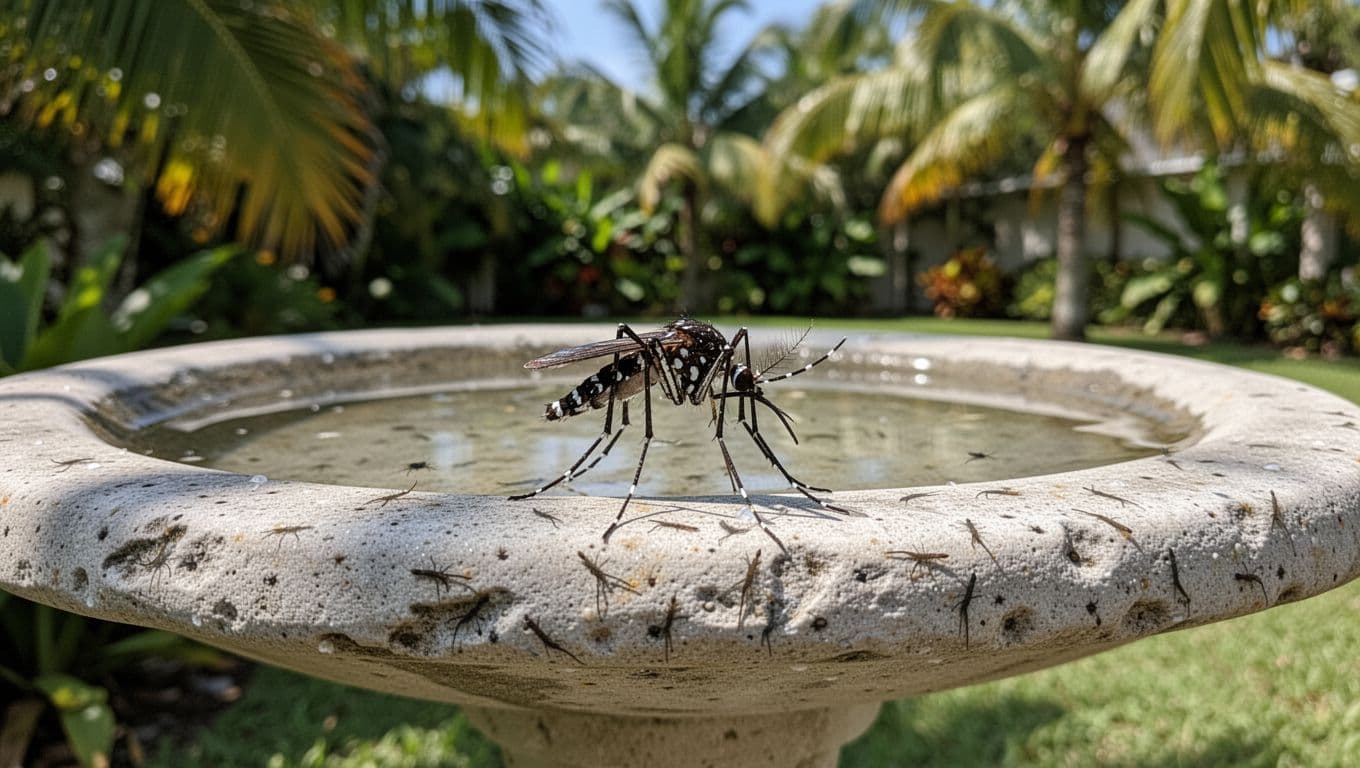
This image shows one perched on a rim, larvae hints below. Sunny backyards like yours host them.
Learn more about common mosquito breeding grounds in Cape Coral.
Managing Bromeliads to Prevent Breeding
Bromeliads add tropical flair to Cape Coral gardens. Their cup-like centers and leaf axils trap rain or irrigation water. Perfect for Asian tiger mosquito eggs.
Flush these cups weekly. Use a hose on gentle spray. Twist plants if needed to reach hidden spots. Let water drain fully before it sits again.
Some gardeners remove central tanks carefully. Others treat with labeled larvicides. Always follow product directions for safety around pets and kids.
Patios with potted bromeliads pose extra risk. Lanais collect debris that holds moisture. Trim dead leaves often. This cuts shade where adults hide.
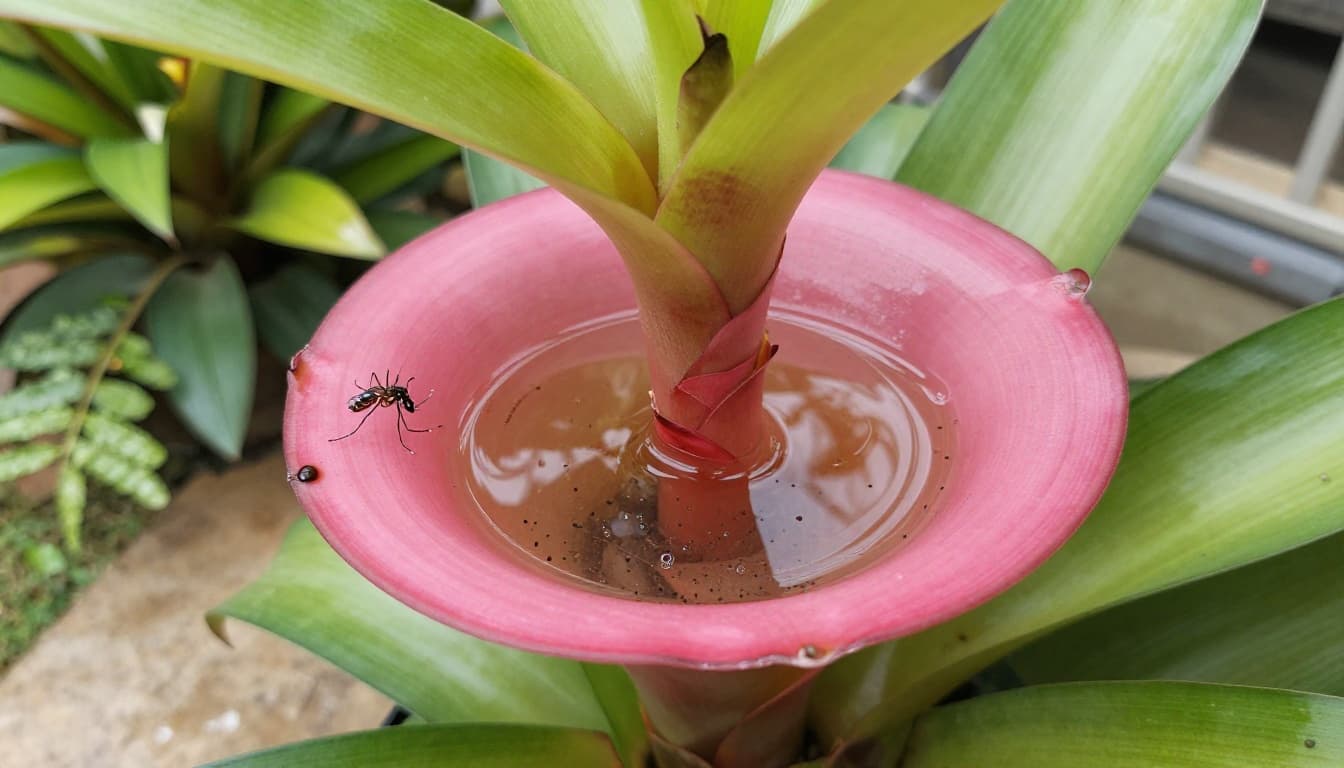
Pink varieties like this one fill Florida yards. Water in the cup breeds trouble.
University of Florida explains mosquitoes in bromeliads.
Other Small Water Traps in Your Landscape
Yards hide more spots. Flowerpot saucers puddle after watering. Pet bowls sit full on porches. Gutters clog and overflow.
Dump saucers daily. Elevate pots if possible. Change pet water twice a day. Clean gutters monthly, especially pre-rainy season.
Toy buckets, wheelbarrows, and tarps collect rain. Store them upside down or inside. Drill holes in old tires. No water means no larvae.
Patios and lanais need sweeps after storms. Deck furniture cushions trap moisture underneath. Flip and dry them.
For broader tips, check this Cape Coral homeowner's mosquito control guide.
Safe Ways to Control Breeding
Mosquito dunks work well. They release bacteria that kill larvae but spare birds and fish. Drop one in unavoidable water like ponds. Replace monthly.
Sprays target adults. Use fans on lanais; mosquitoes struggle in breeze. Plant citronella or marigolds as extras, though they help little alone.
EPA repellents protect skin. DEET or picaridin last hours. Reapply after swimming.
Lee County advice stresses source reduction first. Their integrated plans match home efforts.
See UF's IPM guide for mosquito reduction.
When Professionals Step In
DIY covers most yards. But heavy rains or canals nearby overwhelm. Pros inspect hard spots like dense bromeliads or lanai roofs.
They apply barrier treatments safely. Schedule monthly in peak season. Local firms know Cape Coral's quirks.
If bites persist, get a free inspection. Pair with protecting family from Cape Coral mosquito illnesses.
Asian tiger mosquitoes won't quit easy. But weekly checks on birdbaths and bromeliads slash their numbers. Your yard stays enjoyable.
Stay consistent. Fresh water and clean plants make the difference. Enjoy Cape Coral outdoors bite-free.
Schedule a Free Inspection: