Booklice (Psocids) in Cape Coral Bathrooms, Why They Look Like Dust, Where Moisture Hides, and How to Dry Them Out
If you've spotted tiny specks on your bathroom counter that seem to move , you're not imagining it. In Cape Coral, a booklice bathroom problem often shows up as "dust" that won't stay put.
The good news is booklice (also called psocids) don't bite people, don't damage your home's structure, and usually don't need heavy chemical treatment. The bad news is they're a clear sign your bathroom has hidden moisture somewhere. Fix the dampness, and the bugs fade fast.
Booklice in the bathroom: what you're seeing (and what you're not)
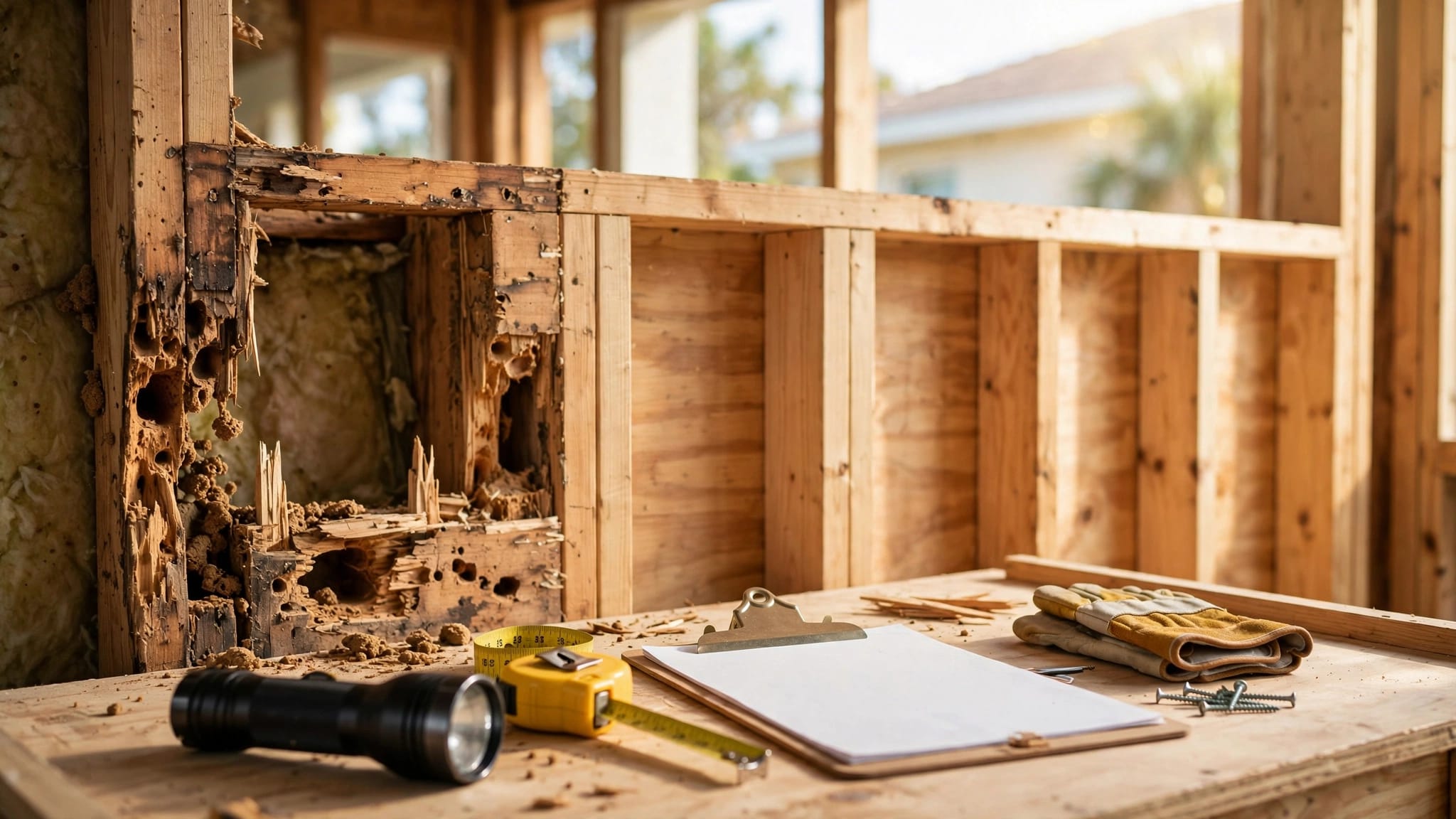
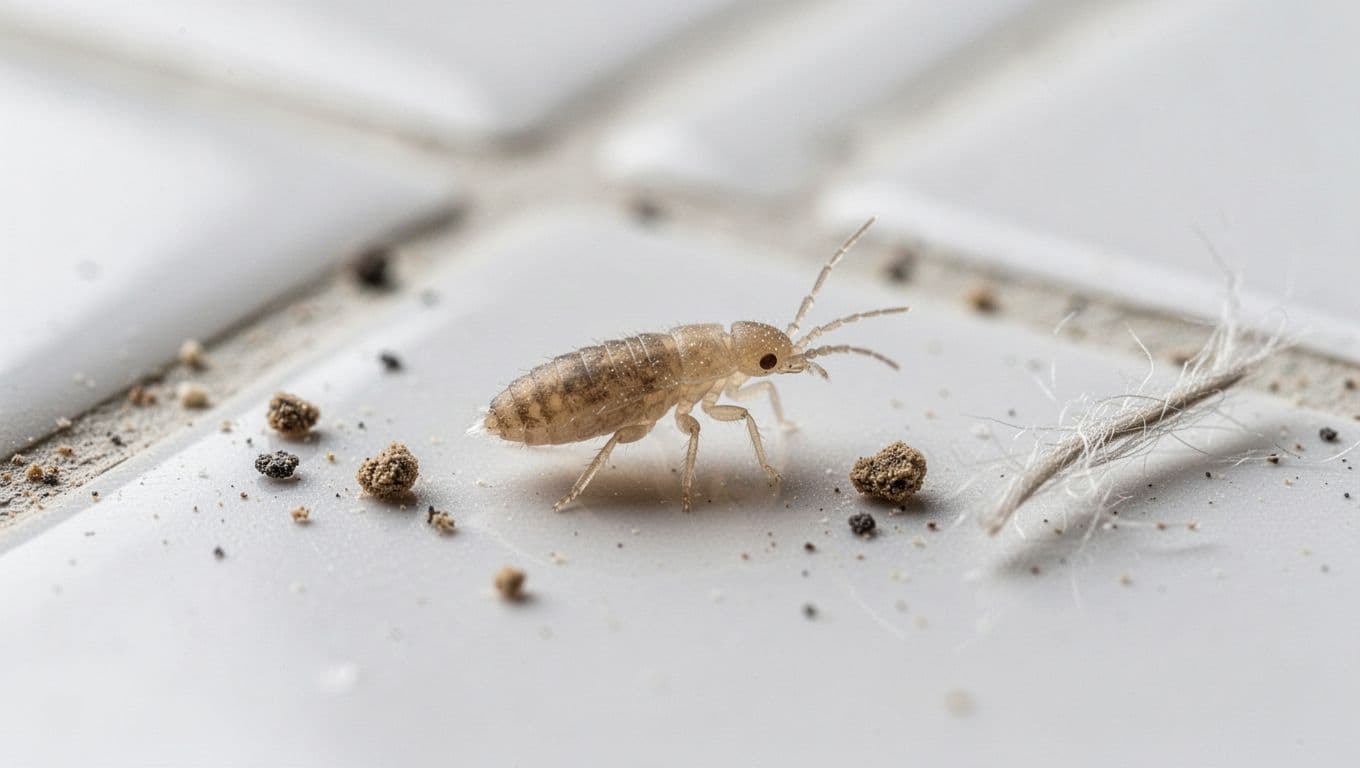 Close-up showing how a tiny psocid can blend in with dust and lint (created with AI).
Booklice are tiny, soft-bodied insects, often pale tan or gray, usually about 1 to 2 mm long. On a white vanity top, they can look like pepper flakes. On a darker floor, they can look like lint. Many homeowners only notice them because one "speck" starts walking.
A few quick clues point toward psocids:
- They move slowly and tend to scatter when you wipe the surface.
- You'll see them near humidity , not near crumbs, like ants.
- They cluster around paper, cardboard, or stored toiletries under sinks.
It also helps to know what booklice are not. They aren't fleas (no jumping). They aren't bed bugs (wrong shape, wrong behavior). They also aren't "drain flies" (no fuzzy wings, no hovering).
Most importantly, booklice usually mean there's a moisture issue feeding mold or mildew in a hidden spot. Psocids graze on micro-mold, fungal growth, and starchy residues (think wallpaper paste, cardboard glue, and dust that's been damp long enough to grow more life).
If you can't get the humidity down, sprays won't solve a booklice bathroom issue for long. Moisture control comes first.
Why Cape Coral bathrooms attract psocids (especially in rainy season)
Cape Coral's weather sets the stage. Outdoor humidity stays high much of the year, and rainy season makes it worse. Even when your bathroom looks dry, moisture can linger in air pockets and building materials.
Here's why psocids do so well in Southwest Florida bathrooms:
Warm, damp air fuels the food source. When relative humidity (RH) climbs, mold can start growing on surfaces you can't see, like the underside of a vanity base or behind baseboards. Booklice follow that growth.
Air conditioning can add to the problem. AC helps, but it can also create micro-condensation when humid air hits cooler surfaces. For example, a cold toilet tank can "sweat" and dampen the wall and floor behind it. A chilled vanity supply line can drip inside the cabinet. Over time, those damp spots become reliable watering holes.
Ventilation gaps matter too. If the bathroom exhaust fan is weak, dirty, or rarely used, shower steam settles into grout lines, drywall seams, and cabinet corners. Then the bathroom dries slowly, sometimes not at all.
A simple target helps: aim to keep bathrooms around 45 to 50% RH , and try not to let them sit above 55 to 60% for long. A basic hygrometer (humidity meter) makes the problem visible in minutes.
Where moisture hides in bathrooms (the spots booklice love)
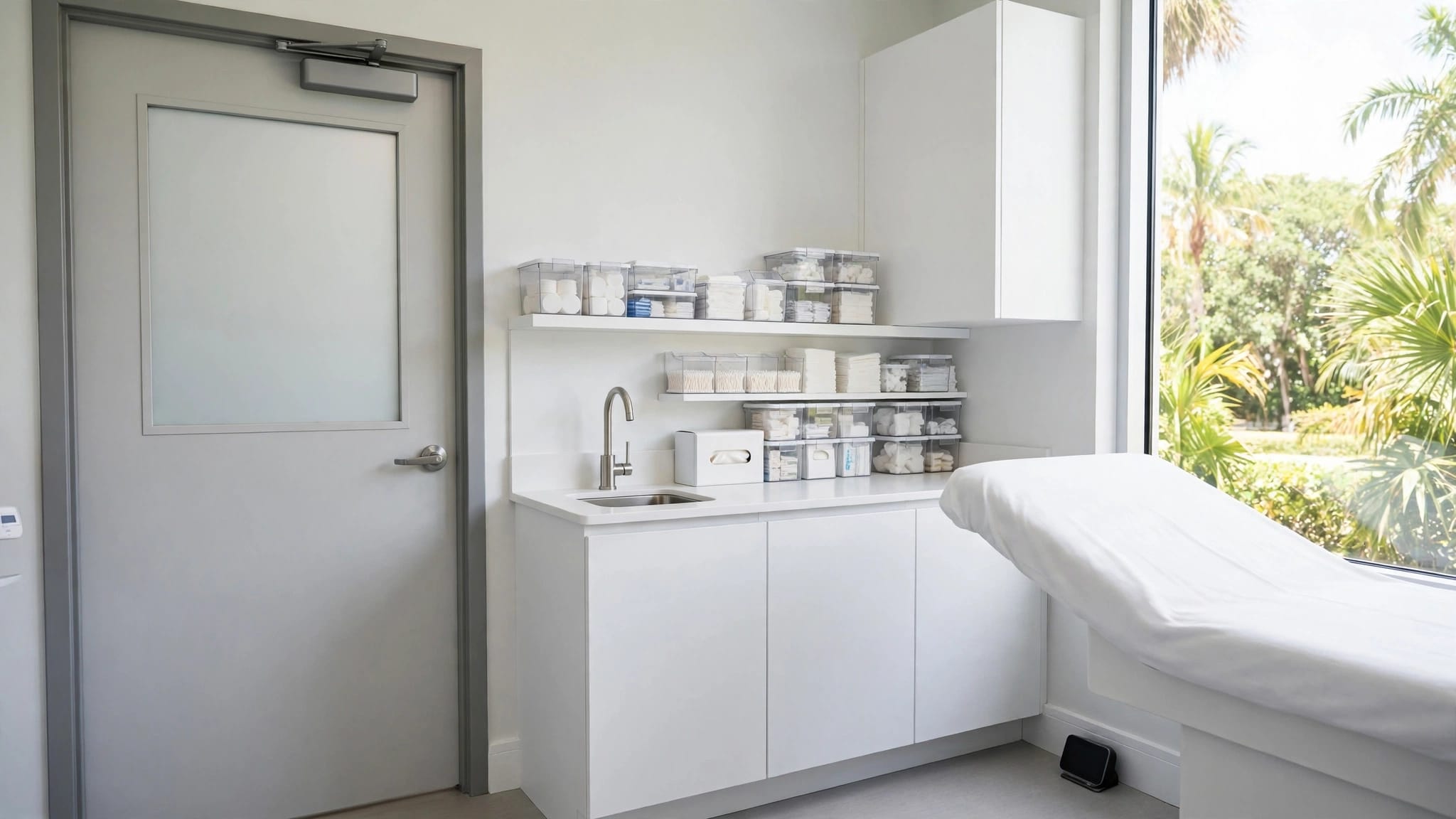
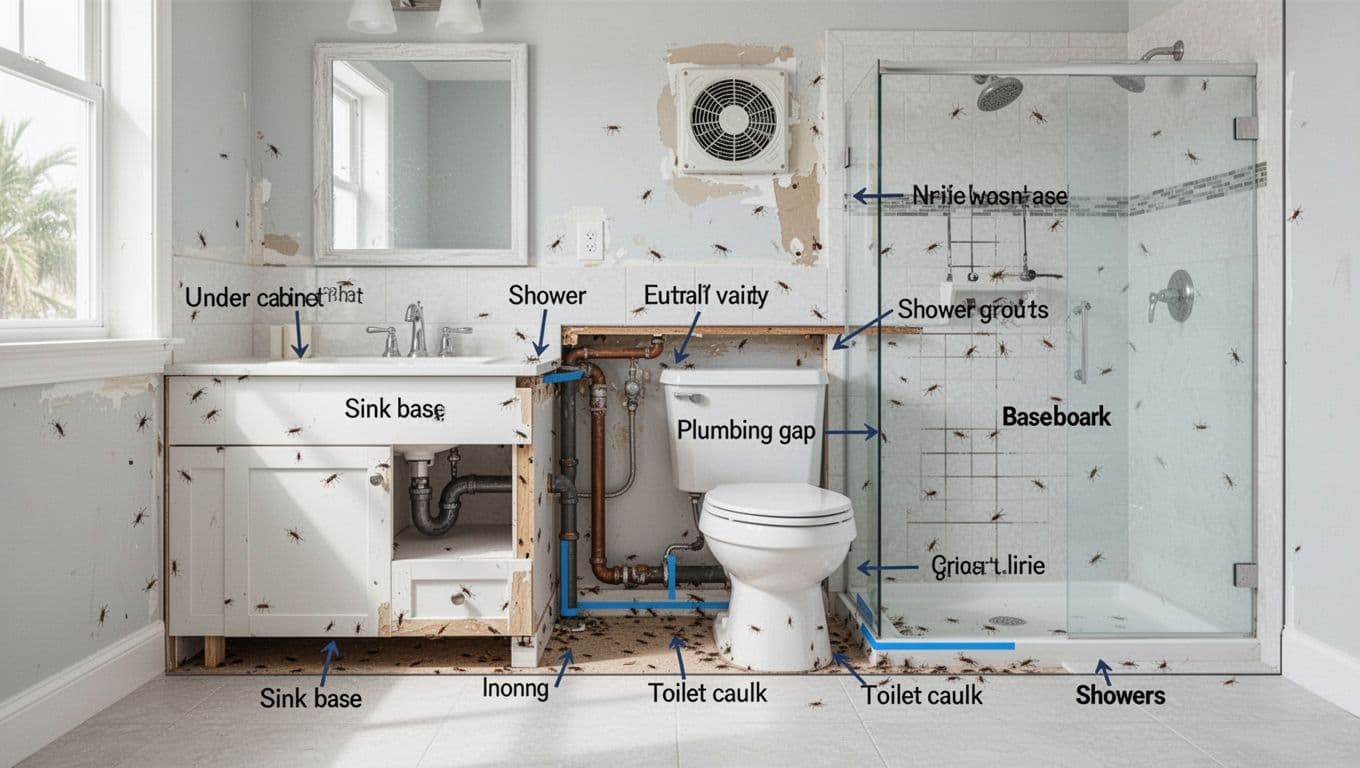 Common moisture pockets in a typical bathroom where psocids often build up (created with AI).
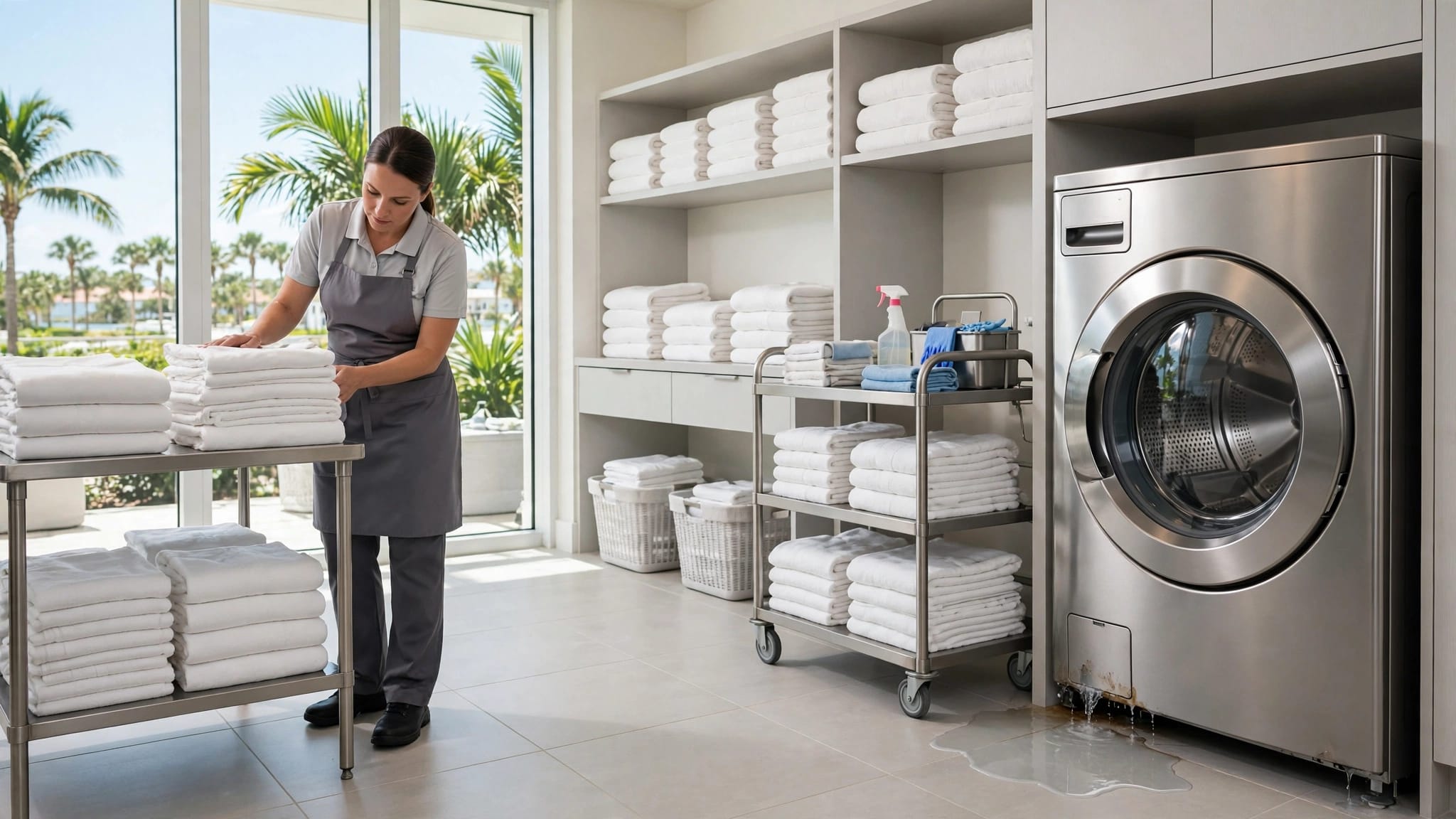
Booklice don't need standing water. They need dampness that hangs around , plus a little dust, paper, or residue to feed on. In Cape Coral homes, the problem is often tucked into places that stay humid even when you run the AC.
Start your inspection with these common hideouts:
- Under-sink cabinet base : Swollen particleboard, damp cleaning bottles, and slow leaks are a perfect mix.
- Plumbing penetrations : Gaps around pipes let humid air move into wall cavities.
- Behind the toilet : Tank sweat and tiny supply line drips wet the floor edge.
- Baseboards and caulk lines : Water wicks under trim after mopping or shower splash-out.
- Vanity backsplash seam : A hairline opening can hold moisture for days.
- Exhaust fan housing : Dust inside the fan can hold humidity and reduce airflow.
- Shower grout and corners : Damp grout plus soap film feeds light fungal growth.
Pay attention to smell and texture. A musty odor, peeling paint, soft cabinet flooring, or caulk that's pulling away can point to a long-term damp zone.
One caution: don't rush to seal everything right away. Sealing wet materials can trap moisture where you can't dry it, and that often makes the psocid problem stick around longer.
How to dry them out: a do-this-today and do-this-week plan
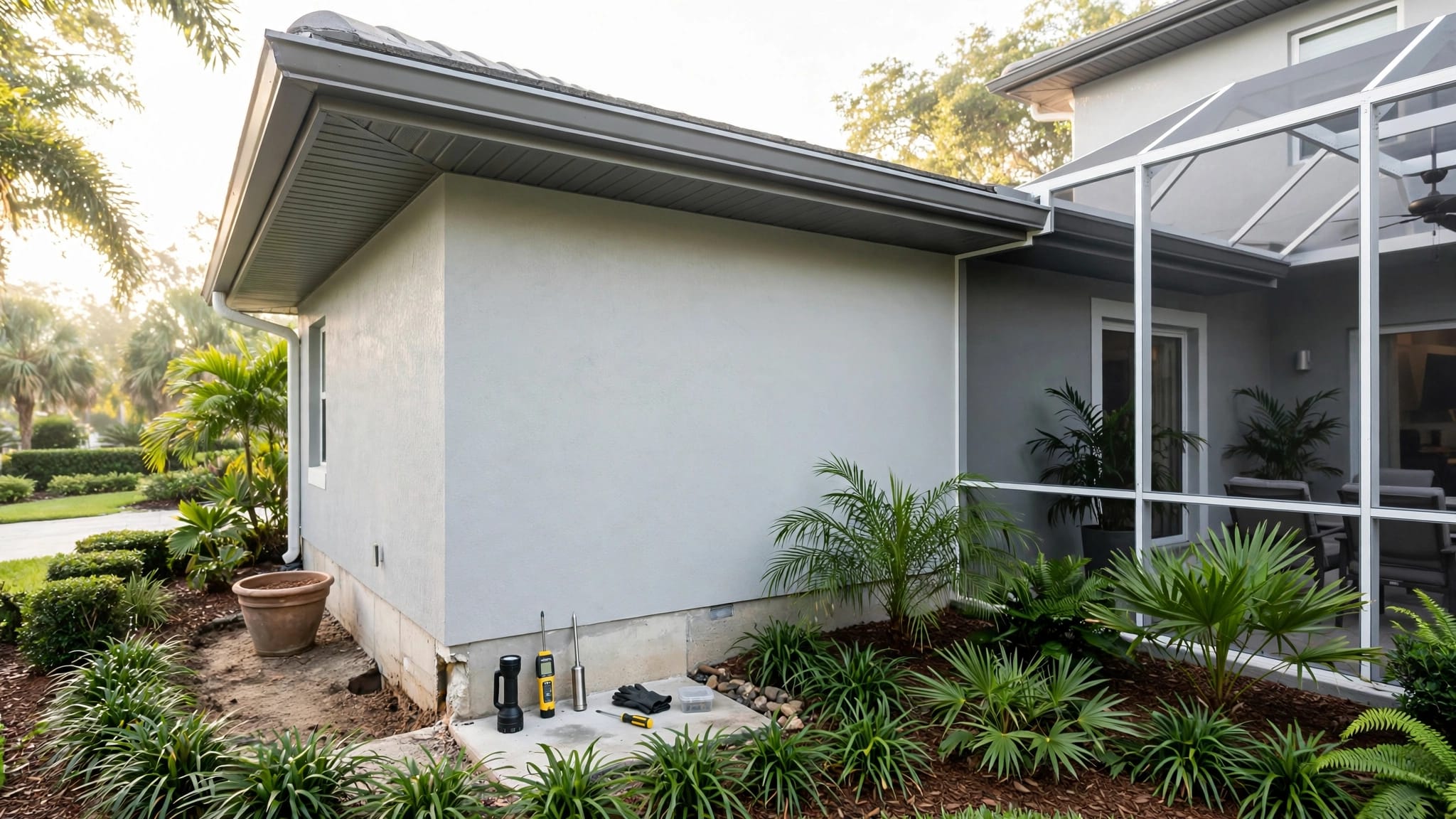
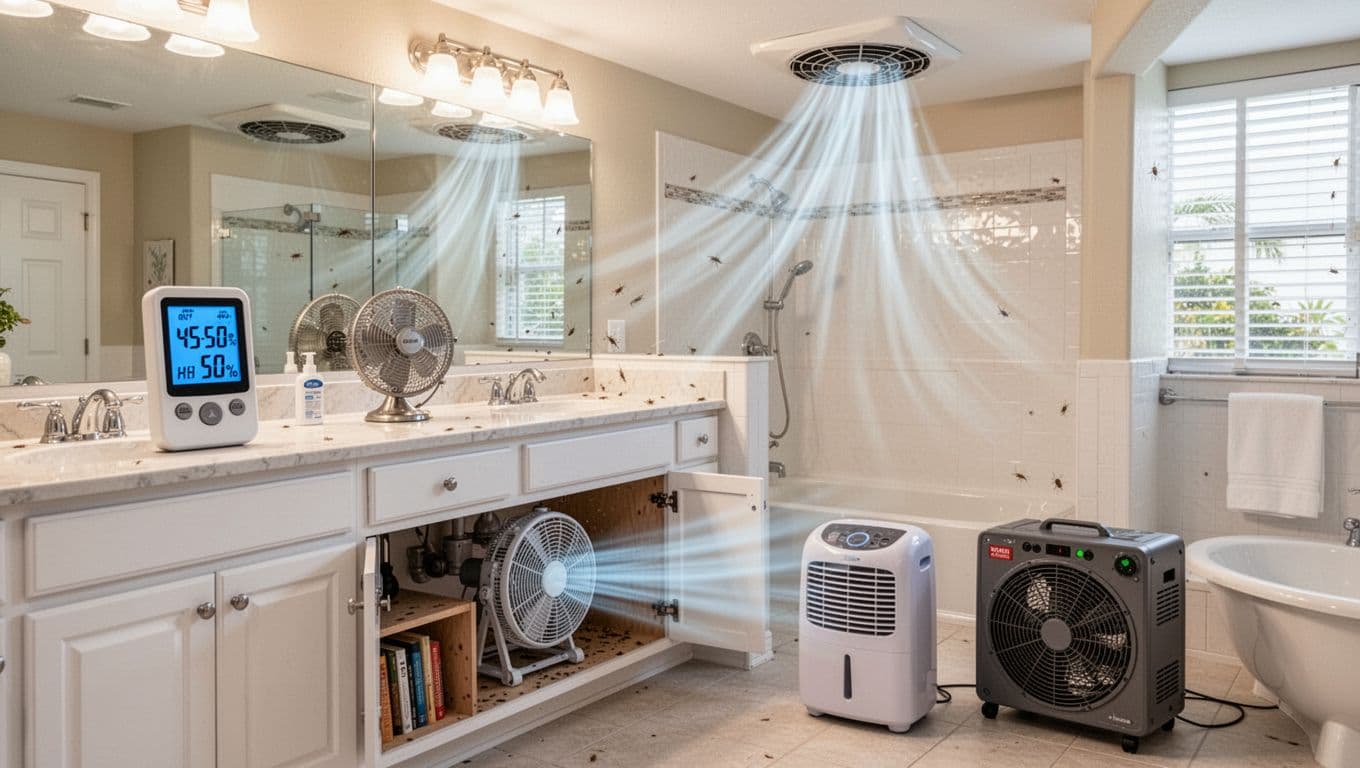 Example of a simple bathroom "dry-out" setup using airflow and humidity tracking (created with AI).
Drying beats spraying in almost every booklice bathroom case. Think of it like pulling weeds. If you only trim the top, it grows back. Remove the conditions, and the cycle breaks.
Do this today (fast wins)
- Vacuum them up using a crevice tool (especially along baseboards and under the vanity lip). Empty the vacuum outside.
- Damp-wipe surfaces with mild soap and water, then dry with a towel. Skip heavy soaking.
- Open the vanity cabinet and pull everything out so air can circulate.
- Run the exhaust fan during showers and for 20 to 30 minutes after. If you don't have a timer switch, set one on your phone.
- Place a hygrometer on the counter and track RH for a day. Your goal is about 45 to 50%.
- Add airflow with a small fan aimed into the open cabinet for a few hours.
Avoid overusing bleach in a small bathroom. Never mix bleach with other cleaners, and don't trap fumes in a closed room.
Do this this week (fix what feeds them)
Use the next few days to remove the moisture source, not just the bugs.
- Check for slow leaks : Touch the shutoff valves, supply lines, and P-trap for moisture. Look for water stains under the cabinet floor.
- Reduce storage that holds humidity : Move cardboard, extra toilet paper, and paper-wrapped products out from under sinks.
- Declutter tight corners : Fewer bottles means more airflow and faster drying.
- Clean fan covers and vents : A dusty fan moves less air. If the fan is loud but weak, it may be underpowered or failing.
- Consider a dehumidifier : In humid Florida homes, a small "mini" unit often can't keep up. Many homeowners do better with a standard portable unit sized for a bedroom or living area, then run it near the bathroom when needed.
- Seal gaps after drying : Once the cabinet and wall area are dry, seal plumbing gaps with the right material so humid air doesn't drift into wall voids.
If you still want to use an insecticide, keep expectations realistic. Sprays can knock down what you see, but they don't stop new booklice from emerging if RH stays high and mold remains available.
When to call for help
Call a professional if you keep seeing booklice after two weeks of drying efforts, or if you notice soft drywall, recurring musty odor, or cabinet wood that's swelling. Those clues can mean a leak inside a wall, under tile, or around a shower pan.
Shield Pest Control works with homeowners across Cape Coral and Southwest Florida to find the moisture driver, not just treat the symptoms. A targeted plan usually combines inspection, moisture guidance, and smart treatment where it actually helps.
Conclusion
Booklice in a Cape Coral bathroom can feel creepy because they look like dust that learned to walk. Still, the fix is usually straightforward: dry the space out , remove damp storage, and improve airflow so humidity doesn't linger. When you control moisture first, booklice fade because their food source disappears. If you want a second set of eyes on hidden leaks or stubborn hotspots, scheduling an inspection can save a lot of guessing.
Schedule a Free Inspection: