Can Pests Enter Florida Homes Through Bathroom Exhaust Fans?
Yes, pests can enter through a bathroom exhaust fan when its exterior cover, damper, duct, or wall seal is damaged or poorly fitted. In Florida, small insects are more likely to use a compromised fan opening than rodents, which usually enter through larger gaps elsewhere.
A fan should vent outdoors and its damper should close when the fan is off. Here's what to inspect, which pests are most plausible, and how to keep the vent working without creating a new opening.
How pests can get into a bathroom exhaust fan
Check the whole vent path
A bathroom fan connects the indoor grille to a duct that exits through an exterior wall or the roof. Pests may gain access at the outside termination, through a damaged cover or flap, or through a gap between the vent assembly and the building.
From there, an insect may enter the duct and reach the room through the fan housing. A loose connection or duct that empties into the attic creates a separate concern: pests can move through the attic or wall cavity, even if the bathroom fan itself is intact.
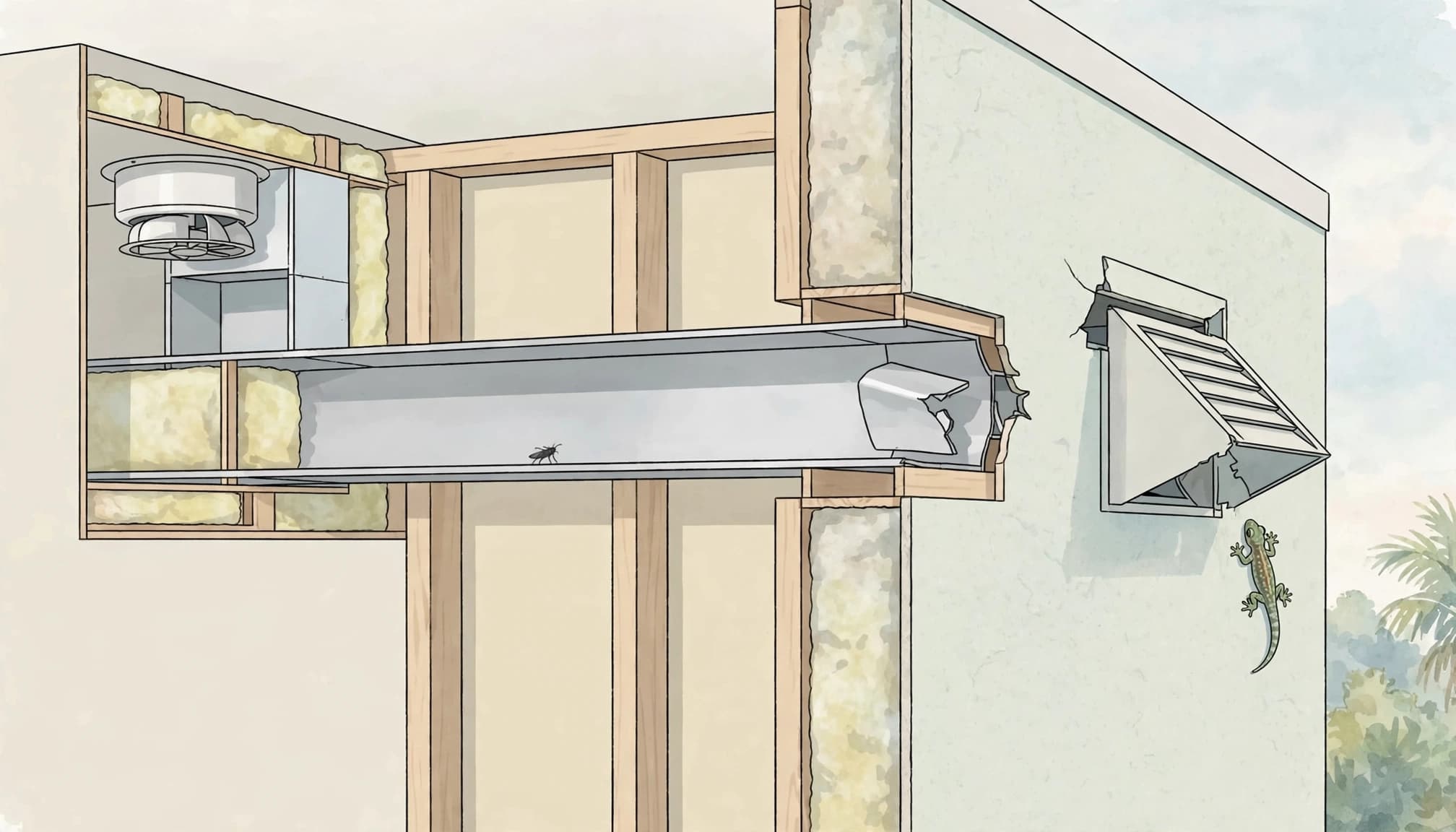
A working damper is a useful barrier
The exterior damper should open when the fan runs and close when it stops. If it sticks open, breaks, or no longer sits flush, the outlet is less protected. Gaps around the vent hood can also leave a route into the wall.
The fan grille is not a substitute for an intact exterior cover. It may catch larger debris, but it won't reliably seal the duct against small insects.
Which Florida pests are most likely?
Small insects are the more plausible visitors through a bathroom exhaust outlet. Roaches, ants, and spiders can take advantage of openings, especially if the vent cover or its seal has failed. American cockroaches are common around Cape Coral homes, but seeing one indoors doesn't prove it came through a fan. They can also enter through drains and other exterior gaps.
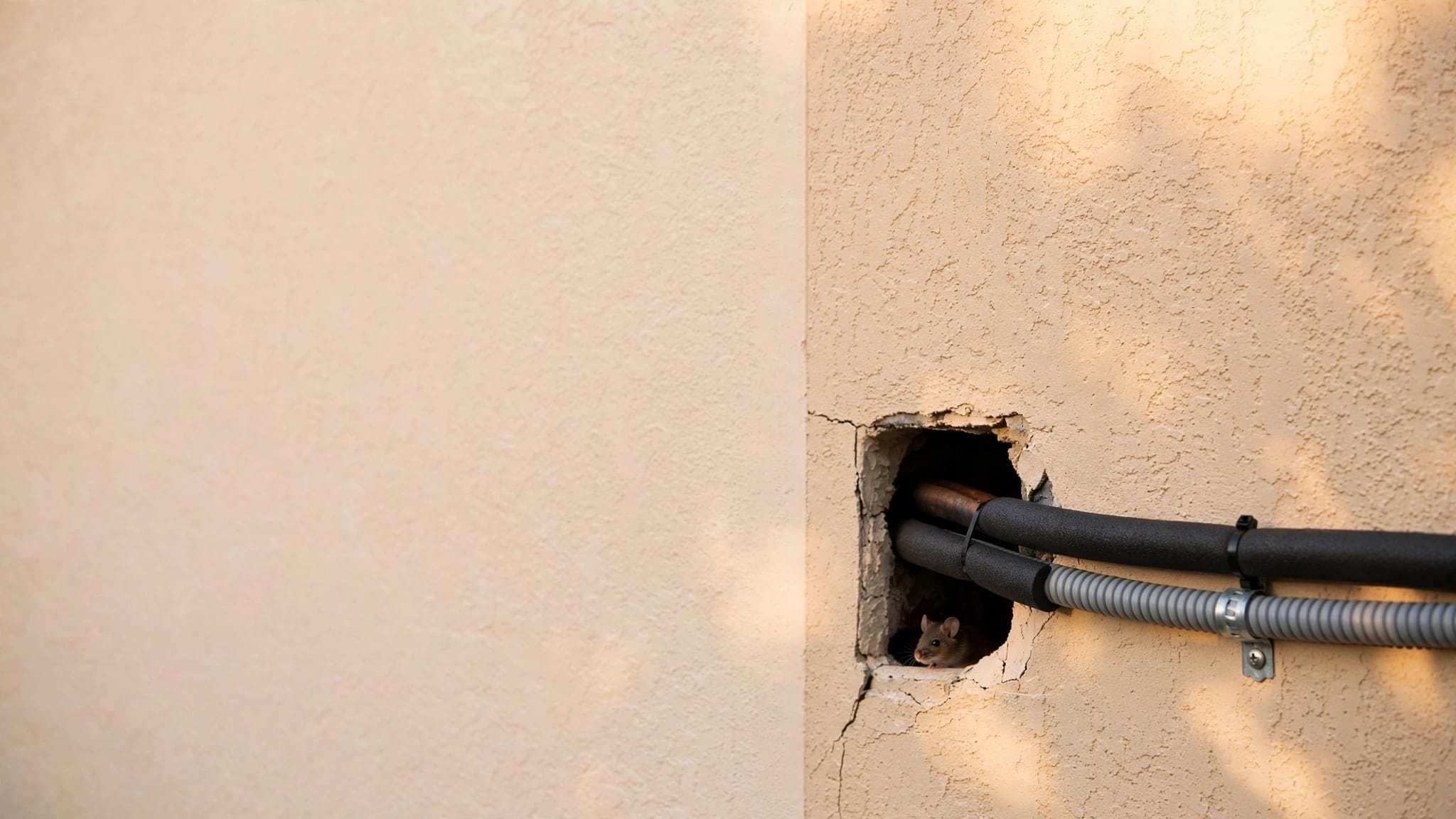
Small lizards may reach openings around the home, though a bathroom fan duct isn't the first route to assume. Rodents are less likely to travel through a narrow, intact fan assembly. If the exterior opening is damaged or unusually large, a rodent may access the wall or attic area, but roofline openings, soffits, and utility gaps deserve attention too.
What conditions make access possible?
The main risk is a physical defect: a missing or cracked hood, a damper that remains open, a loose duct connection, or an unsealed gap around the outside trim. Wind, heavy rain, humidity, and salt air can wear or loosen exterior components over time in Southwest Florida.
Moisture can also make a bathroom more attractive to pests. A slow leak under a vanity, damp materials, or poor ventilation can support insects and create conditions that keep activity going. A pest near the fan may have come from a different opening, so look for clues beyond the vent before deciding where it entered.
How to inspect and maintain the fan
Look inside and outside
Start with the bathroom grille. Check for dust buildup, damage, or signs of insects, and listen for unusual rattling when the fan runs. Don't remove electrical covers or reach into the fan motor. If the fan needs internal repair, use a qualified professional.
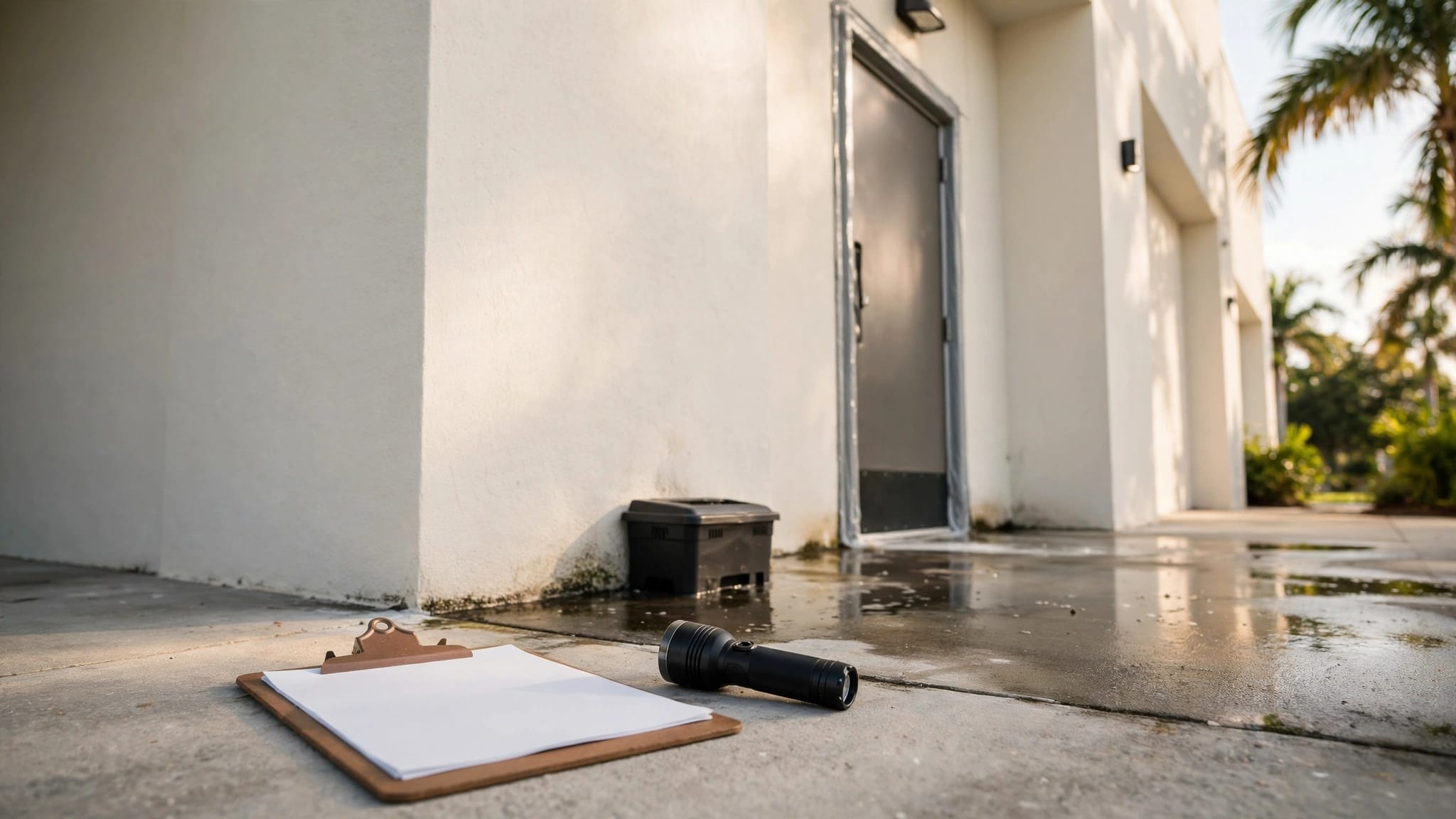
From the ground, inspect the exterior termination in daylight. Look for a cracked or loose cover, a flap that hangs open, and gaps where the vent meets siding or trim. If the outlet is on a roof or another unsafe spot, leave the inspection to a professional. Also confirm that the duct discharges outdoors rather than into the attic.
Repair without blocking airflow
Replace a damaged exterior cover with a compatible model, and seal gaps around the vent assembly while keeping the exhaust opening clear. The damper must move freely. Avoid improvised screens that can trap lint or restrict ventilation; use only a cover or screening designed for the fan and its outlet.
Clean the indoor grille so dust doesn't restrict airflow. Run the fan during showers and for a while afterward, and repair leaks that leave the room or nearby wall damp. In Florida's humidity, a blocked or poorly vented system can hold moisture where you don't want it.
Don't assume the fan is the only entry point
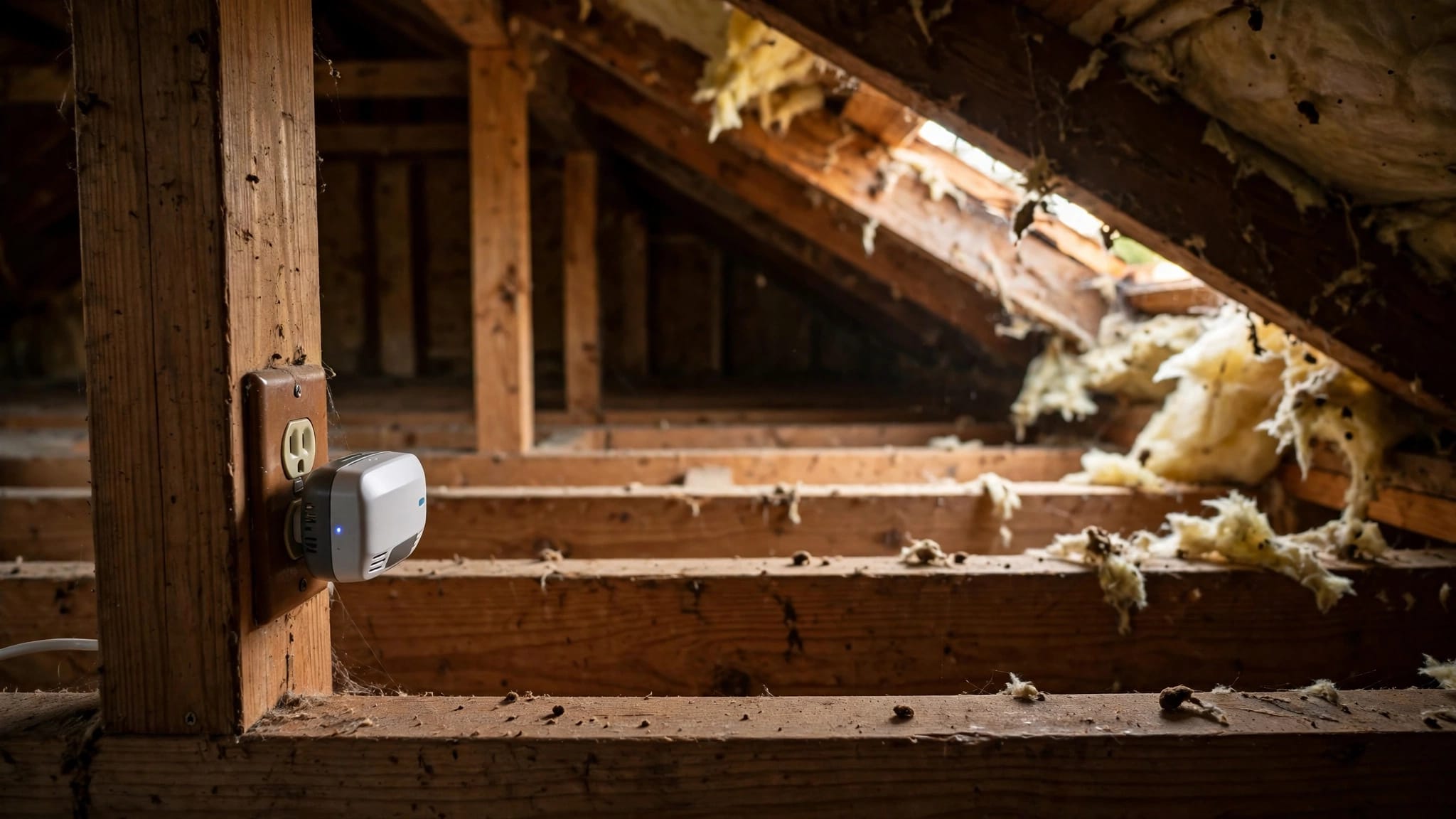
If pests keep appearing in the bathroom, inspect nearby plumbing penetrations, window and door gaps, roofline vents, soffits, and attic access. Rodents may enter at the roof or garage and travel through wall cavities before signs show up indoors. Droppings, gnaw marks, scratching in the attic, or damaged soffits can point to a wider issue.
For a broader look at entry points and exterior conditions, see our guide to preparing your Florida home for exterior pest control. A pest inspection can help distinguish fan damage from another route and identify signs of activity before repairs conceal them. If you find damaged wiring, extensive duct damage, or an animal in the attic, don't reach into the area yourself.
Keep the vent protected and functional
Bathroom exhaust fan pests are most likely to become a problem when a cover, damper, duct, or seal has failed. Small insects are more plausible than rodents, but the fan shouldn't be treated as the only possible route.
Keep the exterior cover intact, make sure the damper closes, and preserve clear airflow. Pair that maintenance with a check of nearby moisture sources and other openings, especially when pest activity continues after the fan has been repaired.
Schedule a Free Inspection: