Wildlife-Proof Trash Storage for Southwest Florida Businesses
One unsecured dumpster can become a nightly food source for raccoons, opossums, rats, flies, and feral animals. Wildlife-proof trash storage keeps that activity from turning into odors, property damage, pest complaints, and an ongoing sanitation problem.
For Southwest Florida businesses, heat, rain, and storm season raise the pressure around every waste area. A closed lid and a clean pad do more work than most managers realize.
Why commercial waste areas attract pests so quickly
Restaurants aren't the only businesses with attractive trash. Office break rooms, apartment communities, retail centers, veterinary clinics, marinas, and construction sites all create food, moisture, or shelter near the container.
Raccoons can lift loose lids and pull bags apart. Opossums follow easy food sources, while rats use clutter, cardboard, and gaps around enclosures as cover. Flies, ants, and cockroaches often find food residue before anyone notices the smell.
Start with a short waste-area audit
Walk the area after business hours or before morning pickup. Look for tipped containers, trash scattered outside the enclosure, torn bags, gnaw marks, droppings, grease stains, and fly activity around drains.
Also check where food waste sits before collection day. A full dumpster with an open lid sends a stronger signal to wildlife than a properly contained one.
Put one person in charge of each shift
Waste handling often fails during handoffs. The kitchen closes, a vendor leaves cardboard outside, or a maintenance team assumes someone else latched the enclosure gate.
Give staff a simple routine: close the lid after every deposit, pick up anything that misses the container, and report damaged hardware the same day. That routine makes waste areas less rewarding for animals.
Build wildlife-proof trash storage that animals can't work open
A durable dumpster is only part of the setup. The lid, enclosure, pavement, surrounding vegetation, and pickup access all matter.
Choose containers with lids that fully close and hinges that still work under regular use. If raccoons are lifting lids, ask the waste hauler about compatible lid restraints, locking options, or a more secure container. Don't add chains or modifications that prevent the driver from safely servicing the dumpster.
Secure the enclosure as well as the container
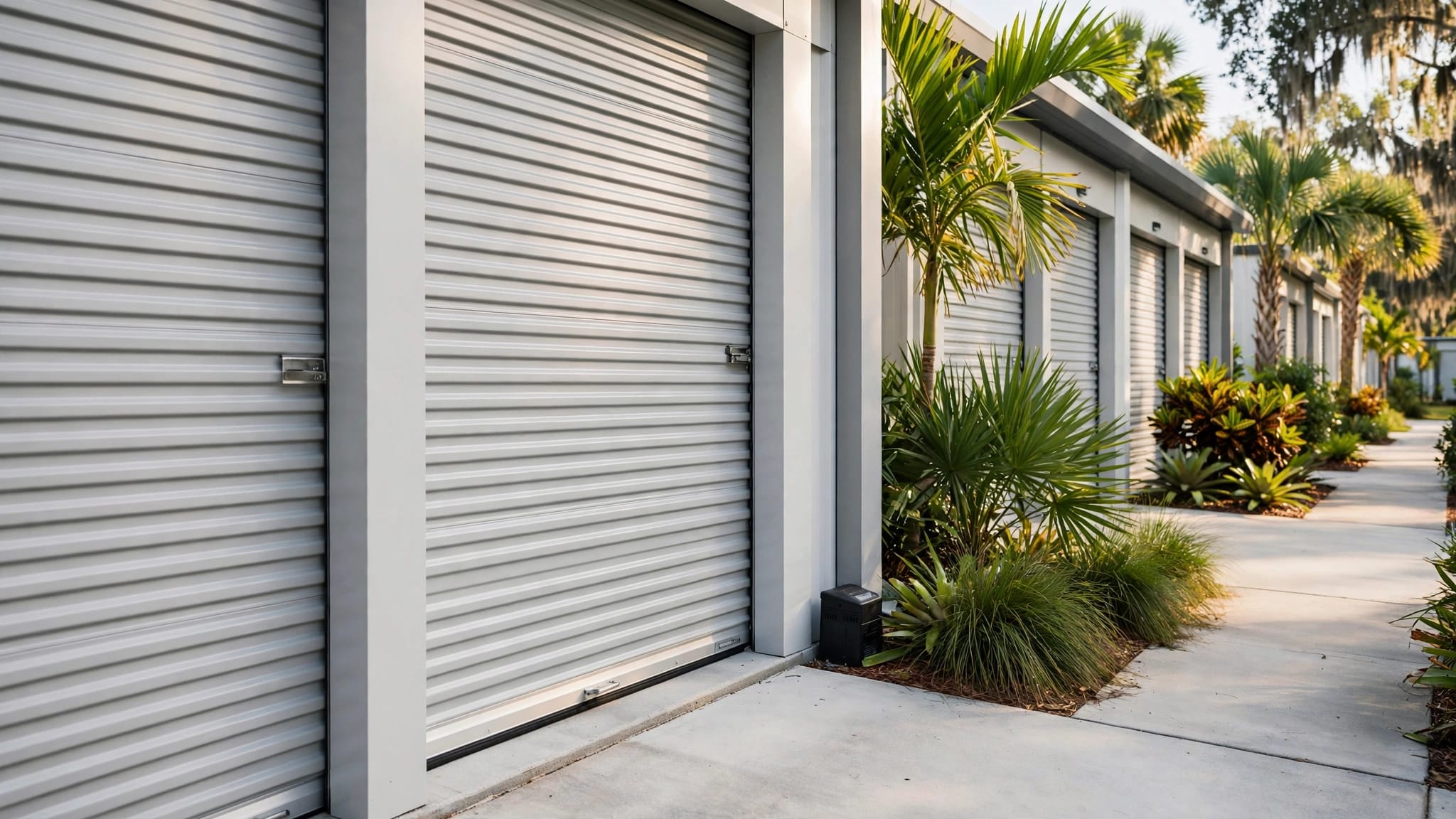
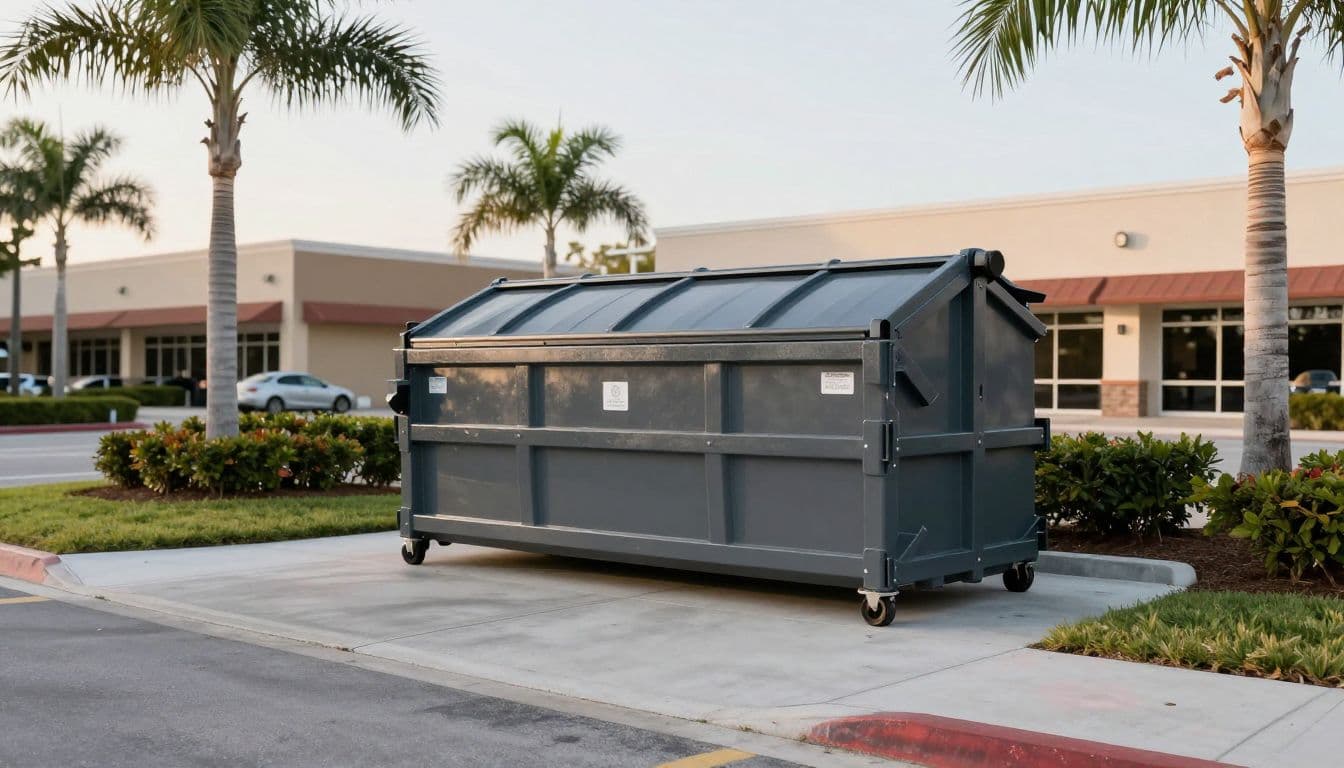
Gates should close and latch without dragging on the ground. A broken gate gives animals a protected place to feed, rest, and hide, even if the dumpster lid is closed.
Keep the enclosure clear enough for employees and haulers to move safely. Piled furniture, pallets, old appliances, and loose cardboard create cover for rodents and can block access during pickup.
Check local and hauler requirements before upgrades
Rules can vary by city, county, lease agreement, property type, and waste hauler. Cape Coral's solid waste guidance says dumpster lids should remain closed to reduce windblown litter, odors, and varmints. The city also reviews dumpster enclosure details for some new commercial construction projects.
Sanibel publishes animal-proof lid guidance for household garbage, while commercial container standards may differ. Before installing a corral, lock, fence, or lid restraint, confirm what your landlord, municipality, fire requirements, and hauler allow.
A lid that stays closed only when nobody uses the dumpster is not a workable control. Staff need hardware they can operate correctly every day.
Control food waste before odor builds up
Heat and summer rain can turn a small spill into a strong odor source within hours. Bag food scraps tightly, use intact liners, and move full interior trash bags to the dumpster close to collection time.
Food-service businesses should avoid storing leaking bags beside the back door or on the dumpster pad. Break down boxes, but keep food-soiled cardboard inside the container. Greasy pizza boxes, produce cartons, and drink trays can attract insects and rodents even when they seem empty.
Clean spills without pushing them into drains
First remove loose food, grease, and trash with a broom, scoop, or absorbent material. Then wash the surface as needed and direct wastewater according to your property's drainage practices.
A hose can spread residue into corners, under gates, and toward drains if staff rush the job. Clean the underside of lids, handles, and container rims too, because those spots often hold the odor that brings flies back.
For kitchens, regular restaurant cockroach prevention should include the exterior waste area, not only prep stations and storage rooms.
Match pickup frequency to the real waste volume
Overflowing trash is a service issue, not a staff failure to solve by stacking bags outside. Ask the hauler about a larger container, more frequent pickup, or separate service for cardboard and recycling if trash regularly exceeds capacity.
Keep a simple record of overflow dates for a month. That record helps property managers make a clear case for changing service instead of guessing.
Keep the dumpster pad dry, visible, and easy to inspect
Rodents prefer protected travel routes. Dense shrubs against an enclosure, stored materials along a wall, and debris beneath loading docks give them cover near food.
Trim plants back from gate lines and enclosure walls. Remove stacked pallets and unused equipment from the area. Repair gaps at the base of gates and panels where practical, while keeping required drainage and hauler access intact.
Inspect hardware and pavement every week
A five-minute weekly check can catch the problems that lead to repeat activity:
- Test both lids, hinges, wheels, gate latches, and any approved restraints.
- Remove loose trash, wet cardboard, standing water, and vegetation pressing against the enclosure.
- Note cracks, gaps, damaged panels, or stains that need cleaning or repair.
- Look for fresh droppings, gnawing, tracks, nesting material, insects, and unusual odor.
If rats are already using the pad or nearby seawall area, sanitation must pair with exclusion and targeted control. These steps support rat prevention around dumpsters instead of leaving a dependable food source behind.
Keep employees away from wildlife
Don't corner, feed, trap, or touch raccoons, opossums, feral cats, or other animals near the container. Bites and scratches can expose staff to injury and disease, while direct handling can create added risk for the animal.
Document the time, location, and behavior of repeat visitors. Then contact property management, local animal control, or a licensed wildlife professional when removal is needed.
Prepare waste containers for severe weather
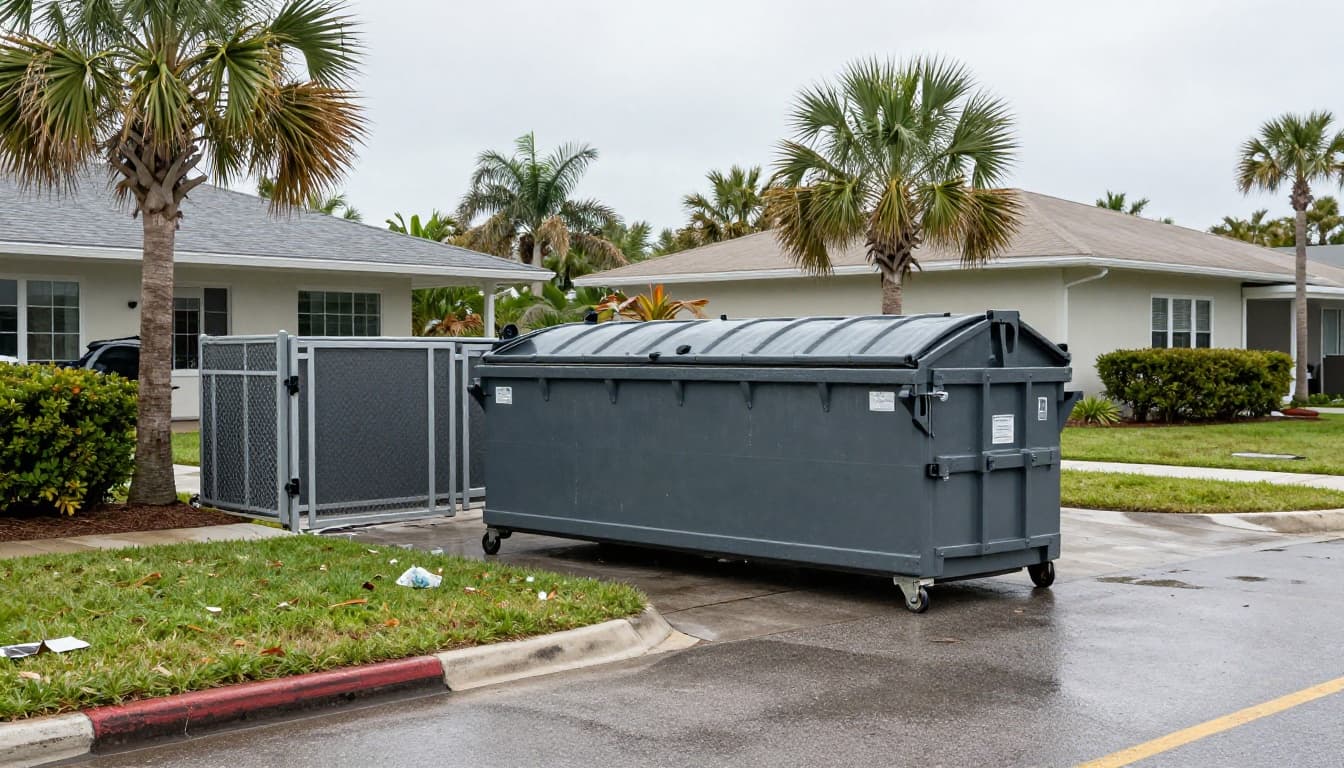
A storm-ready waste area starts before a tropical system is near the coast. Loose bags, overflowing dumpsters, open gates, and unsecured corrals can spread debris across a parking lot or into neighboring property.
Check your local emergency notices and follow instructions from the waste hauler. Collection schedules can change before and after severe weather, so don't assume the normal pickup day will hold.
Use a pre-storm waste-area checklist
Before conditions worsen, have the site supervisor or maintenance team:
- Arrange an early pickup if the container is near capacity and service is available.
- Move loose cardboard, bags, pallets, and debris inside or to an approved secured area.
- Close lids and gates, then inspect hinges, latches, and enclosure panels for damage.
- Clear leaves and trash from nearby drains so water can leave the pad.
- Photograph the area after it is cleaned and secured for property records.
Avoid overfilling a dumpster before a storm. A packed container may prevent the lid from closing, which invites wildlife and creates windblown litter.
Reopen the area carefully after the storm
Inspect the enclosure before staff return to normal disposal. Look for damaged panels, shifted containers, standing water, fallen branches, and animal activity around the perimeter.
Wear appropriate protective gear for cleanup, and don't reach into a container where an animal may be hiding. Report structural damage to the property manager and hauler before attempting makeshift repairs.
Know when a pest issue needs professional help
A clean, secured dumpster should reduce activity over time. However, frequent sightings, daytime rodent activity, recurring flies, chewed bags, and droppings near buildings can mean pests have established shelter beyond the waste area.
Flies may breed in residue around pads, compactors, drains, and pet waste stations. When odors and fly pressure return after routine cleaning, fly control around waste areas can identify the source and treat the hotspot.
Treat the property, not only the dumpster
Rats can travel from canals, seawalls, utility routes, storage areas, and adjacent properties. A technician should inspect likely routes, hiding places, exterior entry points, and the sanitation conditions keeping rodents nearby.
For businesses in Cape Coral, Fort Myers, Punta Gorda, Bonita Springs, Sanibel, and nearby communities, commercial pest management services can pair monitoring and exclusion with practical sanitation corrections.
Avoid careless rodent-control shortcuts
Unsecured rodenticides can put pets and wildlife at risk. If baiting is part of a control plan, it should be handled by trained professionals using secured stations and a documented placement strategy.
Florida Fish and Wildlife Conservation Commission guidance focuses on stopping wildlife from reaching trash in the first place. That approach supports long-term control because it removes the food reward that keeps animals returning.
A cleaner waste area keeps pests moving on
Wildlife-proof trash storage is a daily property-management habit, not a one-time enclosure project. Closed lids, contained food waste, clean pads, working gates, and storm preparation remove the conditions that attract nuisance animals.
A dumpster area should never become the easiest meal on the property. Keep it clean, closed, and inspected, and pests have fewer reasons to stay.
Schedule a Free Inspection: