Pollinator-Safe Pest Control for Florida Flower Beds
Florida flower beds can host bees at breakfast and pests by lunch. That overlap makes pollinator-safe pest control a regular maintenance choice, not a once-a-season rule.
In Cape Coral, Fort Myers, Punta Gorda, Bonita Springs, and Sanibel, heat, humidity, frequent irrigation, and long flowering cycles keep both pests and pollinators active. The safest results come from careful inspection, targeted action, and restraint around open blooms.
Florida's Warm Growing Season Changes the Pest Plan
Florida's climate gives flowering plants a long season, but it also gives pest populations more time to build. A pentas bed may bloom for months, while aphids, whiteflies, scale insects, caterpillars, and ants remain nearby.
Because blooms are often present year-round, waiting for every flower to disappear isn't practical. Instead, protect active foraging periods and avoid treating the parts of a plant that pollinators visit.
Flowers rarely stay empty for long
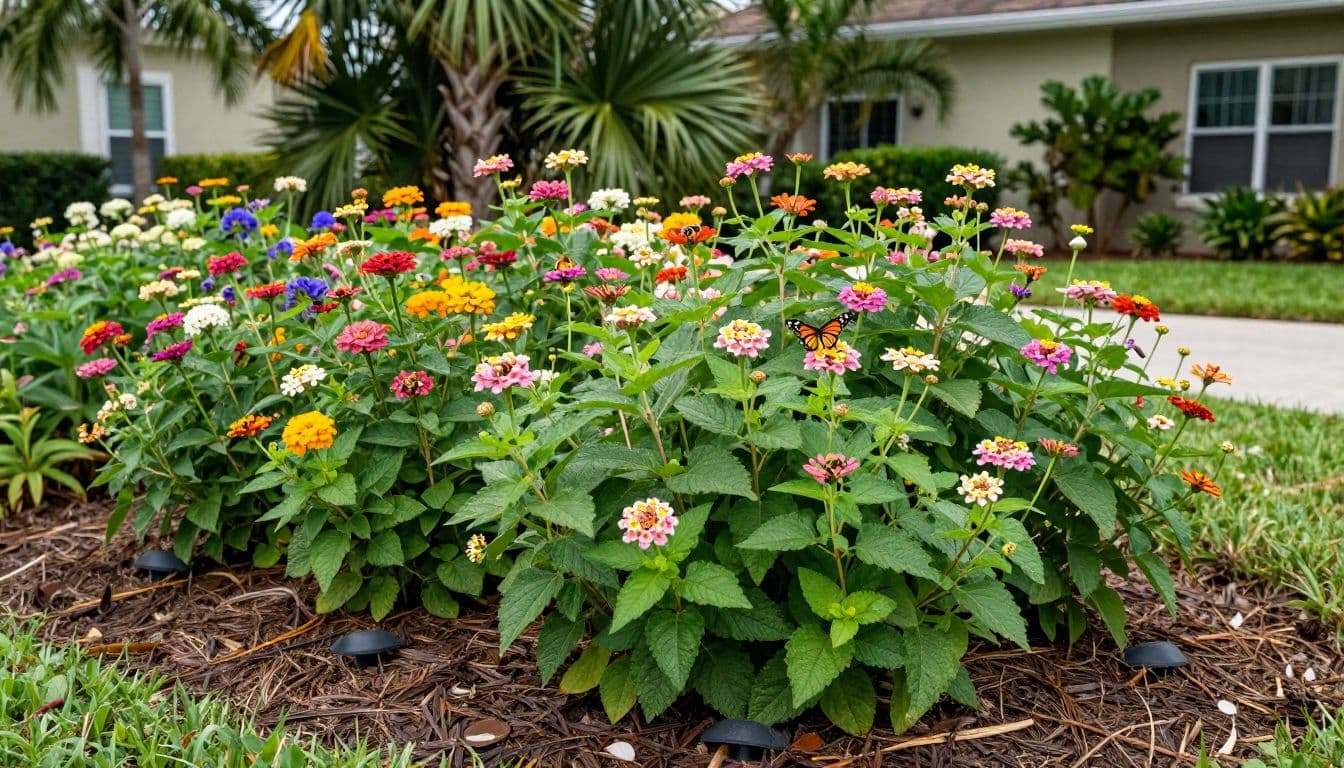
Honey bees, native bees, butterflies, hummingbirds, and other pollinators use flowering beds throughout much of the year. Florida-friendly plants such as porterweed, dune sunflower, bulbine, plumbago, bee balm, and blanketflower can draw visitors during long warm stretches.
A flower bed with a few chewed leaves isn't automatically a treatment problem. Caterpillars may be feeding on a butterfly host plant, while lady beetles and parasitic wasps may be reducing aphid numbers nearby.
Heat, humidity, and irrigation add pressure
Constantly damp foliage can encourage plant disease, while overwatered soil can weaken roots and invite pest trouble. Afternoon rainstorms also create a poor window for most outdoor applications because spray can drift, wash off, or move into drains.
Use irrigation to wet the root zone, not every leaf in the bed. For established plants, deep and less frequent watering is often better than shallow daily irrigation. Adjust schedules after rainfall, and repair leaking heads that leave one area soaked.
Pollinator-Safe Pest Control Starts With Inspection
A strong pollinator-safe pest control plan starts before a product leaves the shelf. Inspect the plant, identify the pest, and decide whether the damage justifies action.
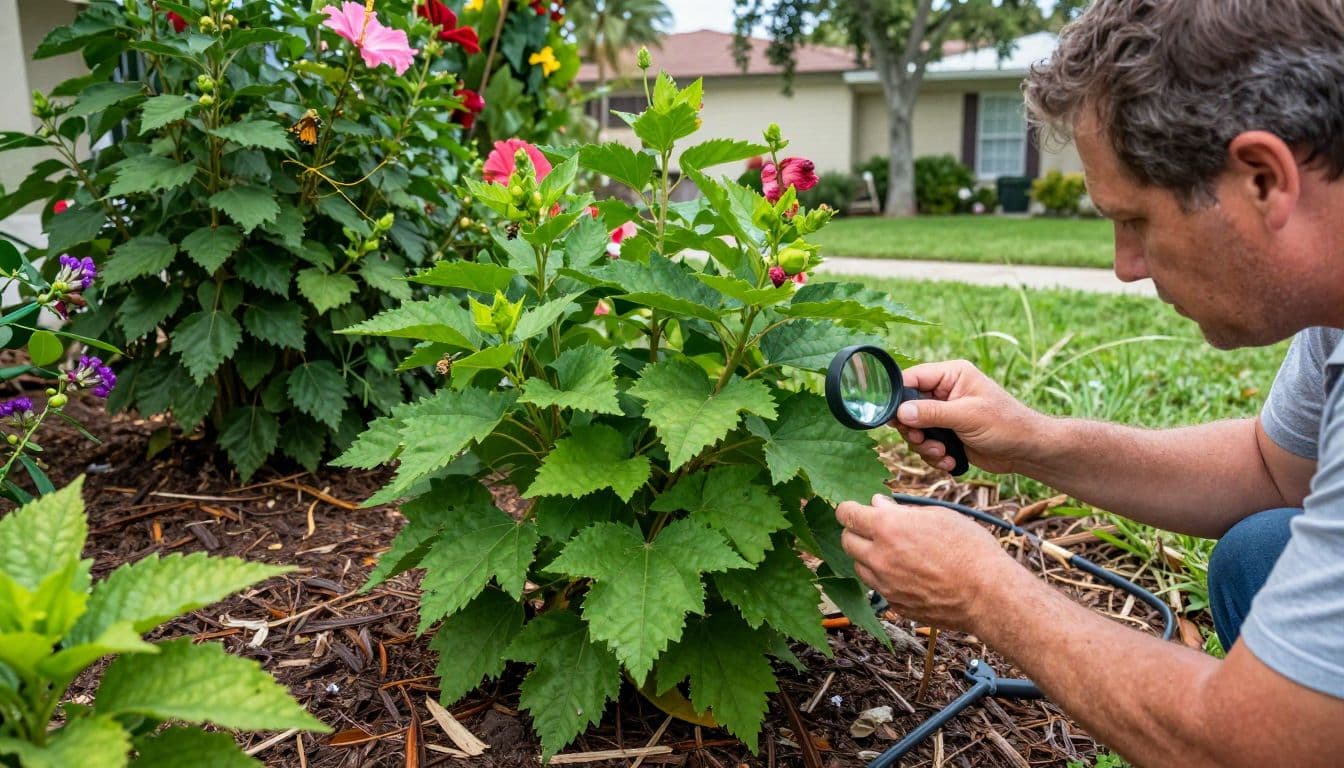
Check both sides of leaves, new growth, stems, flower buds, and the soil surface. Look for sticky honeydew, white wax deposits, webbing, curled leaves, stippling, chewed edges, or clusters of insects.
Identify the pest before choosing a treatment
Different pests leave different clues. Aphids often gather on tender new growth. Spider mites create pale stippling and fine webbing. Scale insects look like small bumps fixed to stems or leaf veins. Rugose spiraling whiteflies leave waxy spirals and honeydew that can lead to black sooty mold.
A close photo and hand lens can prevent a bad guess. For a closer look at a common Southwest Florida problem, review guidance on identifying whiteflies on Florida palms and shrubs.
Treat damage that matters
A few insects on a mature, healthy shrub may not need treatment. However, repeated leaf drop, distorted new growth, heavy honeydew, dying plants, or pests entering a home call for a closer response.
Watch the pattern for several days when possible. If beneficial insects are gaining ground, a broad spray could disrupt the control already happening in the bed. When damage expands quickly, focus treatment on the affected plant or plant section rather than the entire property.
Make Flower Beds Less Attractive to Pests
Prevention reduces how often you need a spray. Florida beds perform better when plants get the light, spacing, and water their species needs.
Crowded plantings hold moisture after rain. Thick, wet mulch against stems can also create hiding places for insects and contribute to plant stress.
Improve airflow, drainage, and mulch habits
Space plants so air can move between them. Prune dead leaves and spent growth when disease or pests are present, and remove heavily infested plant material from the bed.
Use mulch to moderate soil moisture and suppress weeds, but keep it away from plant stems and the home's foundation. Pine bark and pine straw can work well when drainage is good. These pest-resistant mulch choices for Florida homes can help reduce moisture-related pest pressure around bed edges.
Avoid overfeeding tender growth
Too much quick-release fertilizer can produce soft growth that attracts aphids and other sap-feeding insects. Follow the plant's needs, then use slow, steady care instead of repeated heavy feeding.
Choose plants that fit the site's sun, soil, and salt exposure. A plant struggling in deep shade or soggy soil needs more attention than one suited to the location. Healthy plants tolerate limited pest feeding better.
Start With Physical and Nonchemical Controls
Many common flower-bed pests respond to simple, direct controls. These options limit exposure to pollinators and preserve beneficial insects.
For aphids, a firm stream of water directed at the undersides of leaves can knock many insects off a sturdy plant. Repeat only as needed, and avoid blasting delicate blooms or newly planted material.
Match the action to the pest
Hand-remove large caterpillars only after identifying them. Monarch caterpillars on milkweed are a sign of a working butterfly garden, not a pest outbreak. On the other hand, caterpillars stripping an ornamental shrub may need removal or a carefully selected labeled treatment.
Pruning can help with whiteflies, scale, and mealybugs when infestation is concentrated on a few stems. Dispose of the cut material rather than leaving it beneath the plant. For ant problems, reduce honeydew-producing insects first because ants often gather where they can feed on that sticky residue.
Natural enemies also matter. Lacewings, lady beetles, predatory mites, and tiny parasitic wasps can suppress soft-bodied pests when broad-spectrum products don't wipe them out.
Use Pollinator-Safe Pest Control Only Where Needed
Sometimes pest damage is too severe for nonchemical methods alone. When that happens, pollinator-safe pest control means choosing a product and application method that fits the exact pest, plant, site, and flowering condition.
Never assume that a product labeled for ornamental plants is safe to use on every blooming ornamental. Read the complete label before mixing, including environmental hazards, bee warnings, weather limits, personal protective equipment, and re-entry instructions.
Keep sprays off open flowers
Do not apply foliar insecticides to open flowers when bees or other pollinators are visiting. If a flowering shrub is active with bees, delay treatment when possible or use a non-spray option that does not contact blooms.
Apply only during a lower-activity period when the product label permits it. Evening may reduce bee activity, but it isn't an automatic pass because moths and other pollinators can be active after dark. Timing never overrides a label restriction.
A pesticide label may allow treatment on a landscape plant while prohibiting use on blooms or when bees are present. The full label controls the application.
Select the least disruptive labeled option
Spot treatments are often safer than blanket applications. Treat an infested leaf cluster, stem section, or nonflowering plant area instead of coating the entire bed.
Insecticidal soaps and horticultural oils can help with certain soft-bodied insects when the label allows the use. However, they can still harm pollinators if sprayed directly on them, and Florida heat can stress treated foliage. Check label temperature limits and test products on a small area when directed.
Some systemic insecticides can move into pollen or nectar. Avoid treating flowering ornamentals with a systemic product unless its label clearly permits that use and the application fits all pollinator restrictions.
Prevent Drift, Runoff, and Accidental Exposure
Florida's afternoon storms, canal systems, storm drains, and frequent irrigation make off-target movement a serious concern. Keep sprays on the treatment site and out of water.
Avoid applying during wind, before heavy rain, or before scheduled irrigation. Direct spray away from sidewalks, driveways, gutters, ditches, seawalls, ponds, and storm drains.
Follow the current label and Florida requirements
The label is the legal instruction for pesticide use in Florida. Commercial landscape managers and pest professionals must use products within the scope of their Florida credentials and the product's directions.
Some newer labels require applicators to check an EPA Bulletin before use or use mitigation tools for runoff, erosion, or spray drift. Follow those instructions exactly and keep application records that show the product, rate, target pest, weather conditions, and treatment area.
Use this quick check before treating
- Confirm the pest and inspect nearby plants for pollinator activity.
- Read the current product label from start to finish, even if you've used it before.
- Avoid open blooms, active foragers, windy conditions, forecast rain, and scheduled irrigation.
- Use the smallest effective treatment area and prevent spray from reaching water or hard surfaces.
- Wear the protective equipment listed on the label and keep children and pets out until the listed re-entry time.
- Call a licensed professional when the pest is widespread, the plant is valuable, or the label restrictions are unclear.
Protect the Flowers and the Home
A healthy Florida flower bed can support pollinators while still receiving effective pest care. The goal is targeted control , not a spotless garden with no insects at all.
Inspect early, correct watering and drainage problems, and avoid spraying active blooms. When treatment is necessary, a precise application protects your plants, your property, and the pollinators that keep Florida gardens flowering.
Schedule a Free Inspection: