School Mosquito Control for Florida Daycares
A rain-filled toy bin can create a mosquito problem long before staff notice more bites outside. In Florida's heat and frequent rain, school mosquito control needs steady attention, not an occasional spray after complaints begin.
Schools and daycares have extra responsibility because children spend time near playgrounds, entryways, shaded walkways, and water-play areas. A safe plan reduces breeding sites, protects outdoor routines, and keeps pesticide decisions in qualified hands.
Why Florida campuses need a layered mosquito plan
Mosquitoes need water to reproduce, and Florida properties provide plenty of places for it to collect. Afternoon storms, irrigation, clogged gutters, low turf areas, and stored playground items can all hold enough water for mosquito larvae.
Warm weather also extends the season. Mosquito activity may rise after heavy rain, but it can persist where shade, moisture, and standing water remain. A single treatment may reduce adult mosquitoes temporarily. It won't correct a blocked drain or a forgotten bucket.
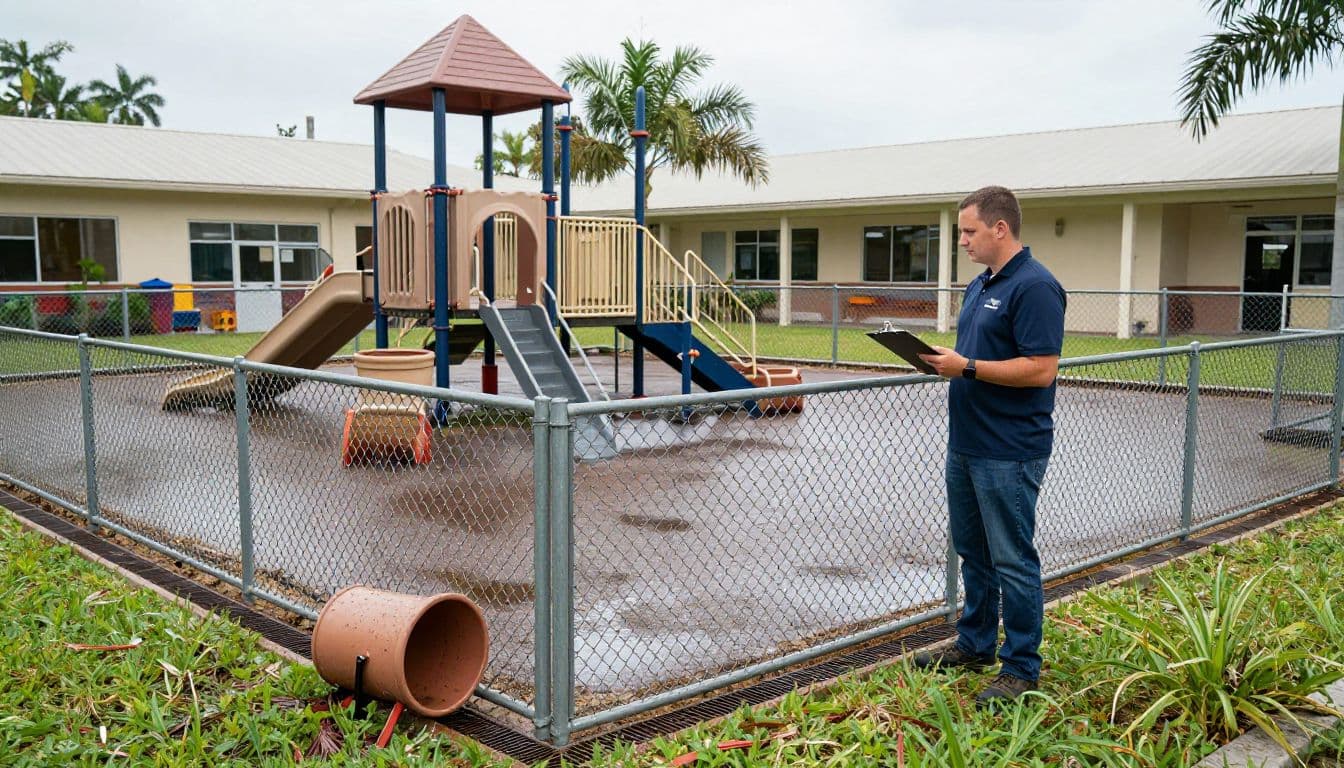
Florida Department of Health guidance calls for emptying, turning over, covering, or removing water-holding items at least once a week. That routine should be part of normal grounds care, especially between May and October.
Mosquito pressure often points to a maintenance issue, such as a blocked drain, a sagging cover, or a container left outdoors after rain.
School mosquito control begins with source reduction
The strongest mosquito plan starts with the places mosquitoes breed. Assign one staff member or facilities vendor to complete a documented weekly walkthrough. Add an extra inspection after heavy rain, irrigation failures, or a tropical weather event.
Find small containers that hold rainwater
Play equipment, outdoor toys, buckets, tarps, planters, coolers, trash-can lids, and tire swings deserve close attention. Empty them, store them under cover, or change how they drain.
Flowerpot saucers and bromeliads also need regular care. Flush bromeliads with a hose once a week, and empty saucers rather than allowing water to remain in them.
A practical weekly inspection should include:
- Emptying water from toys, buckets, carts, tarps, and outdoor storage items.
- Checking gutters, roof drains, and air-conditioning drainage for pooling or blockages.
- Looking under shrubs, benches, and play structures where containers may be hidden.
- Removing discarded equipment that can fill with rainwater.
- Photographing recurring sites so maintenance teams can track repairs.
Repair drainage problems instead of working around them
Low spots in turf, compacted soil, leaking irrigation heads, and clogged catch basins create repeat mosquito sources. Staff can report these conditions, but recurring drainage work often needs a landscaper, plumber, or property-maintenance contractor.
Florida child-care inspection guidance calls for playgrounds to be graded and drained to prevent unintended standing water and debris. That requirement also supports mosquito prevention.
When catch basins stay wet long after rain, request a professional inspection. Persistent drainage issues may need specialized catch basin mosquito treatment and follow-up monitoring.
Keep playgrounds and water activities safe
Outdoor play shouldn't stop because mosquitoes are present, but supervisors should know where mosquito activity is highest. Adult mosquitoes often rest in dense, shaded vegetation during the day and become more active near dawn and dusk.
Keep play areas clear of overgrown vegetation near fences, storage zones, and building walls. Trim foliage to improve airflow and give inspection teams clear access. Screens on doors and windows should also remain intact, especially around classrooms used for naps.
Give water-play equipment extra attention
Water tables, splash toys, and sensory bins need strict routines. Florida child-care standards prohibit shared water tables for two or more children. When water play is offered, each child needs an individual container that staff clean and sanitize between uses.
Empty portable water-play equipment after each use. Store it upside down or under cover so it can't refill during a storm. Don't leave kiddie pools, bins, or watering toys outdoors overnight.
Keep children away from water hazards
Retention ponds, drainage ditches, swales, and fish ponds can be both safety concerns and mosquito habitats. Florida child-care rules require outdoor areas to prevent children from accessing water hazards within or adjacent to the playground.
Maintain secure fencing and report erosion, standing water, or damaged barriers promptly. Staff should never add mosquito products to ponds, ditches, or drains unless a qualified professional directs and performs the work under the product label.
Build an integrated mosquito management routine
Spraying is one tool, but it isn't the entire answer. The CDC describes integrated mosquito management as a combination of surveillance, source reduction, larval control, adult mosquito control when needed, public education, resistance awareness, and review of results.
For a campus, that means observing conditions before deciding on treatment. Keep records of rainfall, mosquito complaints, bites reported during outdoor time, standing-water locations, repairs, inspections, and pest-management visits.
Set clear thresholds for action
A few mosquitoes after a storm may call for another grounds inspection. Repeated complaints near the same classroom, playground edge, or bus loop suggest a local source that needs closer attention.
Ask supervisors to report the location, time of day, and conditions they observed. "Many mosquitoes by the south playground at pickup" is more useful than a general complaint. This information helps facilities staff and licensed professionals inspect the right area.
Make responsibilities easy to follow
A written school mosquito control plan should name who handles each task. Maintenance staff can remove containers, clear accessible debris, and submit repair requests. Teachers can report activity near classrooms and play areas. Administrators can approve notices and coordinate vendors.
Your plan should also identify who contacts the local county health department or mosquito-control program if a public mosquito-borne illness advisory affects your area. Follow current local guidance and adjust outdoor procedures when officials recommend precautions.
Coordinate treatment with licensed professionals
Pesticide applications around children require careful planning. Florida pest-control work must follow the pesticide label, including approved use sites, application methods, rates, personal protective equipment, and any reentry directions.
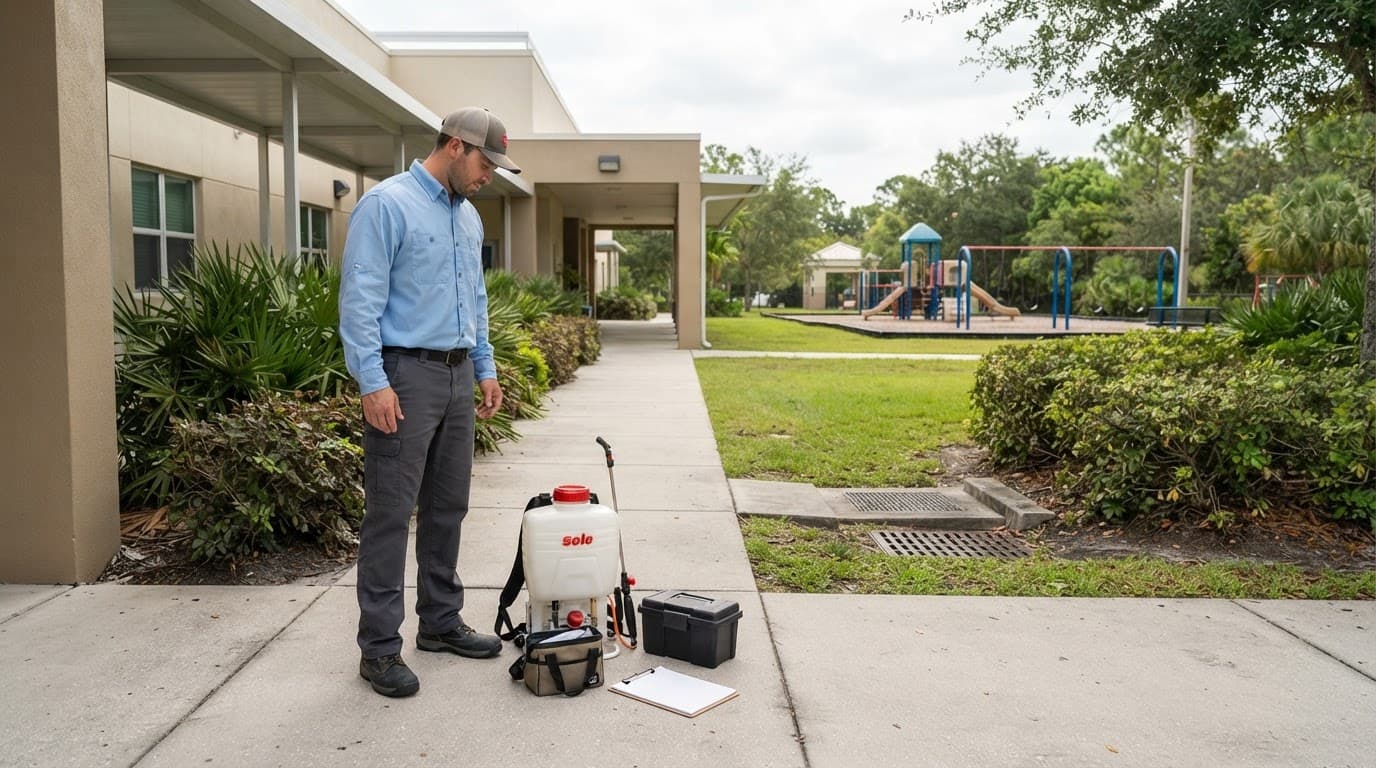
Choose a licensed pest-management professional who inspects the property before recommending treatment. A reliable provider will ask about playground schedules, dismissal times, outdoor classroom use, nearby water features, and prior mosquito concerns.
Ask for a site-specific treatment plan
The provider should explain what they found, what areas need source reduction, and whether treatment targets larvae, adult mosquitoes, or both. A plan may include monitoring, limited treatment of approved breeding sites, and targeted adult control around resting areas.
Avoid blanket applications with no inspection or follow-up. Mosquitoes can return after rainfall if the property still holds water.
Before authorizing service, ask for:
- The provider's Florida license information and proof of insurance.
- The product name and label directions that apply to the school or daycare site.
- The planned treatment area, method, timing, and any label-based access restrictions.
- A written record of service, findings, and recommended property repairs.
Use a clear notification process
Follow your organization's written pesticide policy, parent communication procedures, and any local requirements. Share relevant timing and access instructions with staff, families, and contractors before a planned application when your policy calls for notice.
Keep children, staff, and visitors away from treatment areas as directed on the label. Staff should also prevent access to equipment, treated containers, or marked work zones until the provider confirms the area is ready for normal use.
Respond calmly when mosquito complaints increase
More mosquito reports don't always mean the same problem. A storm, irrigation leak, clogged drain, adjacent unmanaged property, or nearby wetland conditions can all affect activity. Start with documentation and a property inspection.
First, check the exact area people mention. Then look for water sources within the grounds and along property edges. Review recent weather and landscaping work. If mosquitoes remain heavy after source reduction, bring in a licensed professional for a site assessment.
Communicate practical precautions to families
During periods of high mosquito activity, remind families to dress children in lightweight clothing that covers exposed skin when appropriate. Parents can also follow product directions for age-appropriate mosquito repellent before arrival.
Staff should focus on reasonable steps within the school day. Move a class away from a heavily shaded, mosquito-active area, reschedule a brief outdoor activity when conditions allow, and report recurring activity to facilities.
Don't make health claims or promise complete mosquito elimination. Clear communication, careful observation, and timely maintenance give families a more useful response.
Review the plan after every wet-weather period
Mosquito management improves when staff review what happened after a heavy-rain week. Look at complaint locations, photos, work orders, vendor findings, and the time needed to complete repairs.
If the same locations appear repeatedly, change the routine. Add a drain-cleaning schedule, replace water-holding equipment, improve storage, repair grading, or adjust landscaping near outdoor gathering spots.
A short monthly review also keeps mosquito prevention connected to daily facility operations. Grounds care, playground safety, and pest management work better when they follow the same recordkeeping process.
A Safer Routine for Florida Campuses
Effective school mosquito control depends on removing water before mosquitoes can use it. Weekly inspections, good drainage, safe water-play practices, and prompt repairs reduce the need for treatment.
When treatment is appropriate, licensed professionals should guide it with label-compliant, site-specific recommendations. A school or daycare that tracks conditions and acts early can keep outdoor areas more comfortable while protecting the children who use them.
Schedule a Free Inspection: