Rodent Droppings vs. Lizard Droppings in Florida Homes
Finding rodent droppings in your Florida home can trigger an immediate concern. However, a small dark pellet near a window, garage wall, or porch may come from a lizard or gecko instead.
The most useful clues are the dropping's color, shape, white tip, location, and pattern. Since size, freshness, moisture, and species can change its appearance, treat identification as a careful first step rather than a certain diagnosis.
How rodent droppings compare with lizard droppings
Start with the pellet itself, but don't rely on one feature alone. Fresh waste usually shows more detail than old, dried, crushed, or rain-damaged material.
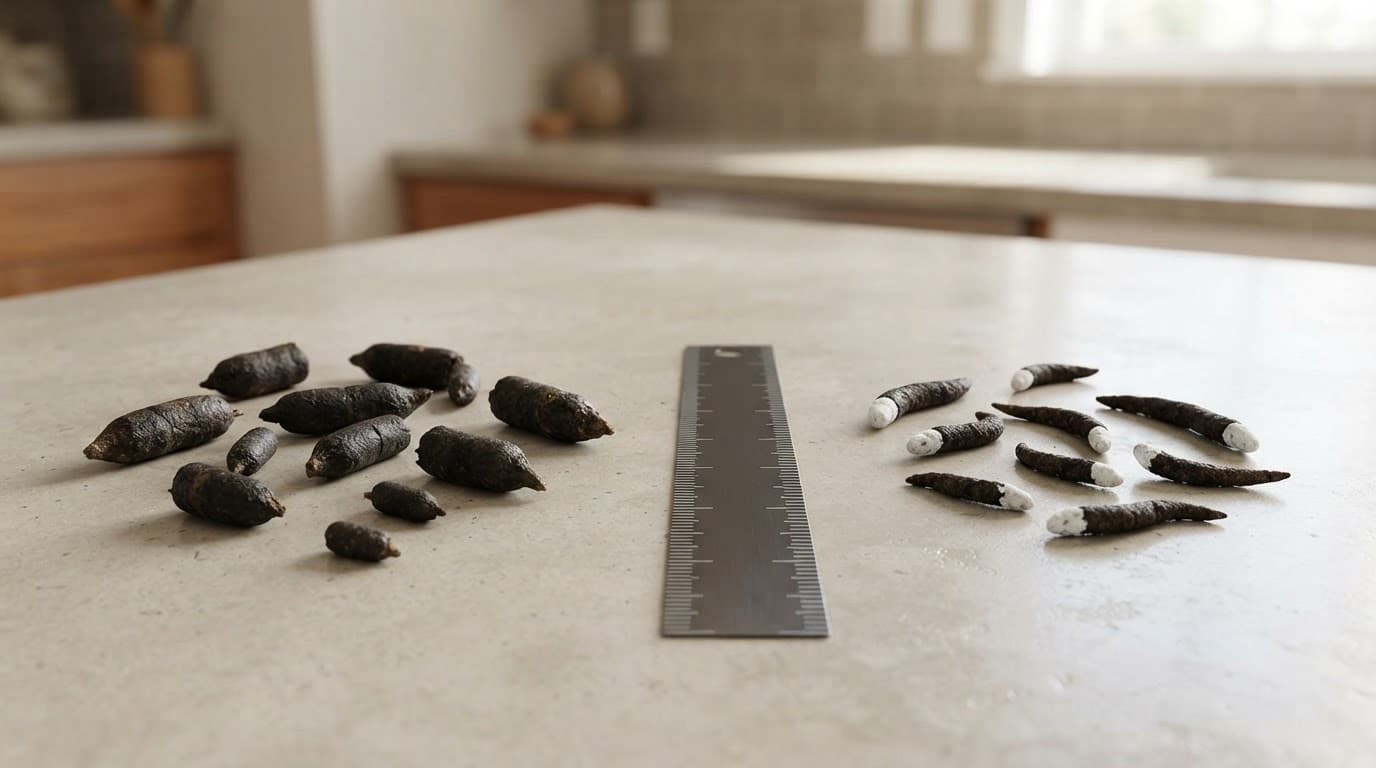
Look for the white urate tip
Lizard and gecko droppings often have two visible parts. The main portion is dark brown or black, while one end has a small white or chalky tip. That white section is urate, a solid form of waste that reptiles pass with their feces.
A white tip strongly suggests lizard or gecko waste, especially when several droppings appear near walls, windows, or porch lights. Still, the tip may be difficult to see when the dropping is old, wet, smeared, or stuck to a rough surface.
Rodent waste is typically uniformly dark. Mouse and rat droppings usually lack the distinct white urate end found in reptile waste. A dark pellet without a white tip may point toward a rodent, but it doesn't prove one is present.
Size and shape add context
Mouse droppings are often small and rice-shaped, with tapered ends. Rat droppings are usually larger, although their size and shape vary by species and the animal's age. Roof rats, which occur in Florida, can leave pellets that differ from those of other rats.
Gecko droppings are often smaller and may look irregular. Lizard waste can also break apart, flatten, or lose its white tip as it dries. Moisture, cleaning products, sunlight, and the surface beneath the dropping can change what you see.
A close photograph can help a technician review the evidence, but handling or moving the material isn't necessary.
Where you find the droppings matters
Location often provides as much information as appearance. A pellet on a high wall beneath a porch light suggests a different source than repeated droppings inside a pantry or attic.
Common places for lizard and gecko waste
Geckos climb walls and gather where insects collect. In Southwest Florida, homeowners often notice their droppings near porch lights, windows, lanai screens, exterior walls, garage walls, and covered patios.
Their waste may appear as scattered individual spots rather than a long trail. You may also find it below a favorite resting area, such as a light fixture, window frame, shelf, or ceiling corner.
If you see small dark droppings with white ends around a porch light, the gecko may be feeding on insects attracted to that light. You can learn more about Mediterranean house gecko droppings and the conditions that attract them.
Areas that may point to rodents
Rodents prefer protected routes and hidden nesting areas. Look for repeated pellets along wall edges, behind appliances, inside cabinets, near stored food, around garage shelves, or in attic insulation.
A rodent may leave waste close to food and water sources. It can also leave droppings along a travel path between an entry point and a nest. Multiple pellets in a sheltered area deserve more attention than one isolated dropping on an outdoor surface.
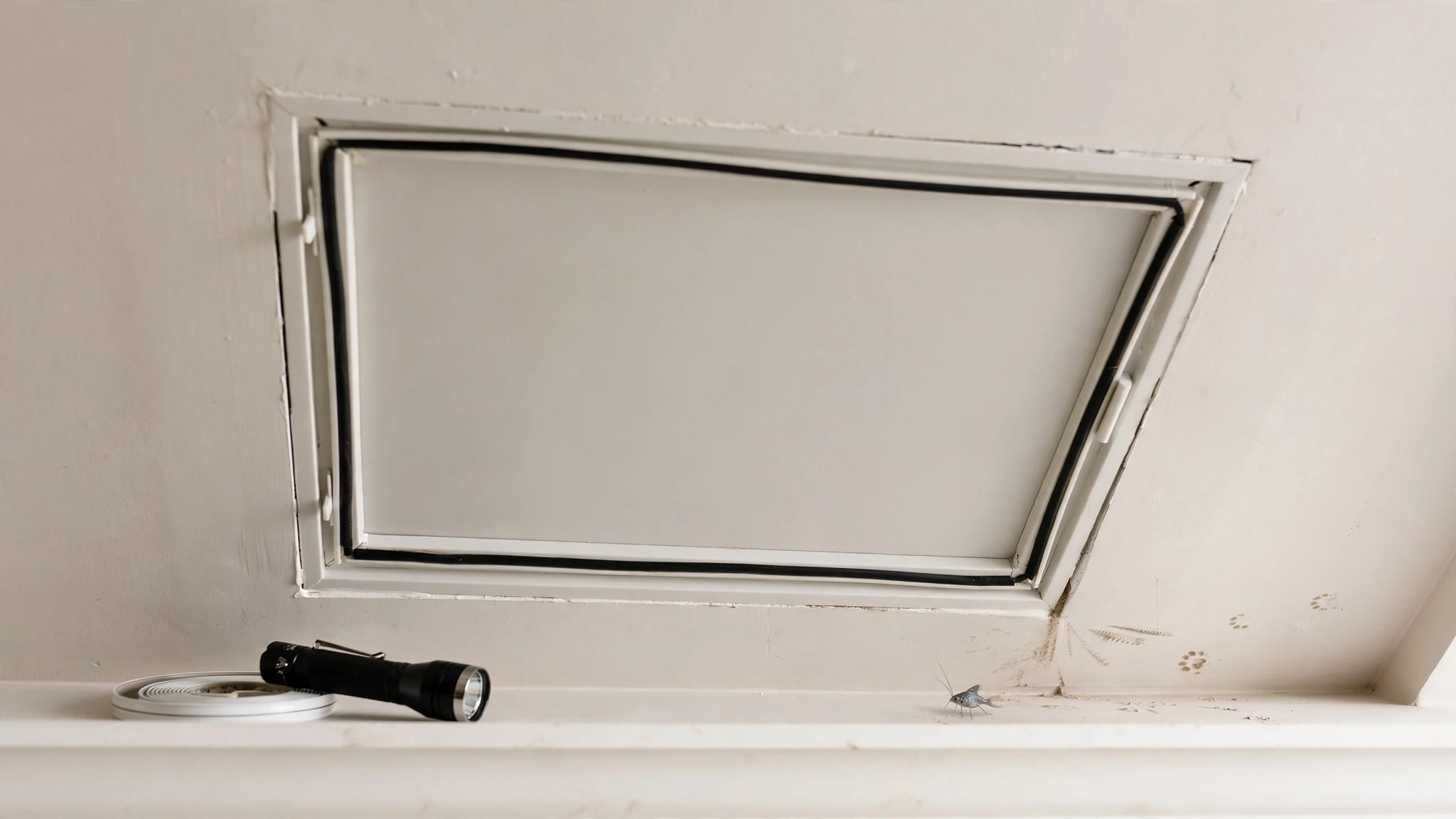
Droppings near an air-conditioning return, duct, attic access, or wall void are harder to identify and clean safely. Avoid reaching into these areas without professional guidance.
Why Florida homes can attract both pests
Florida's warm climate gives reptiles and rodents long periods of outdoor activity. Heavy rain, high humidity, dense vegetation, screened porches, and open garages can also create easy access to food and shelter.
Porch lights attract insects and geckos
Many Florida homes have exterior lights near doors, lanais, garages, and pool areas. Those lights can attract flying insects at night, which may bring geckos close to the structure.
A gecko near the house isn't automatically a problem. In many cases, the animal stays outside and leaves only a few droppings in a predictable location. Cleaning the area and reducing insect activity may reduce repeated waste.
However, gecko activity can distract homeowners from other pest signs. Droppings inside an attic, pantry, or wall cavity need a separate evaluation, even if geckos are visible outside.
Rodents look for shelter and steady food
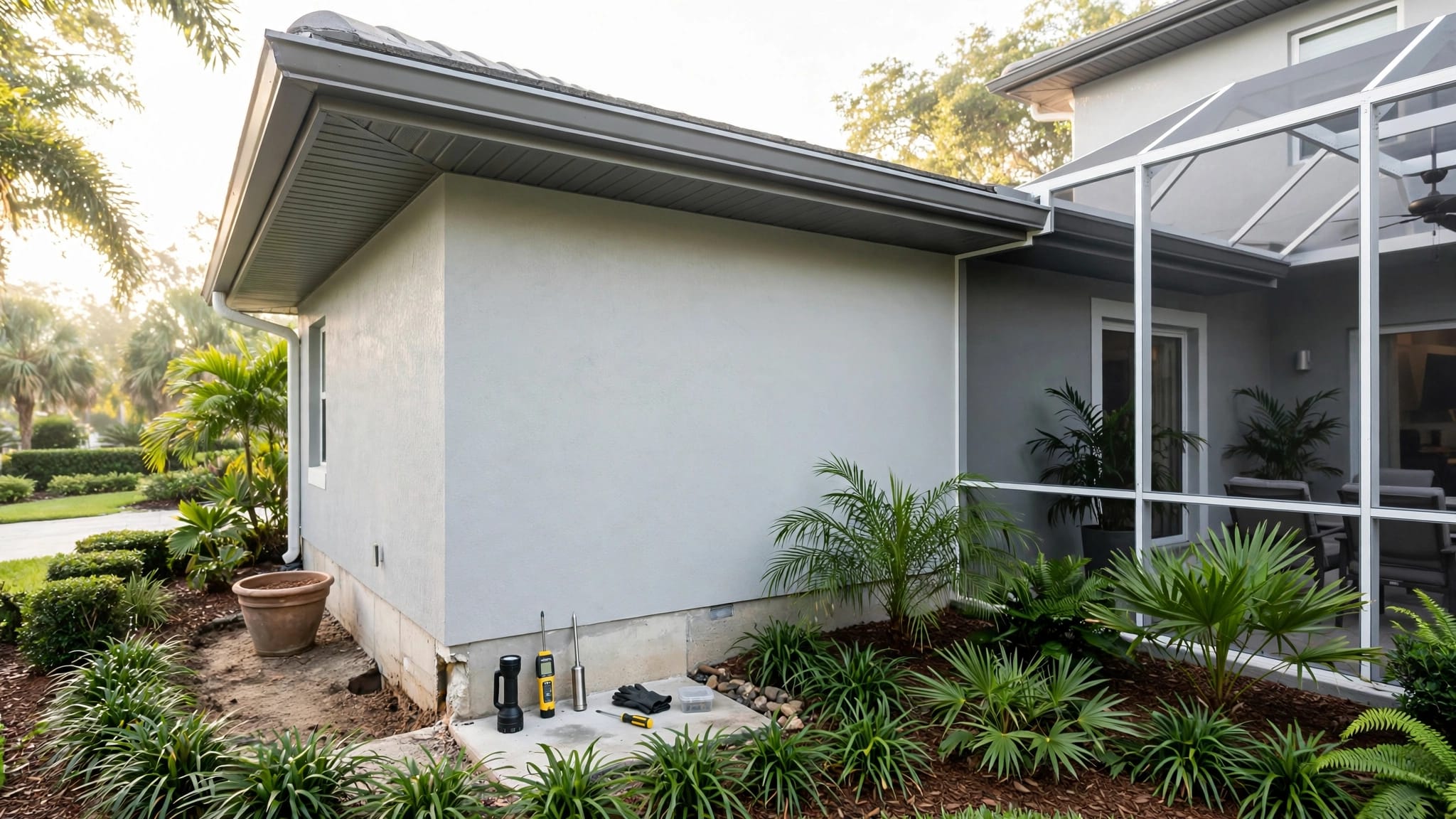
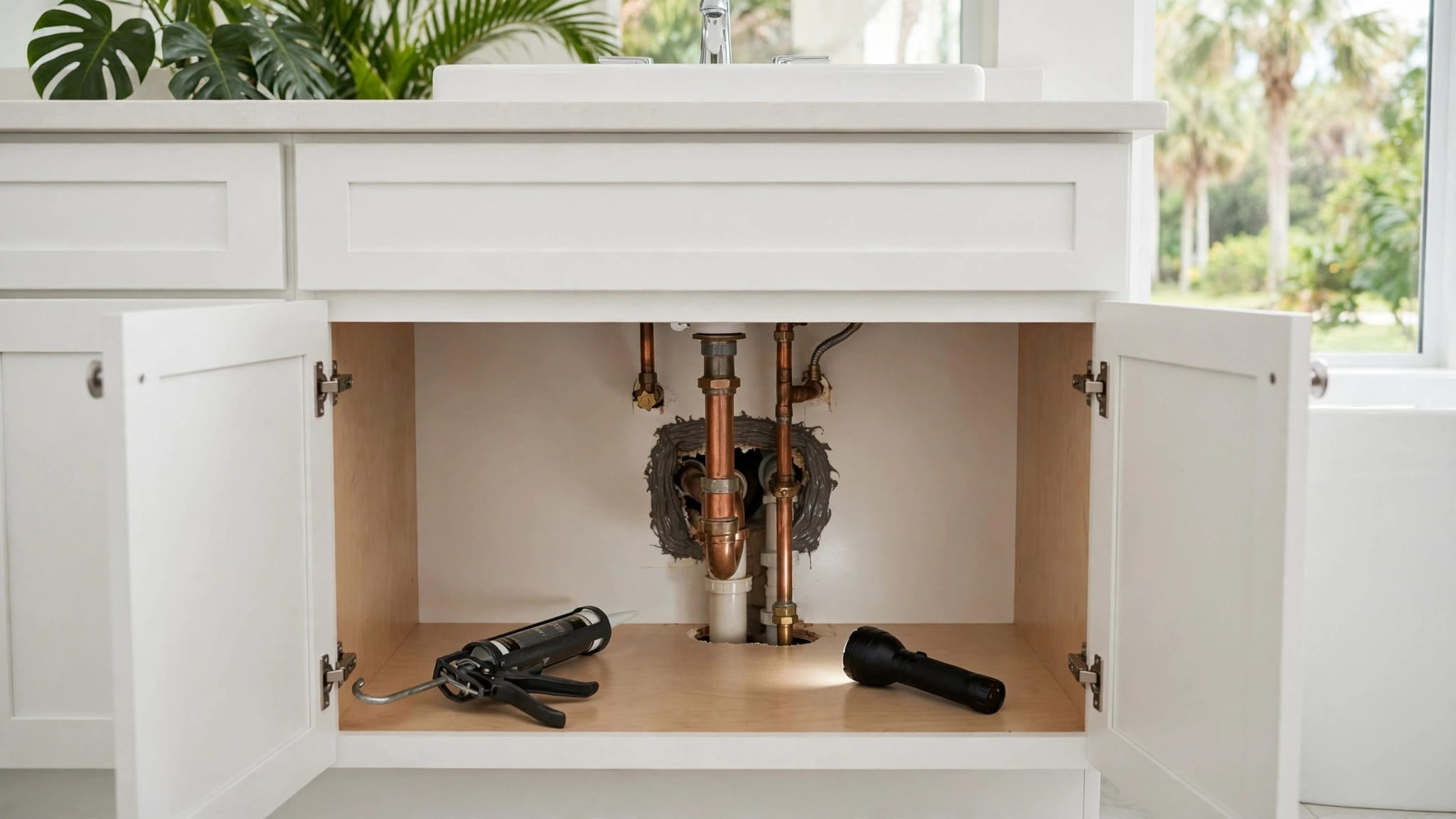
Rats and mice may enter through gaps around garage doors, soffits, roof lines, vents, pipes, and utility openings. They also take advantage of pet food, birdseed, unsecured trash, fallen fruit, and food stored in thin packaging.
Storms and changing weather can push rodents toward dry, protected spaces. Once inside, they may nest near insulation, stored boxes, HVAC areas, or other quiet locations. Inspecting common Florida home entry points can help explain why droppings keep returning.
Safe cleanup for suspected droppings
Treat unknown animal waste as contaminated material. The safest approach limits dust, avoids direct contact, and keeps children and pets away until the area is clean.
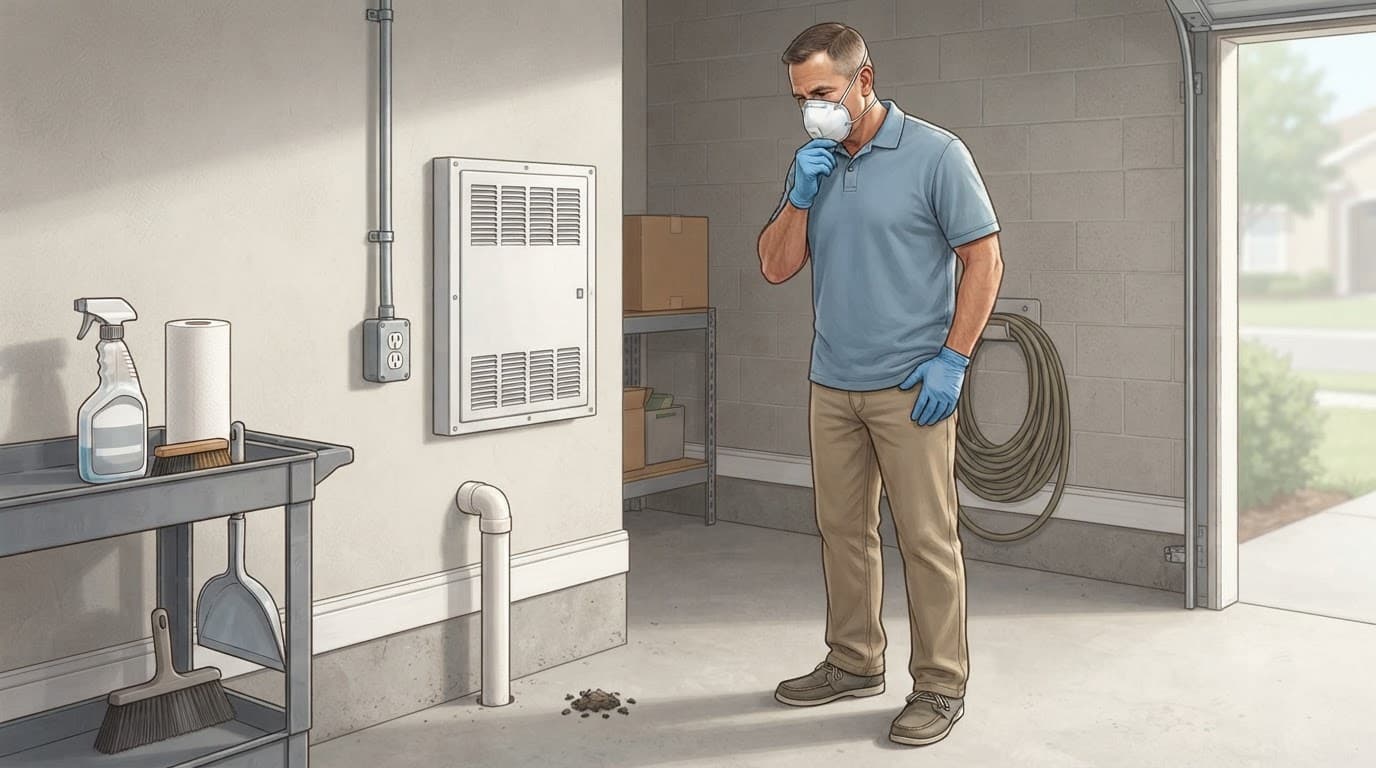
Prepare the area before cleaning
Ventilate the space by opening doors or windows when conditions allow. If the material is in a small enclosed room, give airborne dust time to settle before approaching it.
Wear disposable gloves, closed-toe shoes, eye protection, and an appropriate mask or respirator for dusty cleanup. Keep food preparation surfaces covered, and move children and pets away from the area.
Don't sweep or vacuum dry droppings. Those actions can disturb particles and spread contaminated dust through the air. Don't scrape dry waste from a surface either.
Disinfect, soak, and wipe
Use a disinfecting cleaner suitable for the surface. Follow the product label, spray enough to wet the droppings thoroughly, and allow the cleaner to soak for the required contact time before wiping.
- Pick up the softened material with paper towels or disposable cloths.
- Place the waste and used cleaning materials in a sealed plastic bag.
- Apply disinfectant to the surrounding surface and wipe it again.
- Dispose of the sealed bag according to local household waste rules.
- Remove gloves carefully, then wash your hands with soap and water.
Never mix bleach with ammonia or other cleaning products. If the droppings cover a large area, appear in insulation, or have been disturbed already, stop cleaning and arrange a professional assessment.
Signs that point beyond one pellet
A single dropping rarely tells the whole story. Look at nearby surfaces and check whether the evidence is isolated, recurring, or connected to other signs of animal activity.
Check for supporting rodent evidence
Rodent droppings often appear alongside physical damage or nesting material. Inspect the nearby area without touching anything:
- Scratching sounds may come from walls, ceilings, or attic spaces, especially at night.
- Gnaw marks can appear on cardboard, food packaging, wood, plastic, and wiring.
- Shredded paper, fabric, insulation, or dried plant material may indicate nesting.
- A persistent musky or urine-like odor can point to activity in a hidden area.
- Greasy rub marks may develop along wall edges or narrow travel routes.
- Damaged screens, soffits, vents, or stored items can reveal an entry route.
Fresh rodent droppings may look dark and slightly shiny. Older waste often becomes dull, dry, or dusty. That change can help estimate freshness, but it doesn't identify the animal by itself.
Watch for repeated patterns
Lizard or gecko droppings often remain near a visible resting or hunting area. Rodent waste commonly reappears along protected travel routes, near food, or around a nesting zone.
If you clean a few pellets and find new ones in the same place, the source may still be active. Repeated signs in an attic, garage, kitchen, or wall area deserve an inspection rather than repeated surface cleaning.
For homeowners who find evidence in an attic, this guide to Cape Coral attic rodent control covers entry points, droppings, and safe handling concerns.
When to call a professional pest-control company
Professional evaluation makes sense when droppings are numerous, recurring, or difficult to reach. It is also the safest choice when waste appears inside HVAC equipment, air returns, ductwork, insulation, wall voids, or other inaccessible areas.
Call for help if droppings occur with scratching, strong odors, gnaw marks, nesting material, damaged wiring, or visible rodents. These details raise the chance of an active infestation, even when the pellets themselves are difficult to identify.
Don't disturb hidden or contaminated areas
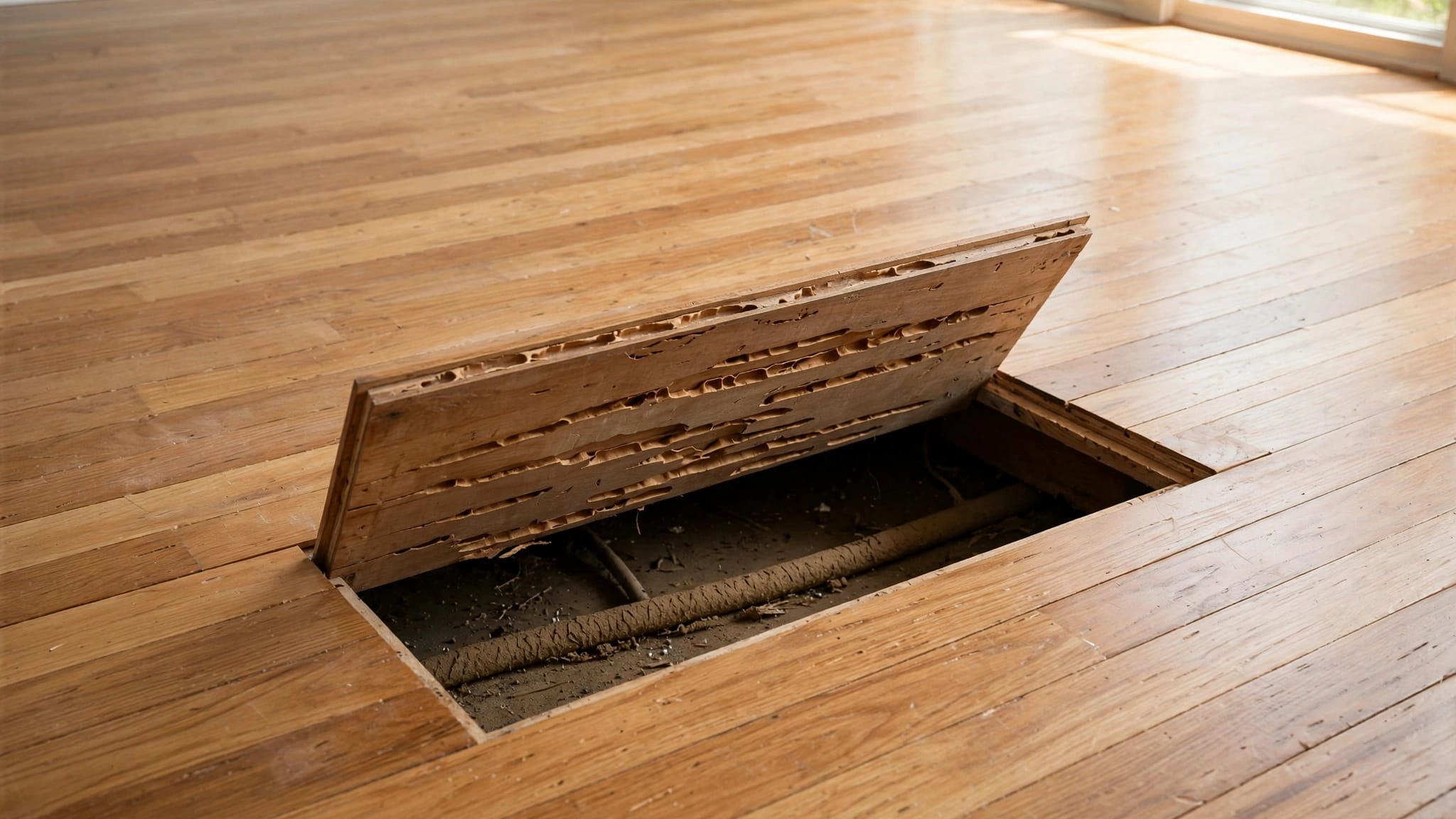
Attics and crawl spaces can contain poor ventilation, damaged insulation, electrical hazards, and concentrated waste. HVAC areas also spread air through the home, so reaching inside blindly can create additional problems.
A homeowner can take a photograph from a safe position and note where the droppings appeared. Avoid opening sealed panels, pulling out insulation, or cleaning inside ductwork without the right equipment and training.
What a professional inspection can address
A technician can compare the droppings with other evidence, inspect likely entry points, and look for activity in connected areas. The inspection may include the attic, garage, roof line, soffits, vents, utility gaps, food storage areas, and exterior conditions.
Treatment should address the source, not only the visible pellets. Depending on the findings, that may include sanitation guidance, exclusion work, monitoring, trapping, or a rodent deterrent plan. Homeowners interested in a non-poison approach can ask about professional rodent deterrent services.
A local company familiar with Cape Coral, Fort Myers, Punta Gorda, Bonita Springs, and Sanibel can also account for common Southwest Florida construction and weather conditions.
Conclusion: Use the dropping as a clue
The clearest visual difference is often the white urate tip attached to lizard or gecko feces. Rodent droppings are usually uniformly dark, but size, moisture, freshness, and species can change their appearance.
Treat repeated or hidden droppings as a possible rodent issue, especially when scratching, odors, nesting material, or gnaw marks appear nearby. Clean small areas by ventilating, wearing appropriate protection, soaking the waste with disinfectant, and wiping instead of sweeping or vacuuming.
One pellet may raise a question, but the surrounding pattern usually provides the better answer.
Schedule a Free Inspection: