Florida Termite Inspection After Buying a Home
Buying a Florida home can leave you with unanswered questions about what happened before closing. A Florida termite inspection soon after move-in can reveal active pests, old damage, moisture problems, or areas the earlier inspection could not access.
A pre-closing report is useful, but it describes conditions on one date. Your ownership changes how you monitor the property, maintain warranties, and respond to new evidence. Start with the timing, then learn what the inspection should include.
Why schedule a Florida termite inspection after closing?
A post-purchase inspection isn't a requirement for every Florida homeowner, and Florida doesn't set a universal deadline for completing one. Still, scheduling one soon after closing or move-in gives you a clear record of the home's condition while your purchase documents are fresh.
A previous report is only a snapshot
A pre-purchase inspection may have found no visible activity, yet termites can remain hidden behind finished walls, flooring, cabinets, or structural wood. A report also may list inaccessible areas that couldn't be examined.
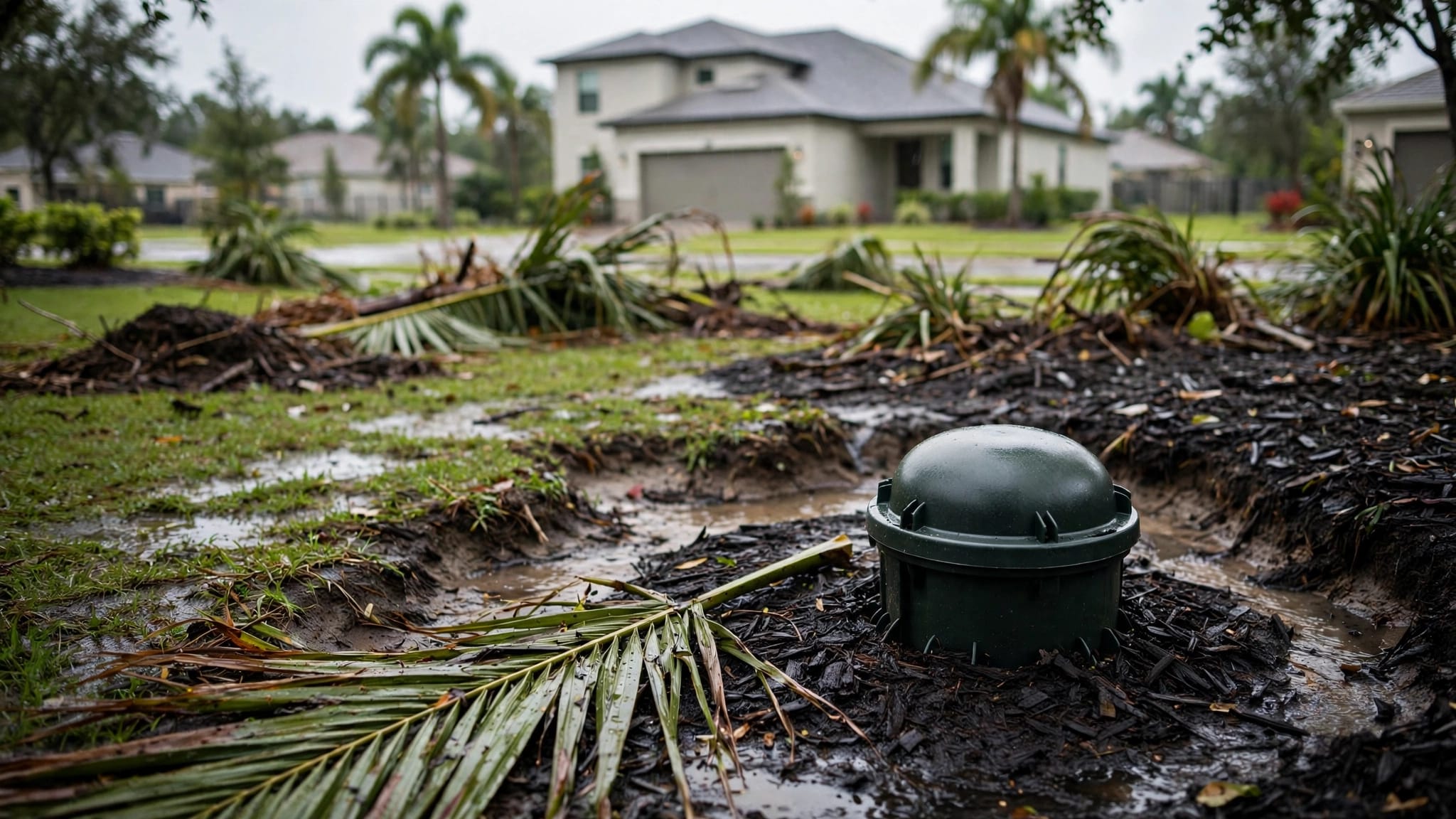
Construction, weather, landscaping, and moisture conditions can change after the original inspection. Irrigation overspray, a leaking hose bib, blocked drainage, or mulch against the foundation can create better conditions for subterranean termites.
A new inspection also helps separate old damage from current activity. That distinction matters when you discuss treatment, repairs, warranties, or responsibility with a pest-control company.
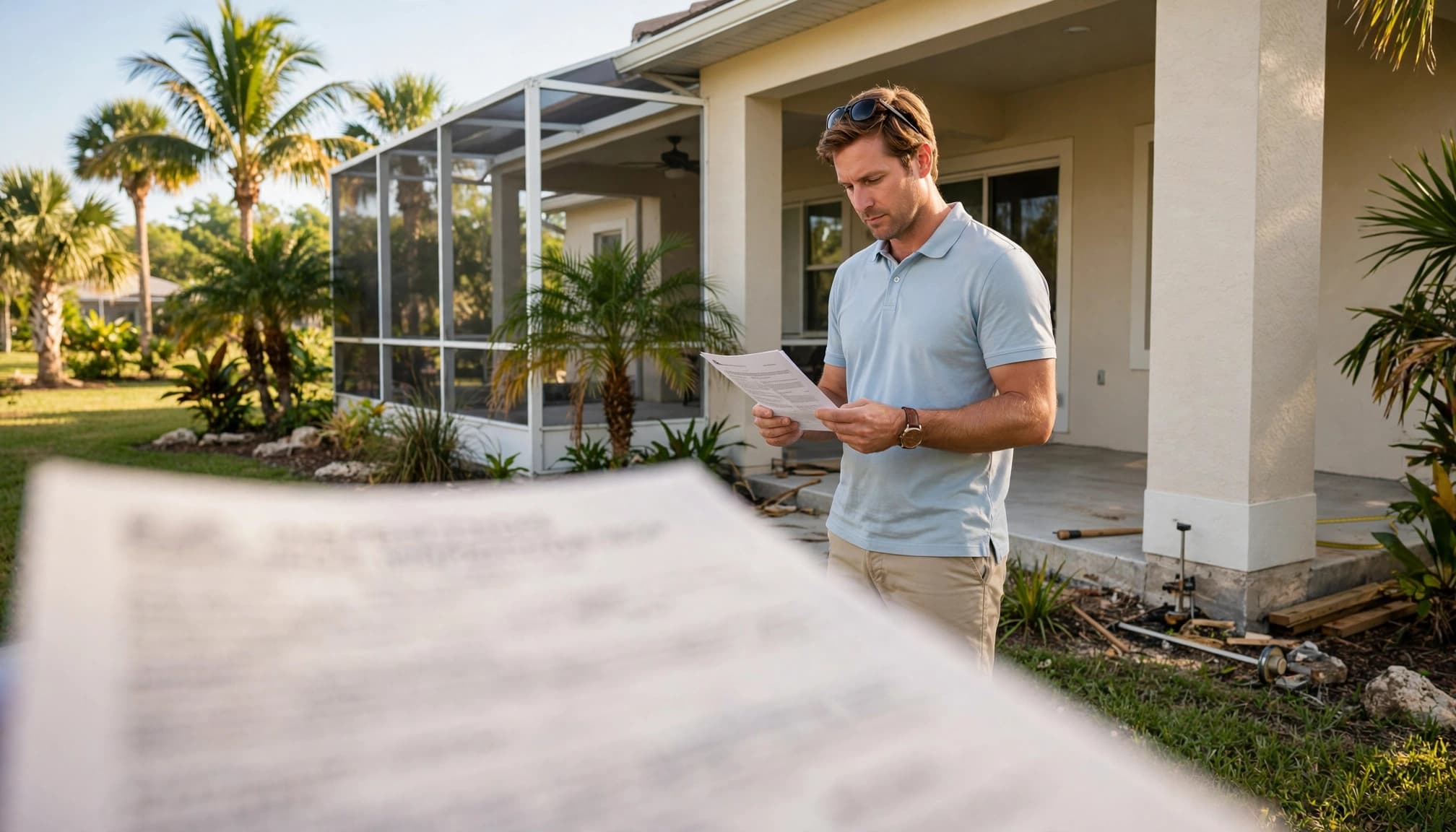
Choose a practical time to inspect
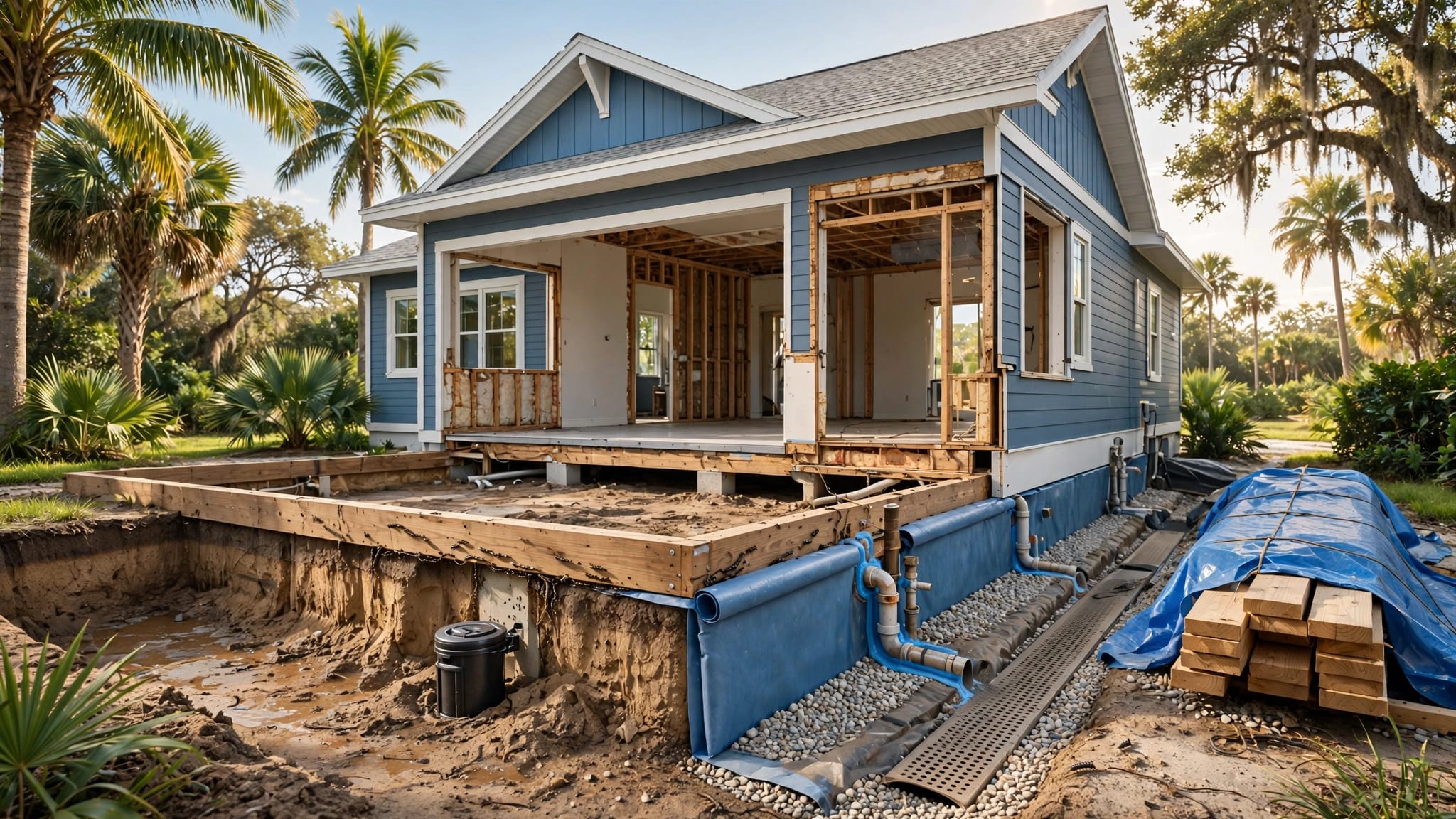
Schedule the inspection shortly after closing, especially if the seller's report is several months old or the property has been vacant. You should also arrange one after major water intrusion, roof work, remodeling, or landscaping changes.
An annual inspection may make sense for many Southwest Florida homes, particularly properties with slab foundations, lanais, older additions, crawl spaces, or nearby wood structures. Your service agreement may set a different schedule, so check those terms instead of assuming the company will contact you.
What a Florida WDO inspection includes
A general home inspection and a wood-destroying organism, or WDO, inspection answer different questions. A home inspection reviews visible structural and household systems. A WDO inspection focuses on termites, other wood-destroying insects, and wood-decay fungi.
Read this Florida WDO inspection guide before booking so you know what each report can and cannot tell you.
The technician checks accessible risk areas
For an average, accessible property, a professional inspection commonly takes about one to two hours. The technician may examine:
- Exterior foundation edges, stucco transitions, block walls, and slab joints
- Garages, patios, porches, screened lanais, and entry points
- Baseboards, door frames, window frames, and suspicious trim
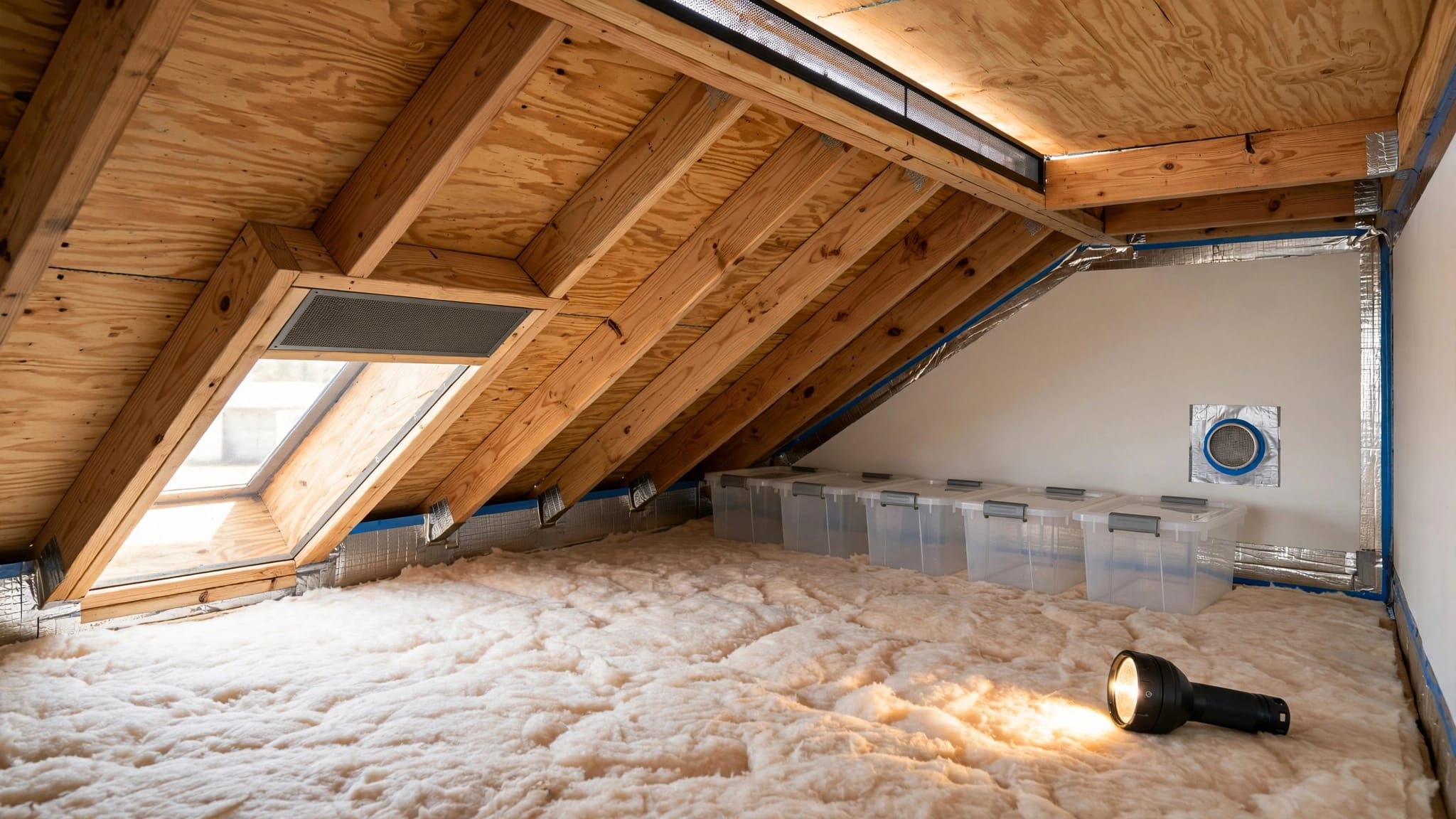
- Attics, crawl spaces, plumbing penetrations, and utility areas
- Sheds, fences, decks, stored lumber, and nearby wood structures
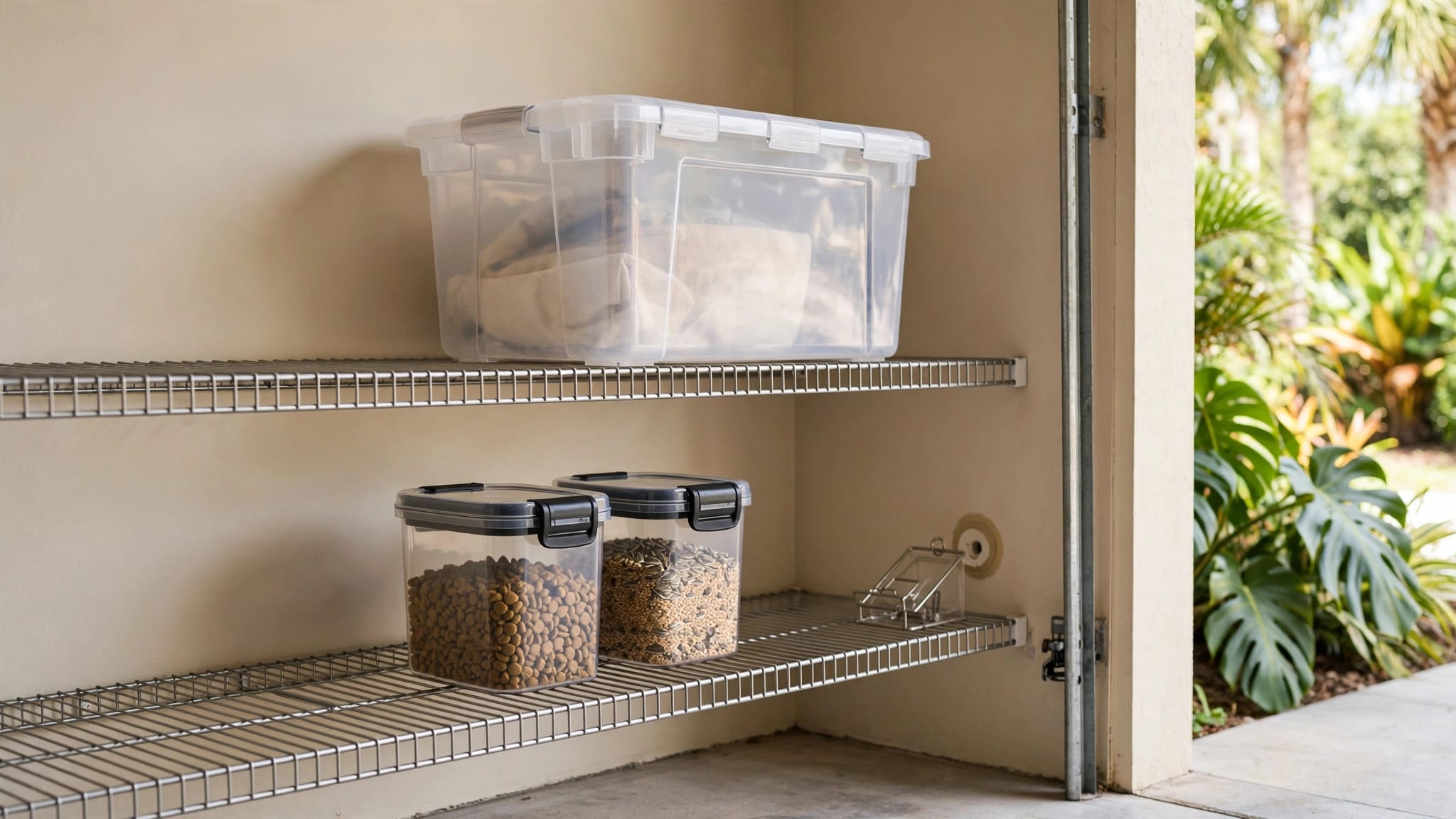
The inspector may probe questionable wood, look for moisture, inspect shelter tubes, and search for discarded wings or pellet-like droppings. Move planters, boxes, firewood, and stored materials away from walls before the appointment.
A visual inspection cannot guarantee that hidden termites are absent. Finished surfaces, insulation, flooring, tight crawl spaces, and locked areas can limit what the technician sees. The report should identify those limitations clearly.
Confirm licensing and written documentation
Ask whether the provider is licensed for termite and other wood-destroying organism work through the Florida Department of Agriculture and Consumer Services, or FDACS. A fumigation license alone doesn't automatically cover every type of WDO inspection.
Florida WDO reports commonly use FDACS Form DACS-13645. The completed report records the inspection date, property address, organisms observed, visible damage, inaccessible areas, and conditions that may support activity.
Request the full written report, not only a verbal summary. Keep it with your closing papers, permits, repair invoices, treatment records, and prior inspection documents.
Signs of termites in Florida homes
Termites don't always leave obvious damage. Florida's warmth, humidity, rain, irrigation, and frequent moisture problems can give pests access to areas that look sound from the outside.
Subterranean termites leave mud tubes
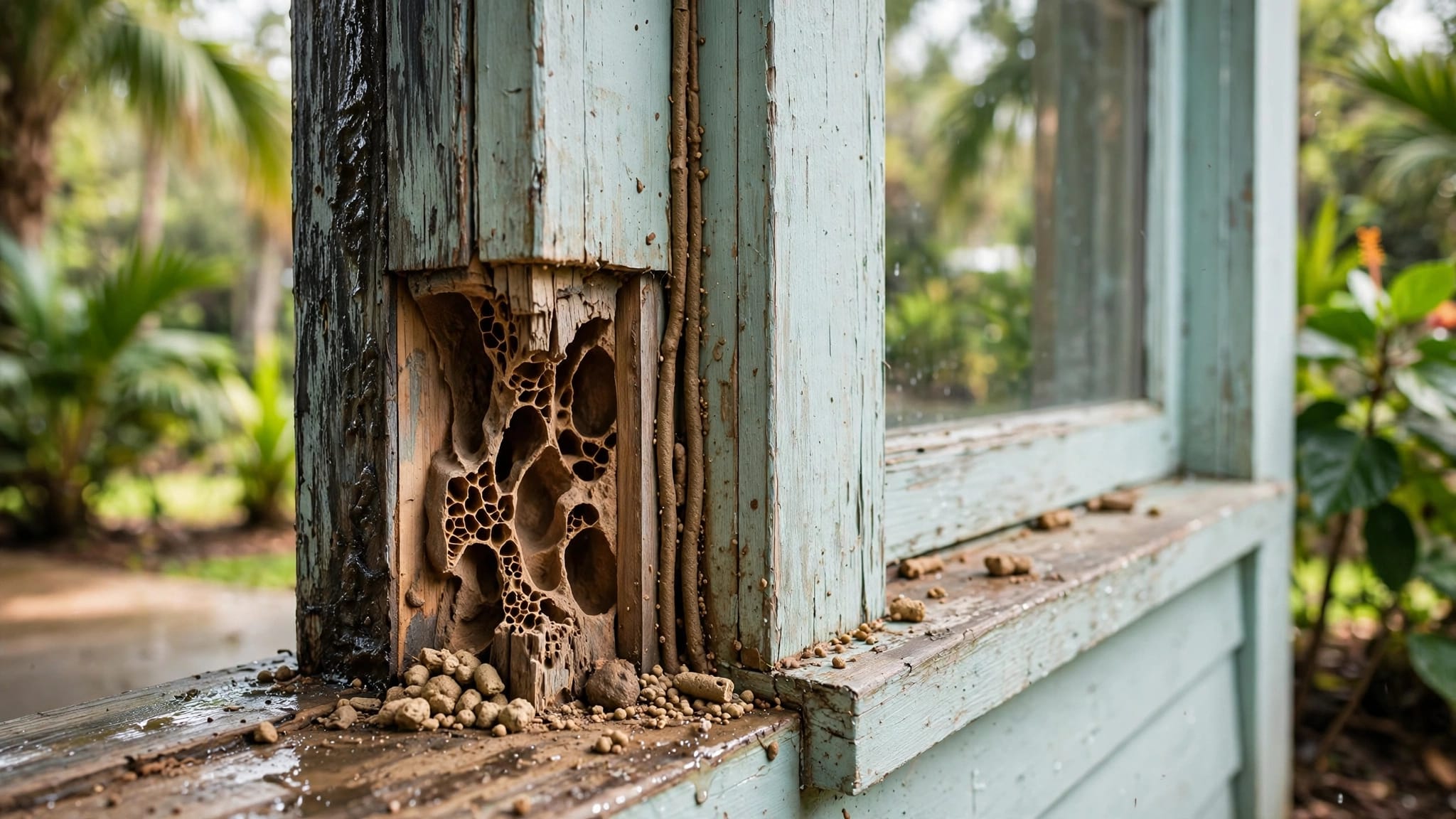
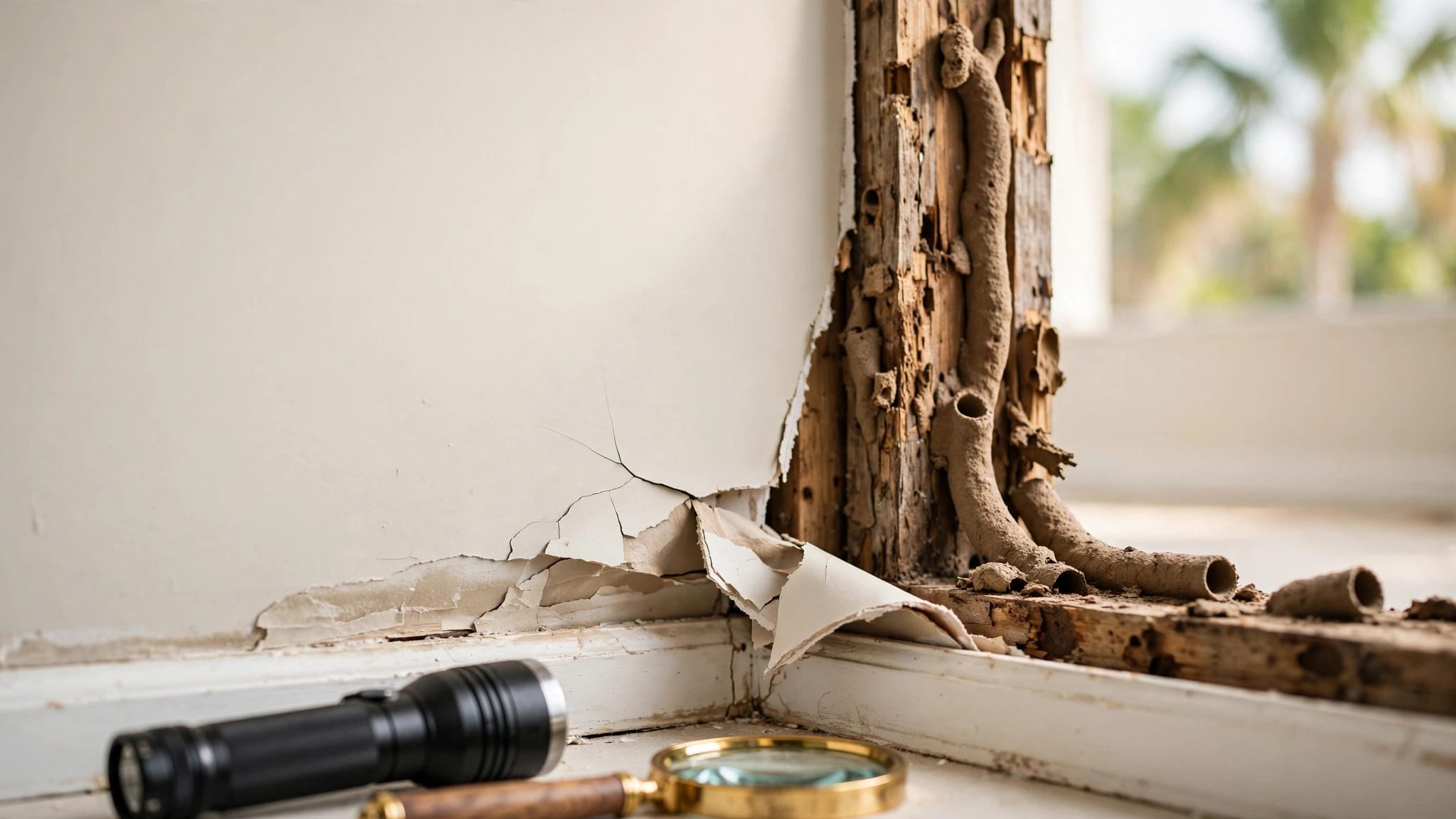
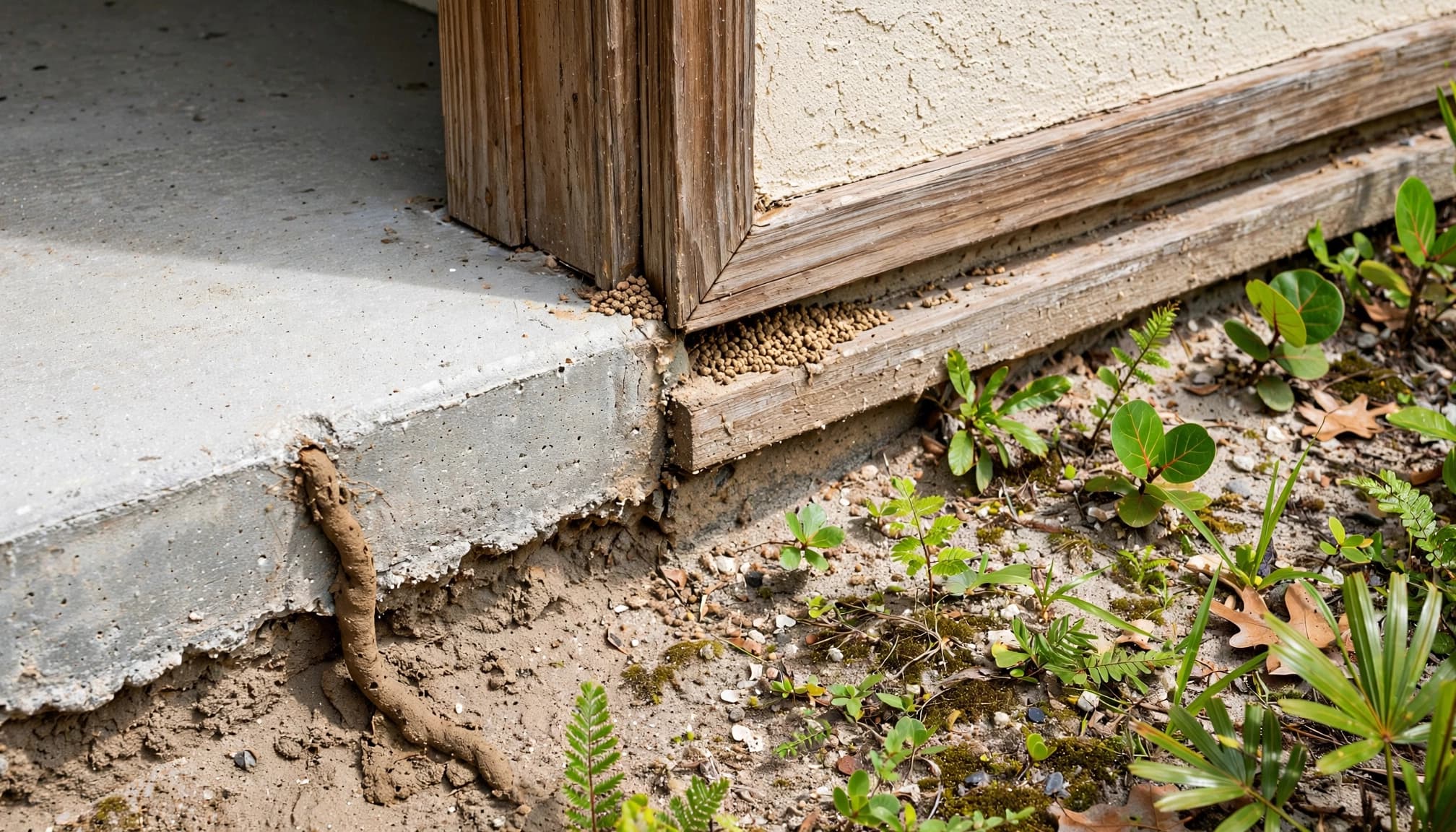
Subterranean termites live in soil or protected soil-connected areas. They use shelter tubes to retain moisture while traveling toward wood. Look for narrow, muddy lines along:
- Slab edges and the base of stucco or block walls
- Garage walls, expansion joints, and porch connections
- Plumbing penetrations and areas near water heaters
- Cracks, utility lines, and damp landscaping
- Wood posts, stairs, sheds, and other ground-contact features
A tube that appears broken may still indicate earlier activity. Don't assume the problem is gone because the tube looks dry. Photograph the location and ask a professional to determine whether the evidence is old or active.
Formosan termites are also found in Florida and can cause serious structural damage. However, only an inspection can identify the species and determine the treatment area.
Drywood termites live inside wood
Drywood termites don't need regular soil contact. They can infest attic framing, roof components, window and door trim, baseboards, furniture, and other dry wood.
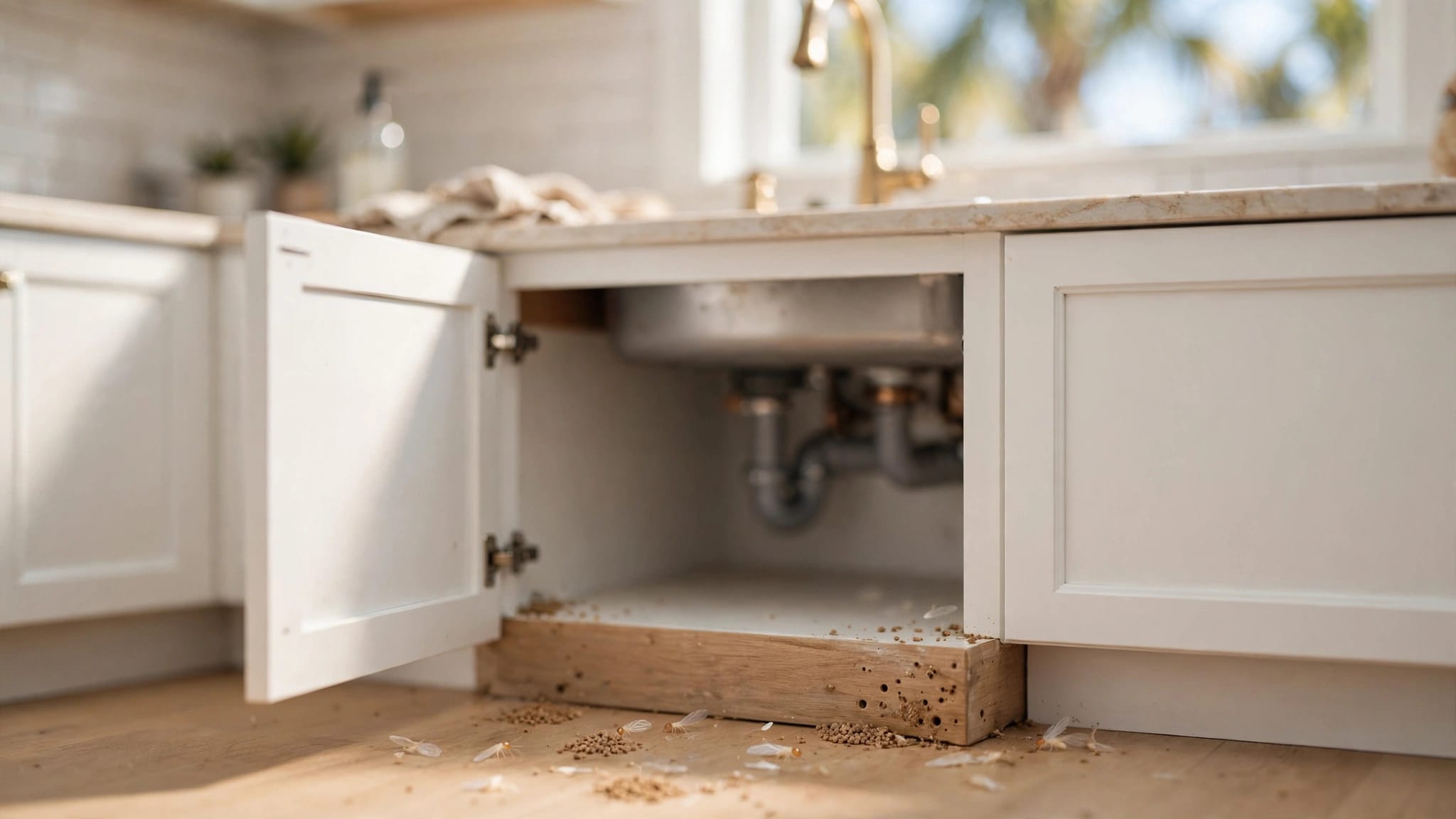
Their common signs include hard, sand-like frass pellets below small kick-out holes. You may also see discarded wings near windows, doors, lights, or other openings. Damaged wood can feel soft, sound hollow, or show galleries beneath paint and trim.
A lack of mud tubes doesn't rule out termites. Drywood colonies can stay hidden for long periods, and visible pellet piles may be the first clear clue.
What to do when activity or damage is found
Finding evidence doesn't mean you need to panic or approve the first treatment proposed. It does mean you should preserve the evidence and obtain a clear diagnosis.
Document the condition before repairs
Take dated photos of mud tubes, pellets, wings, damaged trim, soft wood, stains, and nearby moisture sources. Note where each sign appears and whether it changes over several days.
Avoid painting, filling holes, replacing trim, or removing suspicious wood before the inspection. Cosmetic repairs can erase evidence and make it harder to determine whether activity is current.
Ask the inspector to state whether the finding appears active, inactive, or inconclusive. Also request the likely termite type, affected areas, inaccessible locations, moisture conditions, and recommended follow-up.
Get treatment and repair estimates separately
Termite treatment and structural repair are different jobs. A pest-control company may recommend baiting, liquid soil treatment, localized work, or another method based on the species, construction, access, and activity.
Obtain the proposed treatment in writing. The estimate should identify the method, areas covered, preparation requirements, follow-up visits, and expected warranty terms.
Get a separate written estimate for damaged wood, drywall, flooring, or structural components. A pest company may not perform every repair, and treating termites doesn't automatically restore weakened materials.
For local questions about treatment methods and providers, review these questions to ask a Florida pest control company.
Warranties, disclosures, and insurance
A prior termite treatment, seller disclosure, or construction certificate doesn't guarantee that your home is free of future activity. Each document has a different purpose, and the written terms control.
Check what a warranty actually covers
A termite warranty may include annual inspections, retreatment, damage repairs, or only one of those services. Some agreements cover certain termite species but exclude others. Common conditions include maintaining access, correcting leaks, reducing wood-to-soil contact, and scheduling inspections on time.
Ask these questions before relying on an existing contract:
- Does the agreement transfer to the buyer?
- Is there a transfer fee or renewal charge?
- Are inspections automatic, or must you schedule them?
- Does it cover retreatment only, or repairs as well?
- Which termite species and areas are included?
- What conditions or maintenance failures can void coverage?
You can compare these details in this guide to Florida termite warranty coverage.
Treat insurance and disclosures carefully
Standard Florida homeowners insurance generally excludes direct termite damage because insurers treat it as a maintenance or infestation issue. Citizens states that termite damage isn't covered under its standard policy. A separate covered event, such as storm damage, may involve different questions, so ask your insurer about the exact loss.
A seller's disclosure and prior WDO report can provide useful history, but they don't replace your own inspection after ownership begins. Keep copies of all documents and ask the seller, agent, and pest company for treatment records, repair invoices, warranties, and renewal information.
This Florida termite damage insurance guide explains why insurance, warranties, and service contracts shouldn't be treated as interchangeable.
Key takeaways for new Florida homeowners
- Schedule a post-closing inspection soon after moving in, especially if the earlier report is old or limited.
- Confirm that the provider can perform WDO inspections under the appropriate Florida licensing category.
- Request a complete written report that lists findings, inaccessible areas, moisture conditions, and photographs.
- Learn the difference between mud tubes from subterranean termites and pellet piles from drywood termites.
- Don't cover or repair suspicious damage before a professional documents it.
- Get separate written estimates for treatment and building repairs.
- Read warranty transfer, renewal, inspection, retreatment, and repair terms.
- Assume direct termite damage is excluded from standard homeowners insurance unless your policy says otherwise.
Florida termite inspection FAQ
Do I need another inspection if the home passed before closing?
A second inspection can still help because the earlier report covered one date and only accessible areas. It also gives you a baseline for ownership, especially when the property has changed hands, remained vacant, or has moisture concerns.
Is a WDO report the same as termite treatment?
No. A WDO report documents visible conditions during an inspection. It doesn't automatically include treatment, repairs, monitoring, or a future warranty. Those services require a separate written agreement.
How soon should I inspect after buying?
Schedule it as soon as practical after closing or move-in. There is no universal post-closing deadline, but early documentation helps you understand existing conditions before you make renovations or sign a service contract.
Can I identify the termite species myself?
You can note the signs, but accurate identification requires more than a quick look at an insect or pellet. Subterranean and drywood termites need different inspection areas and treatment plans. A licensed professional should confirm the type and activity.
Protect your investment with clear records
A Florida termite inspection after buying a home gives you more than reassurance. It creates a written starting point for maintenance, treatment decisions, warranty coverage, and future repairs.
Look for evidence around foundations, garages, plumbing areas, roof structures, trim, and nearby wood. When a concern appears, document it, request a licensed evaluation, and obtain written findings before authorizing work. That steady approach helps you protect the home without treating every suspicious mark as an emergency.
Schedule a Free Inspection: