Termite Damage in Florida Hardwood Floors: Signs and Repair Decisions
A hardwood floor can look intact until one board flexes underfoot. The damage termites cause to hardwood floors often starts out of sight, but a soft spot can also come from water, rot, or a failing subfloor.
If you live in Southwest Florida, don't replace the board yet . First, document the damage and find out what's causing it. That answer determines whether you need pest treatment, moisture repairs, flooring work, or all three.
Key Takeaways
- Hollow sounds, blistering, sagging, and small holes deserve attention, but none confirms termites on its own.
- Mud tubes can point toward subterranean termites; hard pellet piles near tiny openings can point toward drywood termites.
- Treatment addresses termite activity. It won't restore weakened boards or structural wood, so repair decisions need a separate assessment.
- Keep damaged areas accessible until an inspector has examined them. Replacing the visible board too soon can hide useful evidence.
Signs of termite damage in hardwood floors
Finished wood can conceal internal damage. Check the floor itself, then look at the baseboards, wall edges, and nearby rooms for clues that put the problem in context.
Changes you can see or feel
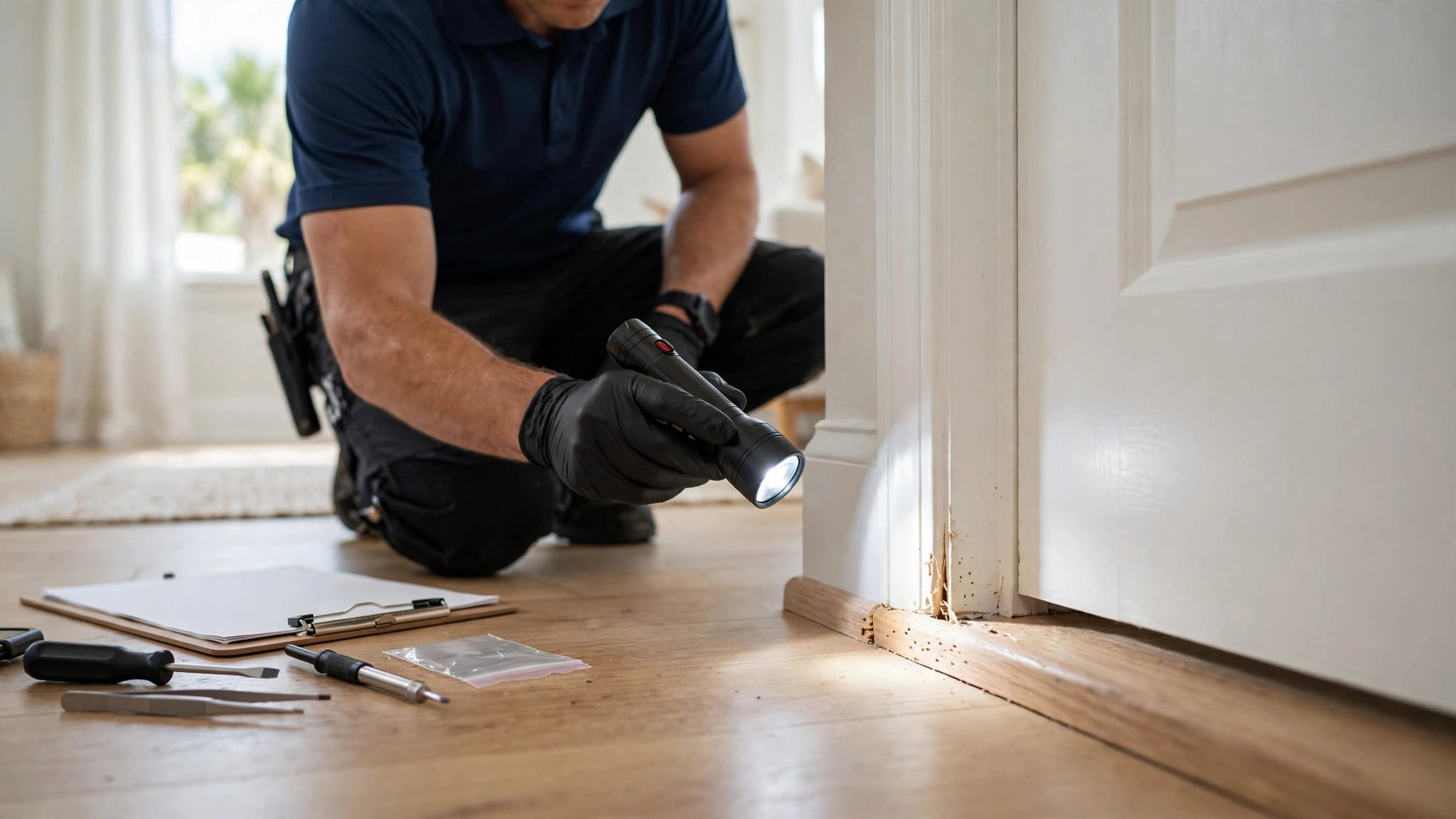
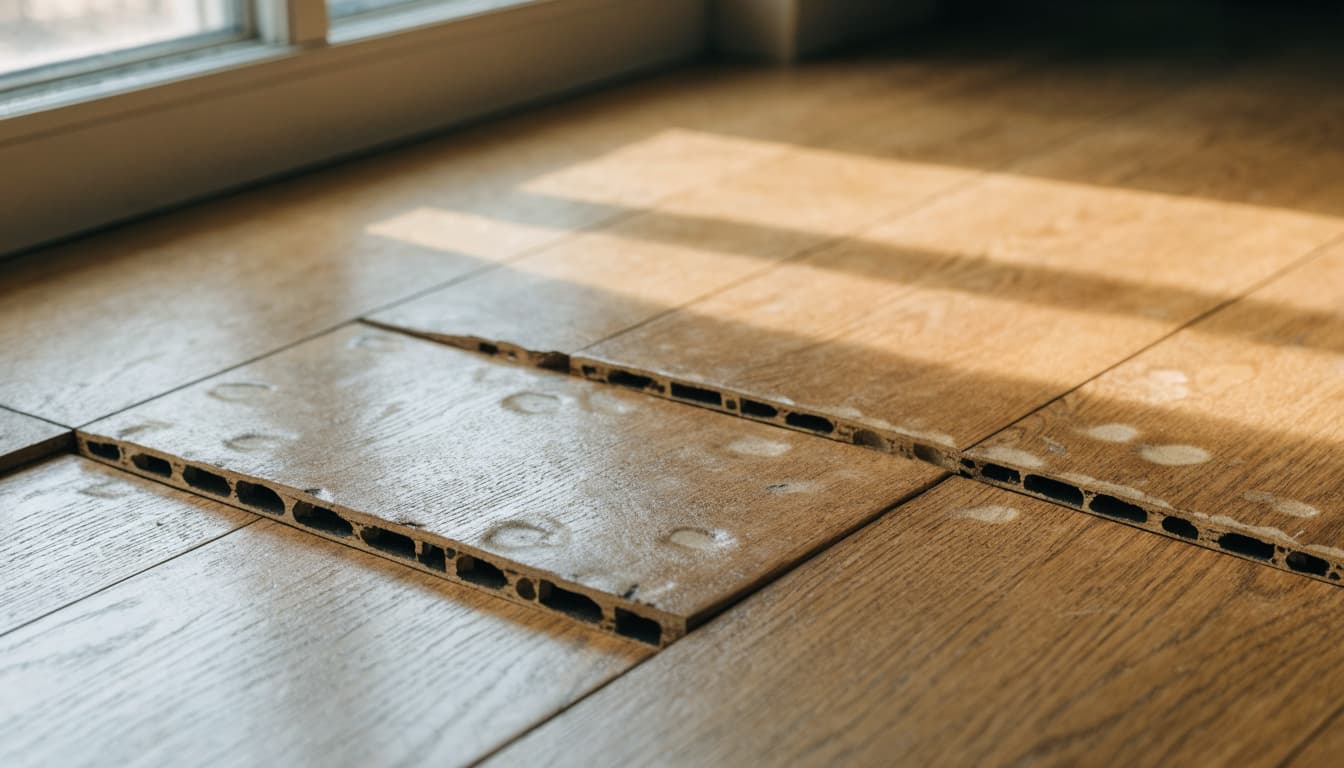
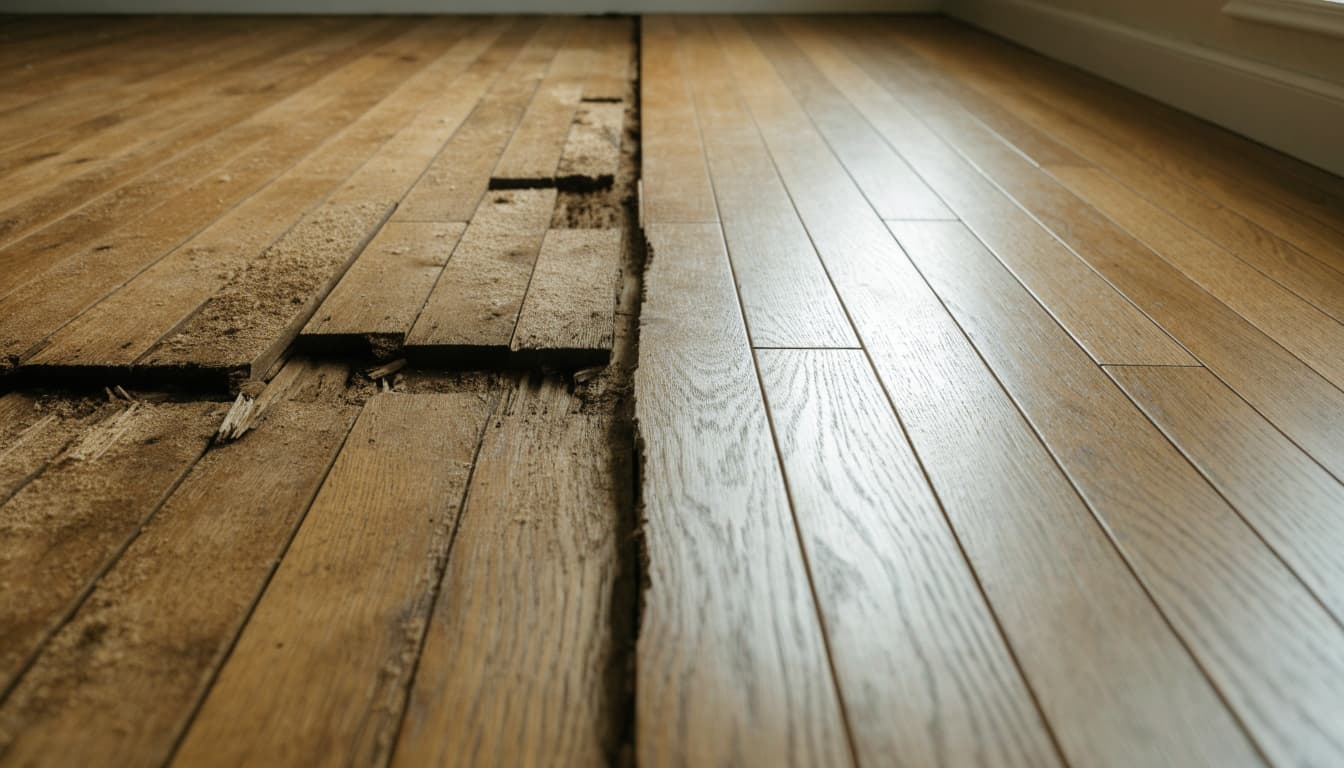
A board may sound hollow when you tap it lightly or feel springy under normal foot traffic. You might notice blistered finish, narrow cracks, an uneven surface, or a small area that gives way. Damage near a baseboard can appear minor on top even when wood beneath it is affected.
These signs warrant a closer look, especially when more than one appears together. However, finish problems and loose flooring can produce similar symptoms. See common signs of termite damage for other places to check around a Cape Coral home.
Clues beside the floor
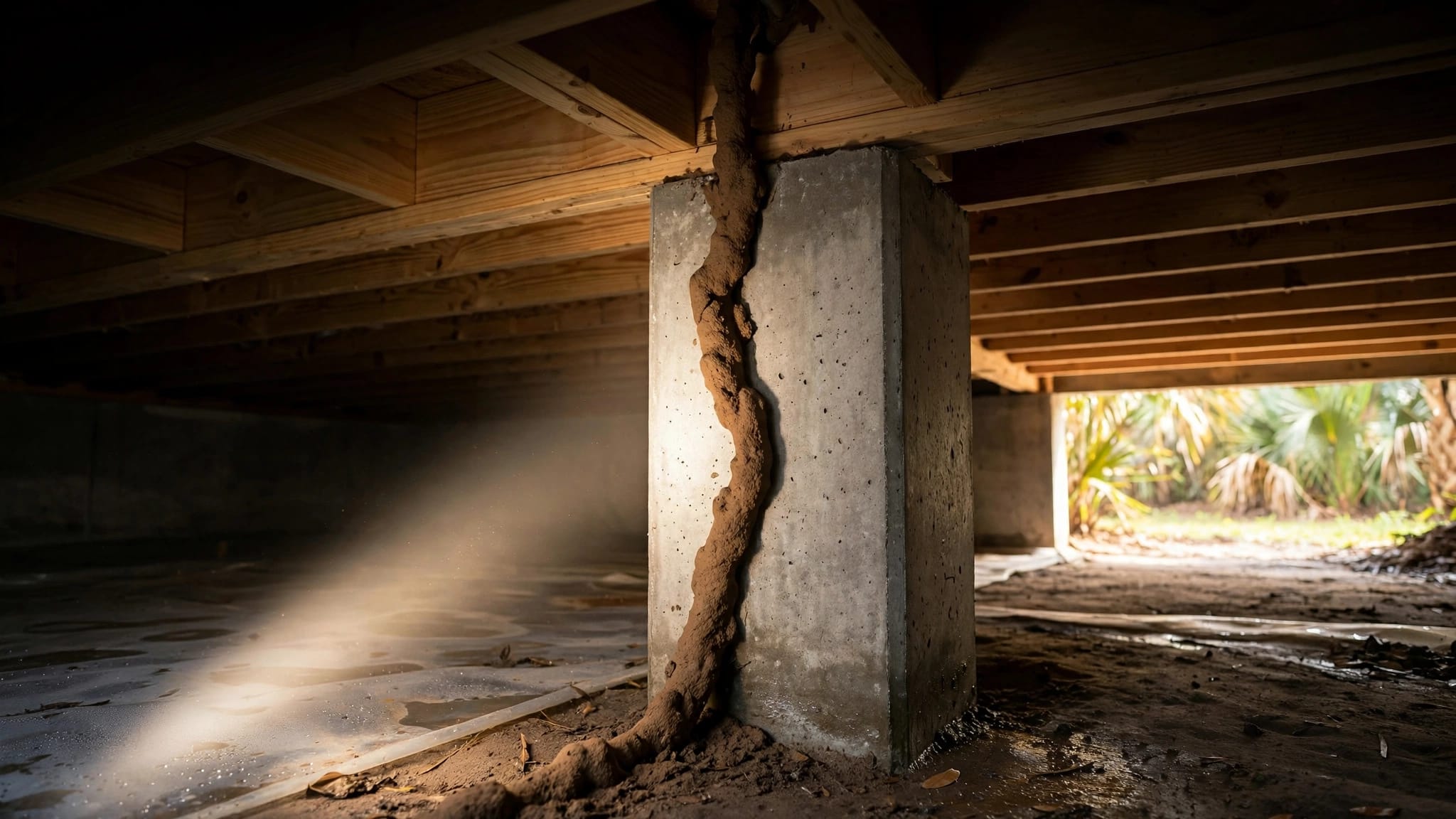
Look for brown mud tubes along a slab edge, garage wall, or foundation. Also watch for discarded wings near windows and small, hard pellets collecting below tiny openings in wood trim.
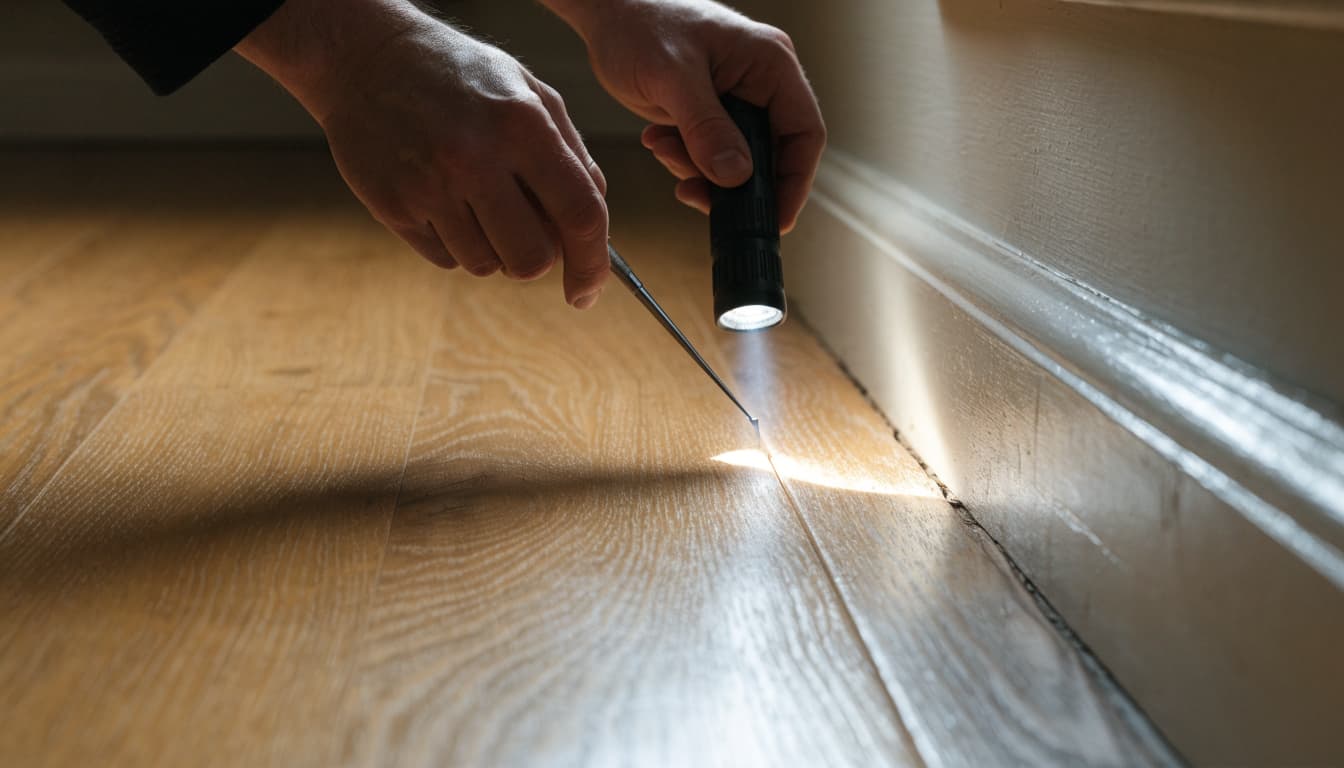
Photograph any evidence before cleaning it up. Note whether the pile returns and where you found it. Avoid pulling up boards or spraying into holes, since an inspector may need to see the original pattern.
Which Florida termites might be involved?
The kind of termite matters because it changes where an inspector looks and which treatments may work. Floor damage alone can't identify the insect.
Subterranean termites
Subterranean termites generally reach a home through soil-connected routes. Their shelter tubes protect them as they move across exposed surfaces. In a slab-on-grade home, check accessible foundation edges, garage walls, plumbing penetrations, and the floor perimeter.
A tube near a damaged floor is significant, but its absence doesn't clear the room. Entry paths can remain hidden behind finishes and built-in features.
Drywood termites
Drywood termites live within wood and don't need a route to the soil. They may leave tiny kick-out holes and hard, grain-like pellets. Check whether pellets are falling from trim, furniture, or another piece of wood before assuming they came from the floor.
A licensed inspector can distinguish termite evidence from other wood-damaging insects. Identification also helps prevent a treatment aimed at the wrong location.
Could water be causing the soft spot?
Florida humidity makes this comparison difficult. A plumbing leak, air-conditioning condensate problem, rain intrusion, or trapped moisture can cause boards to cup, stain, swell, or soften. Rot can also weaken wood beneath a finish.
Trace the pattern. Water damage often follows a leak or spreads through a damp area. Termites may leave galleries and insect evidence, sometimes in wood that shows no obvious surface stain. Both problems can occur together, so finding moisture doesn't rule out termites.
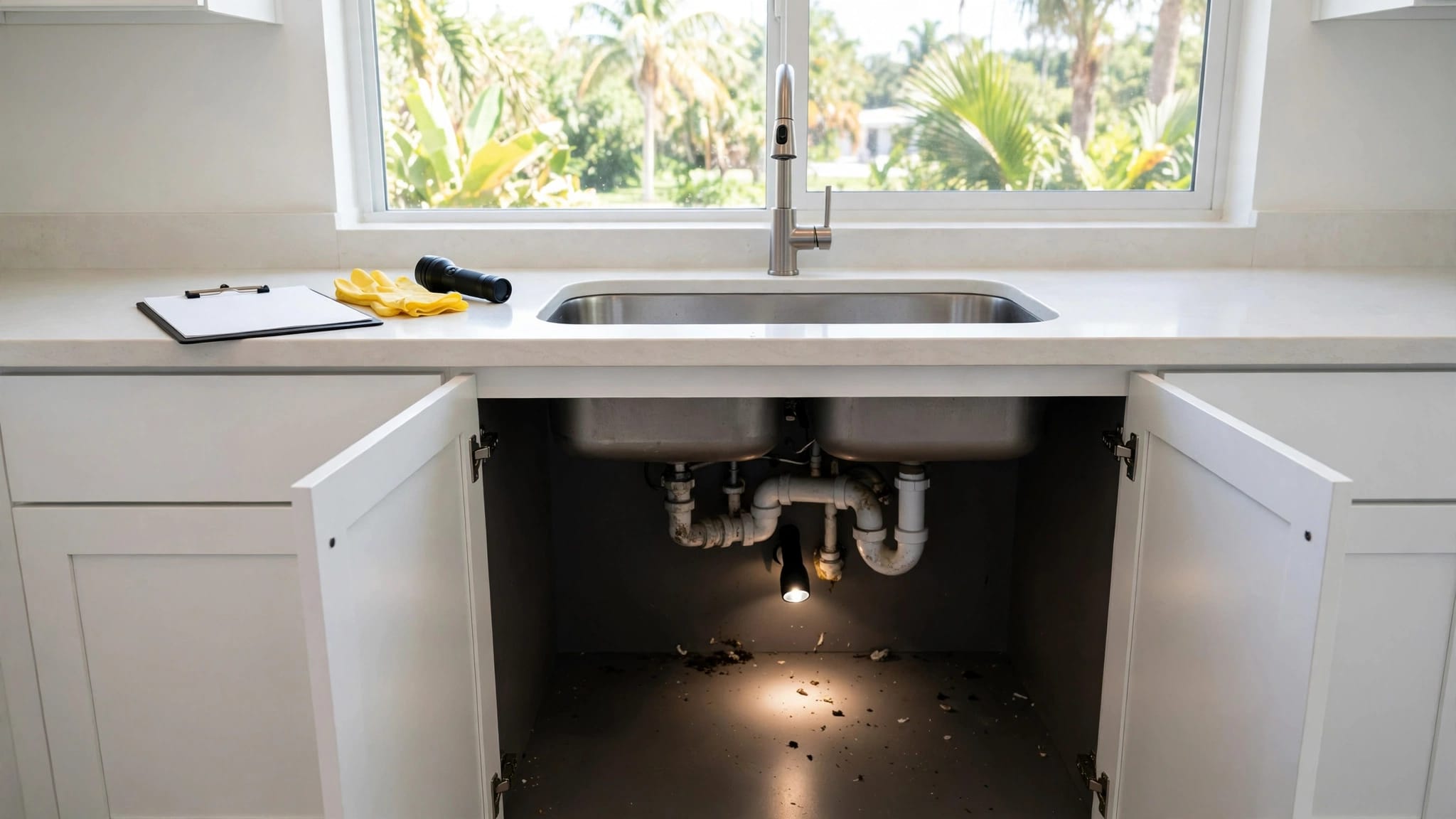
Check accessible plumbing and nearby walls without opening the floor. If you find an active leak, stop the water safely and arrange the appropriate repair. Then have suspected insect evidence assessed before covering the area. Drying a floor won't eliminate termites, and termite treatment won't fix a leak.
What a professional floor inspection should establish
The immediate goal is to identify the cause and find out how far the damage may extend. An inspection should also separate evidence of current activity from older damage where possible.
Evidence, access, and limits
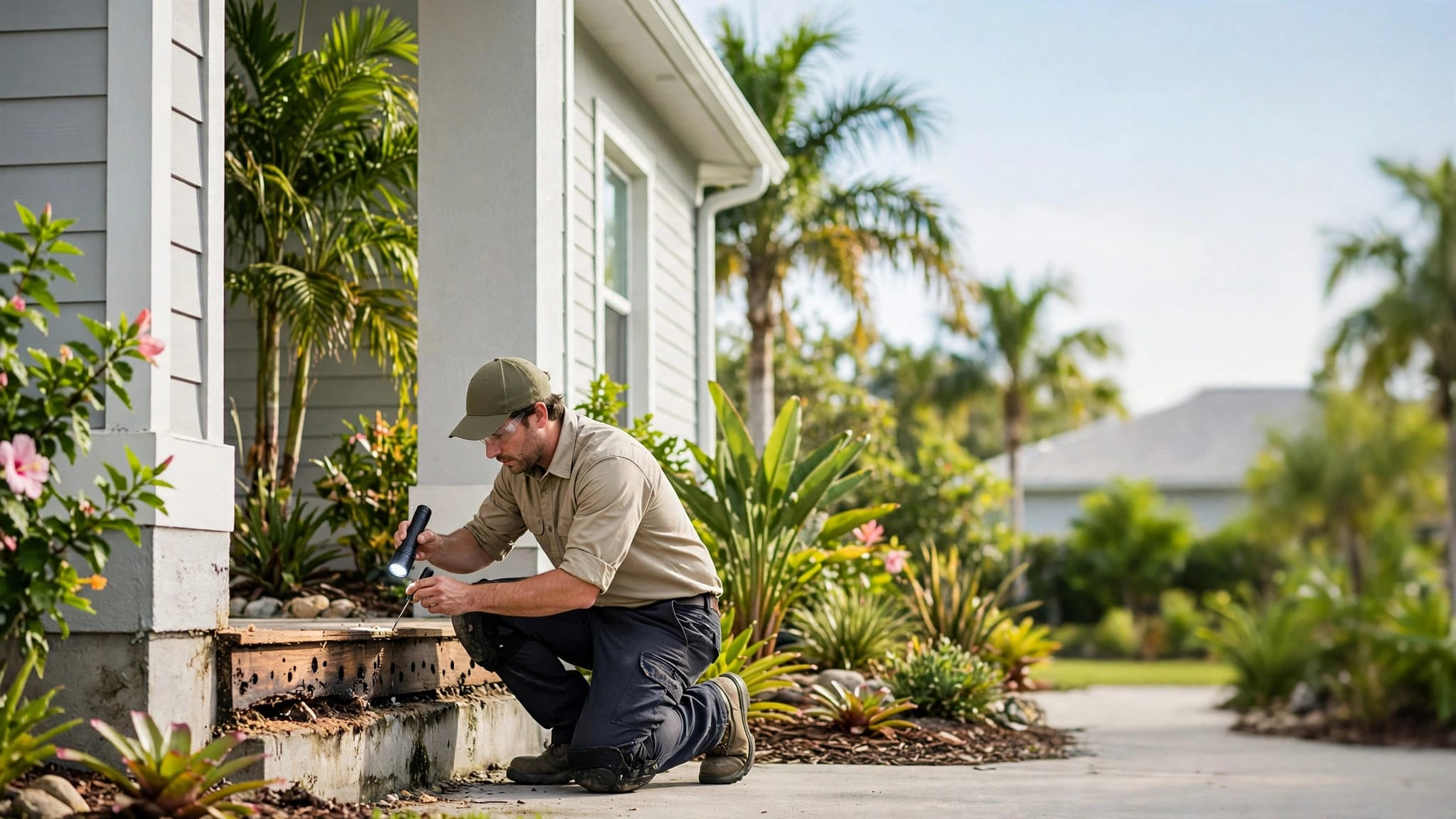
A pest professional may inspect accessible flooring edges, baseboards, adjoining walls, slab edges, garages, crawl spaces, and moisture-prone areas. They can look for insects, tubes, pellets, wings, damaged wood, and possible entry routes.
Tell the inspector about past leaks and treatments. If flooring or framing is covered, ask what they couldn't see. A visual assessment cannot confirm the condition of every concealed board or support.
When a WDO report matters
If you're buying or selling a home, ask whether you need Florida's Wood-Destroying Organisms Inspection Report. It documents visible evidence and relevant conditions, but it doesn't automatically include treatment or a full structural repair assessment. What a Florida WDO inspection covers differs from a general home inspection.
For an existing home, a pest assessment is still appropriate when flooring blisters, sounds hollow, or sits near mud tubes or pellet piles. Ask for clear findings you can share with a flooring contractor if repairs are needed.
Treat the termites before closing the floor
If an inspector finds active termites, agree on a treatment plan before covering the damage with new material. Replacing one board doesn't address an infestation elsewhere in connected wood or along a soil entry route.
Bait stations and liquid treatments are options for some subterranean termite situations. Drywood activity calls for a different assessment of affected wood and how widely it extends. Construction, access, soil conditions, and inspection findings all matter. A comparison of Florida termite treatment options can help you discuss the recommendation with your technician.
Ask what the proposed work treats, which areas need access, and what follow-up is included. If moisture contributed to the problem, arrange that repair too. Successful termite treatment doesn't make damaged wood strong again.
How much termite damage hardwood floors can sustain
There's no reliable repair decision based on the finish alone. A single marked board may have sound support beneath it, while a modest-looking soft spot may conceal damage in lower layers.
When a board-level repair may work
If the infestation is addressed and a flooring professional confirms that the supporting material is sound, replacing affected boards may be enough. Matching existing hardwood can still be difficult. Species, board width, finish, and years of sun exposure all affect how a patch looks.
Surface refinishing may improve appearance, but it cannot repair hollowed or weakened wood. Ask the contractor to assess each compromised board rather than assuming a fresh coat will solve the problem.
When the repair goes below the flooring
Movement across several boards, a sinking area, or damage beside a wall may require opening part of the floor. The repairer may need to examine the subfloor and any accessible structural members. The right scope depends on how the home was built, including whether the flooring sits over a slab or a framed floor.
If a floor feels unsafe or damage may involve load-bearing wood, keep people off the area and contact a qualified contractor. An engineer may be needed to assess structural safety. Pest treatment and building repairs answer different questions, so get both findings before rebuilding.
Plan the repair budget around the findings
The visible patch rarely tells you the full cost. Treatment needs, access beneath the floor, moisture repairs, and matching materials can all change the scope. Request written estimates that distinguish pest work from flooring and structural work.
Review your insurance policy before assuming repairs are covered. Florida homeowners insurance generally doesn't pay for routine termite treatment and often excludes damage from ongoing infestations. Coverage depends on the policy and circumstances; whether insurance covers termite damage in Florida is worth checking before you budget for the work.
Keep inspection findings, photographs, treatment records, and contractor estimates together. They give each professional a clearer picture of what has already been found.
Reduce the chance of another damaged floor
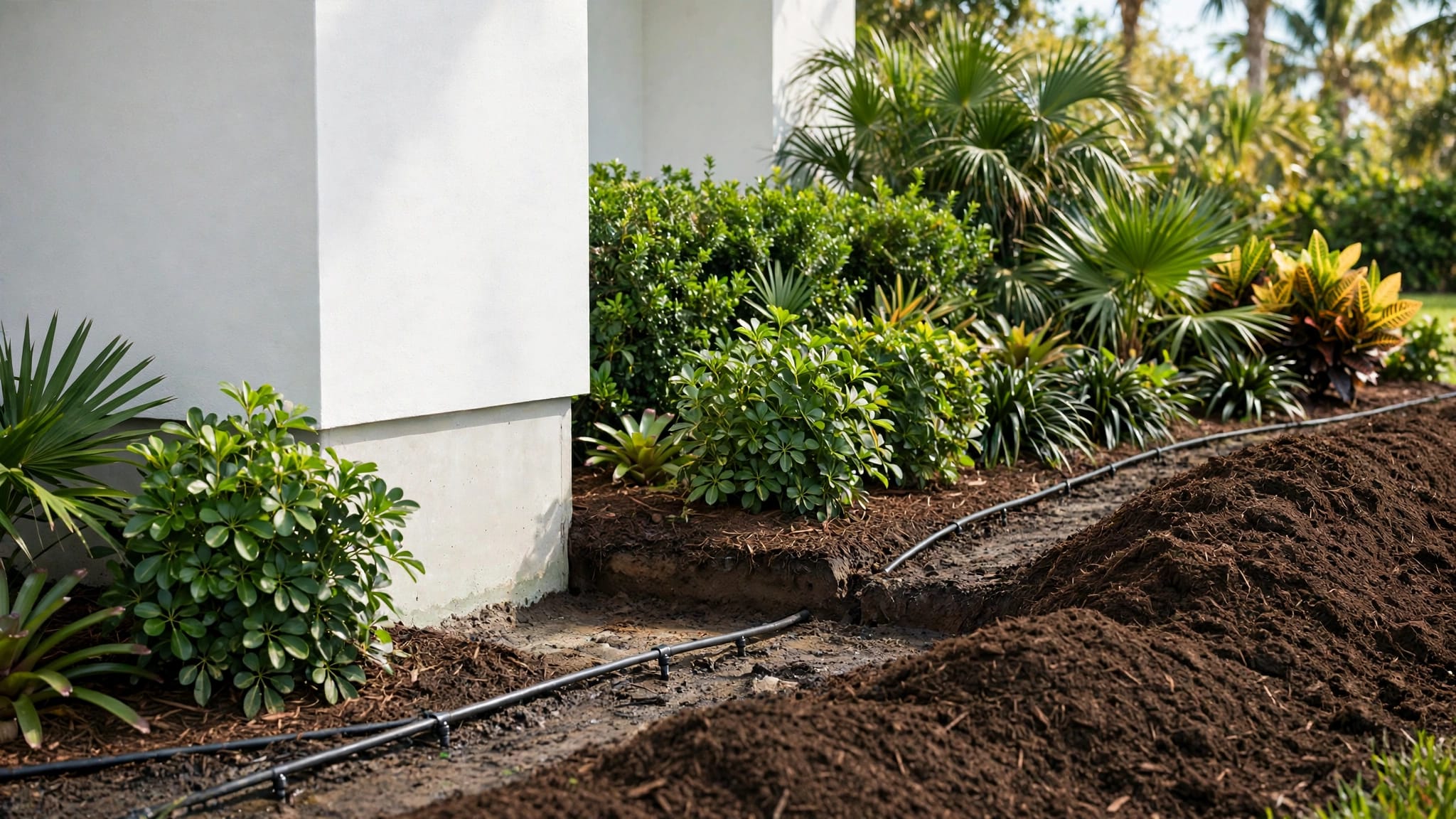
After treatment and repair, focus on the conditions that made the area vulnerable. Fix leaks promptly, check air-conditioning drainage, and keep accessible slab edges and foundation areas visible. Watch for irrigation that repeatedly wets an exterior wall.
Don't store firewood or wood debris against the house. When a renovation exposes old damage, ask for an assessment before closing the area again. In Cape Coral, Fort Myers, and nearby Southwest Florida communities, periodic inspections help catch new evidence before another board feels soft.
FAQ
Can termites eat through hardwood flooring?
Yes. Hardwood is wood, although the flooring finish may hide damage while termites feed inside or beneath it. The species and the home's construction affect where activity appears.
Does a hollow-sounding board mean termites are active?
No. Loose installation, water damage, rot, and old termite damage can also change how a board sounds. An inspector needs supporting evidence to identify the cause and assess possible current activity.
Should I pull up a damaged board before the termite inspection?
Usually, leave it in place if the area is safe. Photograph what you see and let the inspector examine the floor edges and nearby clues first. If the floor may collapse, avoid walking on it and get qualified help promptly.
Will termite treatment fix a sagging hardwood floor?
No. Treatment targets the insects, not the lost strength of wood. A flooring contractor or other qualified building professional must assess what needs replacement or structural repair.
Conclusion
A soft board is a warning, not a diagnosis. The termite damage hardwood floors sustain can remain hidden beneath a sound-looking finish, while water and rot can produce similar signs.
Identify the cause first , then match the treatment and repair to what the inspection finds. That sequence protects your home without covering up the problem beneath a new floor.
Schedule a Free Inspection: