Stormwater Pond Mosquito Control for Florida Properties
A stormwater pond can protect a Florida property from flooding and still become part of a mosquito problem. The goal of stormwater pond mosquito control is to reduce breeding habitat without damaging drainage, violating pond permits, or relying on routine spraying.
For homeowners, HOAs, property managers, and commercial owners, the most effective work happens after rain. Clear drainage, accessible pond edges, and prompt removal of small water sources can reduce mosquito pressure around patios, walkways, pool decks, and entrances.
Why Florida Stormwater Ponds Attract Mosquitoes
A pond is not automatically a mosquito factory. Healthy stormwater systems move and store water as designed. Problems often start in shallow, protected pockets where water remains still after storms.
Florida's wet season usually runs from May through October. During that stretch, frequent downpours can fill low spots, clog inlets with leaves, and leave containers wet for days. Hurricane-season rainfall can add even more standing water around a pond system.
A functioning pond should not hold water in dry areas
Many dry retention ponds are designed to drain within about 72 hours. If one stays wet longer, inspect the outlet, overflow structure, swales, and connecting pipes. Sediment, yard waste, erosion, or a collapsed pipe can slow drainage.
The EPA advises property managers to remove debris and sediment from inlets and outlets, repair eroded ground, and manage excess plant growth around stormwater basins. These steps support drainage and reduce sheltered water where larvae develop.
However, don't dig, drain, fill, regrade, or change a stormwater pond on your own. Many Florida ponds are permitted systems with recorded easements and maintenance requirements. Contact the HOA, property manager, municipality, or a qualified stormwater contractor before altering a basin or its structures.
Dense edges can hide stagnant pockets
Mosquitoes do not need the entire pond to be stagnant. A narrow strip of still water behind floating debris or thick shoreline growth may be enough.
Keep a clear maintenance path along pond edges where the property design allows it. Crews need safe access to inspect water, clear obstructions, and treat larvae when appropriate. Avoid cutting vegetation below permit requirements or disturbing wildlife habitat without approval.
Inspect Drainage After Heavy Florida Rain
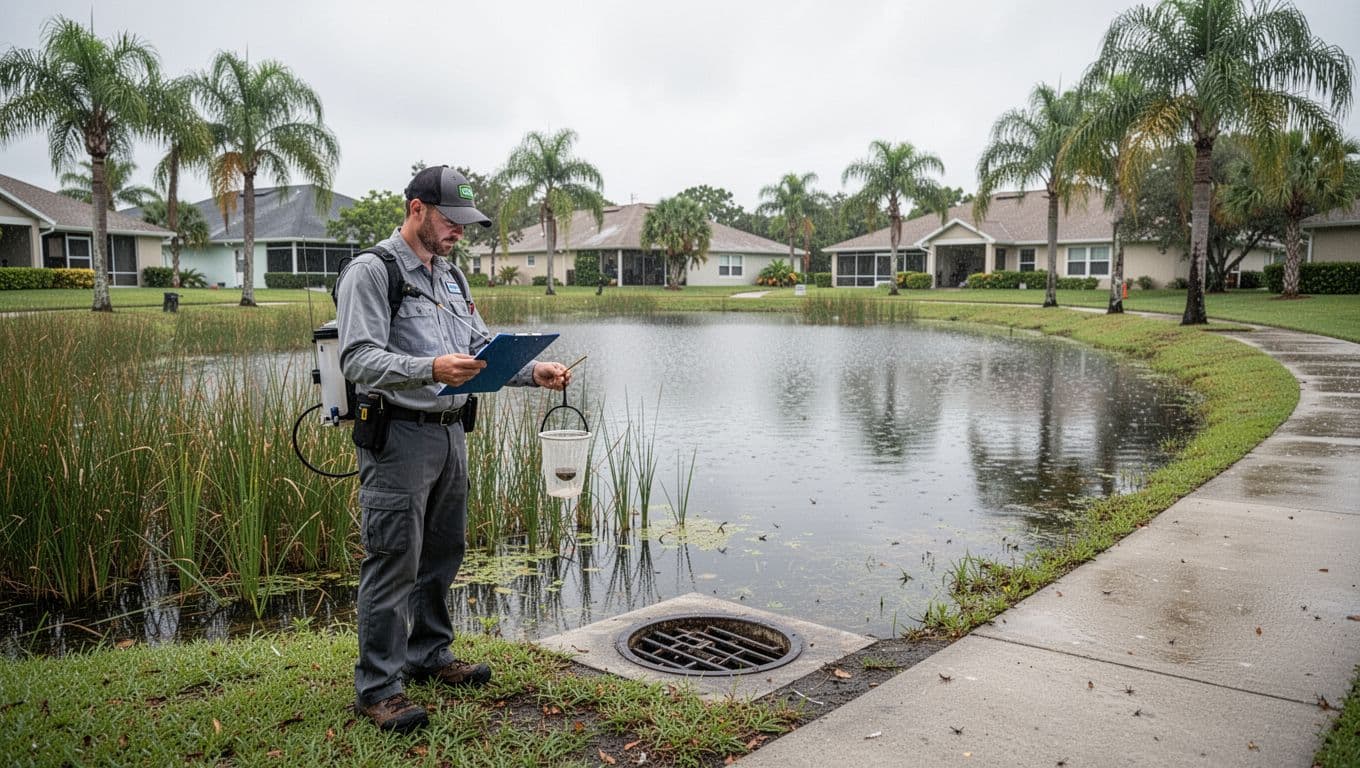
Inspecting after rainfall shows what a dry-day walk misses. Start 24 to 48 hours after a storm, then check again around the third day if water has not drained.
Walk the property safely. Stay off wet pond slopes, keep children away from steep banks, and never enter standing water. Alligators, snakes, fire ants, unstable soil, and hidden drop-offs make pond-edge work risky.
Look for water that has nowhere to go
Start at the high side of the property and follow water toward the pond. Watch for blocked grates, leaves piled at curb cuts, mulch washed into swales, and water pooling near downspouts.
At the pond, look at inlet and outlet structures from a safe distance. Water should have a visible route through the system. Report cracked structures, severe erosion, algae-choked outlets, or soil washing into pipes to the responsible manager.
A pond may hold permanent water by design. Focus attention on isolated puddles, muddy shelves, roadside ditches, clogged drains, and shallow areas that stay still.
Use a simple post-rain inspection checklist
Keep notes with dates, rainfall, and locations. A short record helps an HOA or service technician spot a repeating drainage failure.
- Check gutters, downspout extensions, swales, French drains, and catch basins for blockages.
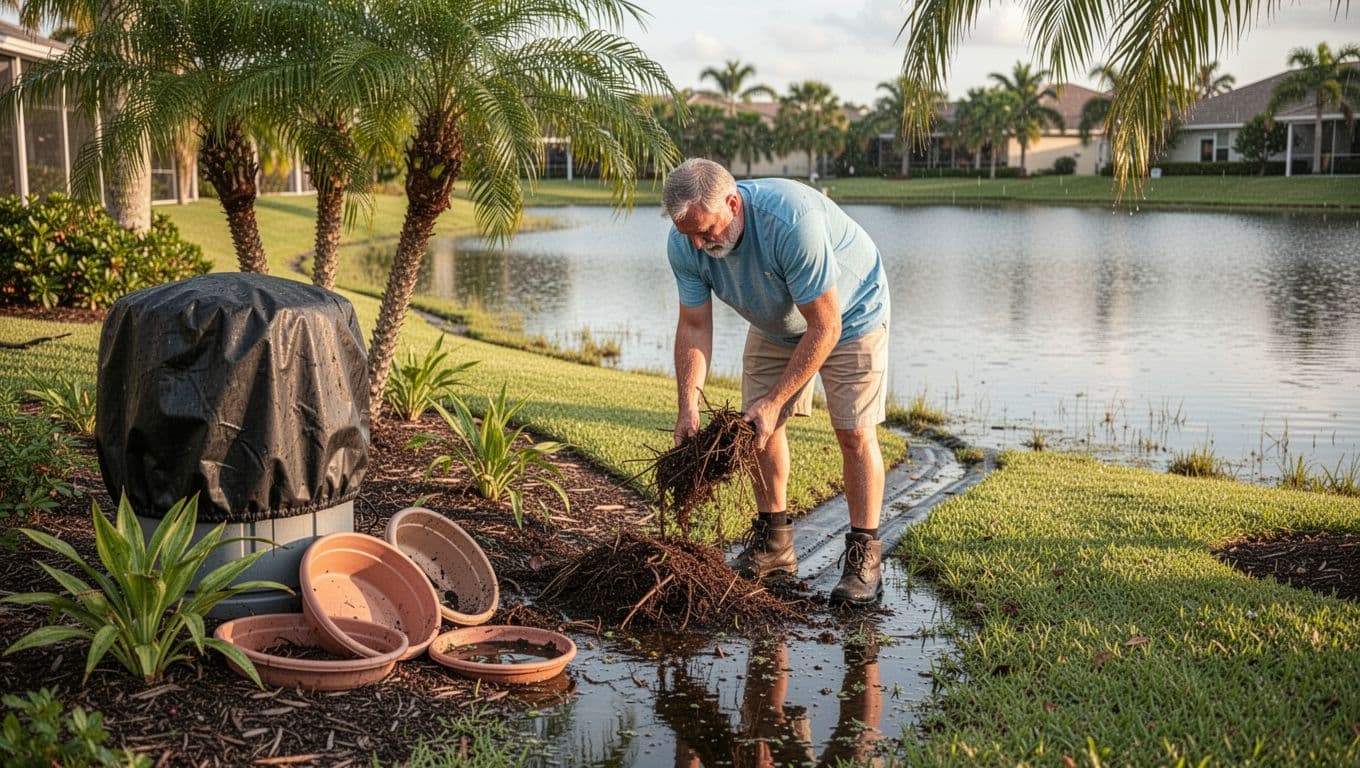
- Empty water from toys, tarps, wheelbarrows, plant saucers, pool covers, and unused equipment.
- Inspect irrigation for broken heads, overspray, and low areas that receive water every cycle.
- Photograph persistent puddles near pond edges, walkways, dumpster pads, or parking areas.
- Watch for mosquito larvae, which look like small dark "wrigglers" near the water surface.
Florida law requires developed residential properties to avoid maintaining freshwater that breeds mosquitoes in significant numbers. That rule does not give owners permission to alter a permitted stormwater system. Fix the source you control, then report the part you do not.
Remove Small Breeding Sites Beyond the Pond
The pond may draw blame while the real breeding water sits beside the building. A forgotten bucket can produce mosquitoes much faster than a well-maintained basin.
For a broader property walk, use this guide to common mosquito breeding grounds around Cape Coral homes. The same trouble spots show up at apartment communities, office parks, restaurants, and retail centers.
Make water removal part of routine maintenance
Ask landscaping and maintenance teams to inspect after mowing, irrigation repairs, and storms. Trash, plastic sheeting, empty planters, and discarded tires often collect water along fence lines or behind storage areas.
Pool covers also deserve attention. A maintained pool is rarely the issue, but folds in a cover can trap rainwater. Birdbaths and pet-water bowls need fresh water often, while rain barrels need tight screens or covers.
Correct irrigation problems before treating mosquitoes
Overwatering creates a cycle that treatments cannot solve. Run each zone while someone watches for runoff, leaks, and overspray into sidewalks or low turf. Adjust timers after seasonal rainfall instead of leaving a dry-season schedule in place.
Shared drainage complicates some neighborhoods. Water can move from a neighboring lot, common area, road, or canal connection. In that case, document the issue and send it to the HOA, manager, or local public works department.
A larvicide can treat water that must remain, but it cannot correct a blocked outlet or leaking irrigation line.
Stormwater Pond Mosquito Control With Targeted Treatments
Source reduction comes first. When water cannot be drained and mosquito larvae are present or likely, targeted larval treatment may fit into a managed plan.
Bti, short for Bacillus thuringiensis israelensis , is a biological larvicide used in some mosquito-control programs. Methoprene products, including Altosid, interrupt mosquito development. These products have different labels, formulations, application rates, and site restrictions.
Treat larvae before adult mosquitoes spread
Larval control focuses on mosquitoes before they emerge as biting adults. It works best when a technician can identify the water source and reach it safely.
Adult mosquito treatments may reduce biting activity around approved resting areas, such as dense shrubs near patios or building entries. They do not replace drainage repairs or container cleanup. Wind, rainfall, and new mosquitoes flying in can limit how long an adult treatment affects activity.
For waterfront commercial spaces, the same principle applies: inspect shoreline edges, drains, storage zones, and outdoor seating areas before choosing treatment. Mosquito control around waterfront facilities needs careful planning around people and water.
Follow labels and professional guidance
Never pour household chemicals, pool products, bleach, oil, or leftover pesticides into a pond, drain, ditch, or catch basin. Those actions can harm aquatic life, damage the drainage system, and create a larger compliance issue.
Use any pesticide only according to its EPA-approved label. Keep children, pets, and visitors away from treatment areas for the label's stated interval. Store products in their original containers, locked away from food and animal feed.
HOAs and commercial owners should use a properly licensed Florida applicator for common-area applications. Request service records that show the product, treatment location, date, label precautions, and follow-up plan.
Set a Pond Plan for HOAs and Commercial Sites
Mosquito control works better when the people who mow, irrigate, clean drains, and manage vendors share the same plan. A monthly dry-season check may be enough for some sites, while rainy-season inspections often need to happen more often.
Assign clear responsibilities. The landscape team can flag blocked swales. Maintenance staff can remove container water. The board or property manager can authorize stormwater repairs and coordinate licensed mosquito service.
Keep residents and tenants informed
Give residents notice before common-area treatment. Include the date or service window, affected locations, precautions, and a contact for questions. Clear communication prevents well-meaning residents from applying products to shared ponds without authorization.
A property manager should also keep a map of pond structures, drains, irrigation zones, and recurring wet areas. This record helps after staff changes or a major storm.
Maintain access without creating new problems
Do not stack mulch, yard debris, equipment, or construction materials near inlets and outlets. Keep maintenance access routes open, but do not remove shoreline vegetation simply to make an area look tidier.
If overgrowth blocks inspection or traps floating mats, ask the pond manager or qualified contractor about approved vegetation management. Some mosquitoes, including Mansonia species, can use rooted aquatic plants as part of their development. Mosquitoes associated with canal vegetation need a shoreline-focused response.
When a Professional Mosquito Service Is Needed
Call for help when mosquitoes remain heavy after you remove containers and correct obvious drainage issues. A professional inspection also makes sense when larvae appear repeatedly in water that cannot be drained.
Ask for service if a pond outlet is blocked, erosion is severe, water remains in a dry basin after several days, or dense shoreline growth prevents safe access. Commercial sites should act sooner when mosquito activity affects employees, outdoor diners, customers, or residents.
A good visit includes more than spraying. The technician should inspect low spots, irrigation, drains, vegetation, containers, and pond margins. They should also explain which areas they can treat, which repairs belong to stormwater maintenance, and what people and pets should do after service.
For ongoing issues near homes and shared property, professional mosquito control options in Cape Coral can pair site inspections with treatment plans based on actual conditions.
A Better Pond Means Fewer Places to Breed
Florida stormwater ponds need maintenance, not quick fixes. Clear drainage routes, safe shoreline access, and regular removal of small water sources reduce the conditions mosquitoes need.
Stormwater pond mosquito control works best when pond maintenance and mosquito management stay connected. Treat water that must remain, follow product labels, and bring in qualified help when drainage or shared-property issues go beyond routine upkeep.
Schedule a Free Inspection: