What to Include in a Florida Termite Repair Estimate
A low repair quote can become expensive when it leaves out damaged framing, finish work, or concealed damage. A Florida termite repair estimate should describe exactly what you're buying and how additional work gets approved.
The most important detail is a clear written scope , backed by inspection findings and separate treatment terms. Before comparing prices, check who will stop the termites, who will repair the damage, and where each company's responsibility ends.
Separate Termite Treatment From Repair Work
Treatment addresses the infestation
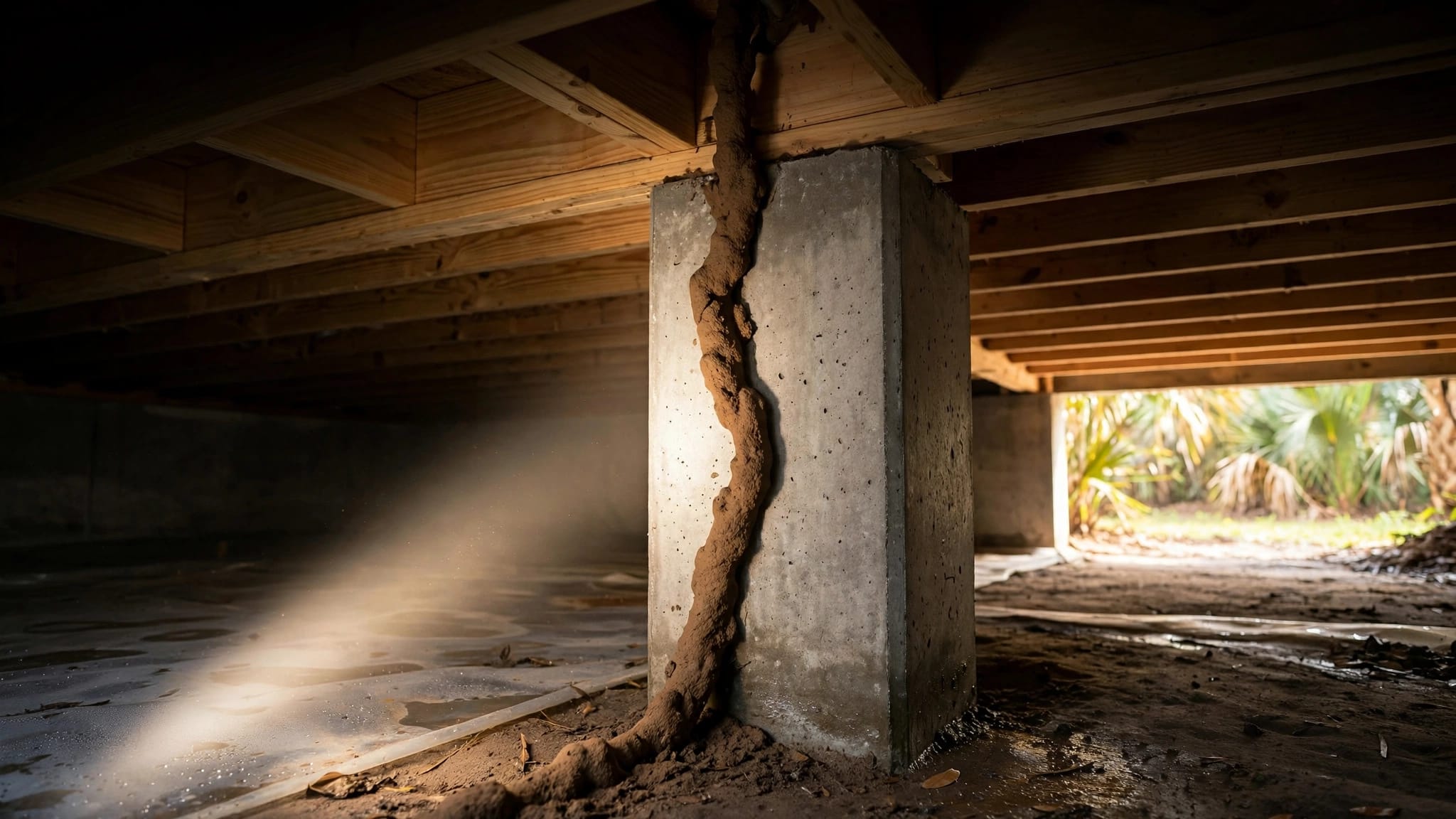
Termite treatment targets the insects. Depending on the species and property, a licensed pest-control company may recommend bait stations, liquid soil treatment, localized wood treatment, or fumigation.
The written treatment plan should identify the evidence found, areas covered, access needs, preparation instructions, and follow-up services. Ask whether repairs must occur before or after treatment, because opening walls or replacing wood may affect access.
General household pest spraying doesn't replace termite-specific treatment. Likewise, replacing one damaged board won't resolve an infestation elsewhere in the structure.
Repairs restore damaged materials
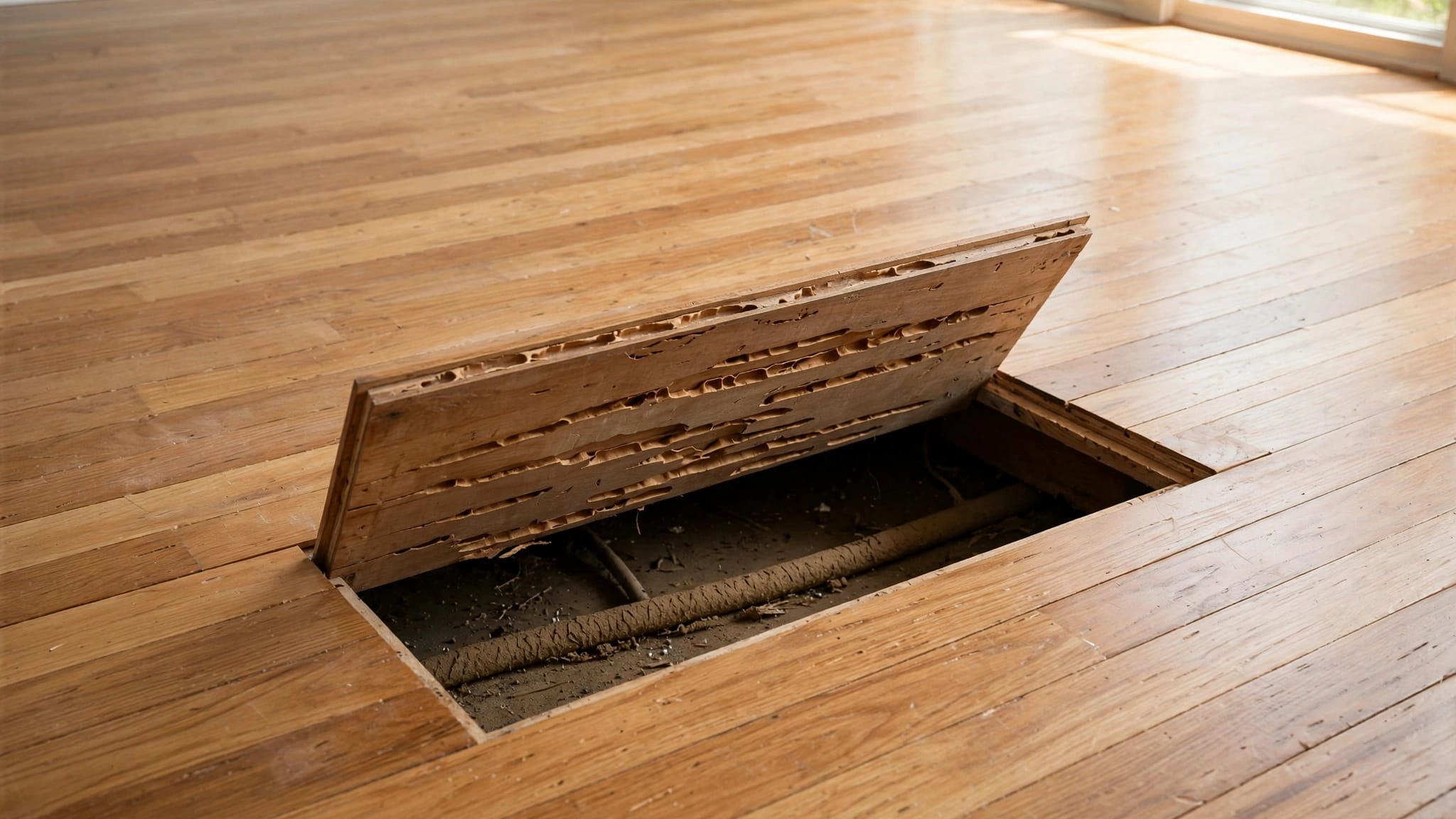
Repair work addresses damaged wood and related building components. It may include demolition, framing replacement, drywall, trim, flooring, and painting.
Request separate prices for treatment and construction, even if one company coordinates both. Shield's guidance on post-purchase termite inspection steps also explains why those scopes need separate documentation.
Ask who contracts with you for each job. If another contractor handles repairs, identify that business and clarify who schedules inspections, approves changes, and answers warranty claims.
What a Termite Repair Estimate Should Describe
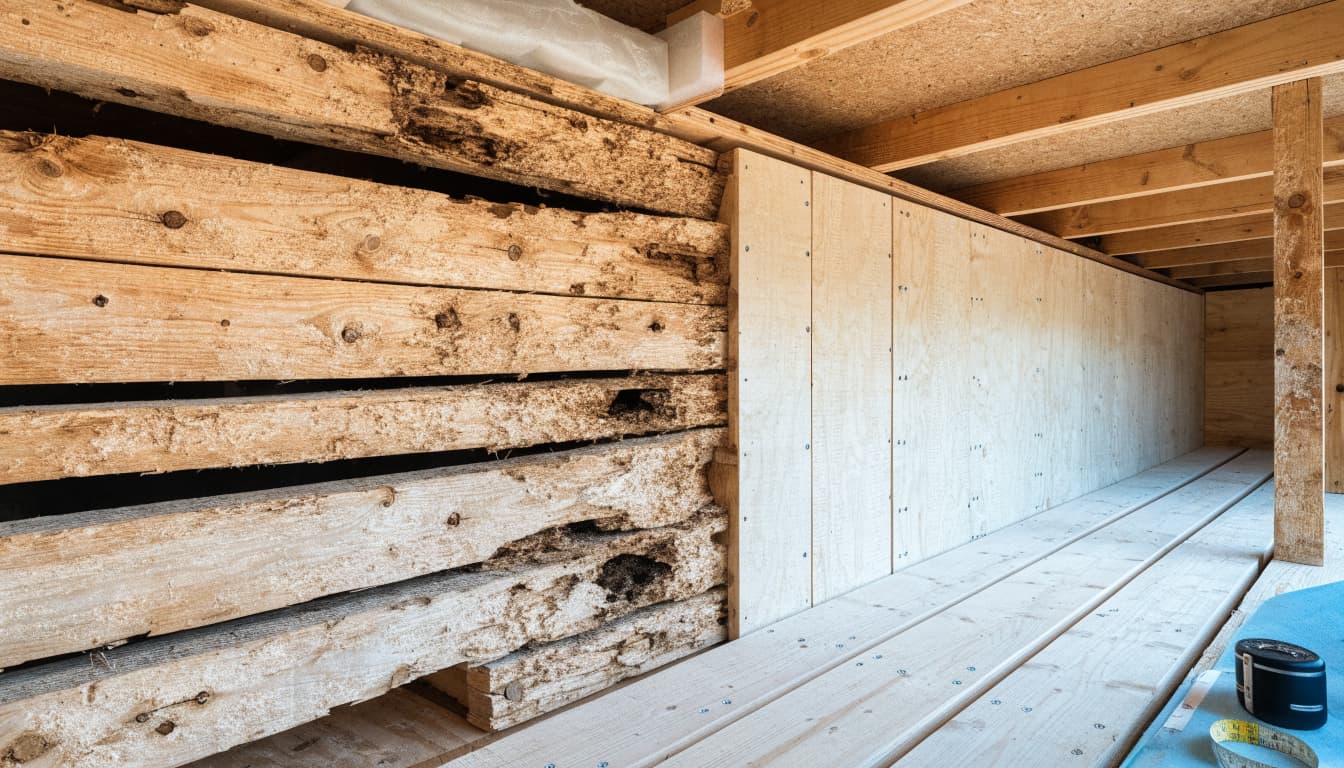
Identify locations and repair methods
"Repair termite damage" is too vague to compare or enforce. Ask the contractor to name each affected area and component, such as a garage door frame, wall stud, sill plate, or floor joist.
The estimate should explain whether the work involves replacement, an approved reinforcement method, or further evaluation before choosing a repair. Measurements and quantities help distinguish a limited trim repair from substantial framing work.
Request dated photographs tied to the locations listed. Also clarify whether removing finishes, protecting surrounding surfaces, and disposing of damaged materials are included.
Specify materials and finished results
Request lumber dimensions, grade, treatment requirements where applicable, and relevant connection details. Replacement materials must suit their intended use, including exterior exposure or ground contact where applicable.
Pressure-treated wood doesn't repair adjacent damage or eliminate the need for termite control. The contractor should explain how the replacement addresses the actual building condition.
Finish work deserves equal attention. Ask whether drywall patching, texture matching, baseboards, paint, flooring transitions, and cleanup are included. Clarify the expected finish standard, since a repaired wall may still need broader painting for a consistent appearance.
Use Inspection Findings Without Overreading Them
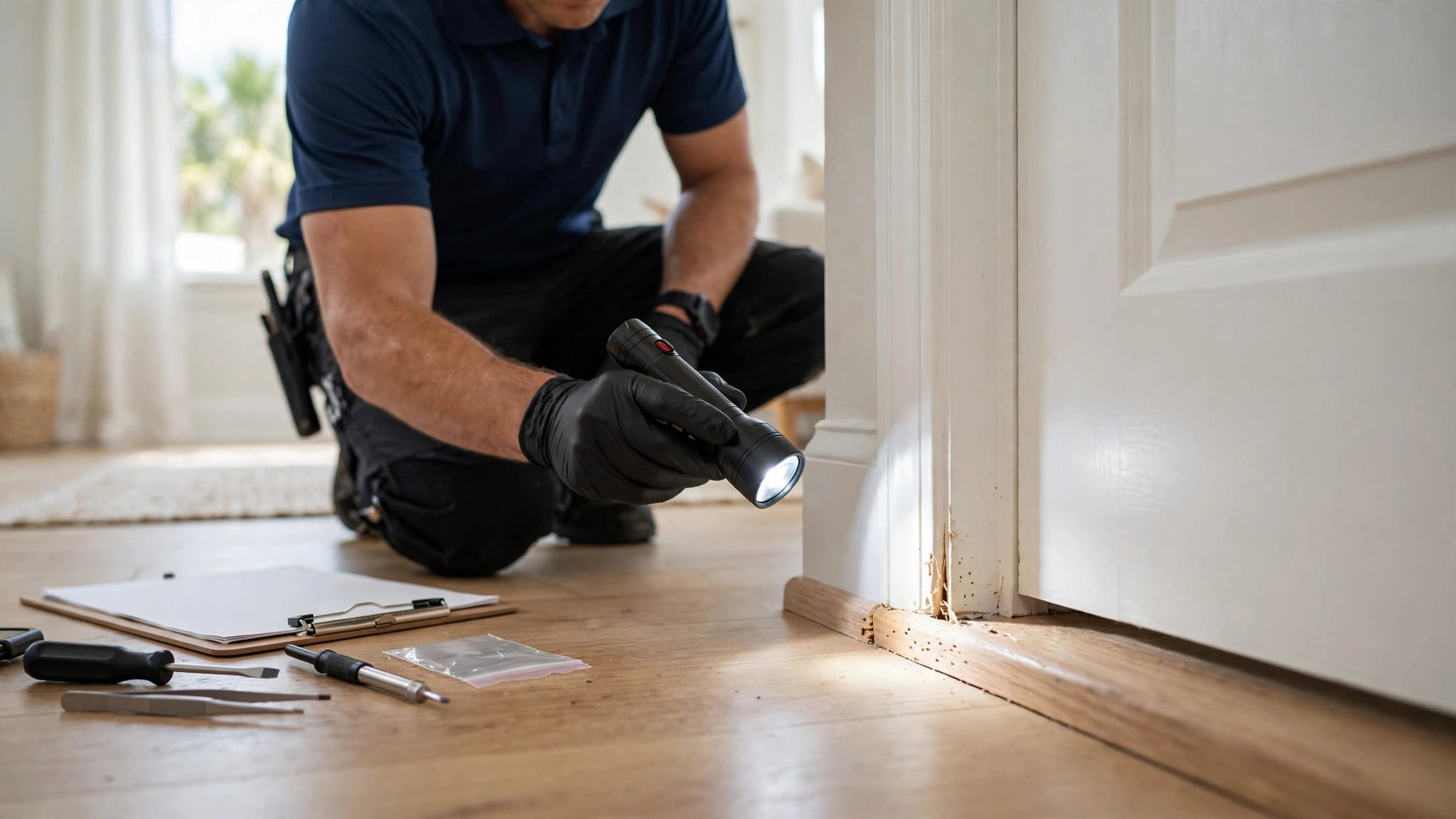
A Florida wood-destroying organism (WDO) report documents inspection findings; it isn't a complete structural assessment or an automatic repair guarantee.
For applicable real-estate inspections, Florida uses the department-prescribed report, identified by UF/IFAS as Form 13645 . The report addresses visible evidence, visible damage, and areas that couldn't be inspected.
Compare those limitations with the repair estimate. If an inspector couldn't access a wall cavity or crawlspace section, the contractor shouldn't treat that area as fully evaluated without further investigation.
Understanding WDO and home inspection differences helps you decide whether another evaluation is needed.
Ask whether suspected damage involves termites, wood decay, a plumbing leak, or another wood-destroying insect. Those conditions can overlap, but the corrective work may differ. For questionable load-bearing components, ask whether a structural engineer should assess the damage before the contractor finalizes the repair plan.
Set Rules for Hidden Damage and Change Orders
Define what the initial price assumes
Concealed damage is one of the biggest sources of unexpected cost. A contractor may need to remove drywall, siding, cabinets, or flooring before confirming the full extent.
The estimate should identify inaccessible areas and explain whether exploratory opening is included. If further evaluation has a separate charge, get that price and describe what it covers.
Ask whether the proposal is a fixed price, an estimate, or a price with allowances. An allowance is a budget for an item whose final cost remains unresolved. Request the assumptions behind each allowance.
Require approval before additional work
Agree on a written change-order process before demolition starts. Additional work should identify the newly discovered condition, proposed repair, added cost, and schedule impact.
Ask how the contractor prices extra labor and materials, including any markup. Where practical, request unit prices for measurable additional work.
An allowance for concealed damage isn't a spending limit unless the agreement expressly makes it one.
Require photographs and your written authorization before added work proceeds. Also discuss how the contractor will secure an opened wall or protect the property while awaiting approval.
Verify Licensing and Local Repair Requirements
Check termite credentials separately
The Florida Department of Agriculture and Consumer Services (FDACS) regulates structural pest control under Chapter 482.
Verify the pest-control business license and the responsible operator's certification for Termite and Other Wood-Destroying Organisms Control . Fumigation is a separate certification category.
Ask for the legal business name and license information, then confirm the records with FDACS. A pest-control credential doesn't establish that a company holds every credential needed for structural construction. If repair work goes to another business, verify that contractor separately rather than relying on the termite company's credentials.
Confirm construction credentials and permits
For construction work, verify the license applicable to the proposed scope. Florida's Department of Business and Professional Regulation and the relevant local authority can help you check credentials.
Request evidence of applicable insurance and clarify who employs or supervises subcontractors.
Permit requirements depend on the work and jurisdiction. Ask the appropriate city or county building department whether your repair requires a permit, plans, or inspections. The estimate should identify who handles those tasks and whether their costs are included.
For shared buildings, also confirm association approval and responsibility before authorizing invasive work.
Compare Written Estimates on Matching Terms

Give each contractor the same inspection reports, photographs, and access opportunity. Otherwise, different assumptions can produce prices that look comparable but cover different jobs.
Use these details to compare proposals side by side.
| Estimate item | What to compare |
|---|---|
| Damaged components | Same locations, quantities, and repair extent |
| Demolition and access | Openings, protection, and restoration |
| Materials | Dimensions, grade, and intended use |
| Labor and finish work | Installation, patching, painting, and cleanup |
| Added costs | Allowances, permits, engineering, and disposal |
| Contract terms | Payment schedule, changes, and warranty |
A lower total is meaningful only after you account for omitted work and unresolved costs.
Ask each contractor to revise unclear wording before signing. "Wood replacement included" should identify which wood, how much, and whether surrounding finishes will be restored.
Also distinguish repair pricing from termite-control pricing. A published treatment price doesn't establish what rebuilding a damaged wall will cost.
Request an itemized breakdown where practical. When a contractor quotes a lump sum, the scope should still describe included work and exclusions clearly.
Finally, compare payment milestones and estimate expiration dates. Ask what triggers the deposit, progress payments, and final payment, along with what happens if the project stops before completion.
Clarify Treatment and Repair Warranty Coverage
Read the treatment contract's coverage category
Florida Statutes Section 482.227 requires the first page of a new WDO treatment contract to state its warranty category in bold. The categories are repair and retreatment, retreatment only, or no warranty or guarantee.
The contract must also disclose in bold whether restrictions apply to repair or retreatment obligations.
Ask which termite species and structures the agreement covers. Review renewal charges, inspection requirements, claim procedures, and transfer terms.
Retreatment-only coverage doesn't promise payment for damaged wood. Even repair-and-retreatment coverage can have restrictions, so read the actual obligations rather than relying on the warranty's name.
Get a separate repair workmanship warranty
A construction workmanship warranty addresses the repair contractor's work. Ask for its duration, covered defects, exclusions, and claim contact in writing.
Clarify whether pre-existing termite damage, future infestations, leaks, inaccessible areas, additions, or landscaping changes affect either agreement. Missed inspections or interrupted service may also affect treatment coverage, depending on the terms.
A treatment completion certificate doesn't automatically provide future retreatment or damage-repair coverage. Keep the certificate, treatment contract, repair warranty, and invoices together.
If coverage transfers to a future buyer, request the transfer conditions and any fee.
Include Scheduling, Moisture Corrections, and Closeout
Ask for an anticipated start date, project duration, and known scheduling dependencies. Treatment access, permit review, engineering, material availability, or additional damage may affect the sequence.
The contractors should agree on when exposed wood needs inspection or treatment before the wall closes. Ask who documents that step.
Also address conditions that could undermine the work. Plumbing leaks, poor drainage, and wood-to-soil contact may need separate correction. Identify who handles each issue and whether the estimate includes it.
If treatment requires temporary vacancy, obtain preparation and re-entry instructions directly from the pest-control provider. Discuss resident and pet access during construction as well.
Before final payment, request completion photographs, applicable permit inspection records, approved change orders, and warranty documents. Keep them with the original inspection report.
Key Takeaways for Florida Homeowners
- Compare the same repair scope, materials, and finished results rather than total prices alone.
- Keep termite treatment, structural repair, and their warranties clearly separated.
- Verify relevant credentials, confirm local permit requirements, and require written approval for added work.
An estimate should make unresolved questions visible before the job begins, especially concealed damage and costs assigned to someone else.
Approve a Clear Scope Before Work Starts
A dependable termite repair estimate defines the work you can see and the process for damage you can't see yet. The strongest protection is written clarity about scope, added costs, and responsibility.
Get treatment and repair commitments documented before approving the project. A lower quote is useful only when it covers the work your home needs.
Schedule a Free Inspection: