How Wind Affects Mosquito Activity Around Florida Homes
A breezy afternoon can make a Florida patio feel almost mosquito-free, then bites start again near the shrubs at sunset. Wind mosquito activity changes quickly because mosquitoes struggle to fly, track human scent, and land in moving air.
Still, natural wind doesn't clear an entire yard. Mosquitoes wait in protected pockets, then emerge when the air settles, humidity stays high, and people step outside.
Why Wind Mosquito Activity Drops in Open Areas
Mosquitoes are lightweight fliers. A steady breeze can push them off course before they reach your patio chair, bare ankle, or open door. Wind also breaks up the carbon dioxide and body-odor trail mosquitoes use to locate people.
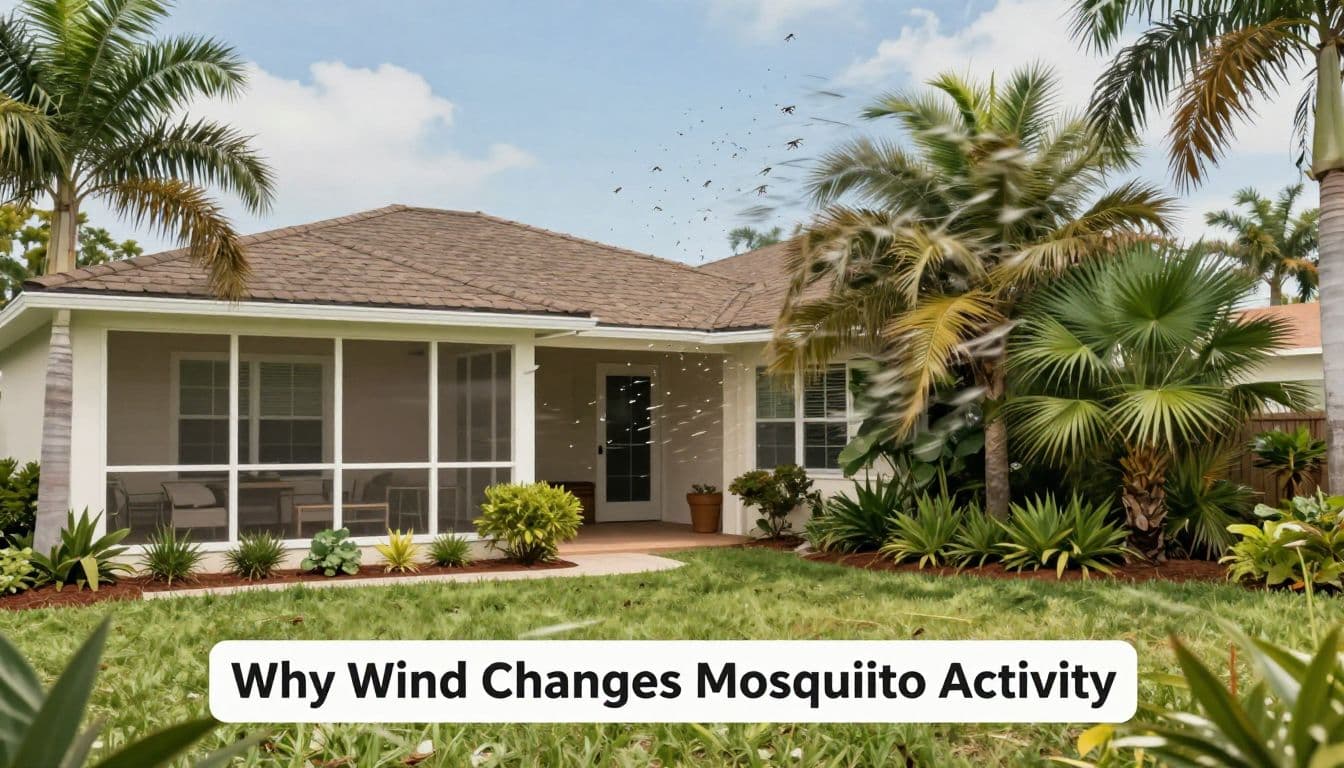
That is why an exposed pool deck, dock, or open lawn often feels better on a windy day. However, wind conditions can differ only a few feet away. A hedge, fence, pool cage, or house wall can block airflow and create a calm spot where mosquitoes remain active.
Breezes interfere with flight and host-finding
Mosquitoes rely on odor, heat, moisture, and carbon dioxide to find a host. In still air, those cues form a trail that can lead a mosquito toward people. Gusts scatter that trail.
A breeze also makes controlled flight harder. Mosquitoes may fly lower, land more often, or retreat to a protected resting place. For homeowners, this often means fewer bites in the middle of a windy backyard.
Wind direction matters, too. A patio on the leeward side of a house may receive far less airflow than the front yard. The weather report can say it is windy while the space beside your lanai stays still.
Sheltered spots keep mosquitoes close
Wind pushes adult mosquitoes toward cover rather than removing them from the property. They may rest under broad leaves, inside dense shrubs, beneath deck furniture, around potted plants, or along a shaded wall.
A pool enclosure can improve comfort, yet it also creates areas where airflow weakens. Mosquitoes resting near a screen or door gap can enter when someone comes and goes. Wind helps most where it can actually move through the space.
Florida Humidity and Daily Timing Can Override a Breeze
Southwest Florida's heat and moisture support mosquito activity for much of the year. After rain, humidity remains high even when sunshine returns. Adults lose less water in humid air, so they can stay active longer in shaded areas.
Many mosquitoes bite most often around dawn and dusk. During those periods, temperatures are lower, sunlight is weaker, and neighborhood breezes often fade. A patio that felt comfortable at 3 p.m. can become busy with mosquitoes after sunset.
Calm periods arrive faster than most yards dry
A short break in the wind can be enough for mosquitoes to move from vegetation to a seating area. This is common after an afternoon storm, when wet ground and leaf litter hold moisture close to the home.
Cloud cover can also extend activity before evening. If your family spends time outdoors at dusk, plan for the calmer conditions instead of relying on the afternoon breeze.
Wind can reduce bites around an exposed patio, but it does not stop mosquitoes from breeding in water or resting in sheltered vegetation nearby.
Rainy-season conditions support repeated activity
Florida's wet season creates frequent cycles of standing water, warm nights, and dense plant growth. Mosquitoes do not need a pond to multiply. Water trapped in a plant saucer, toy, clogged gutter, tarp fold, or low spot can be enough.
Therefore, a windy week can still be followed by a mosquito-heavy weekend. Adults may have sheltered through the breeze while new mosquitoes developed in water around the yard.
Landscaping Creates Mosquito Hideouts Near the House
A well-planted Florida yard offers welcome shade, privacy, and color. It can also create protected daytime resting areas when branches touch, shrubs grow thick, and damp debris collects at ground level.
Mosquitoes prefer cool, humid cover during the hotter part of the day. They often settle on the undersides of leaves or in vegetation near patios, doors, and walkways. Wind may pass over a hedge while the interior remains still.
Trim dense growth near gathering spaces
Keep shrubs and ornamental grasses from pressing against screened walls. Prune plants so air can move between them, and remove fallen leaves that stay wet beneath hedges.
Give particular attention to vegetation beside the patio, pool cage, front entry, and outdoor trash area. These are the places where people pause, unlock doors, grill, or relax. A neat mulch bed can still work well, provided it drains and does not stay packed with wet debris.
Avoid clearing every plant from the property. Focus on airflow and dry ground near living areas. Native plants and pollinator gardens can remain valuable features when they are maintained with spacing and drainage in mind.
Shade, fences, and furniture form small calm zones
A solid privacy fence can block an otherwise helpful breeze. The same is true for the corner behind an outdoor kitchen, the space below a covered porch, and the shaded side of a garage.
Look for places where mosquitoes gather after you walk through the yard. If bites begin near one chair or one doorway, inspect the nearest vegetation and containers. Moving a chair into better airflow can help, though it will not solve breeding sites elsewhere.
Standing Water Matters More Than a Windy Forecast
Wind affects adult mosquito movement. Water determines where the next generation begins. That distinction keeps a mosquito plan grounded in what works.
Check the property after rainfall and once a week during wet weather. Walk slowly and look at containers from above, because a shallow puddle is easy to miss. The most common sites are often ordinary household items.
Inspect the places water hides
A useful weekly inspection includes:
- Empty and scrub plant saucers, pet bowls left outdoors, toys, buckets, and wheelbarrows.
- Turn over items that can collect rain, including grill covers, kiddie pools, and unused pots.
- Clear leaves from gutters, downspouts, and drainage channels so water can move away.
- Check pool covers, tarps, boat covers, and outdoor furniture covers for pooled water.
- Look for low turf areas that stay wet days after rain or irrigation.
For a closer look at problem areas, review these common mosquito breeding grounds around your Cape Coral home. Small water sources can produce a large annoyance when they go unchecked.
Adjust irrigation before it creates wet shelter
Overwatering does more than waste water. It keeps turf, mulch, and plant beds damp, while poor drainage can leave puddles that support mosquito larvae.
Run irrigation only as long as your landscape needs, and watch each zone for overspray. Sprinklers should not fill containers, wet screened patios, or keep water pooling near the foundation. If one area drains poorly, correct the grade or drainage issue instead of accepting standing water as normal.
Homeowners can find more practical advice in this guide to irrigation mosquito control for Florida yards. Wind may dry exposed surfaces faster, but shaded puddles can remain long after the rest of the yard looks dry.
Use Fans and Screens to Improve Patio Comfort
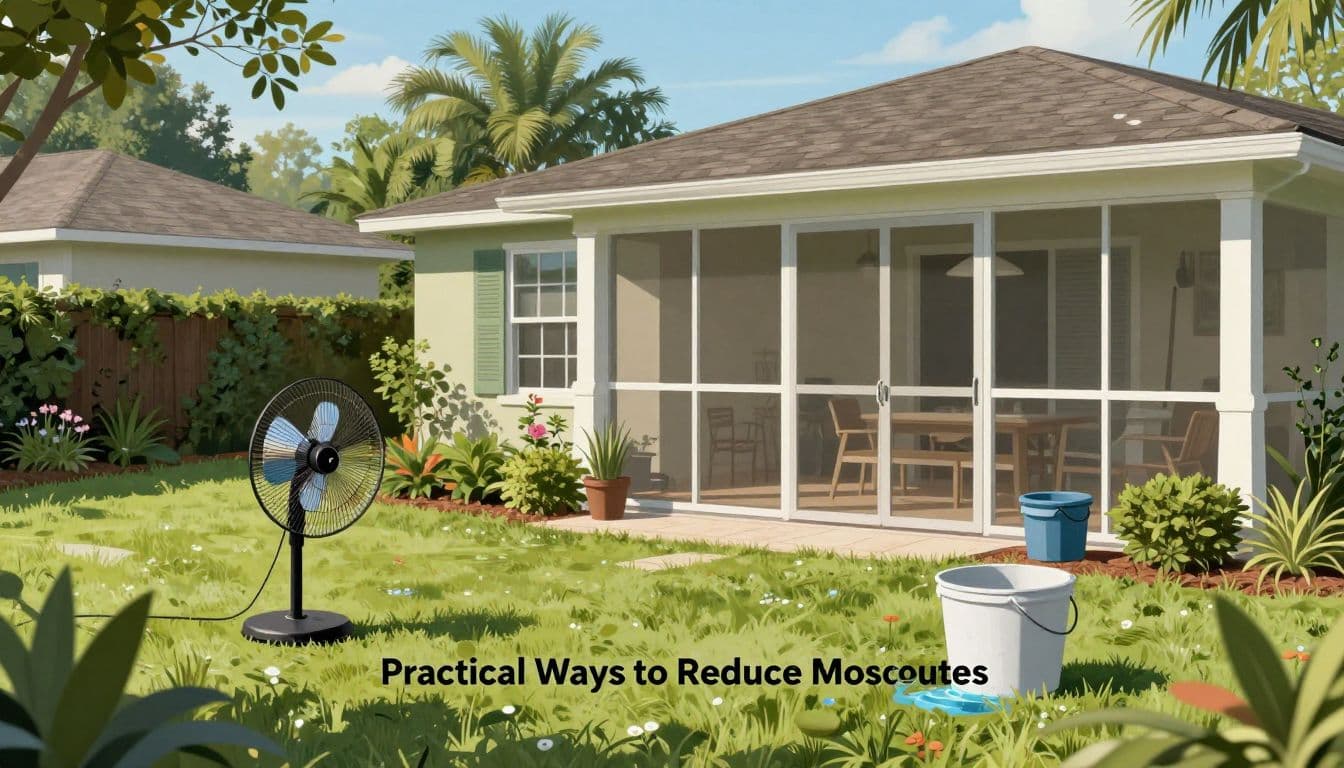
A fan is one of the most practical tools for an outdoor sitting area. It creates local airflow where natural breezes fail, which makes it harder for mosquitoes to fly and land near people.
Place an outdoor-rated fan so it moves air across the seating area rather than straight into a wall. A ceiling fan inside a screened lanai can help, while a portable fan can improve a porch or covered patio. Keep cords, outlets, and equipment protected from rain.
Screens work only when gaps stay closed
Screens reduce mosquito entry, but they need regular inspection. Check for tears near the bottom of the enclosure, loose frame corners, worn door sweeps, and gaps around utility lines.
Keep patio doors closed when possible. Mosquitoes can enter through a door left open for a few minutes, then rest in a shaded lanai until you sit down. Pool cages also benefit from vegetation trimmed back from the screen.
For more detailed enclosure advice, see mosquito control for Cape Coral pools and lanais. A repaired screen and a good fan often improve daily comfort faster than a wind forecast.
Protect yourself during the calmest hours
When you work outside near dawn or dusk, wear long sleeves, long pants, and closed shoes when conditions allow. Use an EPA-registered repellent according to its label on exposed skin or clothing.
This matters after rain, during yard work, and in shaded corners where wind does not reach. Repellent offers personal protection while water control and property maintenance reduce the number of mosquitoes around the home.
Build an Integrated Mosquito Plan for Recurring Bites
Mosquito control works best as integrated pest management , not as one product or one weather condition. Start by removing water and improving airflow. Then use physical barriers, personal protection, and targeted treatment when mosquito pressure stays high.
A property with regular service still needs homeowner maintenance between visits. Rain refills containers, wind moves debris, and plants grow quickly in Florida's warm conditions.
Match treatment to the mosquito source
Persistent activity near a patio may come from dense shrubs, a drainage issue, standing water next door, or a screen gap. A professional inspection can identify likely resting zones and breeding sources before treatment begins.
Ask where mosquitoes are resting, what water sites need correction, and how long people and pets should stay away from treated areas. Targeted service around vegetation, entries, and outdoor living spaces works better when the property does not keep producing new mosquitoes.
If bites continue despite weekly cleanup, a homeowner's guide to mosquito control in Cape Coral can help you spot gaps in your routine.
Keep a simple weekly rhythm
Choose one day each week to check water, screens, and shaded plant beds. After a heavy storm, repeat the walk-through within a day or two. This routine takes less time than dealing with a yard full of biting adults.
Pay extra attention before family gatherings, pool time, or visitors arriving for the weekend. Outdoor comfort improves when prevention happens before mosquitoes build up around the property.
A Breezy Yard Still Needs Mosquito Prevention
Wind mosquito activity often falls in exposed areas because mosquitoes cannot fly or track people as easily. Yet shrubs, screens, shade, standing water, and calm evening hours can keep bites going close to home.
The most reliable plan combines airflow, weekly water removal, maintained landscaping, sound screens, and targeted help when needed. A breeze is useful relief, while consistent prevention keeps mosquitoes from taking over your yard.
Schedule a Free Inspection: