Florida Mosquito Repellent Plants: What Helps and What Doesn't
A citronella pot beside the lanai may smell fresh, but it won't create a mosquito-free zone. In Florida's warm, rainy climate, mosquito repellent plants are often sold as a simple fix for a problem that needs a more practical plan.
Herbs and flowers can still earn a place in your yard. However, they work best as attractive garden plants, not as your primary defense against biting mosquitoes.
Why mosquito repellent plants get too much credit
Many popular herbs contain fragrant compounds that can affect mosquitoes when those compounds are concentrated in tested products. The living plant, however, releases too little of that material to protect a patio, pool deck, or backyard.
UF/IFAS Extension puts it plainly: growing lemongrass or rosemary around a patio does not repel mosquitoes in a meaningful way. A breeze carries away the scent, and mosquitoes can still land a few feet from the plant.
A pleasant scent is not a protective barrier
Citronella candles, crushed leaves, and aromatic landscaping may make an outdoor space feel more inviting. Yet scent alone doesn't stop mosquitoes from finding people nearby.
Mosquitoes are drawn to body heat, carbon dioxide, and skin odors. A row of basil or marigolds can't overpower those cues across a lanai or lawn.
A plant can contain mosquito-deterring oils without delivering enough of those oils into the air to prevent bites.
Concentrated ingredients are different from garden plants
Some plant-derived ingredients have a documented role in repellents. For example, the CDC recognizes oil of lemon eucalyptus (OLE) and para-menthane-diol (PMD) as active ingredients in certain EPA-registered products.
That doesn't mean lemon eucalyptus essential oil, citronella oil, or a homemade leaf mash works the same way. A tested, labeled repellent has a controlled concentration and instructions for safe use. A plant in a pot does not.
Mosquito repellent plants worth growing in Florida
Florida gardeners can grow several plants commonly associated with mosquito control. Choose them for fragrance, cooking, pollinators, or appearance. Treat any mosquito benefit as a small extra.
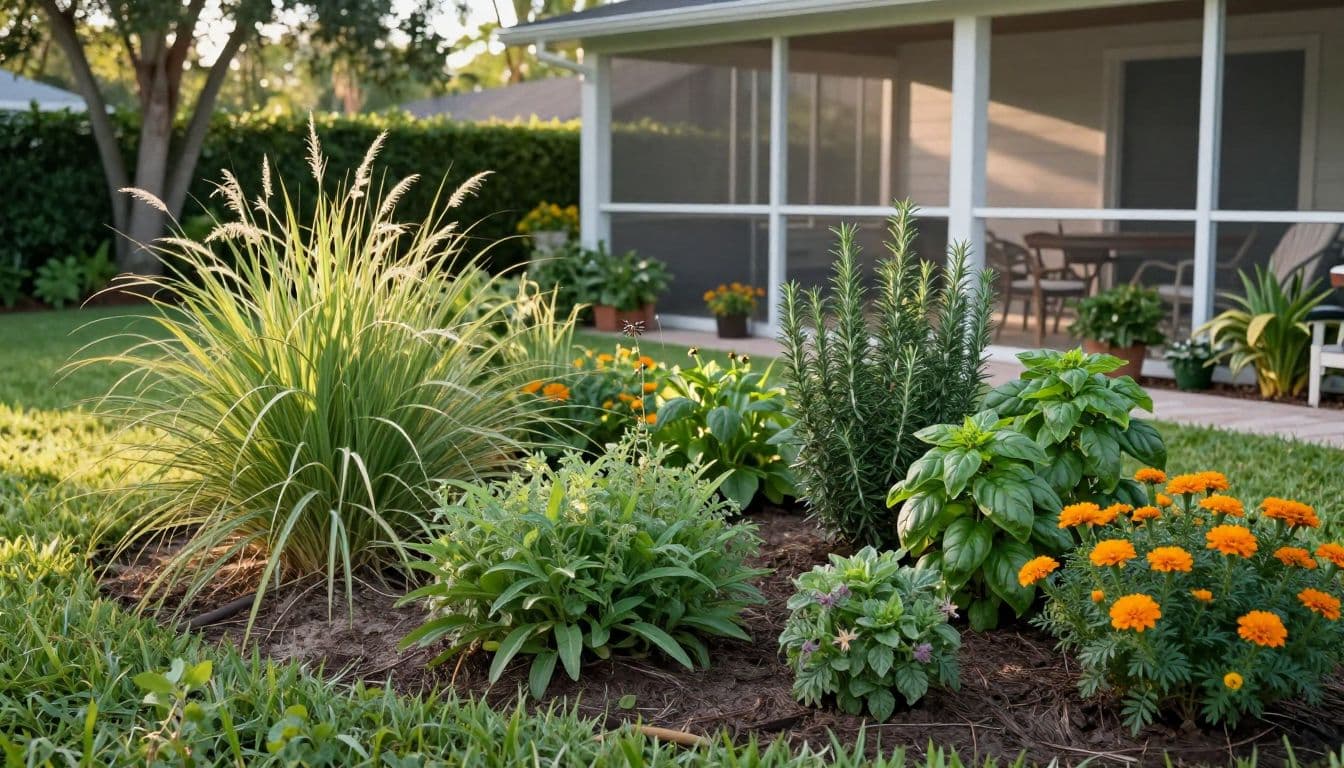
Citronella grass and lemongrass
True citronella grass, commonly sold as Cymbopogon nardus , has the familiar citrusy scent associated with citronella products. Lemongrass ( Cymbopogon citratus ) looks similar and is useful in cooking.
Both plants like heat, sun, and consistently moist but well-drained soil. They can grow into large clumps, so give them room instead of crowding a walkway or screen.
Garden centers also sell scented geraniums as "mosquito plants." Their fragrance may be pleasant, but they do not provide reliable protection from bites either.
Rosemary, basil, lavender, and marigolds
Rosemary ( Salvia rosmarinus ) and basil ( Ocimum basilicum ) make useful edible landscaping plants. Rosemary prefers sun and excellent drainage. Basil grows quickly in Florida warmth but benefits from airflow and regular checks for leaf disease.
Lavender ( Lavandula species) and marigolds ( Tagetes species) are frequently marketed for mosquito control. Lavender and rosemary can struggle during humid, rainy periods if their roots stay wet. Marigolds are easier seasonal color, although they don't form a mosquito barrier.
Catnip ( Nepeta cataria ) also appears on lists of mosquito repellent plants. Plant it only if you want catnip in the garden. Its presence won't replace water management or a personal repellent.
Don't rub crushed leaves or essential oils on your skin
Crushing a citronella leaf may release fragrance, but it doesn't create a measured repellent dose. The same problem applies to homemade sprays made with herbs, essential oils, alcohol, or dish soap.
Natural does not automatically mean skin-safe
Essential oils can irritate skin, trigger allergic reactions, or become more irritating in Florida sun and sweat. Children, pets, and people with sensitive skin need extra caution.
Oil of lemon eucalyptus in an EPA-registered repellent is also different from lemon eucalyptus essential oil sold for aromatherapy. The names sound alike, but the products aren't interchangeable.
Use products only as their labels direct. Don't apply untested plant oils to broken skin, eyes, hands, or areas where children may lick or rub them.
Watch for plant toxicity around pets
Some ornamental plants create risks that have nothing to do with mosquitoes. Lantana ( Lantana camara ), for example, is sometimes promoted online as a mosquito-repelling plant, yet there isn't strong evidence that it controls mosquitoes around a home.
Lantana foliage and unripe berries can be harmful if eaten by pets, children, or livestock. It belongs in a carefully chosen landscape location, not in a yard because of an unsupported pest-control claim.
Florida gardening habits that can increase mosquito problems
A lush Florida garden offers shade and cooling, but dense foliage can also give adult mosquitoes a humid place to rest during the day. The goal isn't to strip your yard bare. It is to keep plants healthy, spaced properly, and free of trapped water.
Plant for drainage and airflow
Keep rosemary, lavender, and other dry-soil plants in raised beds or containers with drainage holes. Avoid leaving pots sitting in water-filled saucers after rain or irrigation.
Trim thick growth away from screened walls, patio doors, and seating areas. This reduces damp resting spots right beside the places where your family spends time outdoors.
Basil, citronella grass, and lemongrass tolerate Florida's warmth well, but they still need thoughtful watering. A drip system or hand watering at the soil line is better than frequent overspray that leaves patios and containers wet.
Be careful with water-holding plants
Bromeliads fit naturally into Southwest Florida landscapes, but their leaf cups can collect rainwater. UF/IFAS recommends flushing bromeliads every three to four days during summer conditions.
Also check birdbaths, decorative planters, rain barrels, and folded pool covers. Mosquito larvae need standing water, not a certain type of landscaping.
For a closer look at hidden water sources, see these tips for mosquitoes in birdbaths and bromeliads.
What works better than planting herbs
Effective mosquito control starts with stopping breeding before adults reach your patio. Florida rain can turn a forgotten saucer, clogged gutter, or child's toy into a mosquito nursery.
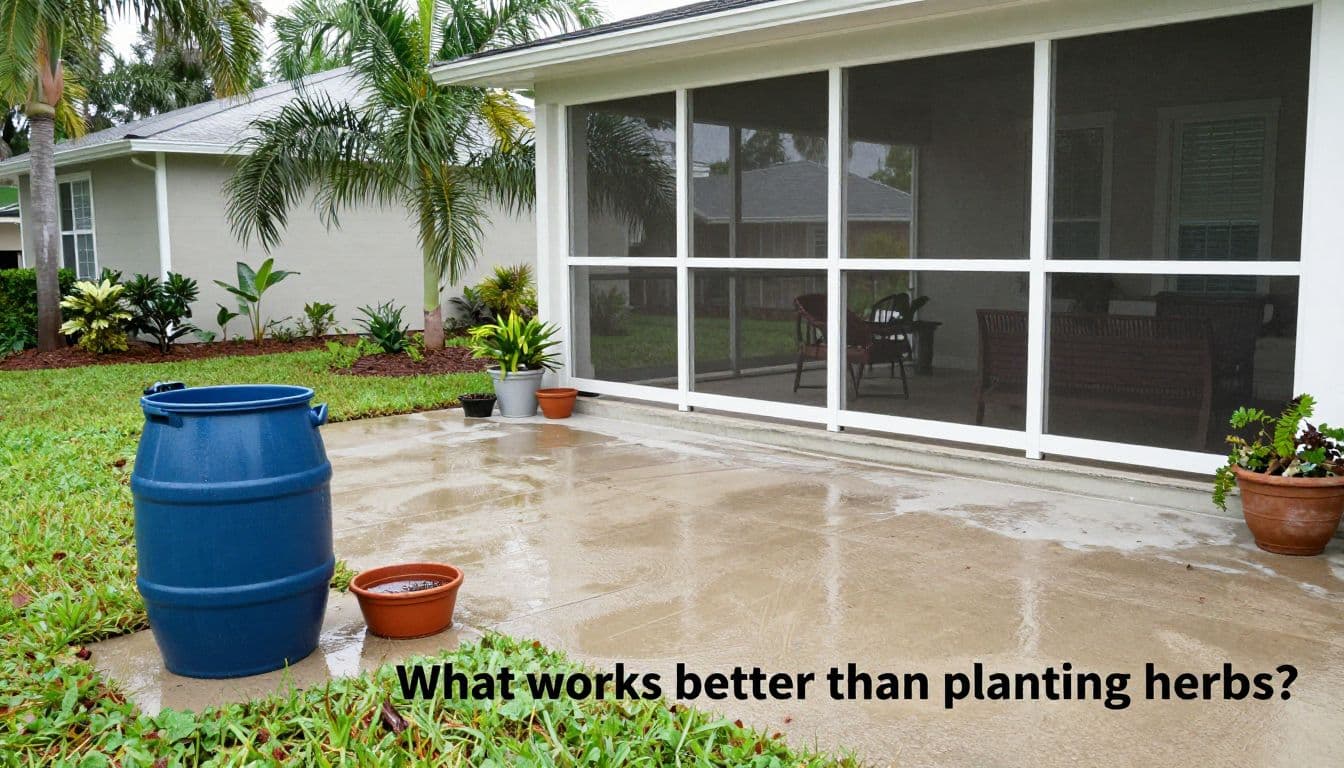
Remove standing water every week
The CDC recommends emptying, scrubbing, turning over, covering, or discarding water-holding items at least once a week. After a storm, walk the property before mosquitoes have time to develop.
Pay close attention to these common trouble spots:
- Empty flowerpot saucers, pet bowls, toys, buckets, and wheelbarrows after rain.
- Clear leaves from gutters, drains, pool skimmers, and outdoor furniture covers.
- Keep rain barrels covered with fine mesh and repair gaps around their lids.
- Change birdbath water often and flush water from bromeliad cups.
- Correct irrigation overspray and low spots that stay wet near patios or shrubs.
If a water feature can't be emptied, use a larvicide only according to its product label. Products containing Bti can target mosquito larvae in appropriate water-holding areas, but they still require correct placement and timing.
Block mosquitoes before they get inside
Repair torn window and door screens, including small holes near corners and tracks. Keep lanai doors closed when practical, and clear leaves or debris that stop screen tracks from draining.
A fan can also make a seating area less attractive because mosquitoes struggle in moving air. It helps most when paired with clean surroundings and intact screens.
For homes with pools or screened patios, these mosquito prevention tips for screened lanais can help identify problem spots near the cage, deck, and equipment area.
Use EPA-registered personal repellents outdoors
When mosquitoes are active, use an EPA-registered repellent and follow the entire label. The CDC lists DEET, picaridin, IR3535, OLE, PMD, and 2-undecanone among active ingredients used in registered repellents.
The label tells you where to apply the product, how much to use, when to reapply, and any age limits or precautions. EPA-registered repellents are considered safe and effective when used as directed, including for pregnant and breastfeeding people.
When a Florida yard needs professional mosquito help
Heavy mosquito activity can continue after you remove standing water because adults may rest in dense vegetation, shaded property edges, and neighboring areas. A trained technician can inspect the property for overlooked breeding sites and determine whether targeted treatment makes sense.
Ask what areas will be treated, which product will be used, and how the service protects pets, edible gardens, ponds, and pollinators. A responsible plan also includes the steps you can take between visits.
Property-wide treatment works best alongside regular cleanup and screen repairs. Learn more about common mosquito breeding grounds that may be hiding around a Southwest Florida home.
A Florida Garden Can Be Beautiful and Practical
Mosquito repellent plants can add scent, color, and fresh ingredients to a Florida yard. Citronella grass, basil, rosemary, lemongrass, and marigolds are worthwhile when you enjoy the plants themselves.
For fewer bites, put the focus on standing-water control , screens, and EPA-registered personal repellents used as directed. Those steps do more than a fragrant planter ever could.
Schedule a Free Inspection: