Termite Damage Drywall: Warning Signs in Southwest Florida
A soft wall near a baseboard can feel like a small repair, yet it may point to a hidden pest or moisture problem. Termite damage drywall often appears indirectly, because termites usually work in wood framing, trim, or other concealed materials around the wall.
In Southwest Florida, humidity, irrigation, storms, and plumbing leaks can blur the line between termite damage and water damage. Before patching, painting, or replacing drywall, get the source checked.
Termite Damage Drywall: What the Clues Can Mean
Termites don't need to leave obvious surface damage before they affect a wall. Activity behind drywall can weaken nearby wood and cause finishes to shift, crack, or separate.
Drywall can hide damage in the framing
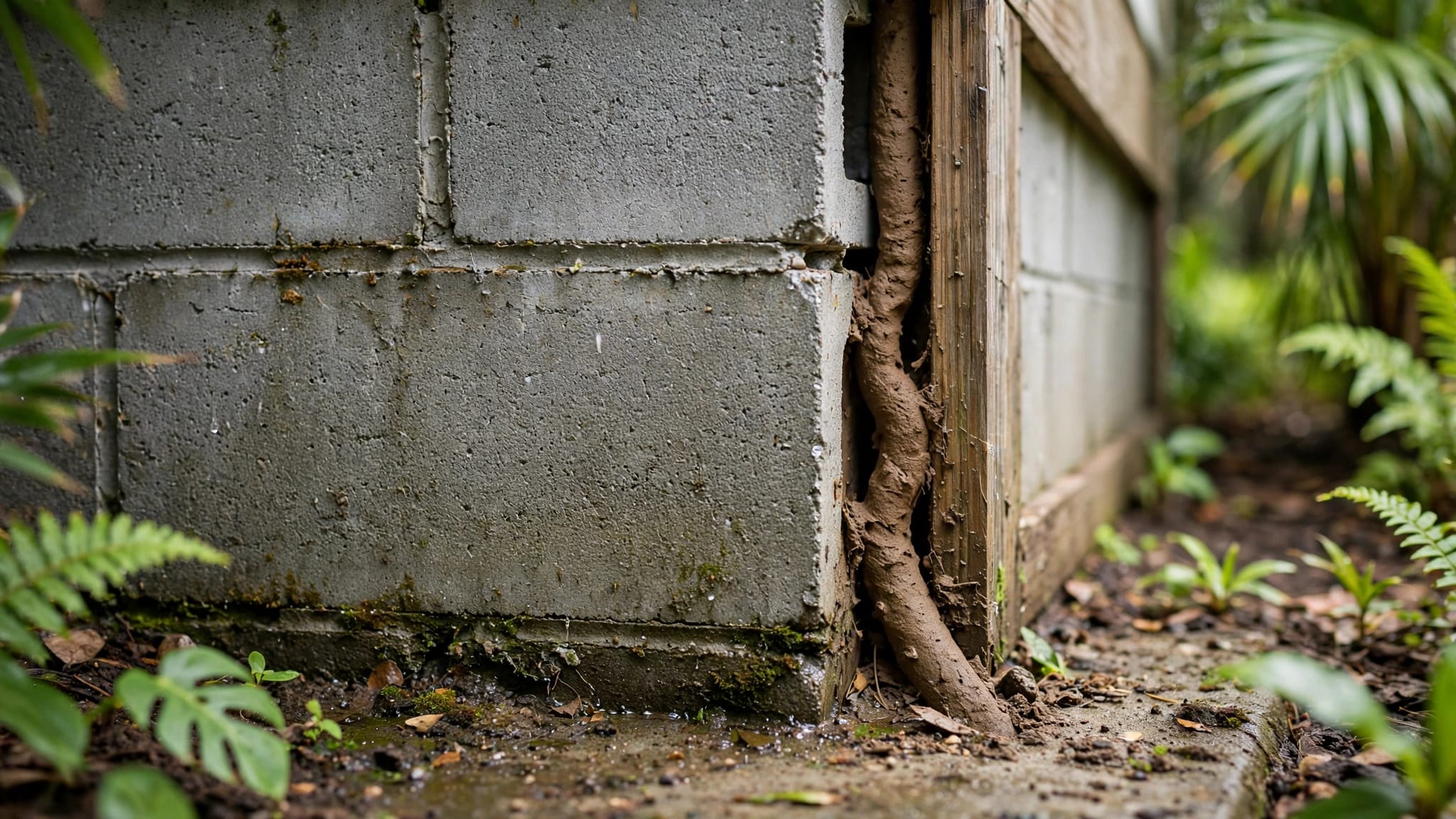
Subterranean termites often travel from soil into a home through concealed routes. They can move near slab edges, block walls, expansion joints, and plumbing penetrations before reaching wood components behind drywall.
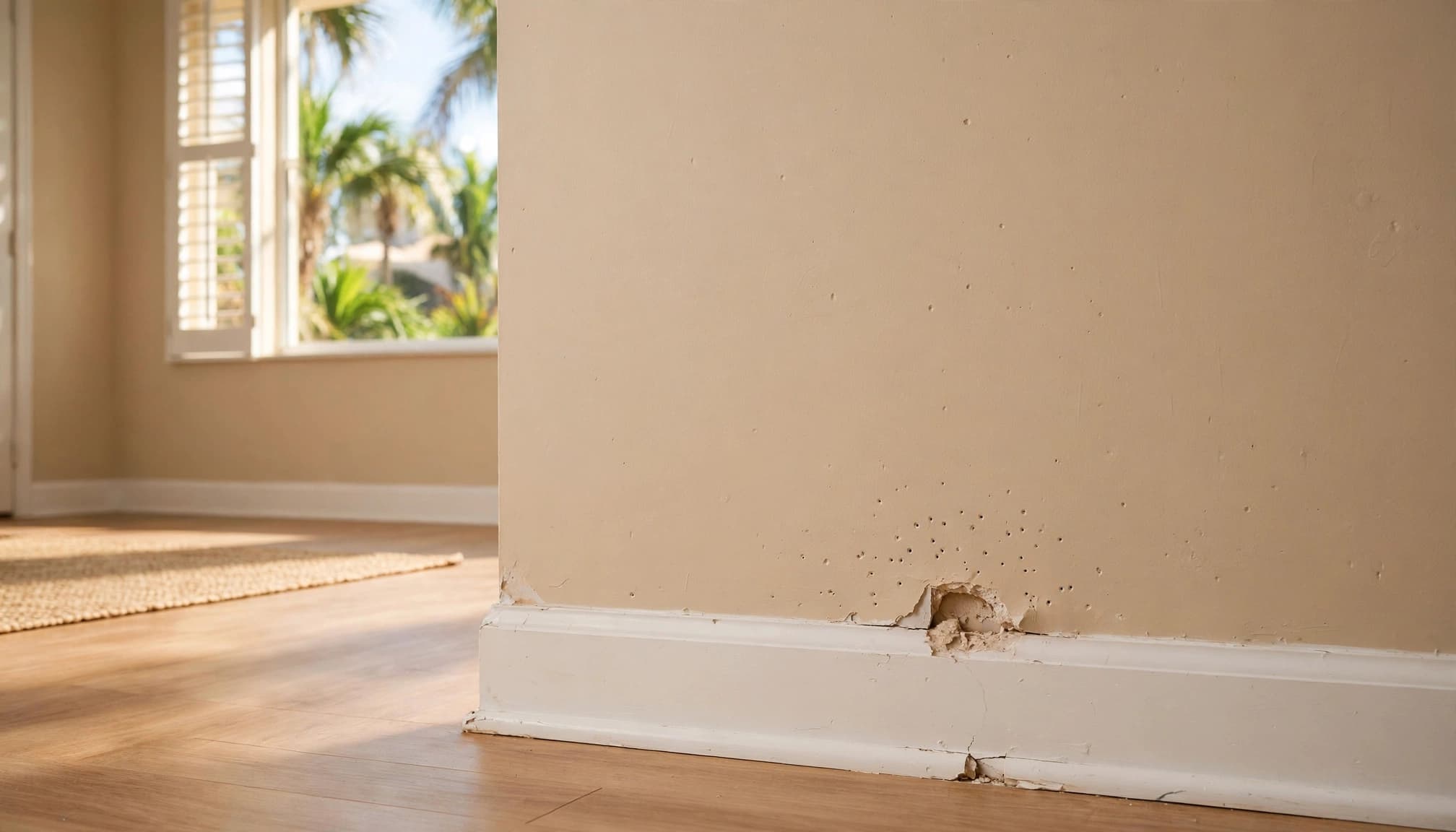
As that hidden wood deteriorates, you may notice a soft area, a slight bulge, loose baseboard, or drywall that sounds hollow when tapped. These clues don't confirm termites by themselves, but they deserve attention.
Surface changes can have several causes
Pinholes, bubbling or blistering paint, thin cracks, and sagging trim may come from termites, water intrusion, settling, or a past repair. Moisture is especially common around air handlers, water heaters, sinks, toilets, and windows.
A dry surface doesn't rule out termites. Likewise, a damp wall doesn't prove water is the only issue. A termite inspection can separate insect evidence from a leak or humidity-related problem.
Key Takeaways
- Termite damage drywall usually means the wall shows damage caused by hidden activity in nearby wood, trim, or wall voids.
- Hollow-sounding drywall, pinholes, bubbling paint, and loose trim are warning signs, not proof of an infestation.
- Subterranean termites often leave mud tubes and follow moisture-linked routes from the soil.
- Drywood termites can live inside dry wood and may leave hard, sand-like frass pellets near tiny kick-out holes.
- Don't repair or cover suspicious damage until a licensed professional checks the area.
Fresh paint can hide a damaged wall, but it cannot identify whether termites, moisture, or both caused the problem.
Check the Right Areas for Termite Clues
A quick walk-through can help you document what you see. Focus on accessible spots where drywall meets wood, plumbing, or an exterior wall.
Look low, near water, and around exterior entries
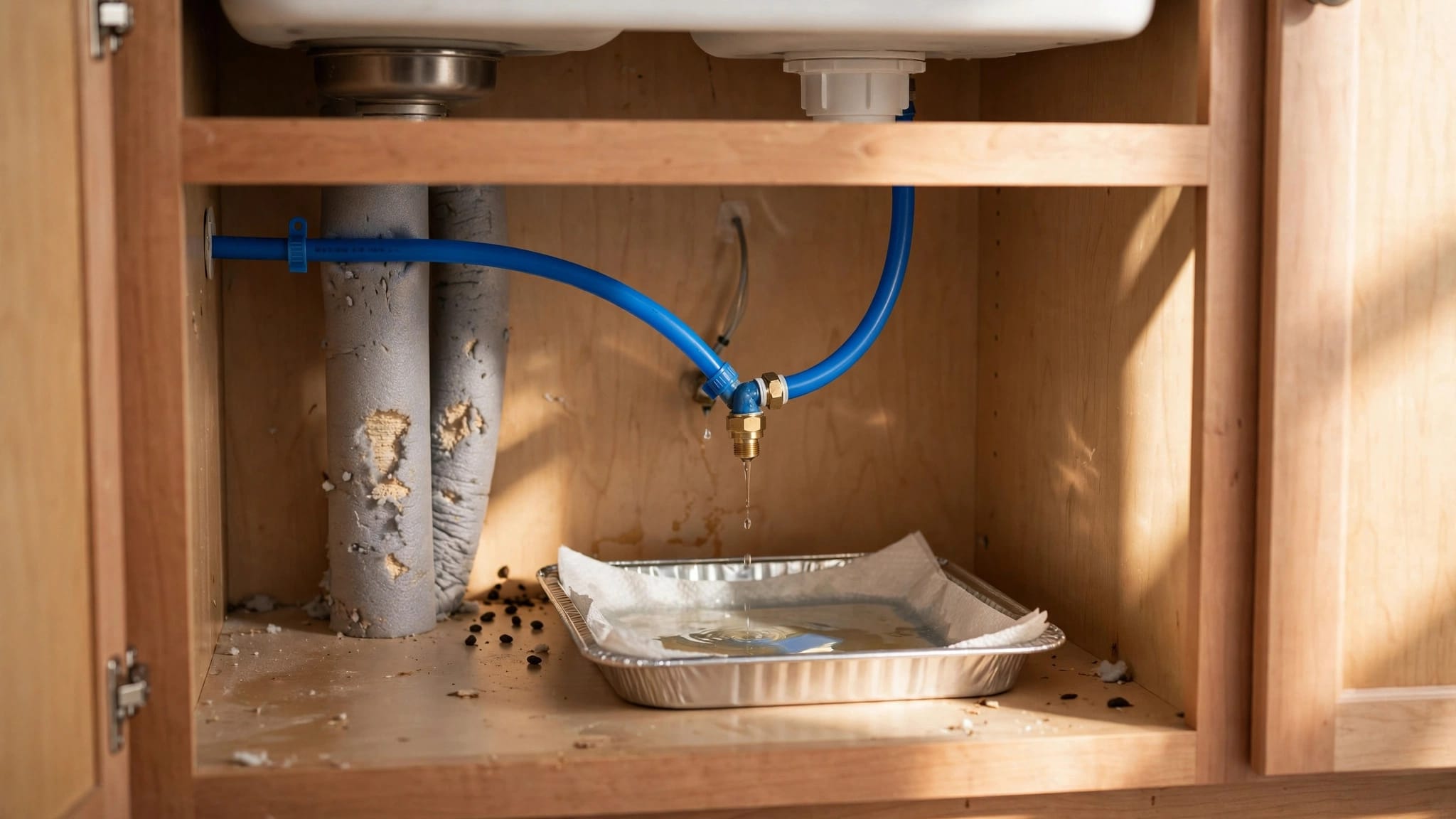
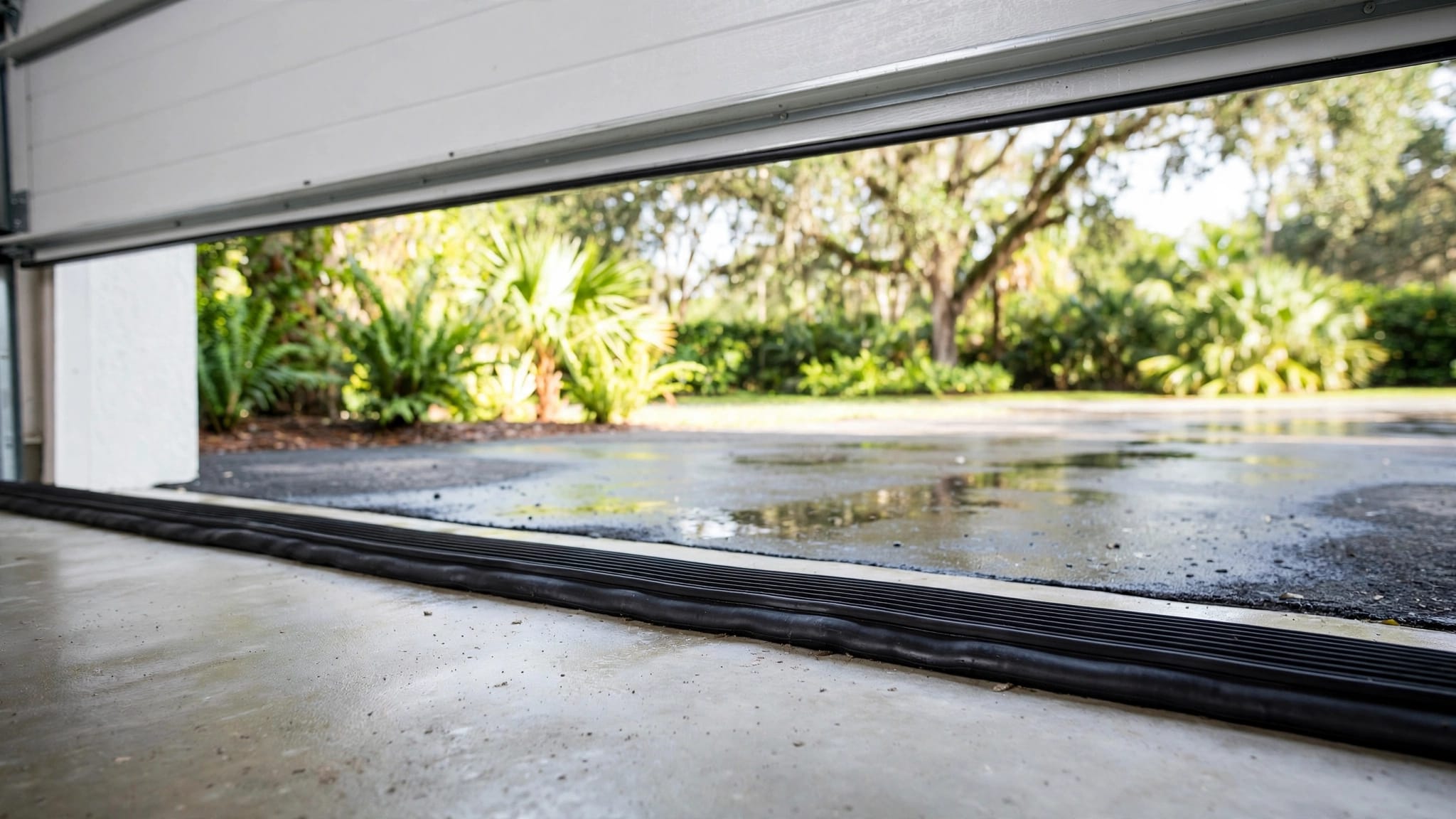
Check baseboards on exterior walls, garage drywall edges, and areas behind stored items. Also inspect under sinks, behind toilets, near the water heater, and around the air handler.
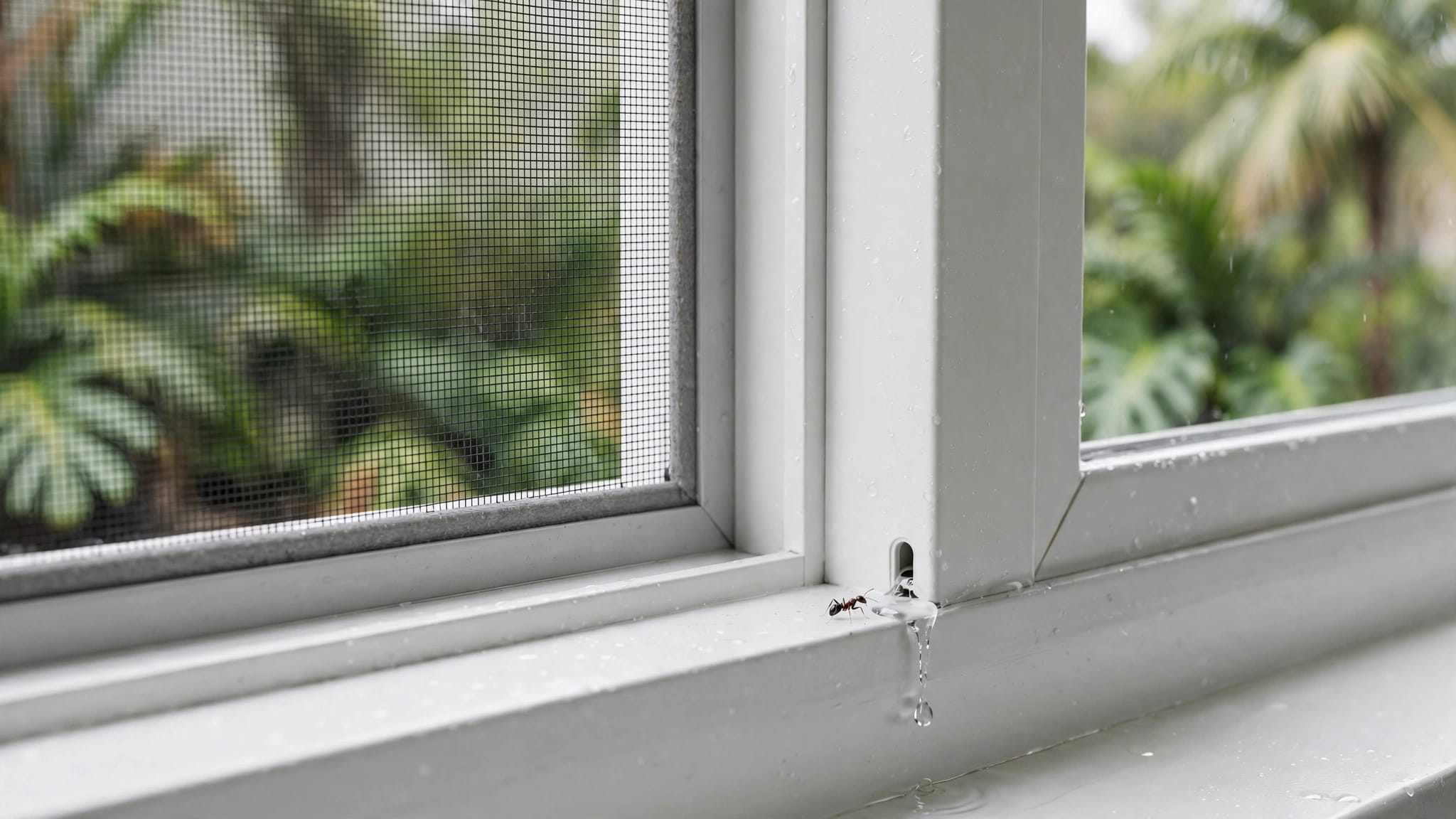
Windows, sliding doors, and door frames deserve a close look. Discarded wings may gather near these openings, while soft trim or peeling paint can point to a problem behind the surface.
Watch for mud tubes and drywood evidence
Mud tubes look like narrow brown lines along a slab edge, block wall, garage corner, or plumbing line. Subterranean termites use these covered paths to hold moisture while traveling between soil and a food source. Homeowners can review how to identify termite mud tubes quickly before disturbing a suspicious tube.
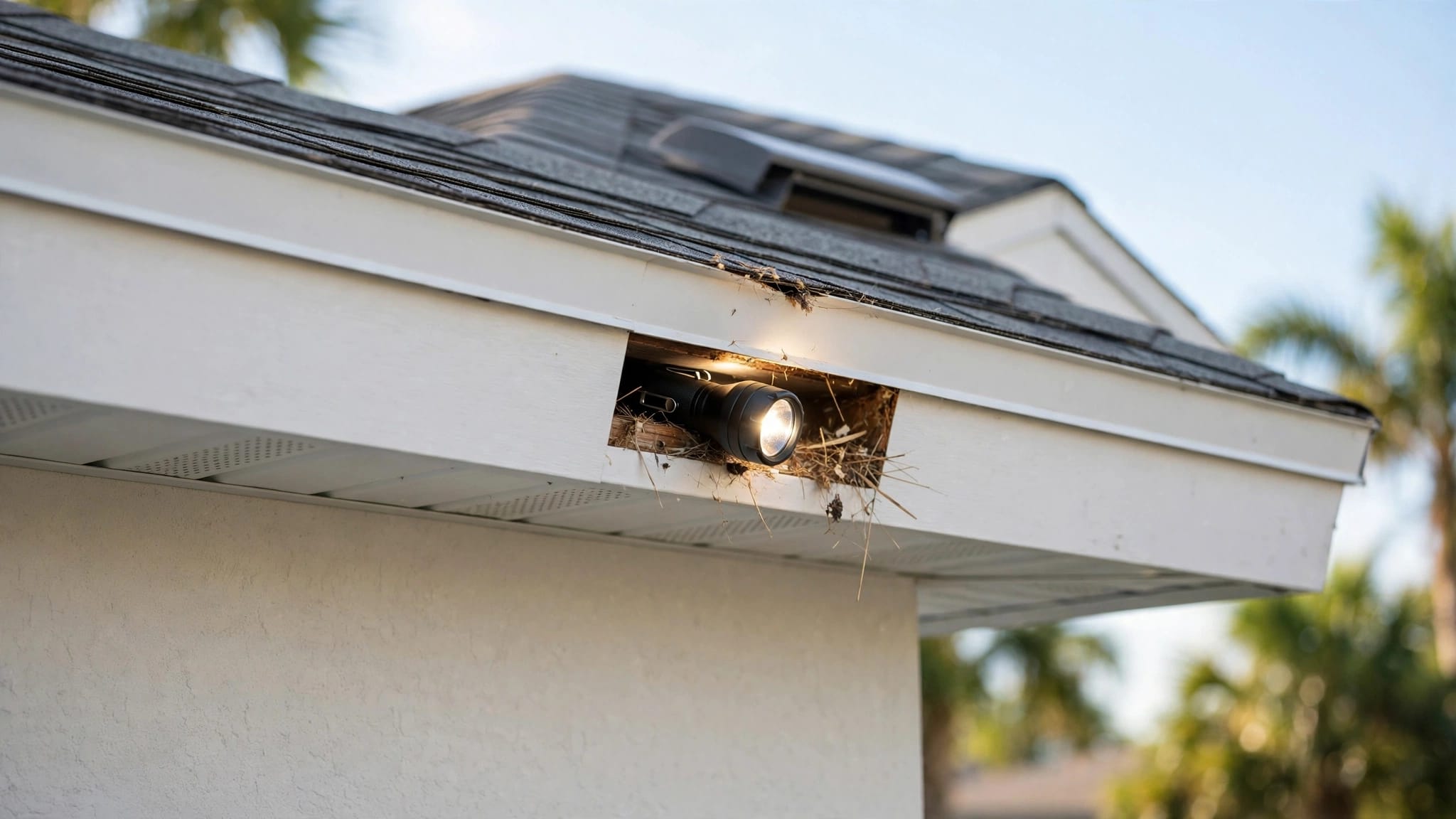
Drywood termites leave different evidence. Look for small piles of hard, dry pellets below wood trim, fascia, attic framing, window casings, or door frames. Their kick-out holes can resemble pinpricks in wood.
Drywood and Subterranean Termites Leave Different Patterns
The termite type affects where a technician looks and how treatment may be planned. Southwest Florida homes can face both drywood termites and subterranean termites.
Subterranean termites follow soil and moisture
Subterranean termites need moisture and contact with soil or a protected soil-connected route. Even slab-on-grade homes with block walls and stucco can have hidden access points.
Irrigation overspray, mulch piled against a wall, leaks, and poor drainage can make inspection areas harder to see. Mud tubes near the foundation or plumbing are strong reasons to schedule an inspection.
Drywood termites can appear higher in the home
Drywood termites live within dry wood and don't need a route from the ground. They may appear in attic trusses, roof framing, fascia, lanai structures, furniture, and trim around doors or windows.
Understanding drywood versus subterranean termites in Southwest Florida helps homeowners recognize why pellets and mud tubes call for different inspections.
What to Do Before Repairing a Damaged Wall
A termite damage drywall concern calls for patience before cosmetic work begins. Removing the evidence too early can make the cause harder to identify.
Document the area without opening more wall
Take clear photos of the damaged spot, nearby baseboards, tubes, pellets, wings, stains, and adjacent exterior wall. Include a wider photo showing the room and the location.
Then check for obvious water sources. Look under nearby plumbing, around the water heater, beside the air-conditioning equipment, and above the area if a roof or window leak is possible.
Request a professional termite inspection
Avoid spraying inside a wall, applying foggers, or sealing mud tubes. These actions can scatter insects, hide evidence, or create a treatment problem.
A professional termite inspection may include accessible foundation walls, sill plates, attic areas, garages, porches, moisture conditions, and suspected entry points. An accessible, average-sized home inspection often takes one to two hours.
Frequently Asked Questions
Can termites damage drywall directly?
Termites can cause drywall to look damaged when they affect concealed wood, trim, or wall areas nearby. Cracks, blistering, and hollow sections are possible clues, but an inspection must confirm the cause.
Could a plumbing leak cause the same signs?
Yes. Moisture from a leaking pipe, clogged condensate drain, roof issue, or window leak can cause bubbling paint and soft drywall. In some homes, moisture damage and termite activity occur in the same area.
Should I patch termite-related drywall damage right away?
Wait until a licensed professional identifies the source and checks for active activity. Repairing the drywall first can conceal mud tubes, pellets, damaged framing, or signs needed for a proper treatment plan.
Inspect Before You Repair
A damaged wall deserves more than a quick patch when termites may be involved. The clearest warning signs are often small, including pinholes, hollow-sounding drywall, loose trim, mud tubes, or dry pellets.
For Southwest Florida homeowners, professional inspection before repair protects the wall, the framing behind it, and the evidence needed to address the real problem.
Schedule a Free Inspection: