Billbugs Cape Coral: St. Augustine Signs and Timing
A healthy St. Augustine lawn can turn thin and brown when billbugs Cape Coral homeowners find are feeding inside the grass stems and crowns. The damage often looks like drought, fungus, chinch bugs, or white grubs, so treating the wrong problem can waste time and money.
Billbugs are easiest to control when adults and young larvae are active near the surface. Learning the warning signs and matching treatment to the season can help you protect your lawn before entire sections decline.
Key Takeaways
- Billbug damage often appears as irregular yellow or brown patches with weak, hollow grass stems.
- Young larvae feed inside stems and crowns, where they are harder to reach with treatment.
- In Cape Coral, monitoring should begin as temperatures rise in late winter and spring.
- Treating early, before larvae move deeper into the crown and soil, usually gives better results.
- Confirm billbugs before applying insecticide because several lawn problems look similar.
Why Billbugs Attack St. Augustine Grass
Billbugs are snout beetles that damage warm-season turf. The hunting billbug, Sphenophorus venatus , is one species associated with Southern lawns. Adult beetles are small, dark insects with a noticeable snout. They feed and lay eggs near the base of grass plants.
After hatching, the larvae tunnel through stems and crowns. These legless, cream-colored grubs have brown heads and can destroy the plant's growing points. Affected runners may stop producing healthy blades, leaving open patches that spread as more plants become infested.
St. Augustine grass can show billbug injury quickly because its dense runners create many feeding sites. Cape Coral's sandy soil also drains rapidly, so turf under heat or irrigation stress has less ability to recover. A lawn that already struggles along sidewalks, driveways, or sunny walls may show damage first.
Billbugs don't always kill an entire lawn at once. Instead, injury often begins in scattered areas and expands across connected sections. Mowing can spread some adults or move damaged plant material, while stressed turf gives the grass less capacity to replace injured growth.
Homeowners searching for billbugs Cape Coral information often mistake this pest for a watering problem. Before changing the irrigation schedule, inspect the stems, thatch, and soil around the damaged area.
Recognizing the Early Signs of Billbug Damage
Billbug injury may start with a faint yellow cast. Over several weeks, the area can become straw-colored, brown, and thin. The pattern is usually irregular rather than a clean circle.
Look closely at the edge of the damaged patch. Healthy St. Augustine runners should feel firm and connect blades to the soil surface. Billbug-damaged stems may feel hollow, break easily, or contain powdery plant material that resembles sawdust. This material is called frass and can appear around small feeding holes.
Other signs include:
- Short, weak blades that fail to fill in after mowing
- Brown patches that remain despite adequate irrigation
- Loose grass that pulls up with little resistance
- Small holes or tunnels in stems near the crown
- Cream-colored larvae with brown heads in stems, thatch, or shallow soil
- Adult dark beetles moving near the soil surface or under debris
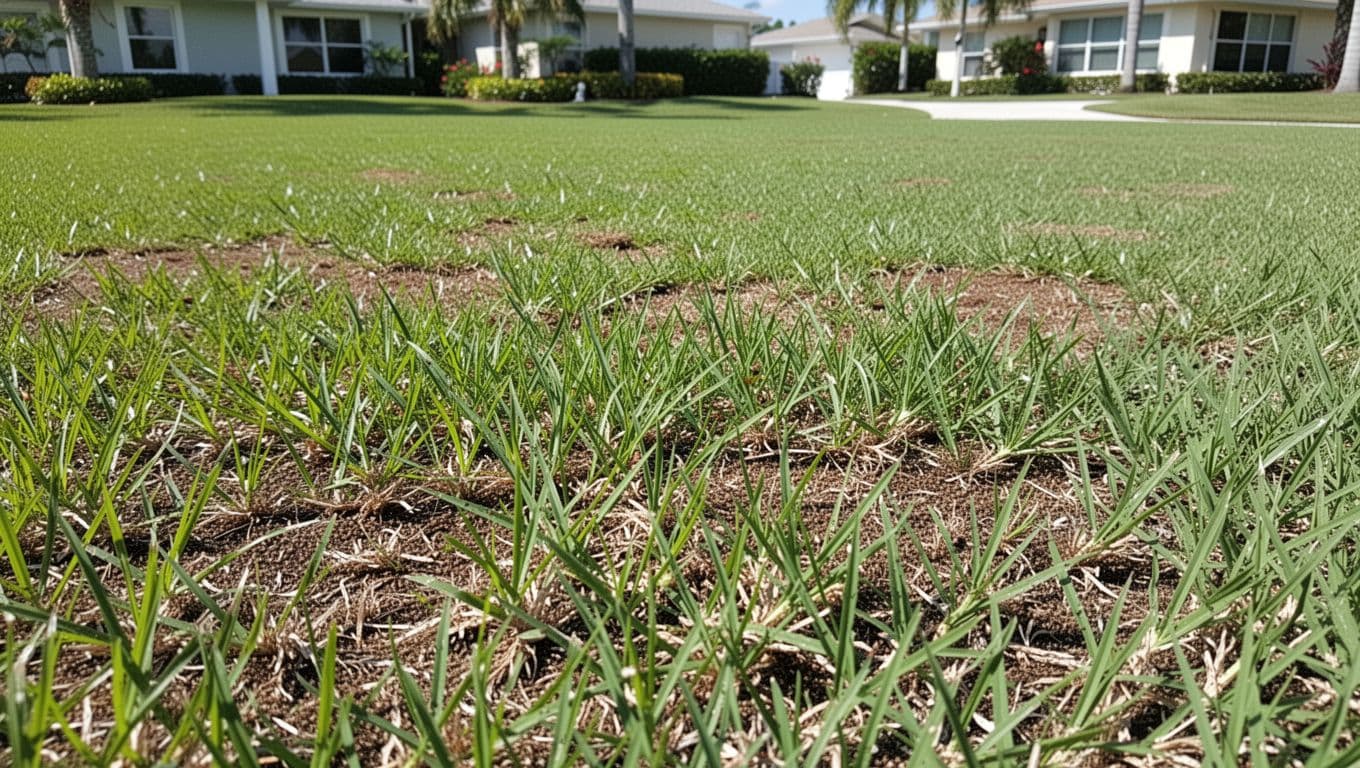
Watering more won't repair stems that billbug larvae have already hollowed out. However, drought stress can create similar brown patches, so one symptom alone doesn't prove an infestation.
Chinch bugs often cause yellowing and browning in hot, sunny areas, especially beside pavement. You can compare the symptoms with this guide to chinch bugs in Cape Coral lawns. White grubs feed on roots below the surface and may cause turf to lift easily. Their appearance and treatment timing differ from billbugs, as described in this guide to white grubs in Cape Coral St. Augustine lawns.
Billbugs Cape Coral Treatment Timing
Timing matters because billbug larvae change location as they grow. Young larvae feed within grass stems and crowns. Older larvae move into the thatch or soil, where they are more protected.
In Cape Coral, begin inspecting St. Augustine lawns as winter temperatures give way to consistent spring warmth. Adult activity can continue through the warm season, especially when turf is stressed. The exact timing varies with weather, lawn condition, and the billbug species present.
| Season or condition | What to watch for | Best response |
|---|---|---|
| Late winter to early spring | Adult beetles near turf edges, sidewalks, and thatch | Inspect several areas and plan treatment if billbugs are confirmed |
| Spring growth period | Yellowing runners, frass, hollow stems, and young larvae | Treat according to the product label before larvae move deeper |
| Summer heat | Expanding brown patches mixed with drought or chinch bug symptoms | Confirm the pest before treating and correct irrigation stress |
| After treatment | New growth may remain thin while damaged tissue dies back | Follow label directions, maintain the lawn, and watch for fresh injury |
The most useful treatment window is usually early activity , when adults are present and larvae are still accessible. A late application may kill exposed adults while missing larvae protected inside crowns or below the thatch.
Avoid using a calendar date as the only guide. Check the lawn when temperatures rise, inspect the border between healthy and damaged grass, and look for live insects. A local pest professional can also determine whether the lawn needs a billbug treatment or a different response.
How to Confirm Billbugs Before Treatment
Start by sampling both healthy-looking turf and the edge of a brown patch. Billbugs may not remain in the center of severe damage, so the transition area often provides better evidence.
Pull apart a few runners and examine the lower stems. Look for tunnels, frass, and larvae. You can also lift a small piece of turf near the damaged edge and inspect the thatch and top layer of soil.
A soap flush can help reveal some surface pests, but it won't always locate larvae inside stems. Mix a small amount of liquid dish soap with water and pour it over a limited test area. Surface insects may rise within minutes. Follow the product label for any test method, and avoid using soap mixtures as a substitute for a labeled insecticide.
Check the lawn's history as well. Ask whether the patch receives water, whether the grass was recently scalped, and whether fertilizer or herbicide was applied. Root disease, pet damage, mower injury, and compacted soil can all create brown areas without billbugs.
If you find only dry soil and no insect evidence, correct the watering problem first. If you find larvae, hollow stems, and expanding injury, treatment becomes more appropriate.
Treating Billbugs in a Cape Coral Lawn
Use only an insecticide labeled for billbugs and St. Augustine grass. The label provides the legal application rate, watering instructions, re-entry period, and restrictions for pets, children, waterways, and beneficial insects. Product names and active ingredients can change, so don't rely on an old recommendation or a product intended for another turf pest.
A treatment plan may include a liquid or granular product, depending on the formulation and label. Some applications need light irrigation to move the product into the thatch. Others require dry foliage for a set period. Applying more product won't compensate for poor timing or incorrect watering.
Professional treatment can help when:
- Brown patches continue to expand after irrigation is corrected
- You can't identify larvae or distinguish billbugs from chinch bugs
- The lawn has heavy thatch or widespread damage
- You need a treatment plan that includes inspection and follow-up
- Children, pets, rental guests, or sensitive areas make application safety a concern
A technician should inspect the turf before recommending treatment. The inspection should include the damaged edge, thatch, stems, soil, irrigation pattern, and nearby stress points. Shield Home & Pest Control provides lawn shield pest treatments in its Southwest Florida service area, including Cape Coral.
After treatment, don't expect dead brown blades to turn green. The grass must produce new growth, and severely damaged sections may need time to fill in. Keep mowing high enough for St. Augustine, use a sharp blade, and avoid removing too much leaf tissue at once. Follow local watering rules while keeping the root zone from drying out.
Reducing Future Billbug Problems
Billbug control works better when the lawn can recover between pest cycles. Mow St. Augustine at the height recommended for the cultivar, and avoid scalping. Short grass has less leaf area and often handles heat stress poorly.
Water deeply enough to wet the root zone, then allow the surface to dry before watering again. Daily light sprinkling can create shallow roots and leave the lawn stressed during hot weather. Repair broken irrigation heads and check areas blocked by fences, walls, or dense shrubs.
Thatch also matters. A thick layer can shelter insects and prevent water or treatment from reaching the turf base. If the lawn feels spongy underfoot, ask a turf professional whether dethatching or aeration is appropriate for the season.
Avoid heavy nitrogen applications when the lawn is already stressed. Excessive soft growth can increase maintenance problems, while balanced fertilization supports recovery. Remove clippings only when they are excessive or diseased, and keep mower equipment clean when moving between damaged and healthy areas.
Conclusion
Billbugs Cape Coral homeowners find in St. Augustine lawns can cause serious thinning before the damage looks obvious. Hollow stems, frass, loose runners, and cream-colored larvae provide stronger clues than brown color alone.
Inspect in early warm weather, confirm the pest, and treat while adults and young larvae remain accessible. With correct timing, proper label use, sound watering, and steady lawn care, you can stop a small billbug problem before it spreads across the yard.
Schedule a Free Inspection: