Phorid Flies In Cape Coral Kitchens How To Find Hidden Breeding Sites
You wipe the counters, take out the trash, and still those tiny flies keep showing up near the sink. If you're dealing with phorid flies in a Cape Coral kitchen, the hard truth is simple: somewhere, there's a moist, organic mess feeding larvae.
Sprays might knock down a few adults, but they don't solve the problem. Think of adult flies like smoke. The real issue is the smoldering source you can't see yet.
This guide helps you spot phorid flies, narrow down where they're coming from, and remove hidden breeding sites safely, without turning your kitchen into a chemical zone.
Why phorid flies keep coming back in kitchens
Phorid flies are small, fast-moving flies that often run across surfaces instead of hovering like fruit flies. Many have a slightly "humpbacked" look when viewed from the side. In Southwest Florida, they thrive because warmth and humidity keep tiny wet spots from drying out.
Here's what matters most: phorid flies breed in wet, decaying organic material . In kitchens, that usually means one of these:
- Sludge inside a drain or garbage disposal
- Rotting food trapped under an appliance
- Leaky plumbing that keeps a cabinet base damp
- A dirty trash can, recycling bin, or mop bucket
- Moisture under tile or along a baseboard after a slow leak
Phorid flies also get confused with drain flies and fruit flies. Drain flies look fuzzy and moth-like, and they often rest on walls near sinks and showers. If you suspect that "fuzzy drain fly" look, this guide on drain flies in Cape Coral bathrooms explains how slime in plumbing supports larvae.
If you're seeing flies every day, you almost always still have a breeding site. Killing adults alone is like bailing water without fixing the leak.
Quick triage: where to look first based on where you see flies
Before you deep-clean everything, use the flies' behavior as a map. You're trying to answer one question: Where are the adults emerging?
Use this quick triage table to decide where to start tonight and tomorrow.
| Where you see flies most | Likely hidden breeding site | Best first check |
|---|---|---|
| Around sink, faucet, or counter edges | Disposal sludge, sink drain biofilm, overflow channel | Tape test on drain, sniff for sour odors, inspect disposal splash guard |
| On cabinet doors under the sink | Slow leak, wet particle board, damp rag stash | Feel for dampness, check trap joints, look for swelling or staining |
| Near trash can or recycling | Residue under liner, gunk in bin seams | Wash bin, check under bag folds, clean floor edge |
| Near fridge or dishwasher | Drip pan spill, food under appliance, drain line leak | Pull appliance out carefully, look for sticky residue and moisture |
| Near a floor drain (laundry, garage entry, pantry corner) | Slime in floor drain, dry trap letting odor and insects move | Pour water to refill trap, then brush and enzyme-treat |
Two simple "proof" tests (no special tools)
First, try the tape test . At night, place clear tape over the sink drain opening (sticky side down) and leave a tab for removal. Check in the morning. If flies stick to the tape, that drain is a strong suspect.
Next, set sticky cards (like plain glue traps) near, not inside, the suspected zone. Place one by the sink baseboard, one near the trash area, and one near the fridge. The trap with the most catches often points to the source.
If flies cluster in one corner but you can't find food or drain issues, don't ignore moisture inside a cabinet base. A slow drip can keep wood damp for weeks.
Finding and removing hidden breeding sites (the source-first approach)
You don't need a huge product lineup. You need the right supplies and a plan that removes buildup instead of masking it.
Supplies to gather
- Nitrile gloves and eye protection
- Flashlight or headlamp
- Screwdriver (to remove drain strainers if needed)
- Long drain brush or bottle brush
- Bucket, old towels, and a trash bag
- Dish soap and hot tap water
- Enzyme or biological drain gel (label-safe for kitchens)
- Optional: wet/dry vacuum for crumbs and debris (empty it outside right away)
Step 1: Start with the sink drain and garbage disposal
Kitchen drains can look fine at the opening while sludge builds deeper down. Remove the strainer, then scrub the drain walls several inches down with a brush. For disposals, focus on the underside of the rubber splash guard. That area often hides a nasty ring of buildup.
After scrubbing, flush with hot tap water and dish soap.
Safety notes matter here:
- Don't use boiling water if you have PVC plumbing, it can soften or warp some plastic parts.
- Don't mix chemicals , ever. Never combine bleach with vinegar or ammonia-based cleaners.
- If you use an enzyme drain gel, avoid pouring disinfectants down the same drain right before or after. Disinfectants can reduce enzyme performance.
Step 2: Check the P-trap and under-sink cabinet base
Place a paper towel under the trap and run water for a minute. Any drip, even a slow one, can feed phorid fly breeding nearby. Also feel the cabinet floor and back wall. Swollen wood, peeling laminate, or a musty smell often means moisture has been sitting there.
If you find wet, damaged particle board, dry it fast with airflow and address the leak. Otherwise, the problem returns.
Step 3: Pull the trash system apart (not just the bag)
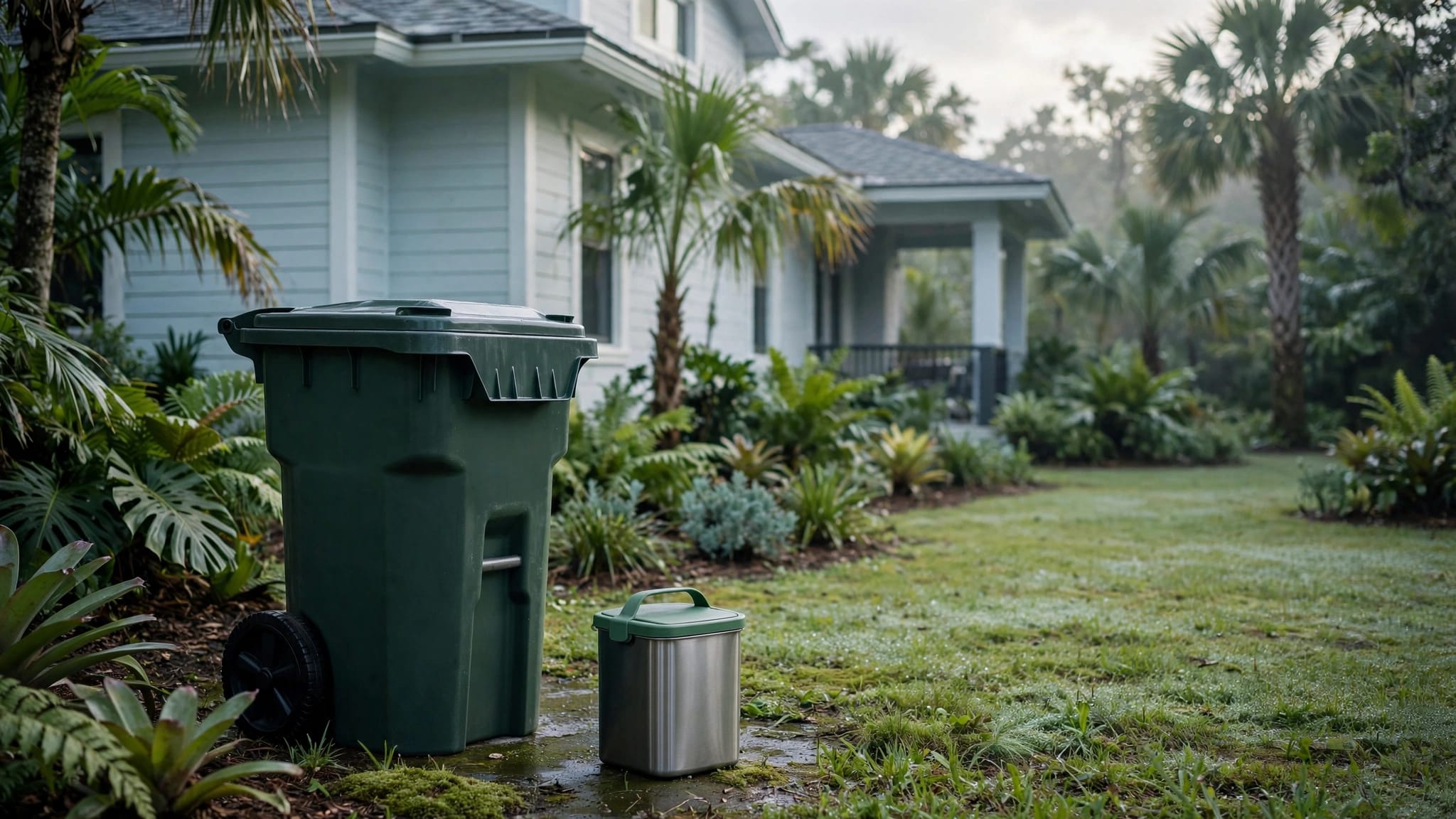
Phorid flies love residue. Take the bin outside, then wash it with soapy water. Clean under the rim, handles, and any "liner pocket" where liquid collects. Wipe the floor edge where the bin sits. If you use a pull-out cabinet trash, check the tracks and the cabinet base for drips.
Seal dirty paper towels and gunk in a bag, then take it to the outdoor trash right away.
Step 4: Look under and behind appliances
That missing French fry under the fridge is not a joke. In Cape Coral kitchens, humidity helps spilled soda and crumbs stay tacky longer, which supports decay.
Carefully pull the fridge or dishwasher out (get help if needed). Look for:
- Sticky residue trails
- Wet spots and warped flooring
- Food debris along the wall edge
- A fridge drip pan that overflowed (varies by model)
Clean, dry, then keep the area dry for the next couple of weeks.
Step 5: If the flies persist, consider a plumbing issue
When you've cleaned drains and removed food sources but adults keep appearing, the breeding site can be deeper in the plumbing system. A damaged drain line under a slab, a broken cleanout, or sewer-related organic buildup can support phorid flies.
This is where a pro inspection helps. Pest pros and plumbers can coordinate to confirm whether the source is structural, not just surface-level.
If you're also battling other kitchen invaders, the habits that prevent fly breeding also help with stored-product pests. This post on pantry moths in Cape Coral kitchens is a good companion read for keeping food storage tight.
How fast you should see results (and when to call a pro)
Once you remove the breeding source, adult phorid flies usually drop fast. In many homes, you'll notice fewer flies in 3 to 7 days . However, you might still see a few for up to 2 to 3 weeks , depending on temperature and whether any larvae were close to becoming adults.
Here's a realistic timeline:
- Days 1 to 3 : You still see adults, but numbers should stop climbing.
- Days 4 to 7 : Daily sightings should decline if the source is gone.
- Weeks 2 to 3 : Stragglers fade out. Sticky traps should be mostly quiet.
Call for help if any of these happen:
- You've cleaned and dried the likely sources, but fly counts don't drop after 7 to 10 days.
- You smell sewer odor, notice recurring slow drains, or see moisture you can't explain.
- The activity seems strongest at a wall, baseboard, or floor seam (possible hidden leak).
Baits and insect growth regulators (IGRs) can be useful, but they're best as supplements , applied correctly and safely by a professional. Foggers and indiscriminate indoor insecticide use aren't a good fit for kitchens, and they don't remove breeding material anyway.
For broader prevention habits that support long-term control, see effective pest control strategies for your home.
Conclusion
Phorid flies don't appear out of nowhere. They're a sign of a hidden, wet food source, often in drains, under appliances, or around a slow leak. Once you remove that source and keep the area dry, phorid flies usually fade within days, not months.
If you've cleaned thoroughly and the problem keeps going, treat it like a clue, not a failure. Something is still feeding them, and the faster you pinpoint it, the faster your kitchen feels normal again.
Schedule a Free Inspection: