Phorid Flies In Cape Coral Bathrooms Signs Of A Drain Issue
Seeing tiny flies in your Cape Coral bathroom can feel random, like they appeared overnight. But if you're spotting them again and again, it usually isn't "just bugs." Phorid flies often point to moisture plus hidden organic buildup, and bathrooms have plenty of both.
Here's the bottom line: when phorid flies keep showing up, the problem is usually inside a drain system or around it , not on the counter. Think of the flies as smoke. The drain issue is the fire.
This guide helps you confirm what you're dealing with, pinpoint likely sources, and choose safe next steps.
How to tell if you're dealing with phorid flies (not "just gnats")
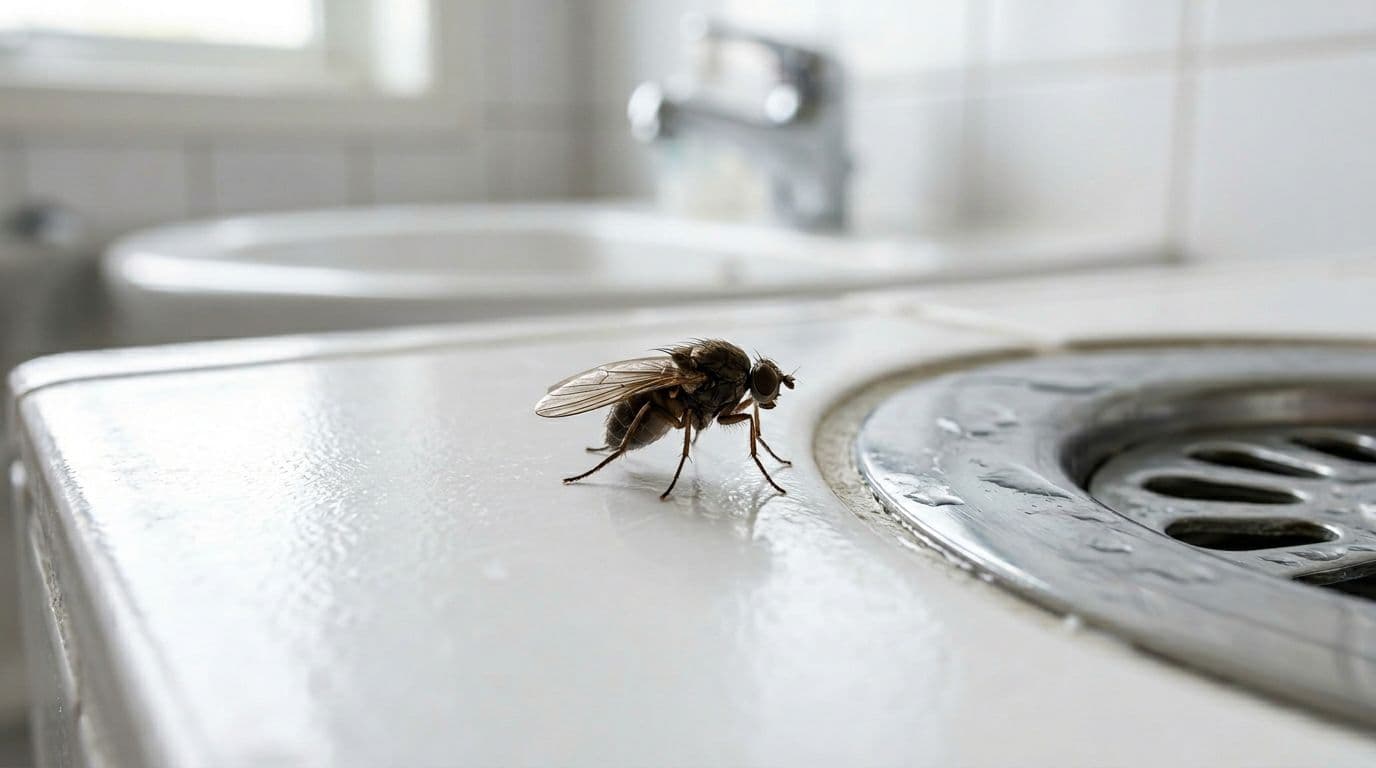 Close-up view of a small phorid (humpbacked) fly near a bathroom drain, created with AI.
Phorid flies (often called humpbacked or scuttle flies) are small and dark, usually a few millimeters long. They don't always hover like fruit flies. Many run in quick bursts across sinks, walls, and counters before taking off.
A few quick clues that fit phorid flies in bathrooms:
- They show up near sinks, showers, tubs, or floor drains , especially where things stay damp.
- You notice them more early morning or after the bathroom sits unused.
- Sprays knock them down, but they return within days.
Mis-ID happens a lot because several "tiny fly" pests overlap. Drain flies (moth flies) look fuzzier and more triangular. Fruit flies hang around produce and trash. Phorids are the ones that often show up when there's wet organic material , sometimes in plumbing.
If you suspect the problem is the drain side of things, this related post goes deeper on tracking moisture and slime sources in bathrooms: drain flies in Cape Coral bathrooms.
If you keep seeing the same tiny flies in the same bathroom, assume there's a breeding source nearby. Random strays don't behave like that.
Why phorid flies in Cape Coral bathrooms often mean a drain problem
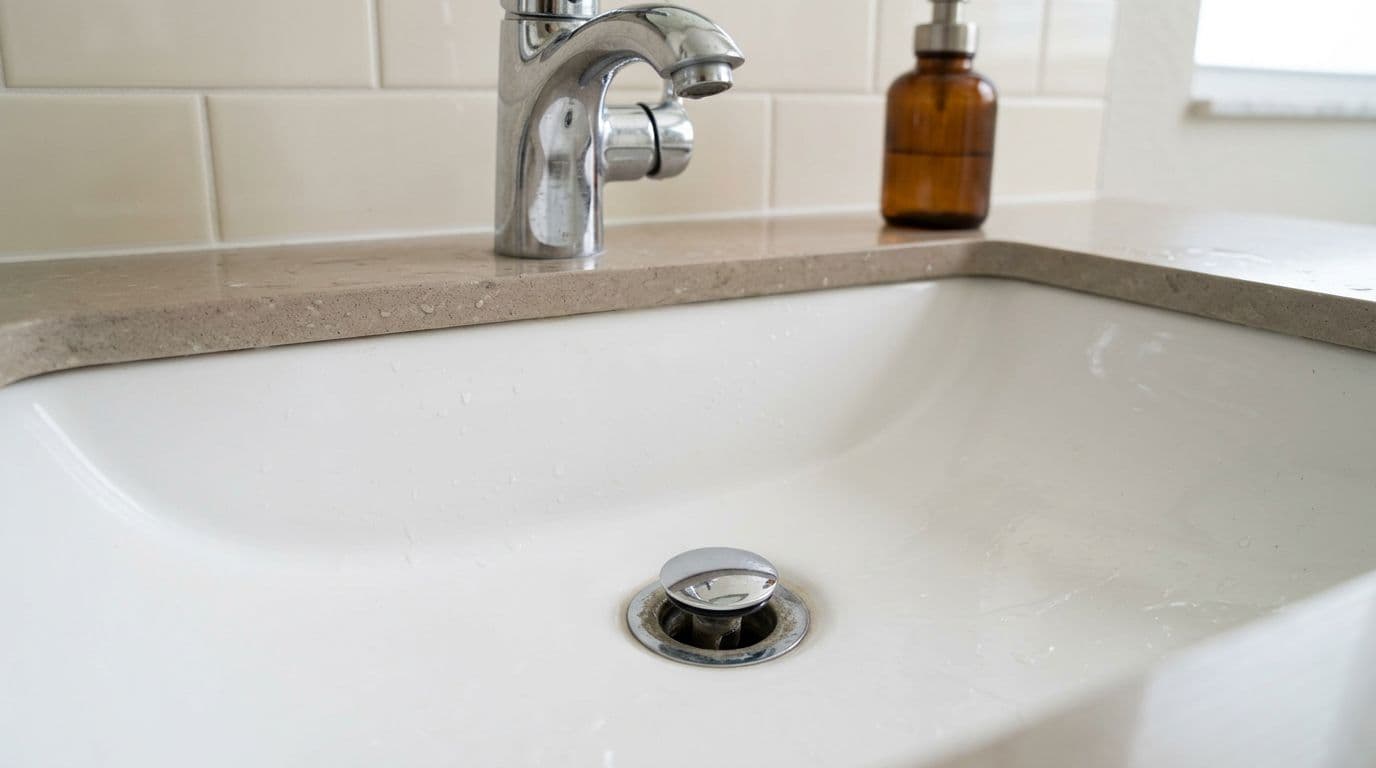 Example of subtle biofilm buildup around a bathroom drain edge, created with AI.
Phorid flies need moisture and organic matter for their larvae. In bathrooms, that "food" is usually biofilm and gunk you don't see, such as soap scum, skin oils, toothpaste residue, and hair breakdown. Over time, it coats the inside of drain lines like a thin slime layer.
Cape Coral adds a few local multipliers:
Florida humidity slows drying, so damp spots stay damp longer. Condensation on cold pipes can keep cabinets humid, especially in summer. In addition, many homes have A/C condensate lines and nearby utility drains that can stay wet, even when the bathroom is "clean."
Most importantly, repeated sightings can hint at more than surface buildup. A persistent phorid flies drain problem is sometimes tied to:
- A slow leak under a sink or inside a wall
- A compromised toilet wax ring , which can keep the subfloor damp
- A cracked or offset drain line , letting organic material sit and rot
- An infrequently used drain with stagnant water and buildup above the waterline
In other words, wiping counters is like mopping the floor while the bathtub is still overflowing. It helps, but it won't stop the source.
Troubleshooting: symptom to cause, what to check, and your next step
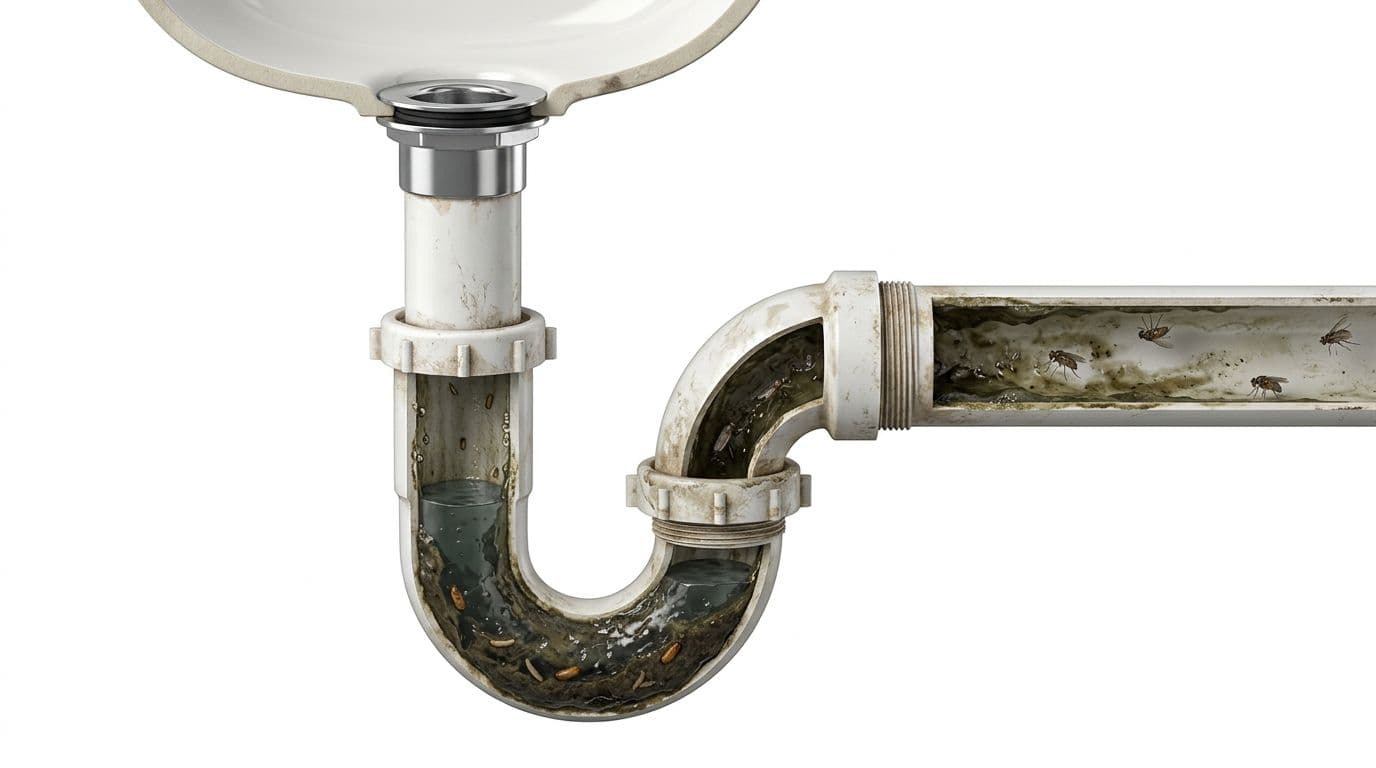 Cutaway view of a typical bathroom P-trap and drain line where buildup can collect, created with AI.
Use this table to narrow down where the flies may be coming from. One sentence before you start: focus on the wettest, least disturbed spots first.
| Symptom you notice | Likely cause | What to check | Next step |
|---|---|---|---|
| Flies mostly around one sink | Biofilm in P-trap or overflow channel | Sniff test at drain, check overflow hole, look for slow drain | Mechanically scrub drain and overflow, then maintain weekly |
| Flies appear near shower/tub | Hair, soap scum, sludge in trap | Remove cover, inspect edges, check for standing water | Pull debris, brush drain walls, flush with hot tap water |
| Worse after a weekend away | Stagnant traps, evaporation, buildup above waterline | Rarely used drains, guest bath, floor drain | Run water weekly, keep traps primed |
| Flies plus musty odor in vanity | Small leak or condensation feeding organic grime | Damp cabinet base, wet particle board, sweating pipes | Dry area, fix leak, consider plumber if moisture returns |
| Flies near toilet base | Possible wax ring leak or damp subfloor | Rocking toilet, soft flooring, staining at caulk line | Stop DIY, schedule wax ring and subfloor check |
| You cleaned drains, they're still back | Breeding source isn't removed, or drain defect | Repeat sightings in same zone, slimy residue returns fast | Get a pro inspection, consider camera scoping |
Safe DIY steps that actually help (without risky chemical guessing)
Start with physical removal . Biofilm is like algae on a pool wall, you have to scrub it off.
- Gear up : Wear gloves and eye protection, open a window or run the fan.
- Remove covers and debris : Pull hair and gunk before you "treat" anything.
- Brush the drain : Use a drain brush or bottle brush several inches down.
- Clean the overflow (sink): Gently scrub the overflow channel if your sink has one.
- Flush with hot tap water : Avoid boiling water, it can stress some plastics.
- Use one product at a time (optional): Enzyme cleaners can help after scrubbing.
Important safety note: Don't mix chemicals , especially bleach with acids or ammonia products. Also, don't rely on aerosols alone, they only hit the adults.
When a plumbing inspection is the smart move (and a short FAQ + checklist)
DIY works when the breeding site is simple buildup. Still, call a plumber when signs point to a defect or hidden leak. That usually includes recurring flies after thorough scrubbing, sewer-like odors, frequent slow drains, gurgling, or moisture around the toilet base.
A good plumbing check may include camera inspection , a pressure test for leaks, and a toilet wax ring evaluation. If there's a belly in the line, a crack, or a bad connection, cleaning won't solve it for long.
Quick FAQ
Are phorid flies the same as drain flies?
Not always. People use the terms loosely, but phorids often tie to decaying organic material, sometimes connected to plumbing defects.
Why is it only happening in one bathroom?
That bathroom may have a slower drain, a damp vanity base, an unused fixture, or a small leak feeding buildup.
How long until they're gone after cleaning?
You may see a few stragglers for up to 1 to 2 weeks. The key is whether numbers drop steadily.
Is bleach enough?
Bleach may not penetrate biofilm well. Scrubbing removes what larvae feed on, which is what stops the cycle.
Simple maintenance checklist (especially in humid Florida)
- Run water in guest baths weekly to keep traps primed
- Use the bathroom exhaust fan during showers, then 20 minutes after
- Fix drips fast, even "slow" ones under the sink
- Keep A/C condensate line areas clean and dry if they're nearby
- Brush problem drains monthly, don't just rinse
- Watch for soft flooring around toilets, it can signal a hidden leak
Conclusion
If you're seeing phorid flies in a Cape Coral bathroom, treat it like a clue, not a mystery. The most common cause is hidden organic buildup, but repeated activity can also mean a leak or drain defect. Start with safe, hands-on cleaning, then move to a plumbing inspection when the signs point deeper. Stopping a phorid flies drain problem is about removing the source, not chasing the adults.
Schedule a Free Inspection: