Mosquito Control Cape Coral for Outdoor Weddings
A beautiful Cape Coral wedding can turn uncomfortable fast when mosquitoes arrive with the evening breeze. Reliable mosquito control Cape Coral couples can schedule before the ceremony helps protect guests, vendors, and the outdoor setting.
Warm weather, rainfall, pools, canals, and shaded landscaping create conditions mosquitoes favor. The right plan combines yard preparation, targeted treatment, guest comfort, and safe timing around food and people.
Key Takeaways
- Schedule an inspection before the event, not on the afternoon guests arrive.
- Remove standing water from the yard, patio, pool area, and decorative items.
- Ask for treatment around guest spaces, seating areas, walkways, and landscaping.
- Use fans, screened spaces, and personal repellents as added protection.
- Confirm product timing, re-entry guidance, and any venue restrictions in writing.
Why Cape Coral Outdoor Events Attract Mosquitoes
Cape Coral properties often include features that hold or collect water. Swimming pools, boat docks, canal edges, irrigation systems, gutters, plant saucers, toys, and decorative containers can all create mosquito breeding areas when water remains undisturbed.
Even a small amount of water can support mosquito larvae. After rain, check low spots in the lawn and water trapped under patio furniture or pool equipment. A clogged gutter or loose pool cover can also hold water where mosquitoes reproduce.
Adult mosquitoes prefer shaded, humid areas during the day. Dense shrubs, tall grass, palm fronds, and vegetation beside fences give them places to rest. As the sun goes down, they become more active around guests who are standing, dining, dancing, or taking photographs.
Canal-side properties may face additional exposure because nearby water and vegetation can support mosquito activity. However, the source may also be closer to home. A neighboring property, storm drain, vacant lot, or shared drainage area can affect conditions around the event space.
A clean-looking yard can still produce mosquitoes if water collects inside a hidden gutter, planter, or pool-cover fold.
Start with the Cape Coral mosquito breeding grounds guide when reviewing the property. It covers common water sources that homeowners often overlook.
How Mosquito Control Cape Coral Weddings Should Be Planned
Event protection works best when the treatment plan matches the property and the schedule. A professional inspection should review the ceremony area, reception space, guest parking, walkways, landscaping, pool deck, lanai, and any nearby water sources.
Tell the pest-control provider the important details:
- The event date and approximate guest arrival time
- Whether food will be prepared or served outdoors
- Where guests will sit, dine, dance, and gather
- Whether children, pets, or people with sensitivities will attend
- The location of pools, ponds, canals, drains, and shaded landscaping
- Any venue rules about pesticide applications
Schedule the inspection early enough to correct drainage or landscaping problems. A provider may recommend removing containers, trimming dense vegetation, repairing screens, or changing irrigation practices before treatment begins.
Treatment timing matters as much as the product. Many outdoor applications need time to dry before people and pets return to treated areas. The provider should explain the product label directions, drying period, re-entry instructions, and weather limits. Never plan an application while guests are present.
For a wedding, ask whether the treatment can cover the areas that matter most. A full-property approach may be appropriate for some lots, while a focused service may fit a smaller event space. The quote should identify the areas included, the type of service, and whether follow-up treatment is recommended.
Weather can affect the schedule. Heavy rain, strong wind, or irrigation shortly after treatment may reduce results or require a change in timing. Keep a backup plan for covered seating or an indoor portion of the reception if conditions change.
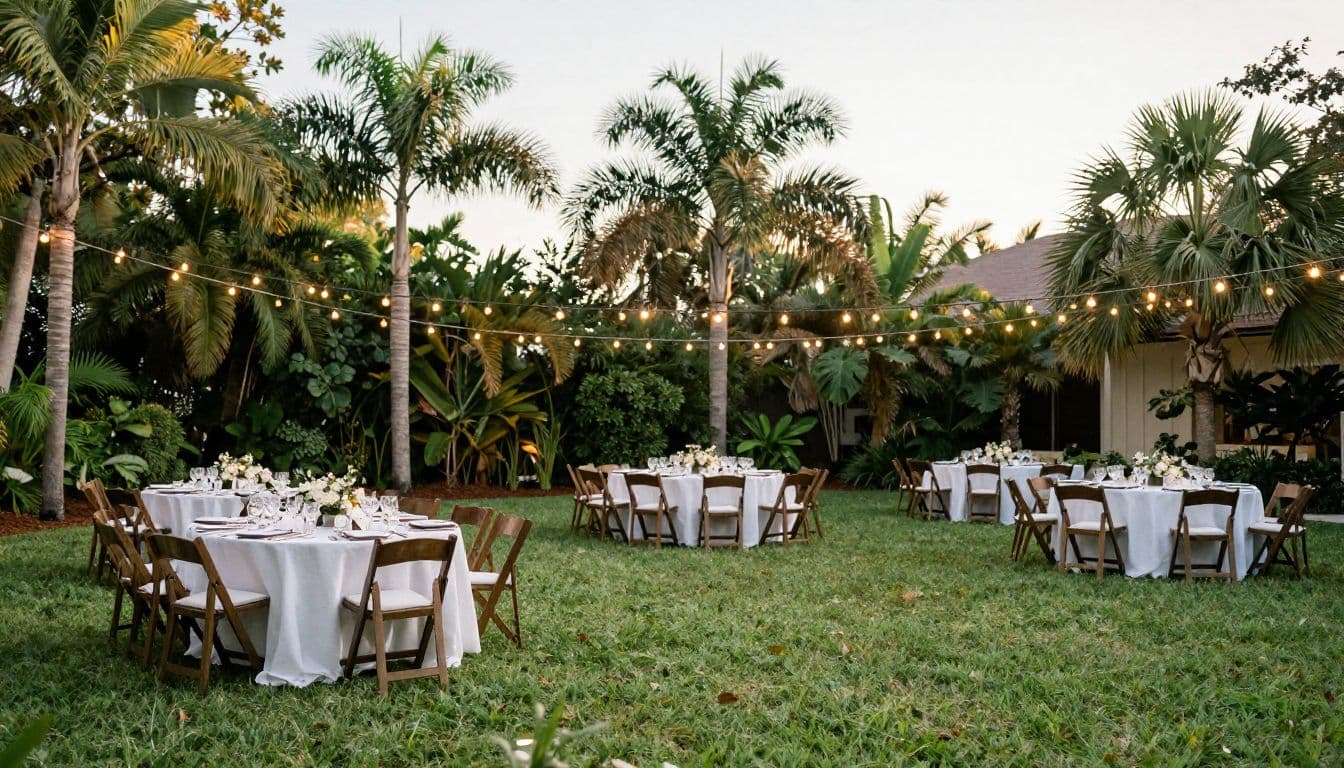
Outdoor event spaces need mosquito planning around seating, food service, walkways, and landscaping.
Prepare the Yard Before the Provider Arrives
Professional treatment cannot correct every breeding source. Yard preparation reduces the number of places where mosquitoes can develop and helps the treatment last longer.
Walk the property several days before the event. Empty plant saucers, buckets, toys, wheelbarrows, outdoor dishes, and decorative containers. Remove leaves from gutters and check that downspouts direct water away from seating areas.
Inspect the pool cover for puddles. Keep water circulating according to the pool professional's instructions, and address standing water around the pump, deck, and drain areas. Do not add chemicals to water unless the product is intended and labeled for that use.
Trim vegetation around guest spaces, but avoid creating loose debris that will collect water. Move dense potted plants away from tables, buffet stations, and ceremony chairs. Keep grass cut and clear overgrown edges near fences and walkways.
Screened lanais provide a useful refuge, but damaged screens and open doors can still allow mosquitoes inside. Repair holes, check door sweeps, and avoid propping doors open during the event. The Cape Coral pool and patio mosquito solutions guide includes practical advice for screened spaces and pool areas.
Ask neighbors or property managers about standing water on adjoining lots when the event site borders canals, drainage areas, or vacant property. You may not control every source, but knowing where activity comes from helps the provider adjust the plan.
Protect Guests During the Ceremony and Reception
Treatment creates a stronger baseline, but guest comfort also depends on how the event is arranged. Place dining tables and the bar away from dense shrubs, tall grass, and canal-facing vegetation when possible.
Fans can help in seating and dining areas because moving air makes it harder for mosquitoes to fly and land. Use several outdoor-rated fans around guest spaces, keeping cords secured and equipment away from walkways.
Screened areas can protect older guests, young children, and anyone who prefers to avoid repellent. Keep doors closed when people enter and leave. If the venue has a tent, ask the rental company about sidewalls and safe ventilation.
Personal protection can add another layer. Guests may choose an EPA-registered repellent containing an active ingredient such as DEET, picaridin, IR3535, or oil of lemon eucalyptus. Follow the label, especially when applying products to children. Oil of lemon eucalyptus products aren't recommended for children under three years old.
Avoid placing open citronella candles beside food, dresses, or crowded tables. They may provide limited help in a small area, but they shouldn't replace source reduction and professional treatment. Smoke, fragrance, and open flames can also create problems at a formal reception.
Keep floral arrangements and beverage stations away from damp, shaded corners. Spilled drinks don't create a mosquito population by themselves, but wet organic debris and nearby water can add to an already favorable area.
Choose the Right Mosquito Service for the Event
When comparing providers, ask what the service includes instead of choosing based only on the lowest price. A good mosquito plan should account for the property, event timing, weather, and people using the space.
Common service elements include:
- Property inspection : The technician identifies breeding sources, resting areas, drainage issues, and likely guest exposure.
- Source reduction advice : The provider recommends practical changes before treatment.
- Targeted outdoor treatment : Applications focus on vegetation and gathering areas according to the product label.
- Larval control : A professional may address water that cannot be drained, when the chosen product is labeled for that setting.
- Follow-up planning : Larger events or properties with ongoing mosquito pressure may need additional service.
Ask whether the company uses licensed technicians and EPA-registered products. Request the product name, application areas, drying time, and instructions for pets, children, food, and outdoor equipment.
A provider should also explain what the service cannot do. No treatment can create a permanent barrier against mosquitoes flying in from nearby properties or waterways. Results depend on rainfall, wind, irrigation, vegetation, and new breeding sites.
Searchers often use the phrase mosquito control Cape Coral when they need help before a party, wedding, or rental turnover. Look for a local company that offers a clear inspection and treatment plan rather than a vague promise of total elimination.
Shield Home & Pest Control serves residential, commercial, and vacation-rental customers across Southwest Florida. A local inspection can help match the service to the lot, the guest areas, and the event schedule without committing to treatment before you understand the plan.
When to Schedule Mosquito Control in Cape Coral
Don't wait until the reception chairs are set out. Contact a provider early enough to allow an inspection, yard cleanup, treatment scheduling, and any needed adjustments.
For a wedding or large outdoor event, share the date during the first conversation. The provider can then discuss the best treatment window and whether weather could affect the appointment. If the property has a history of heavy mosquito activity, schedule the inspection well before invitations go out.
Routine service may make sense for venues that host frequent events, vacation rentals with regular outdoor use, or homes with persistent exposure near canals and drainage areas. A one-time event treatment may fit a single celebration, but recurring activity often points to a source that needs attention.
Keep written instructions with the event coordinator. Include the treatment time, areas treated, re-entry information, and contact details for the pest-control company. That simple record prevents confusion when caterers, rental crews, and guests arrive.
Plan Mosquito Protection Before the Guest List Arrives
Outdoor celebrations in Cape Coral need more than attractive landscaping and good weather. Standing water, shade, irrigation, canals, and open doors can all shape mosquito activity around the property.
A practical mosquito control Cape Coral plan starts with an inspection and yard cleanup. Then, targeted treatment, fans, screened areas, and sensible guest guidance help keep the focus on the ceremony instead of itchy bites.
The strongest results come from planning before the event day. When the yard and treatment schedule are ready in advance, guests can enjoy the lights, music, and celebration in comfort.
Schedule a Free Inspection: