Golf Course Mosquito Control for Florida Clubs
A beautiful Florida course can become uncomfortable fast when mosquitoes push golfers off patios, away from practice areas, and into the clubhouse before sunset. Effective golf course mosquito control protects the guest experience without treating every pond, plant bed, or wet area as a problem.
Mosquito pressure usually comes from a mix of small, overlooked water sources and shaded resting spots near people. A recurring, property-wide program gives superintendents and club managers a practical way to reduce activity throughout the season.
Where Golf Course Mosquito Control Problems Begin
Florida golf properties contain plenty of water by design. Ponds, wetlands, drainage swales, irrigation systems, and lush plantings all support course play, stormwater management, and visual appeal. They can also support mosquito development when conditions line up.
The goal is not to remove water features. Instead, identify which areas hold water long enough for mosquitoes to breed, then address those locations with the least disruptive method.
Ponds, wetlands, and drainage features
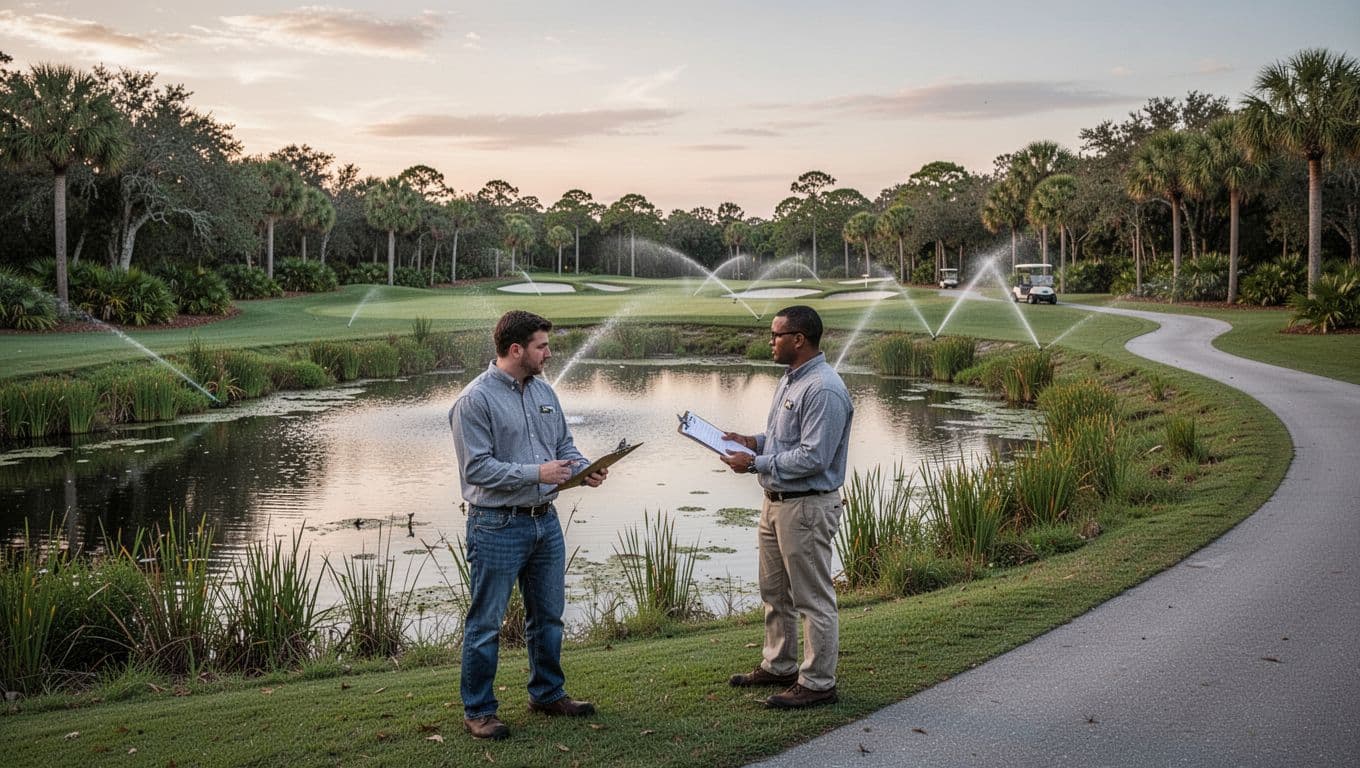
Retention ponds and wetlands often play an important role in drainage and wildlife habitat. However, blocked outfalls, trapped debris, shallow shoreline pockets, and dense floating vegetation can create calmer water near the edge.
After a storm, staff should look beyond the pond itself. Cart-path drains, catch basins, low turf areas, culvert entrances, and dry basins that stay wet for days can also raise mosquito pressure. Stormwater pond mosquito control often starts with better access, clear flow paths, and regular post-rain inspections.
Ornamental plants create adult resting areas
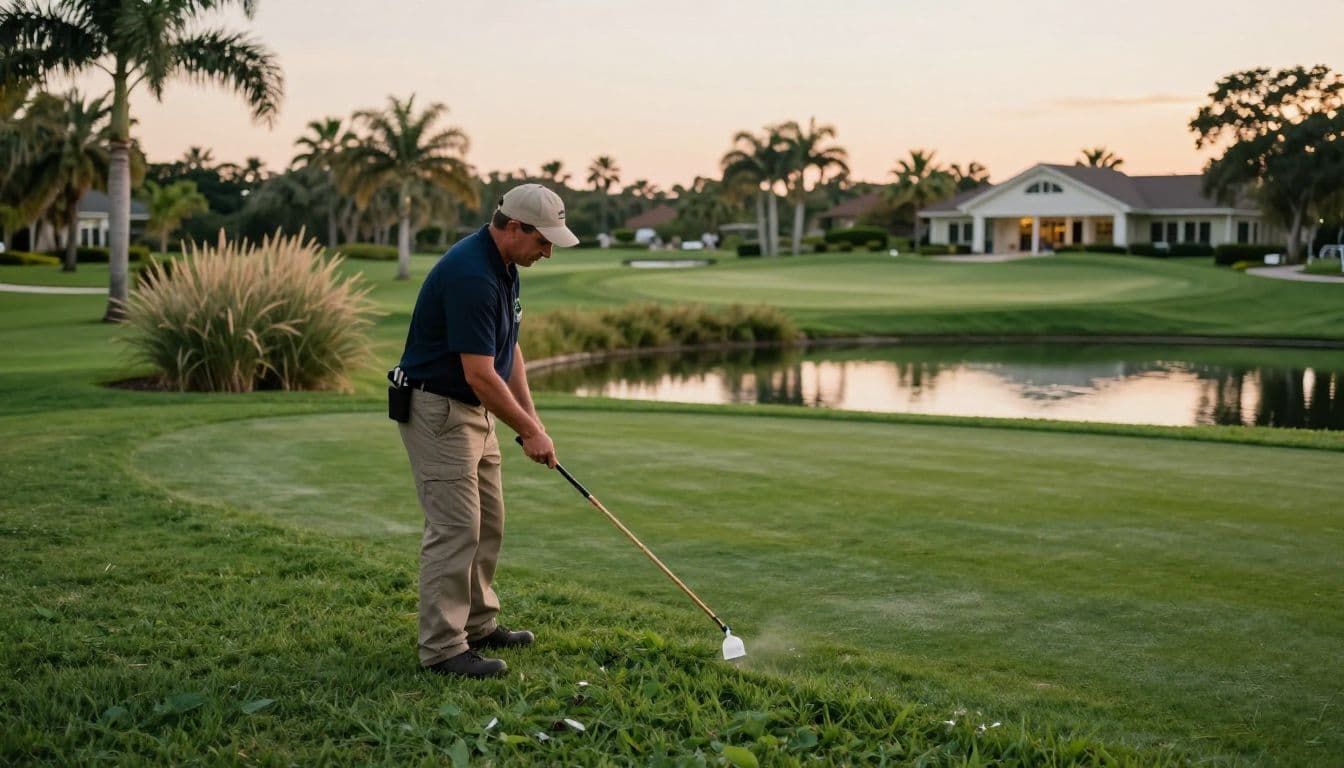
Adult mosquitoes rest in cool, humid cover during the day. Dense shrubs around patios, tennis courts, pool decks, bag-drop areas, maintenance buildings, and outdoor dining spaces can give them a place to wait until evening.
Ornamental bromeliads, containers, tarps, equipment covers, and clogged gutters deserve attention as well. Many of these sources are small enough to miss during a normal landscaping walk-through, yet they sit close to employees and guests.
Mosquito complaints near a clubhouse may begin in a drain, planter, or shaded service area nearby, not at the largest pond on the property.
Build a Recurring Mosquito Management Program
A one-time spray may briefly reduce flying adults, but it doesn't correct the water sources that keep producing more mosquitoes. Golf course mosquito control works best as an integrated program with scheduled inspections, maintenance coordination, monitoring, and targeted treatments when conditions call for them.
Course conditions change quickly after rainfall, irrigation adjustments, landscaping work, or seasonal growth. Your service plan should change with them.
Map concerns by location and timing
Start with a simple property map that marks ponds, wetland edges, drainage structures, irrigation zones, employee work areas, outdoor event spaces, and high-traffic guest areas. Add reports from golf staff, food-and-beverage teams, members, and maintenance crews.
Then record when activity occurs. A complaint at a patio during twilight points to different conditions than daytime mosquito activity at a shaded cart barn. Notes on rain, wind, mowing, and irrigation timing make patterns easier to spot.
A useful service record includes:
- Inspection dates, observed conditions, and locations with standing water or dense resting cover.
- Source-reduction work assigned to course maintenance, landscaping, irrigation, or facilities teams.
- Treatment locations, product information, label precautions, and any required follow-up.
- Mosquito reports before and after service, including areas that need another inspection.
Reduce water sources before treating
Maintenance staff can often correct the simplest sources quickly. Emptying containers, removing debris from drains, repairing leaks, adjusting irrigation overspray, and keeping catch basins clear all reduce habitat without changing the course design.
Some water cannot be drained or removed. Wetlands, stormwater ponds, and certain drainage structures may need planned larval control where appropriate. A licensed professional can inspect these areas and select a label-approved method that fits the site, water conditions, and local requirements.
Use Targeted Adult Mosquito Treatments Wisely
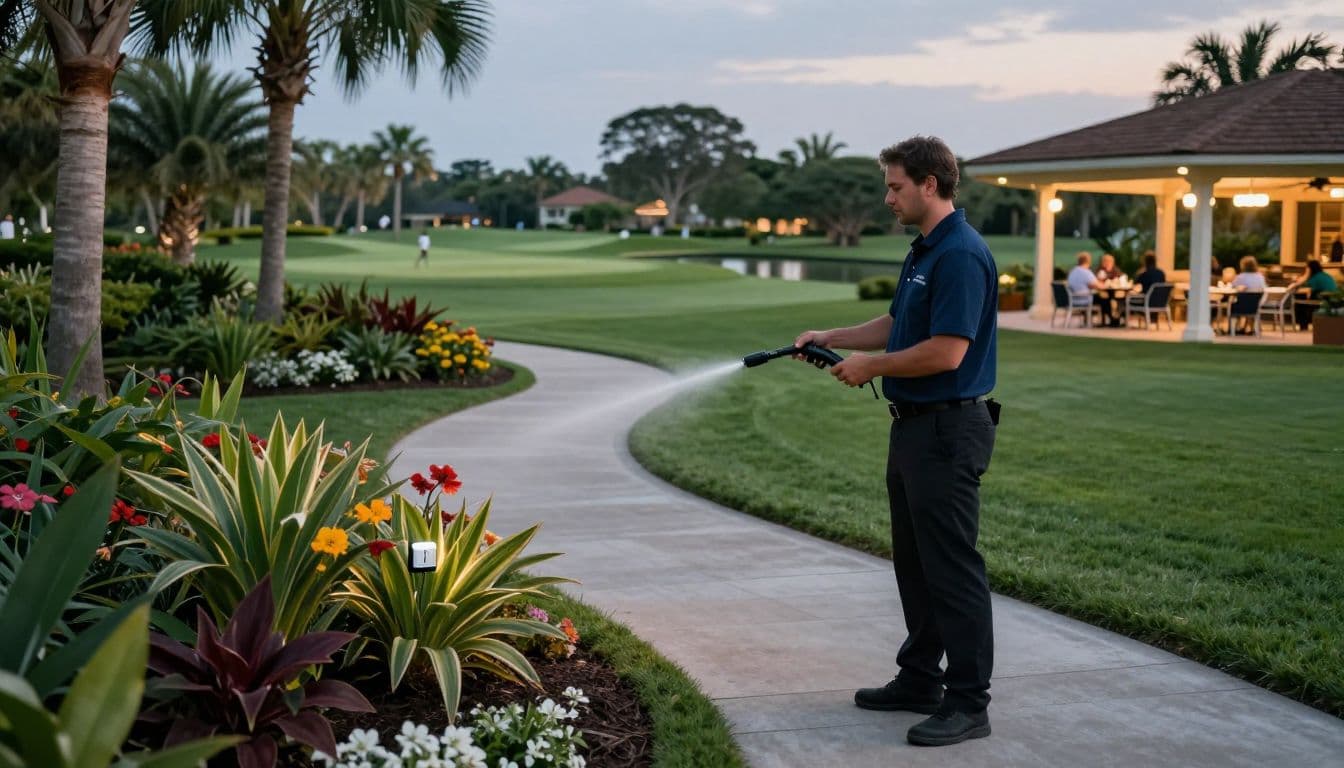
Adult mosquito control has a place in a Florida club program, particularly when surveillance and guest reports show active pressure around patios, clubhouse entrances, cart staging, practice facilities, and shaded walkways. Still, adult treatments work best when paired with source reduction and larval management.
Blanket applications across every fairway waste effort and can create unnecessary disruption. Treatment should focus on approved areas where adult mosquitoes rest or where people regularly gather.
Match service to the property schedule
A professional provider should review tee times, weddings, tournaments, outdoor dining, maintenance work, and staff shifts before scheduling service. Treatments may need to occur when guests are absent and when weather supports the planned application.
Wind, rain, and irrigation can affect timing and coverage. Heavy rain soon after a service visit can also create new breeding sites. That is why recurring visits and rain-triggered follow-ups make more sense than relying on a fixed calendar alone.
For clubs with changing schedules, commercial mosquito and pest control services can be coordinated around operations rather than treated as a separate facilities issue.
Keep applications label-conscious
Florida pesticide labels control where, when, and how a product may be used. Licensed professionals follow those directions, including approved use sites, application methods, personal protective equipment, and re-entry instructions.
Ask your provider to explain the treatment area in plain language. Staff should know which spaces will be serviced, what precautions apply, and when the area returns to normal use. A responsible plan never promises to eliminate every mosquito or remove disease risk.
Protect Golfers, Staff, Pollinators, and Wildlife
Mosquito management has to fit a property shared by members, seasonal visitors, grounds crews, birds, fish, and beneficial insects. The best results come from careful timing and site selection, not the broadest possible application.
Golfers remember the experience around the first tee, beverage stations, restrooms, patios, and evening events. Meanwhile, crews may spend hours near drainage areas, equipment storage, and shaded vegetation where mosquito pressure builds.
Communicate before treatments
Give department leaders advance notice of planned service. The golf shop can avoid directing players toward a treated route, while food-and-beverage teams can adjust patio setup if needed. Maintenance supervisors can also flag irrigation cycles, mowing, fertilizer work, or restricted areas.
For member-facing communication, keep the message short and useful. State the date, general areas affected, expected access limitations if any, and who to contact with questions. Clear notice prevents confusion without alarming guests.
Respect pollinator and wildlife areas
Flowering beds, wetland edges, bird habitat, and water features call for added care. Crews should identify pollinator activity and avoid unnecessary treatment of flowering plants or non-target habitat. Providers also need to consider fish, aquatic organisms, and protected wetland conditions before making recommendations.
Landscape maintenance supports this work. Selective pruning can improve airflow and access without stripping useful habitat. Clearing invasive growth or debris from a shoreline may also restore water movement while preserving the feature's purpose.
Plan Around Florida Weather and Seasons
Mosquito activity often rises during Florida's warmer, wetter months. Rainfall fills low areas, increases water in containers, and leaves drainage structures holding water. High humidity also gives adult mosquitoes favorable resting conditions in thick vegetation.
However, a club shouldn't wait for the rainy season to begin inspections. Dry-season maintenance is a good time to clear drains, repair irrigation leaks, improve access to pond edges, and update the site map.
Make rain response part of the schedule
After significant rain, inspect known trouble spots within a few days. Start with low areas near the clubhouse and staff facilities because those locations affect people most directly. Then check cart barns, waste areas, maintenance yards, ornamental beds, drains, and pond margins.
Irrigation deserves the same attention. Repeated overspray can leave water in planters, paved depressions, or equipment areas even when rainfall is limited. A small adjustment can remove a recurring source.
Seasonal mosquito management also benefits from monitoring complaints. When reports drop, continue inspections and source work rather than ending the program. That consistency helps prevent a sudden rebound after the next storm cycle.
Choose a Provider Who Documents the Work
Country clubs need more than a technician who arrives, treats, and leaves. The provider should understand commercial property schedules, outdoor guest spaces, water features, and the shared responsibilities of golf, landscaping, maintenance, and club management.
Ask how the provider identifies larval habitat, how often they inspect, and how they respond after heavy rain. Discuss whether their proposal includes monitoring, source-reduction recommendations, adult mosquito treatments when justified, and written documentation.
What a useful service plan includes
A strong proposal identifies the property areas covered and the expected visit frequency. It should also explain what happens between scheduled visits if mosquito pressure rises before an event or tournament.
Look for clear records after each visit. They should identify inspected areas, conditions found, services performed, label-related precautions, and recommended maintenance corrections. Documentation helps managers track recurring issues and gives operations teams a shared reference point.
Cost depends on property size, access, mosquito pressure, water sources, event schedules, and service frequency. A lower-priced one-time visit may look attractive, but it rarely provides the inspection history and follow-up a large club needs.
A Better Standard for Mosquito Comfort
Florida golf properties don't need to sacrifice ponds, wetlands, or lush landscaping to reduce mosquito pressure. They need routine inspection, fast correction of small water sources, thoughtful larval control where appropriate, and targeted adult treatments handled by licensed professionals.
The strongest golf course mosquito control plan supports play, protects staff work areas, and respects the property's natural features. Consistency keeps small problems from becoming a nightly complaint.
Schedule a Free Inspection: