Drywood Termites in Cape Coral Furniture and Antiques
A single antique chair can hide a termite problem for months. In Cape Coral, drywood termites often move into furniture, heirlooms, and other wood pieces before a homeowner notices a thing.
That makes the damage easy to miss and expensive to ignore. If you own carved tables, armoires, framed mirrors, or family pieces with value, the warning signs matter more than guesswork.
Why furniture and antiques attract drywood termites
Drywood termites live inside the wood they eat. They do not need soil contact, which is why furniture, trim, cabinets, and old wooden keepsakes can all be targets.
Antique pieces are especially appealing because they often contain old, dry wood with hidden joints, cracks, and hollow spaces. Veneer layers, drawer cavities, and decorative trim give termites plenty of places to stay out of sight.
Cape Coral homes also create easy conditions for hidden activity. Warm weather, stored furniture, and pieces brought in from estates, storage units, or secondhand shops can all introduce a problem. One infested item can sit quietly until the colony grows or starts pushing out evidence.
The trouble is that furniture is usually moved, polished, and displayed, not inspected closely. That lets an infestation stay active long enough to spread into nearby wood.
Warning signs on furniture and antique pieces
Drywood termite damage often starts small. A few pellets on the floor can be the first sign, especially beneath a chair, dresser, or wall unit.
Look for these clues:
- Frass pellets : These are tiny, hard pellets that often look like sand or coffee grounds. They may collect in little piles under the damage.
- Kick-out holes : Drywood termites make small openings to push frass out of the wood. They are usually tiny, but they matter.
- Hollowed wood : A piece may sound empty when tapped. That can mean the termites have eaten the wood inside.
- Swarmers : Winged termites may appear near windows, lamps, or light fixtures, especially during warm weather.
- Blistered or thin surfaces : Veneer may bubble, lift, or feel weak when the wood underneath is gone.
Frass under a piece of furniture often means the termites are still active, not that the problem is old news.
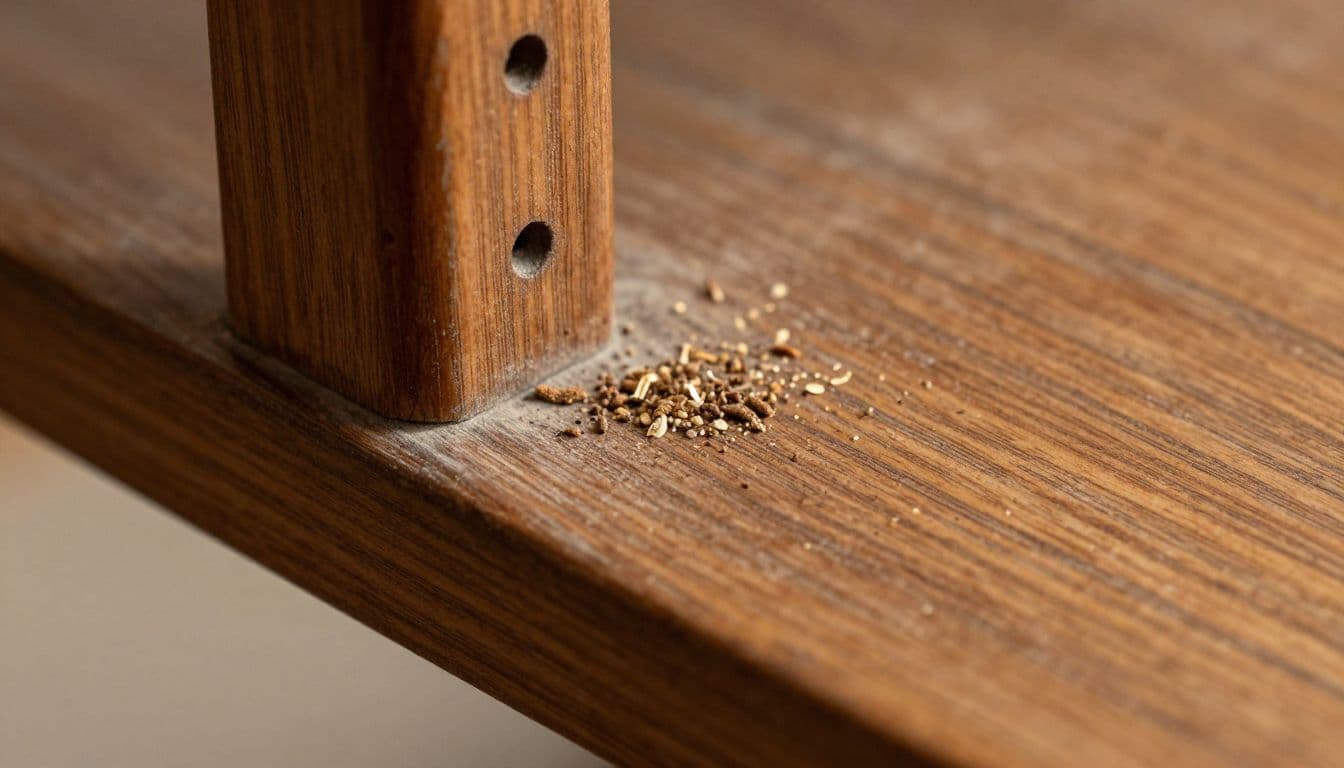
If you see one sign, look for the others. A few pellets and a small hole can point to a much larger problem inside the piece.
How an infestation spreads through a home
Drywood termites do not stay neatly in one corner. They can spread from furniture to the structure, and they can also move into furniture from an infested wall, attic beam, or cabinet.
That is why one damaged chair matters more than it first appears. If it sits near a baseboard, closet, or built-in shelf, termites may find other wood close by. Likewise, a home with hidden drywood activity can seed nearby furniture without the owner realizing it.
This is where old wood pieces become a bridge. A sideboard in the dining room, an armoire in a guest room, or a table in a storage area can all sit close to structural wood. Over time, the insects may move between them.
If you want a wider view of what to watch around the house, homeowner guide to termite prevention covers the kinds of areas that deserve regular attention.
The main lesson is simple. A furniture issue may not stay a furniture issue for long.
Protecting valuable pieces without hurting them
With antiques, rough handling can cost more than the termites. Old finishes, veneers, joinery, and hardware all need a gentle approach.
Start by isolating the piece. Move it away from other wood items if you can do so safely. Set it on a hard surface, such as tile or a plastic sheet, so new pellets are easy to spot.
Then keep the evidence intact. Take photos of the damage, the pellets, and any wings you find. If frass is falling from the piece, collect a small sample in a clean bag.
Do not rush into harsh DIY fixes. Spray treatments, sanding, strong cleaners, and sealants can hide damage or reduce value. Heat, smoke, and fogging products can also warp wood or stain a finish. For antiques, that kind of shortcut can create a second problem.
Use this short checklist while you wait for an inspection:
- Keep the piece away from other wooden items.
- Leave visible pellets in place when possible.
- Avoid drilling, filling, or repainting the wood.
- Move fragile pieces only if you can support the frame and joints.
If the item is delicate, avoid opening drawers or doors with force. Loose joints and fragile veneer can split fast.
What a careful inspection and treatment may involve
A careful inspection looks at both the furniture and the room around it. That includes baseboards, nearby trim, attic wood, closets, and any other pieces stored close by.
If the signs are mixed, how to tell the difference between termite types can help you sort drywood activity from other termite issues. The signs and the treatment path are not the same.
For a valuable antique, the goal is to stop the activity without damaging the piece. That often means checking whether the termites are limited to one item or whether the home has broader activity. The answer changes the next step.
Some pieces can be treated on their own. Others are part of a larger structural problem. Either way, the inspection should focus on where the insects are active now, not just where the pellets landed.
That is why quick action helps. The longer the termites stay hidden, the more wood they can remove from inside.
Preventing the next round of damage
Prevention starts with your incoming wood pieces. New furniture, secondhand antiques, and stored items should get a close look before they enter the house.
Check seams, drawer bottoms, backs, and undersides. Those hidden spots often show damage first. If a piece has loose pellets, tiny holes, or a hollow sound, do not place it beside other wood until it has been inspected.
Storage rooms deserve attention too. Drywood termites can survive in a forgotten trunk, a boxed mirror frame, or a shelf full of old keepsakes. The same is true for garage items that spend months out of sight.
Regular checks help most when you own family pieces you plan to keep. A quick look under a table or behind a cabinet can catch a problem before it spreads.
Cape Coral homeowners who keep antiques, heirlooms, or older wood furniture often find that prevention is less about big repairs and more about habits. Small checks save valuable pieces.
Conclusion
Drywood termites in Cape Coral are a real risk for furniture and antique pieces because they stay hidden inside the wood. The first clues are often frass pellets, kick-out holes, hollow spots, or swarmers near a room's light source.
If you suspect a piece is active, isolate it, protect the finish, and avoid harsh DIY steps that could lower its value. A careful inspection is the fastest way to find out whether the problem is limited to one item or has spread into the home.
For heirlooms and furniture with history, early attention matters. The wood can be replaced, but the piece itself often cannot.
Schedule a Free Inspection: