Scoliid Wasps in Cape Coral Lawns and White Grubs
A few small wasps skimming low across a Cape Coral lawn can look like trouble, but they often point to a buried food source. In many warm-season yards, those insects are scoliid wasps , and their presence usually means white grubs are active below the turf.
That is good news and bad news at the same time. The wasps are generally helpful, yet the lawn may still need attention. Before you reach for a spray, it helps to read the turf the right way.
Why scoliid wasps show up in Cape Coral yards
Cape Coral lawns give these wasps plenty of reasons to visit. Warm soil, regular irrigation, and sandy turf make it easier for them to search for grub larvae near the root zone. They fly low, dart across open grass, and often circle the same spot more than once.
They are not looking for people or pets. Female scoliid wasps are hunting white grubs, which are the larval stage of certain beetles. Those grubs feed on grass roots, so the lawn becomes both the feeding ground and the clue.
You may see several wasps in one section of the yard and none in another. That pattern often means the grubs are patchy. It also means the wasps are working on their own, not building a nest that turns the whole yard into a danger zone.
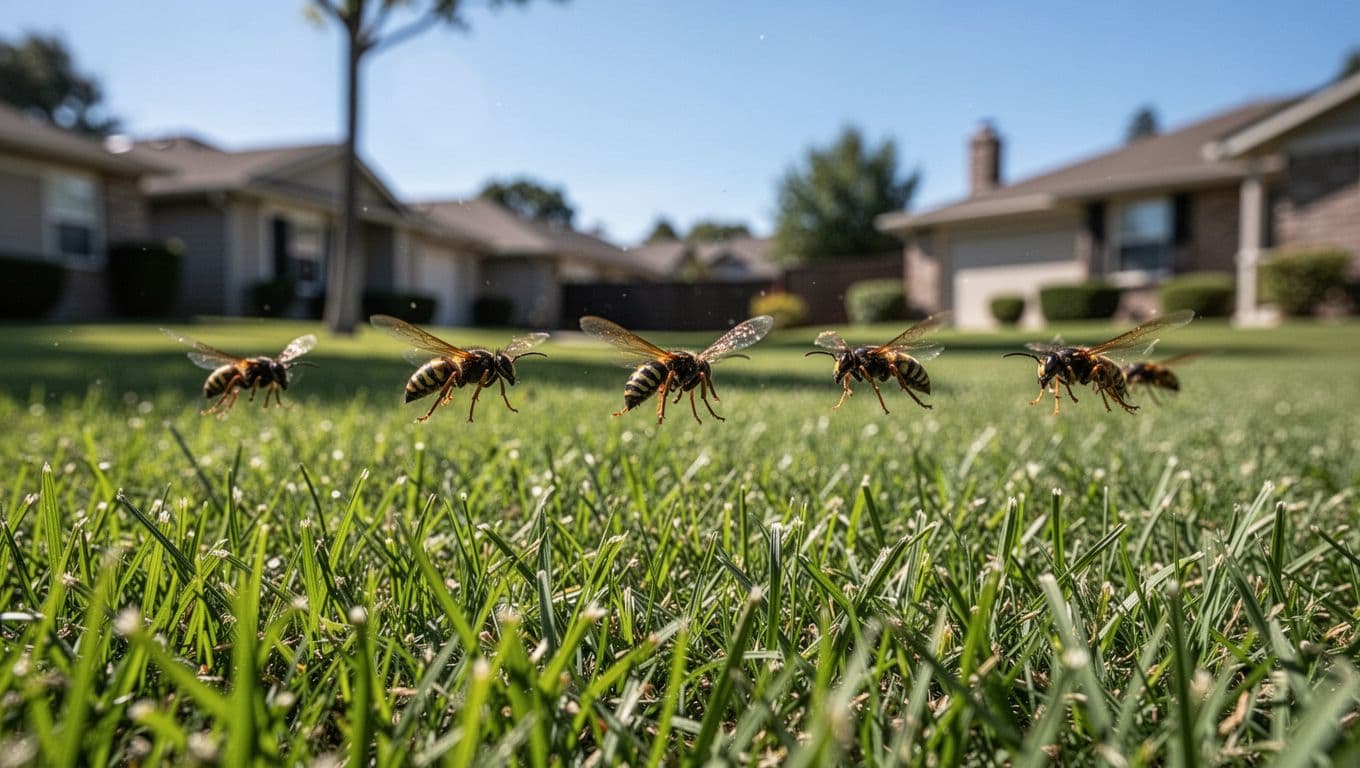
A healthy Cape Coral lawn can still attract them if beetles have laid eggs in the soil. That is why their appearance is often a sign to inspect, not a reason to panic.
What white grub damage looks like in warm-season turf
White grubs feed below the surface, so the earliest damage can be easy to miss. The grass may start to fade, then turn yellow or brown in uneven patches. At first glance, it can look like drought stress or a watering problem.
The turf often feels loose when roots have been eaten. If you grab a patch and it lifts too easily, the roots may already be gone. That kind of damage matters because warm-season grasses in Southwest Florida need strong roots to handle heat and foot traffic.
Wildlife can add another clue. Birds, armadillos, raccoons, or even lizards may scratch the lawn when they sense grubs in the soil. That digging can make a small problem look bigger fast.
Here is a simple way to compare grub damage with other common lawn stress:
| Clue | What it often means |
|---|---|
| Turf lifts with little effort | Roots may have been eaten |
| Irregular yellow or brown patches | Feeding damage may be local |
| Birds or animals dig in one area | Grubs may be near the surface |
| Watering does not improve the patch | The issue may be below ground |
Dry spots from heat usually stay rooted in place. Grub-hit turf often feels soft, loose, or thin at the base.
How to check for grubs without overreacting to the wasps
A lawn inspection does not need to be complicated. The goal is to confirm whether the grass is failing because of root damage, not just because a few wasps are flying overhead. That small difference saves time and keeps you from treating the wrong problem.
Start by watching where the wasps spend their time. If they keep working one corner, one strip, or one patch near a walkway, mark that area for a closer look. A paper flag or a simple note on your phone is enough.
Then test the turf by hand. Pull gently on the grass in the damaged spot. Healthy turf resists because the roots hold firm. If it peels back like a thin mat, the roots may be under attack.
Next, inspect a small soil plug. Use a hand trowel or a flat shovel to lift a square of sod and the top layer of soil. Look for creamy white, curled larvae near the root zone. The exact count that matters can vary by grass type and season, so the condition of the turf matters more than a strict number.
Finally, compare the patch with nearby grass. If the rest of the lawn is green, firm, and growing well, the problem is probably localized. If several areas show the same loose, fading turf, the issue may be spreading.
A quick check like this can tell you more than a month of guessing.
- Watch the flight pattern for a few days.
- Pull on the grass in the most damaged spot.
- Lift a small soil sample and look near the roots.
- Compare the problem area with healthy turf nearby.
If the wasps are still there but the grass stays firm, the yard may simply be part of their hunting route. If the turf keeps thinning and the roots are missing, the grubs are the real target.
When scoliid wasps are helpful, and when the lawn needs help
Scoliid wasps are one of the better insects you can have in a yard. They help reduce grub numbers, and they do that without chewing on your lawn. In many cases, seeing them means nature is already pushing back against a pest problem.
That said, helpful insects do not fix heavy turf damage on their own. If the patches keep spreading, the grass keeps lifting, or wildlife keeps tearing up the same spots, the lawn needs a closer look. At that point, the issue is less about the wasps and more about the grub population underneath.
Homeowners also need to think about where the activity is happening. Wasps hovering over a quiet back lawn are one thing. Wasps concentrated near a play area, patio, or side yard gate can be more annoying, especially for anyone with sting sensitivity. Even then, the wasps are usually responding to grub activity, so removing the grub source matters more than chasing the insects in the air.
If the damage looks beyond a small patch, professional lawn pest control services can help sort out grubs, other lawn pests, and the best next step for the turf. A local inspection can also separate grub damage from irrigation issues, fungus, and other lookalikes that show up in Cape Coral lawns.
The best approach is calm and practical. Confirm the lawn problem first, then treat what is actually causing it.
Conclusion
Seeing scoliid wasps over a Cape Coral lawn usually means something useful is happening underground. They are often a sign that white grubs are present, and that makes them a clue, not the enemy.
The smart move is to inspect the grass, check the roots, and look for loose turf or patchy dieback. If the lawn still holds together, the wasps may be passing through a problem area that has already faded. If the grass peels up and the damage keeps growing, the grubs deserve your attention.
A few wasps in the yard can be unsettling at first. In many cases, they are telling you exactly where to look.
Schedule a Free Inspection: