Pyramid Ants in Cape Coral Sidewalk Cracks and Dry Lawns
Pyramid ants show up fast in Cape Coral when the ground turns hot, dry, and open. A few small mounds near a sidewalk crack can look harmless, but they often spread across driveways, lawn edges, and sandy beds before anyone notices.
For homeowners and property managers, the hard part is spotting them early and reading the signs correctly. These ants are easy to confuse with other small ants, and the wrong treatment can waste time. The mound shape, the soil around it, and the place it appears all tell a useful story.
That story starts with the conditions they like most.
Why Cape Coral's dry spots attract pyramid ants
Cape Coral gives pyramid ants plenty of what they want, heat, loose sand, and small gaps in hard surfaces. Sidewalk edges, driveway seams, and bare patches in turf stay warm longer than shaded soil, so they are perfect nesting spots.
These ants prefer open ground with little cover. Thick grass or dense mulch can hide them, but cracks and thin lawn edges let them build out in the open. That is why they often appear after a stretch of dry weather or when irrigation misses a section of the yard.
The same pattern shows up around pool decks, pavers, curbs, and mailbox pads. When a spot dries out faster than the rest of the property, ants use it like an empty lot with a good view.
Because they stay small, the mound can look like a bit of spilled sand at first. Then it rebuilds, and the pattern becomes clearer.
How to spot pyramid ant mounds in sidewalks and lawns
Pyramid ant mounds are usually small, neat, and easy to miss at first. The dirt often forms a cone or tiny crater with one opening near the top. In loose sand, the mound can look like a thumb pressed into the ground.
Their color can vary, so color alone is not a good ID tool. Some look light brown, while others appear darker. What matters more is the shape and the setting. Pyramid ants usually stay close to the ground and move in quick, tight lines.
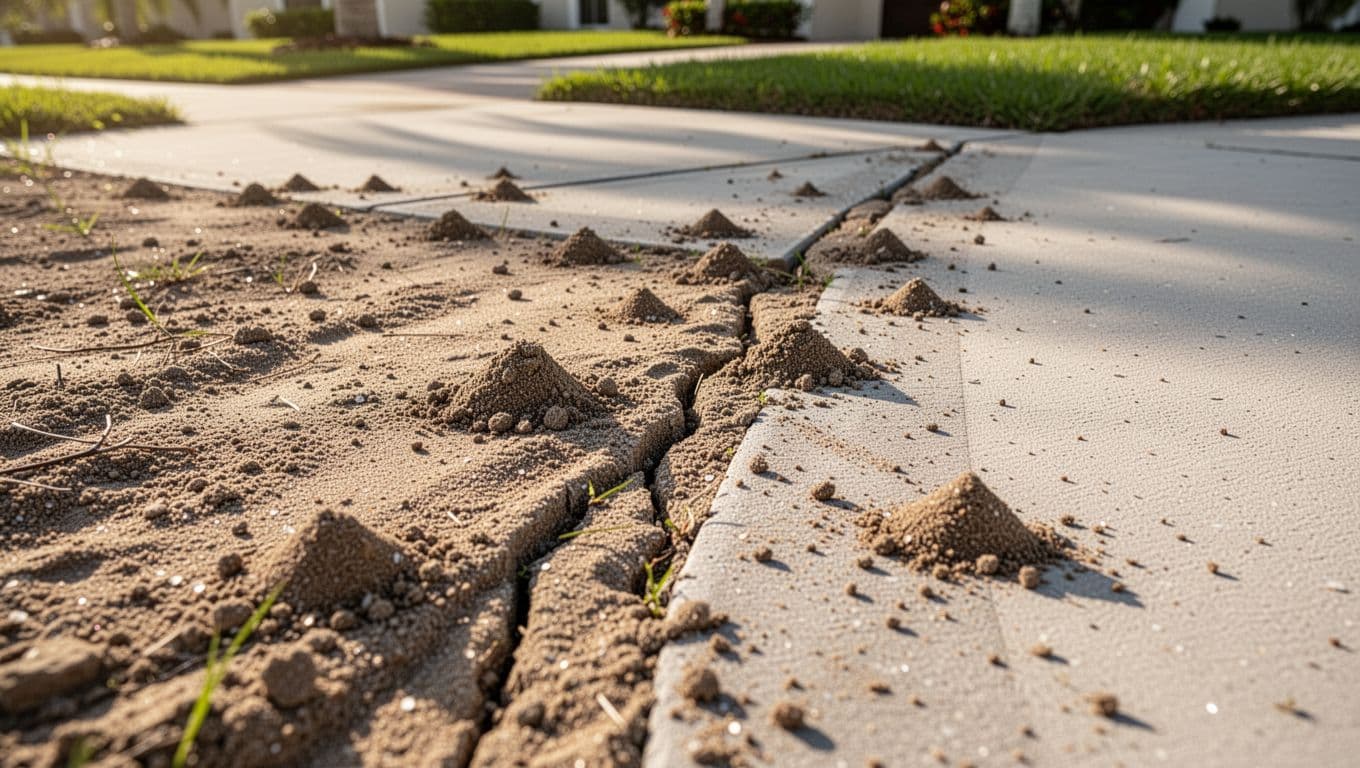
A small mound in a crack means more than a random clump of dirt. A line of little cones along a sidewalk seam or lawn edge usually points to active nesting.
A neat cone in dry sand is more useful than the ant's color when you're trying to identify the pest.
Here is a quick way to separate common lookalikes:
| Pest | What you may see | Main clue |
|---|---|---|
| Pyramid ants | Small cone-shaped mound in dry sand or a crack | Neat soil pile, often in open sun |
| Fire ants | Larger mound in grass or soil | Painful stings and an aggressive swarm |
| Ghost ants or sugar ants | Trails indoors or along walls | No visible outdoor mound |
The takeaway is simple. If the mound is small, tidy, and sitting in a dry gap, pyramid ants move higher on the list.
Why dry lawns and pavement cracks go together
When turf dries out, ants move to the nearest stable edge. That edge is often a sidewalk seam, a driveway joint, or the strip of soil next to a curb. The soil there stays loose, drains fast, and heats up in the sun.
Cape Coral soil makes that easier. Sandy ground dries quickly, so one missed sprinkler zone can leave a strip of yard ready for nesting. A stressed lawn can also create isolated pockets of shade and moisture, while the rest of the area turns hard and bare.
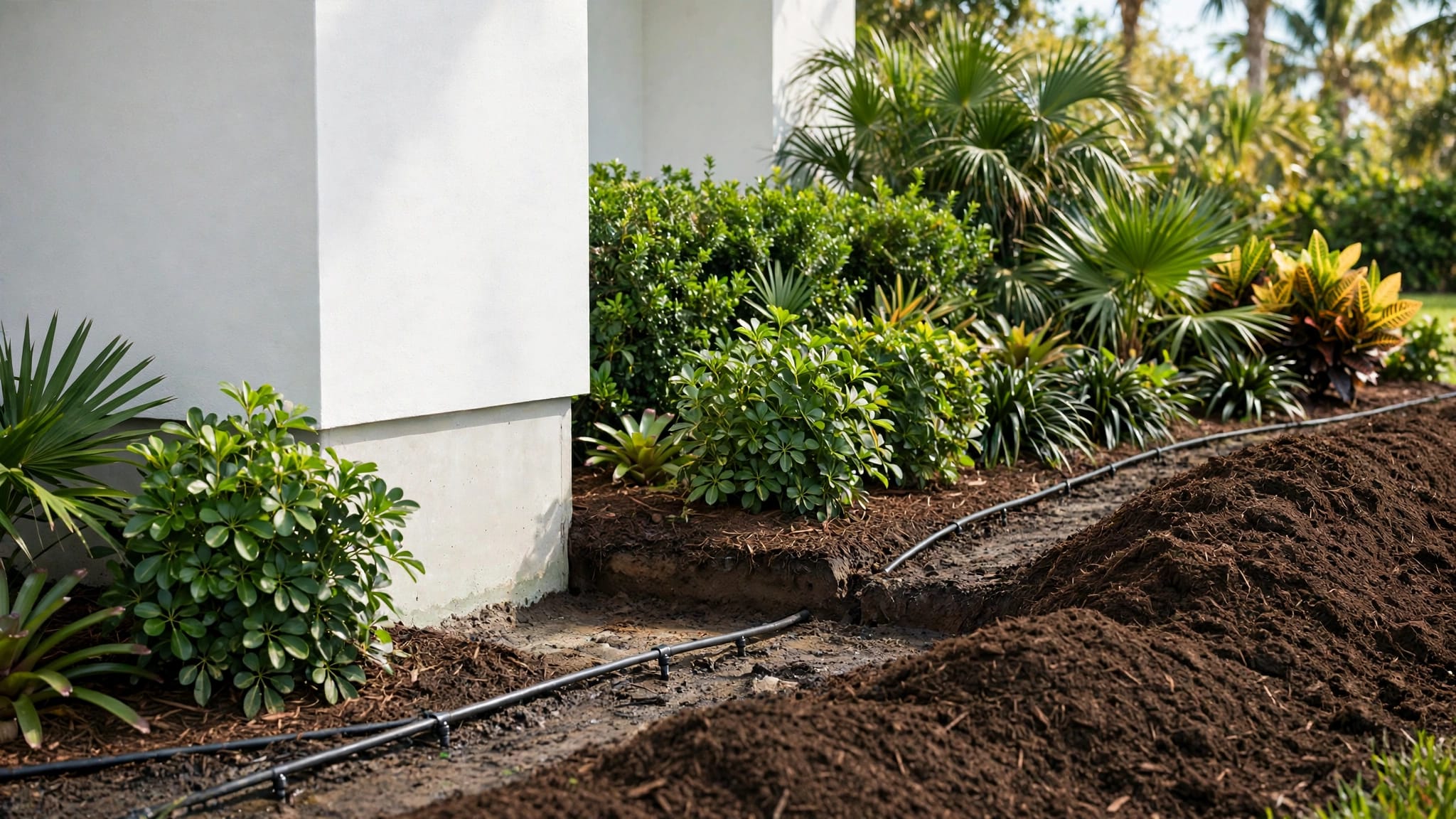
Uneven watering, compacted fill dirt, and heavy foot traffic all add to the problem. A sprinkler head that misses a narrow strip of turf can leave one dry line right beside a walk. Ants notice that kind of detail long before most people do.
Property managers often see the issue first around entrances, pool cages, or mailbox areas. Homeowners spot it while edging the lawn or sweeping the driveway. Either way, the pattern usually points to a dry, open area rather than a hidden indoor source.
That is why pyramid ants in Cape Coral often become a sidewalk crack issue before they become a lawn issue. The hard edge gives them structure, and the dry soil gives them a place to build.
What to do when you find them
The first step is to confirm the mound before you treat it. If the ants stay low to the ground and the mound is small and tidy, pyramid ants are a real possibility. If the ants swarm hard or sting, you may be dealing with fire ants instead.
Next, avoid disturbing the mound too much. A hard blast from a hose or a shovel can break the surface and push ants into nearby cracks. Gentle cleanup is better. Sweep loose sand away lightly, trim back weeds, and check whether nearby joints are holding dry soil.
A few simple steps help keep the problem from spreading:
- Watch the mound for a day or two. If it rebuilds after rain or watering, it is still active.
- Check nearby cracks and edges. Ants often use more than one opening.
- Fix dry spots in the irrigation pattern. Uneven watering can leave ideal nesting patches.
- Keep sand and mulch from piling against hardscape. Those edges are easy nesting zones.
Over-the-counter sprays can knock down the visible ants, but they often miss the nest. That can make the colony shift a few feet and return in a new crack. If the soil keeps opening up in the same area, the source is still there.
A short delay can help too. If you are unsure whether the mound is active, watch it for a day. Active colonies usually leave clear signs fast. Repaired soil, fresh openings, and repeat traffic are the clues that matter.
When professional pest control makes sense
A single mound may not call for a big response, but repeated activity does. If you keep seeing ants rebuild in sidewalk joints, driveway seams, or lawn edges, the nest network may be wider than it looks. In that case, targeted treatment is usually better than chasing one mound at a time.
This is where residential pest control in Cape Coral can help. A local technician can identify the ant correctly, look for more than one nesting point, and treat the active zones around the home or rental property. That matters because pyramid ants, fire ants, and other small Florida ants can look similar from a distance.
For property managers, the curb appeal piece matters too. Repeating soil cones beside walks, pool decks, and entry paths make a property look neglected, even when the inside is spotless. A steady treatment plan keeps the outside cleaner and easier to maintain.
The goal is to treat the places ants actually use, not every square foot of turf. That saves time and gives better results when the yard has dry pockets that keep drawing them back.
Conclusion
Pyramid ants are easiest to handle when you spot them early. In Cape Coral, the real clues are the mound shape, the dry soil, and the places they choose, not just the ants themselves.
Sidewalk cracks, driveway seams, and stressed lawn edges are classic problem zones. Once you know what to look for, you can tell a harmless patch of dirt from an active nest much faster.
If the mounds keep coming back, the nesting site is still right where the ants want it, dry, sandy, and open. That is when a focused treatment plan makes more sense than another round of guesswork.
Schedule a Free Inspection: