Leatherleaf Slugs in Cape Coral Mulch Beds and Pavers
A dry-looking patio can still hide a slug problem after sunset. In Cape Coral, leatherleaf slugs often stay tucked into mulch, paver joints, and shaded bed edges until the evening cools down. Then they move across patios, porches, and ornamental beds, leaving slime trails, rough feeding marks, and the same frustrating mess after every rain or irrigation cycle. Start with the places they like most, because that is where control gets easier.
Why Cape Coral mulch beds attract leatherleaf slugs
Cape Coral gives slugs the kind of conditions they like best, warmth, moisture, and cover. After an afternoon storm or a long sprinkler run, mulch stays damp longer than bare soil. That soft layer holds water, protects them from sun, and gives them a place to hide during the day.
Moisture is the main draw
If the bed edge stays wet, slugs keep using it. Overspray from irrigation, clogged drainage, and low spots near pavers all help them hang around. Nighttime watering makes the problem worse, because the surface is still damp when slugs come out to feed.
Downspouts, AC drip lines, and corners where water pools can do the same thing. Even a small wet patch can keep a bed active longer than you expect.
Shade and shelter keep them close
Dense shrubs, stacked pots, thick mulch, landscape fabric, and fallen leaves all create cover. Paver joints and patio borders add another layer of shelter. Once they find a cool strip of shade, they can move from bed to hardscape without much trouble.
They also follow food. Tender ornamentals, young annuals, and fresh growth near the edge of a bed are easy targets. A patio that sits next to a planted border gives them a direct path from hiding spot to meal.
What slug activity looks like on pavers and plants
By morning, the damage usually shows up before the slug does. That is one reason the problem feels sneaky. You step outside, see a trail on the pavers, and wonder where it came from.
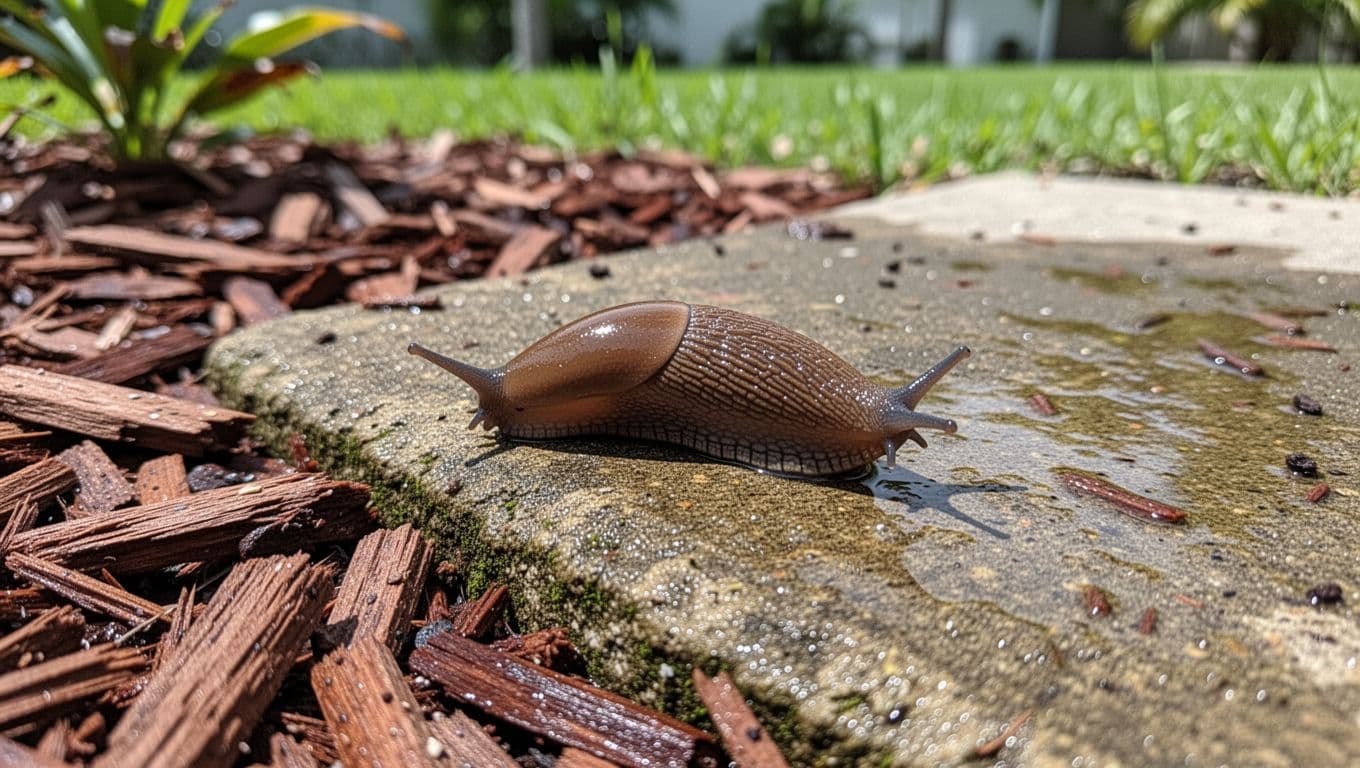
Look for shiny slime lines on patio pavers, especially near bed edges, planter feet, and shaded seams. Also check for irregular holes in tender leaves, ragged edges on ornamentals, and thin damage on low-growing plants.
They often feed after dark, so the signs can look small during the day. A single trail across pavers can point to a larger hiding spot under the nearest lip of mulch or under a loose stone. If you spot one in daylight, the area is usually staying too damp or too shaded.
Lift a planter or garden edge now and then. Slugs like the underside of anything that stays cool and still, especially after rain.
Prevention steps that work in warm, wet weather
Slug control in Cape Coral starts with moisture control. That sounds simple, but it takes a few steady habits to make the yard less friendly. You do not need to strip the landscape bare. You do need to make the damp spots less inviting.
The goal is to cut moisture and shelter, not to turn the yard into bare dirt.
A few practical changes make a real difference:
- Water early in the day so the surface can dry before dusk.
- Pull mulch a few inches back from pavers, steps, and door thresholds.
- Trim dense plants so air can move through the bed.
- Clear leaf litter, seed pods, and old plant debris before it piles up.
- Rinse patio edges and reset irrigation heads that spray hardscape.
- Fix pooling spots, broken heads, and low areas that stay soggy after rain.
Thick mulch at the border can work like a wet blanket. A thinner, cleaner edge dries faster and gives slugs fewer places to hide. The same goes for clutter. Pots, saucers, bricks, and loose edging pieces create little pockets of shade that keep the problem going.
These changes will not erase every slug overnight. They do make the yard less comfortable, which is where real progress starts.
When recurring slug activity needs a pro
If the same patio corner fills with trails every week, the issue is usually bigger than one slug. The bed may hold too much water, or the hardscape may trap debris and shade. In some yards, the slugs move between the mulch and the pavers so often that the whole area stays active.
A technician can inspect mulch depth, irrigation overspray, drainage, gaps along pavers, and hidden spots under planters or edging. That kind of check is useful around entryways and ornamental plantings, where pests move close to the house. It also helps when you have other damp-area pests showing up at the same time.
If the problem keeps circling back, professional pest control and rodent removal services can help narrow down the source and treat the active areas. The real value is not just treating what you can see. It is finding the moisture and shelter that keep the cycle going.
Keeping patios and entryways less inviting
Once the worst spots are cleaned up, keep an eye on the same places after storms and heavy watering. Cape Coral yards change fast in summer, so a bed that looks fine in the morning can stay wet through the evening. Walk the edge, check the mulch line, and look at the joints between pavers when the weather turns humid.
A simple routine helps a lot. Look for fresh slime trails, damp debris, and plant damage near the ground. If the same areas keep turning up active, the landscape still has a moisture problem. That might mean adjusting irrigation again, thinning mulch a little more, or clearing out a shady corner that keeps holding water.
Homeowners who want ongoing help around landscape edges and hardscape can look into residential pest control in Cape Coral. That can be especially helpful when the same patios, walkways, and ornamental beds keep drawing slugs back after storms.
Conclusion
Leatherleaf slugs show up where Cape Coral yards stay wet, shaded, and crowded. Mulch beds, patio pavers, and entry edges give them exactly that, which is why the problem often keeps returning after rain or irrigation.
The best control starts with moisture, cleanup, and less shelter. When the trails keep coming back, the yard still has a condition that supports them. A drier, cleaner edge is less welcoming, and that makes the whole property easier to manage.
Schedule a Free Inspection: