Florida Woods Cockroaches In Cape Coral Leaf Litter And Lanais
Big roach on the lanai after rain? In Cape Coral, that often points to florida woods cockroaches , not a hidden kitchen infestation.
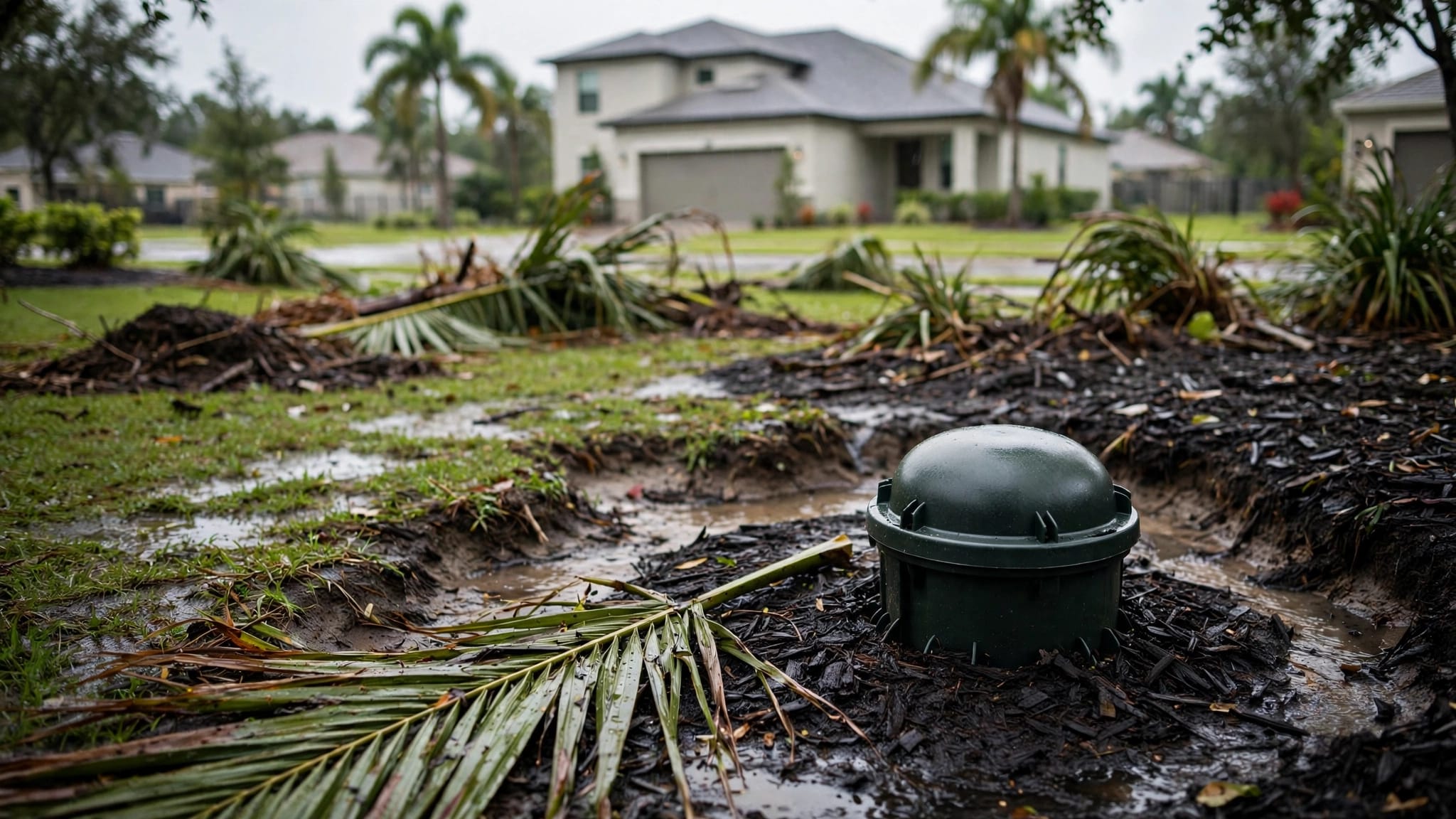
These roaches usually live outside, tucked into leaf litter, mulch, palm debris, and other damp, shady spots. They become a nuisance when the yard presses too close to the lanai, or when moisture and organic debris build up around doors and screens.
Once you know where they hide, the fix gets a lot more straightforward.
Why Florida woods cockroaches show up around Cape Coral lanais
Florida woods cockroaches are outdoor roaches by nature. As of March 2026, there haven't been any reported Cape Coral outbreaks tied to this species. What homeowners usually see is steady outdoor activity that jumps after rain, irrigation, or yard work.
Cape Coral gives them what they like, warmth, humidity, and lots of cover. Leaf litter under shrubs, damp mulch, stacked firewood, wood borders, palm fronds, and shaded garden beds all work like a roach apartment complex. A screen enclosure or lanai then becomes the next stop, because it offers shade, shelter, and easy edges to hide along.
A lanai can feel like an outdoor living room to you. To a roach, it can feel like a cool rest stop between the yard and the house.
They also wander more when the weather shifts. Heavy rain can flood hiding spots. Dry spells can push them toward irrigation or condensation. Night lighting may attract activity around doors, especially if other outdoor roaches are in the mix.
Most indoor sightings still start outside. A roach may slip under a worn door sweep, ride in on a potted plant, or come in through a small gap near plumbing or screens. That's why broad home exclusion matters. For more general home-proofing ideas, see Preventing Cockroaches in Cape Coral Homes.
For most homes, the main issue is nuisance, not a major health event. An occasional outdoor intruder doesn't mean the house is dirty. They can also give off a strong odor when disturbed, which makes the surprise feel worse than the situation. Still, repeated sightings deserve attention, because moisture problems and entry gaps rarely fix themselves.
If you mostly see one large roach on the lanai or near a door after rain, you're usually dealing with outdoor pressure, not an indoor colony.
How to tell Florida woods cockroaches from indoor infestation roaches
One reason these roaches cause so much stress is their size. They look dramatic. Still, they don't behave like the smaller roaches that settle into kitchens and multiply indoors.
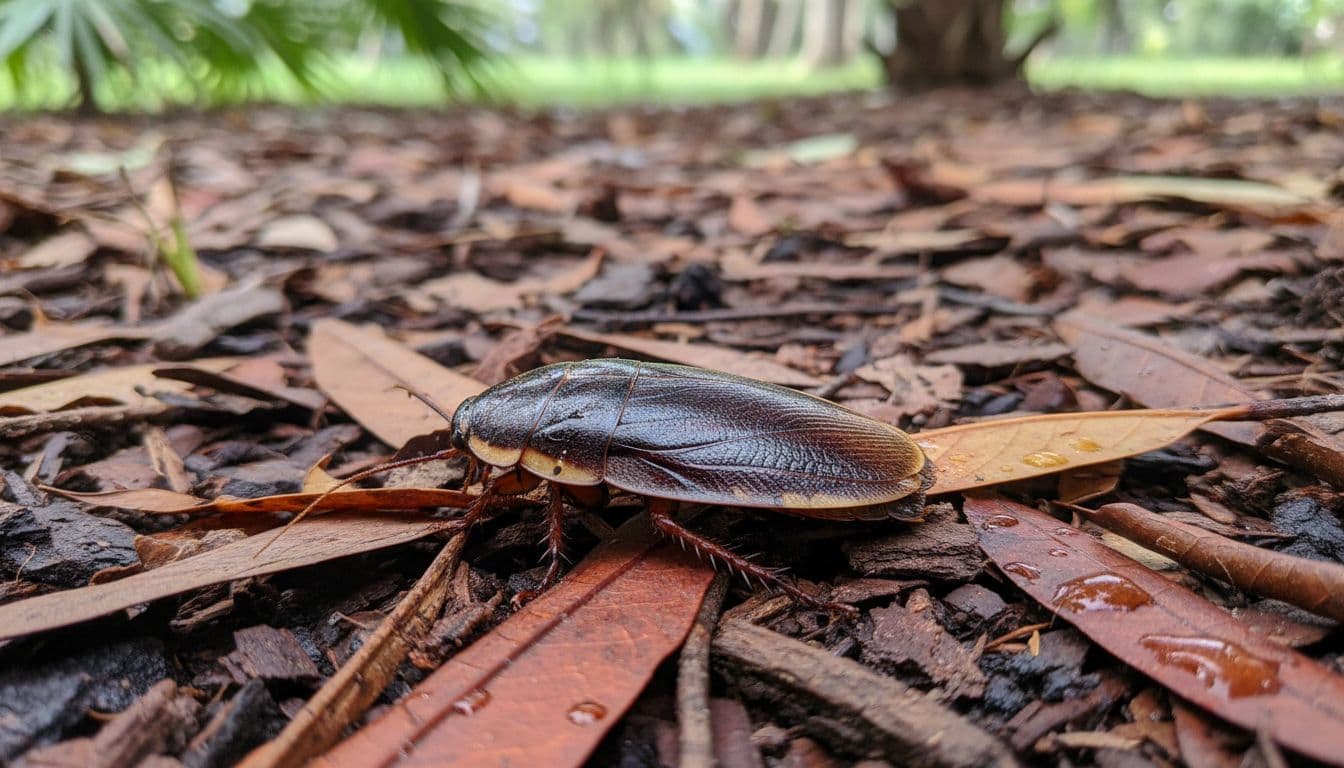
Florida woods cockroaches are usually large, dark brown to black, and linked to damp outdoor debris. They may show short wing pads, and they can give off a strong odor when disturbed. Homeowners often find them in mulch beds, under leaf piles, around lanais, in garages, or near shaded foundations.
This quick comparison helps sort out what you're seeing:
| Feature | Florida woods cockroaches | Indoor infestation roaches |
|---|---|---|
| Usual size | Large, often around 1 to 1.5 inches | Smaller, often under an inch |
| Main habitat | Leaf litter, mulch, wood piles, damp shade | Kitchens, bathrooms, wall voids, appliances |
| What sightings mean | Outdoor nuisance, occasional wanderer | Possible breeding problem indoors |
| Common pattern | One or a few, often after rain or at night | Repeated sightings, droppings, egg cases |
If you're seeing lots of smaller roaches in the kitchen, pantry, or bathrooms, that's a different issue. German cockroaches are the classic indoor infestation species, and they call for a faster, more targeted response. On the other hand, large roaches in garages can also be smokybrown or American cockroaches. If that sounds familiar, this guide on Smokybrown Cockroaches in Cape Coral Garages may help.
The big takeaway is simple. Florida woods cockroaches usually point to harborage outside, not a nest under your stove.
Simple prevention steps for leaf litter, mulch, and lanais
The best fix starts outside. When you remove shelter and moisture, you make the property less welcoming without turning the whole house into a spray zone.
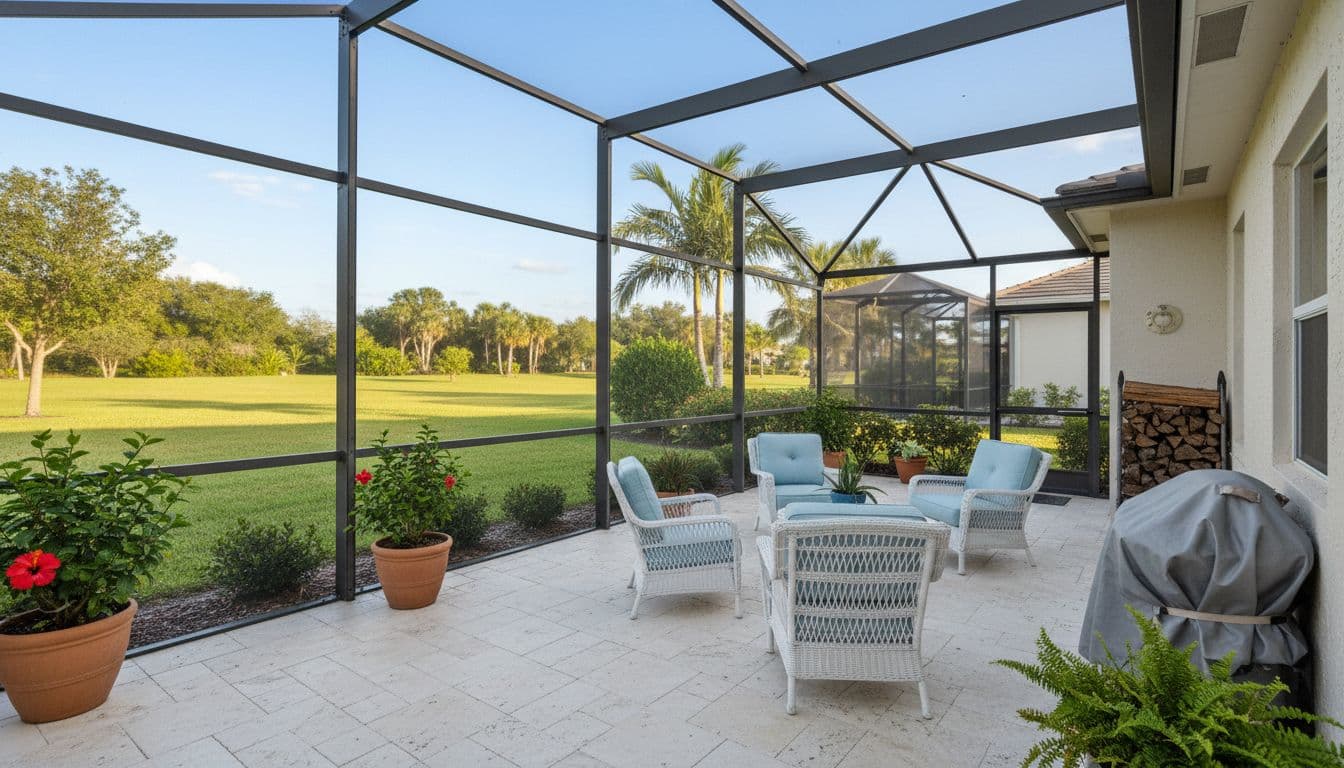
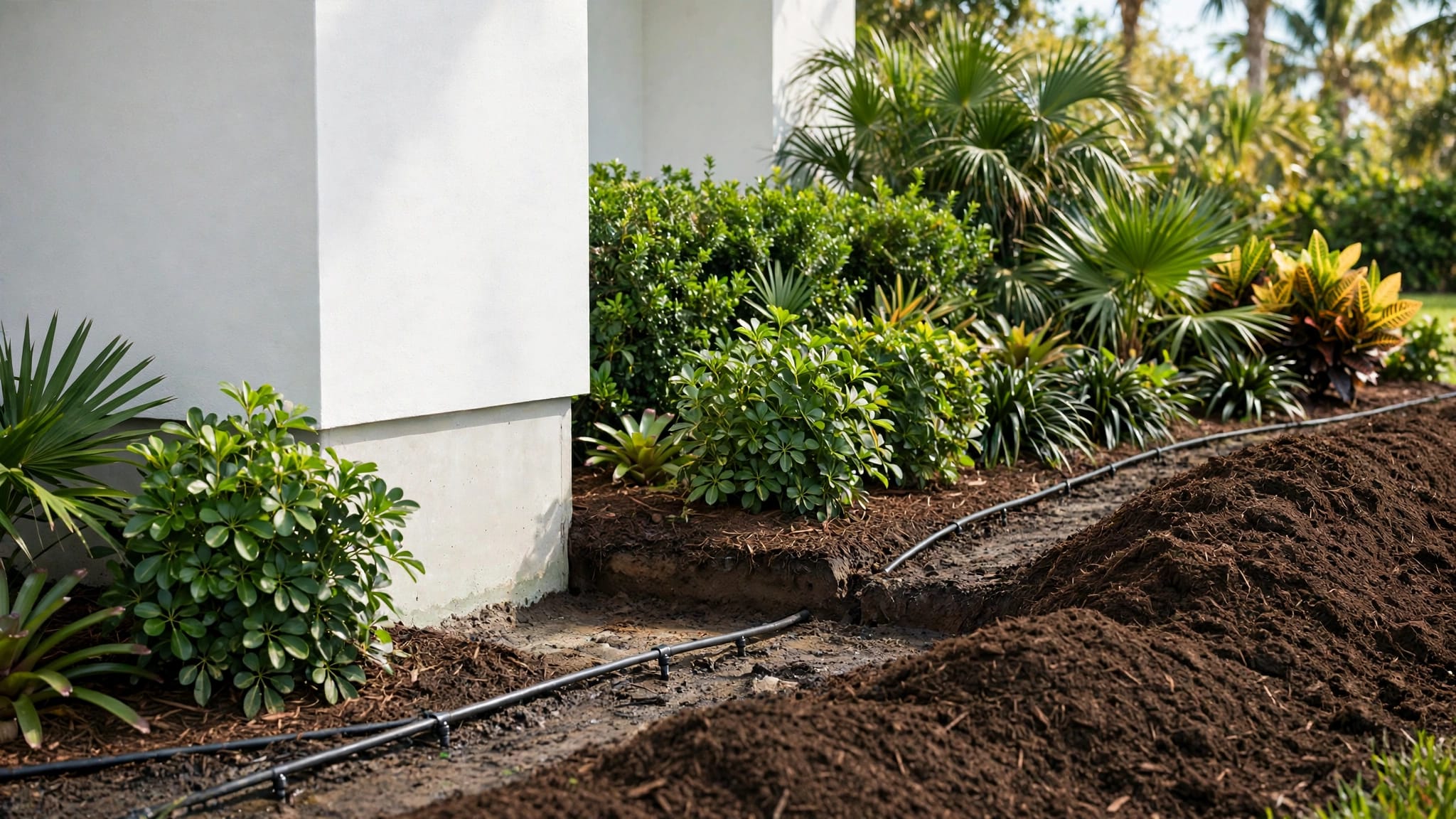
Start with the lanai edge and foundation line. Pull back leaf litter, palm debris, and heavy mulch from the slab. Keep wood piles, stacked pots, and stored lumber away from the enclosure. If you store items on the lanai, lift them off the floor so moisture can't sit underneath.
Then deal with shade and dampness. Trim shrubs and palms so air can move. Fix hose bib leaks, dripping spigots, and irrigation overspray. Empty saucers under plants when water stands for days. Also check door tracks, screen channels, and lanai corners where organic debris collects.
A few practical steps go a long way:
- Reduce harborage : Remove leaf litter, palm fronds, dead plants, and soggy mulch near the house.
- Manage moisture : Correct leaks, adjust sprinklers, and let shaded spots dry faster.
- Clean the lanai : Sweep debris from corners, under furniture, and along screen walls.
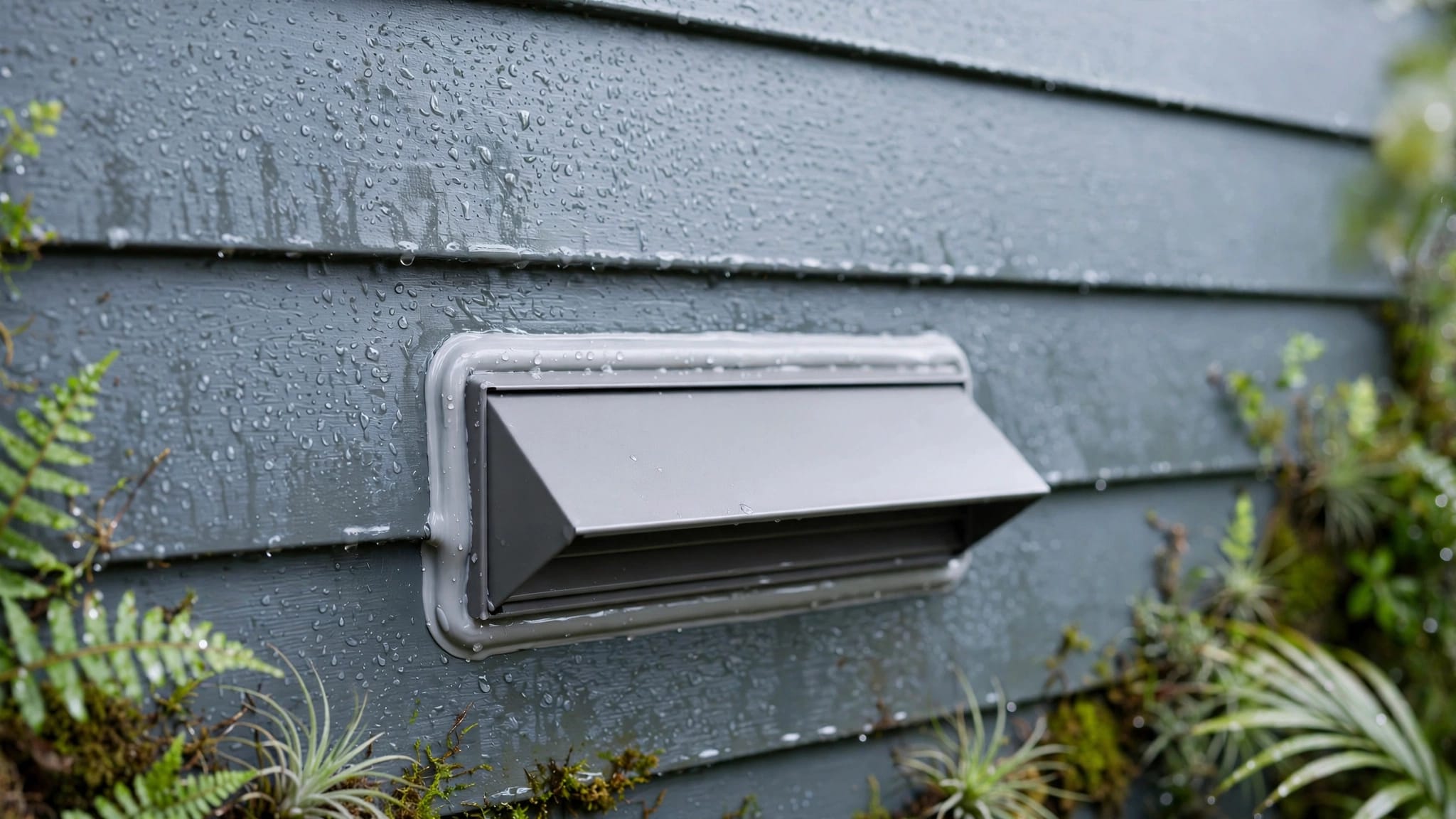
- Seal entry points : Replace worn door sweeps, repair screens, and seal small gaps around pipes and cables.
- Treat the perimeter when needed : Target exterior entry points, lanai thresholds, and outdoor hiding zones if activity keeps repeating.
When treatment makes sense, focus on the outside first. A perimeter application around harborage zones and lanai transition areas often makes more sense than heavy indoor spraying. Product choice and placement matter, because Cape Coral rain can wash treatments away, and bait contamination can reduce results.
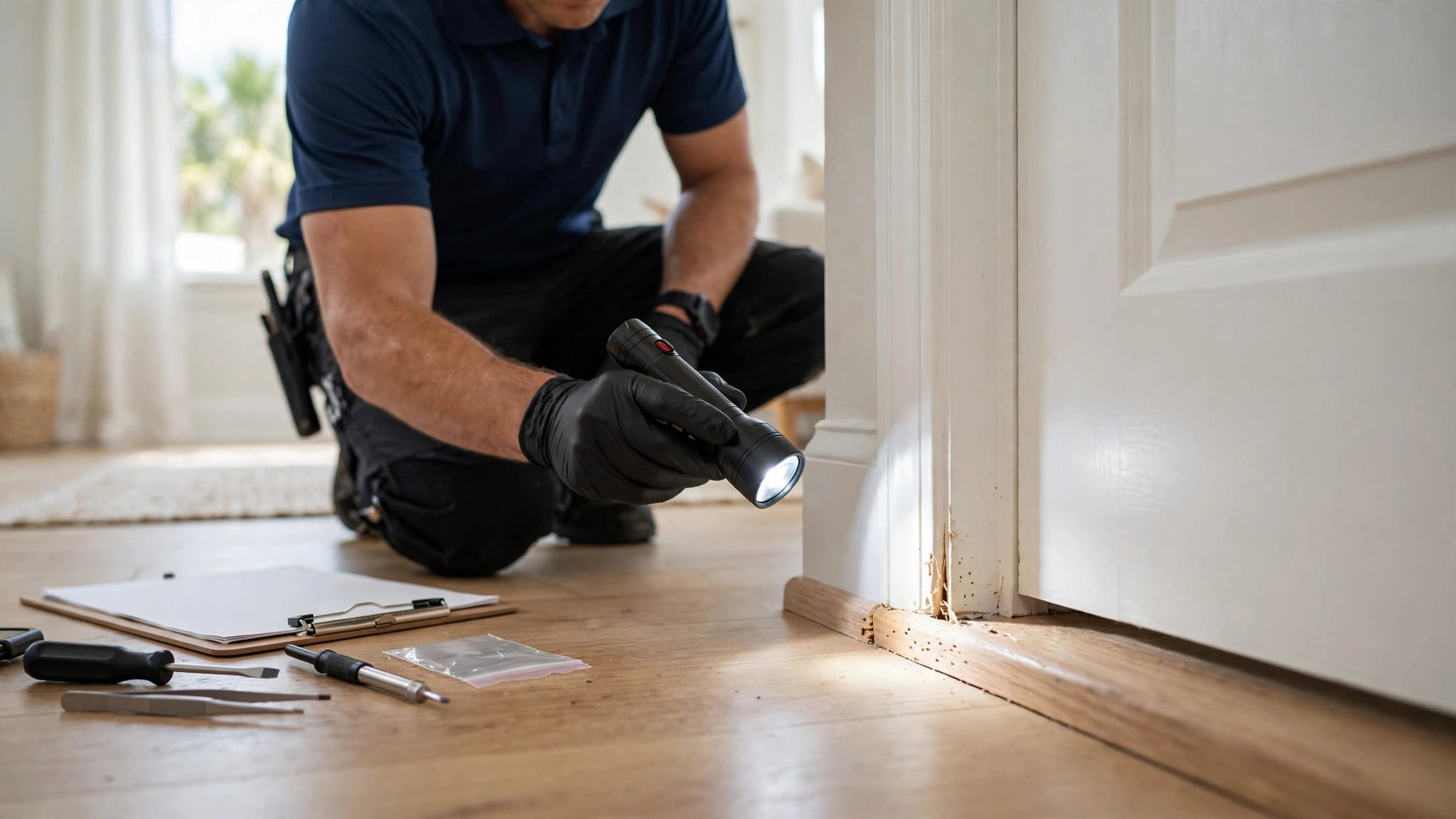
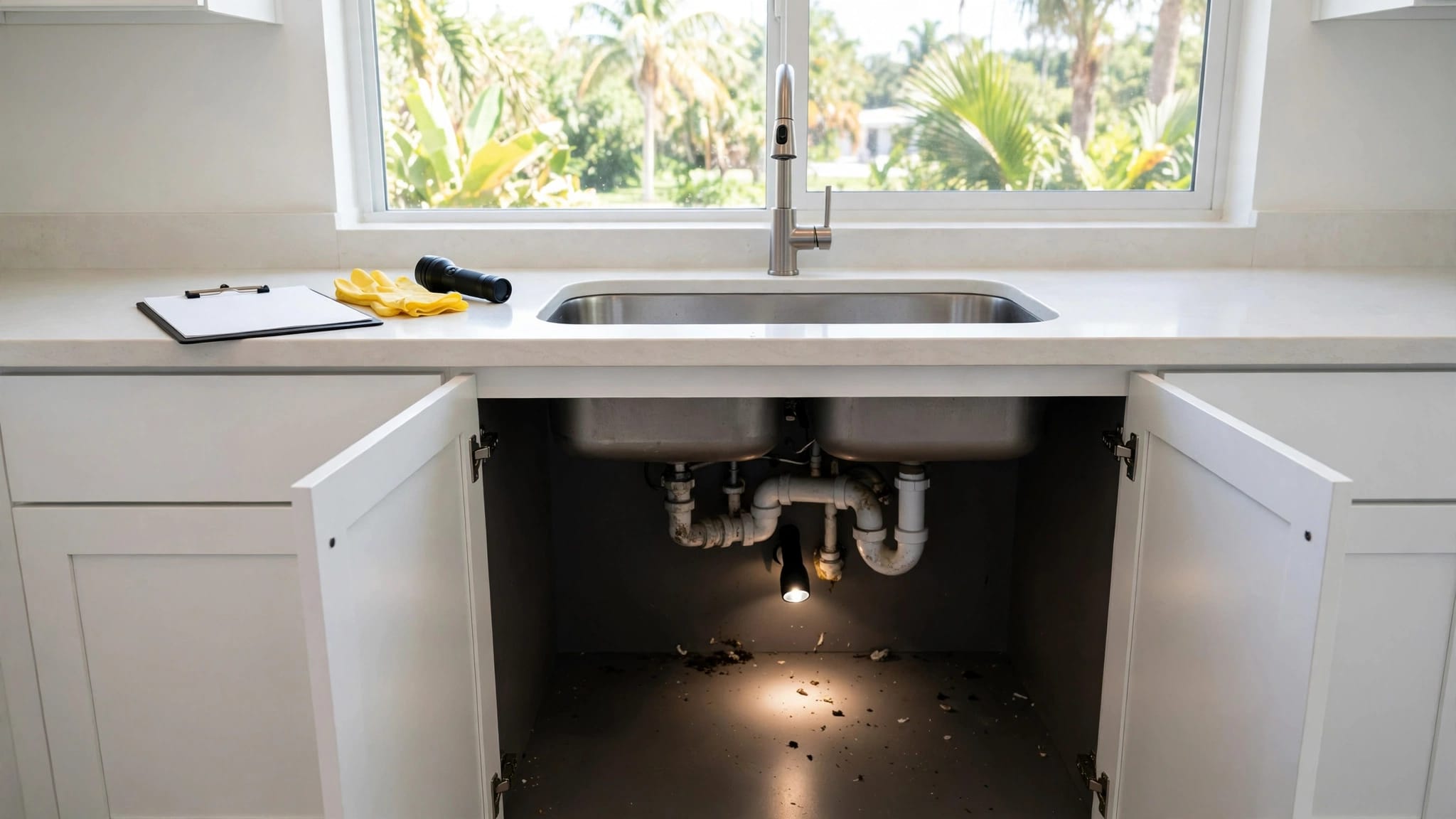
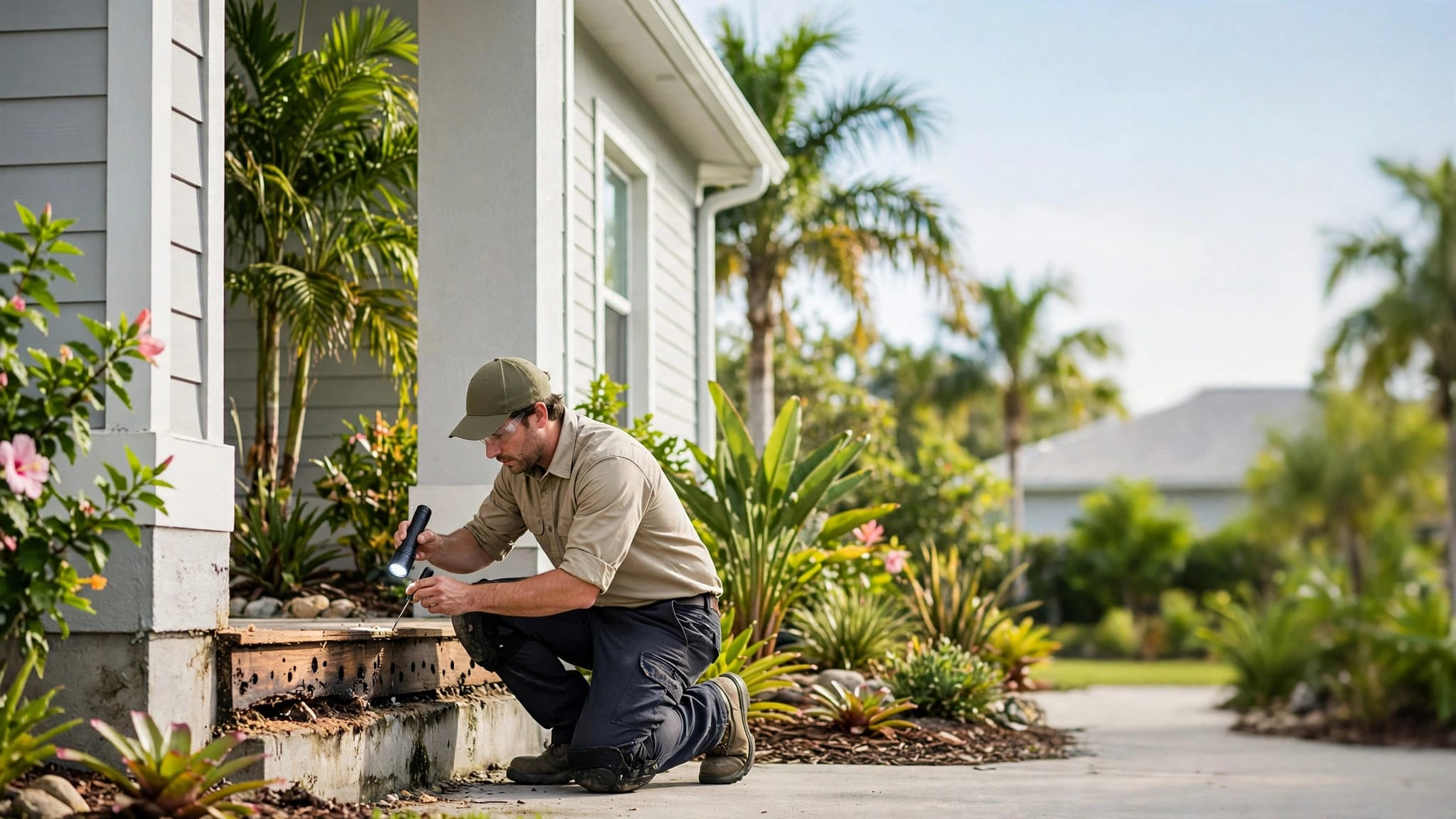
You also don't need panic over a single roach indoors. Vacuum it up, check nearby gaps, and look for the outdoor source. If sightings keep happening, or if you see roaches in several parts of the house, schedule an inspection. That helps confirm whether you're dealing with florida woods cockroaches, another large outdoor species, or a true indoor infestation.
Florida's climate won't stop producing big outdoor roaches. Still, your yard doesn't have to invite them onto the lanai.
Keep the leaf litter cleaned up, keep damp spots in check, and tighten the gaps around doors and screens. That combination does more than almost any quick-fix spray.
If large roaches keep showing up after rain, take the next step and get the property inspected before a nuisance turns into a routine.
Schedule a Free Inspection: