Asian Needle Ants in Cape Coral Mulch Beds and Potted Palms
Small ants in Cape Coral mulch beds can turn into a bigger problem than they look. Asian needle ants hide well in damp mulch, then show up around potted palms, patio edges, and shady landscape beds.
They sting, they spread fast in the right conditions, and they're easy to miss until you touch the wrong pot or kneel in the wrong spot. If your yard stays moist after watering or rain, the clues are usually there. The trick is knowing where to look and what to change.
How to Recognize Asian Needle Ants in Cape Coral
Asian needle ants are small, dark brown to black, and easy to mistake for other nuisance ants. They have a slim body, a narrow waist, and long legs that give them a quick, sharp look. They don't usually build the big mounds people expect from fire ants, so many homeowners overlook them at first.
Their behavior matters as much as their size. These ants often move through mulch, leaf litter, and loose soil near shade. They may appear in scattered workers instead of long, obvious trails. That makes them harder to spot in a busy landscape bed.
The sting is another clue. It can feel sudden and unpleasant, especially on bare feet, ankles, or hands that brush against a pot rim. A few ants in a mulch bed may seem harmless, but a hidden nest can keep sending workers back to the same spot.
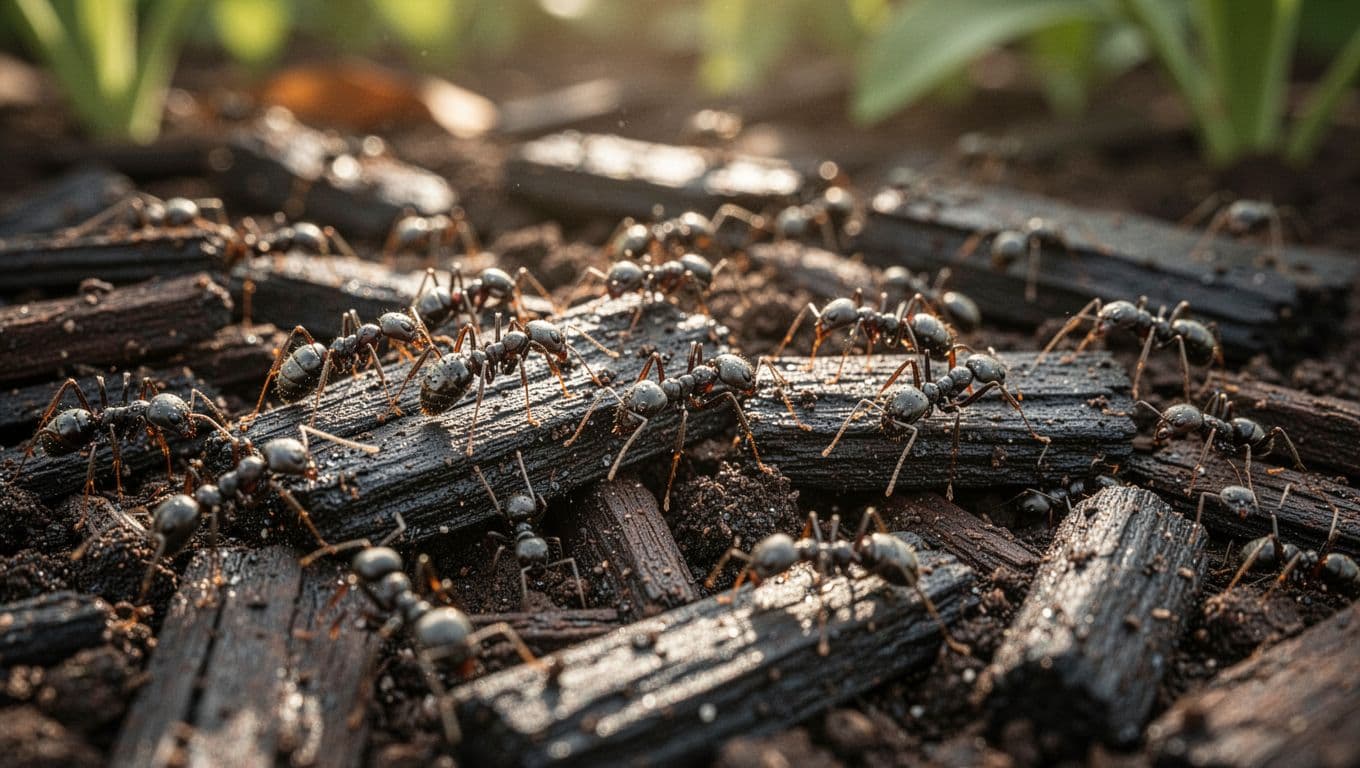
One or two ants in a bed may not look like much. A hidden nest in mulch can turn into a steady problem.
Because they stay so low and tucked away, many people notice them only after a sting or after ants keep returning to one container. That is often the first warning sign.
Why Damp Mulch and Potted Palms Attract Them
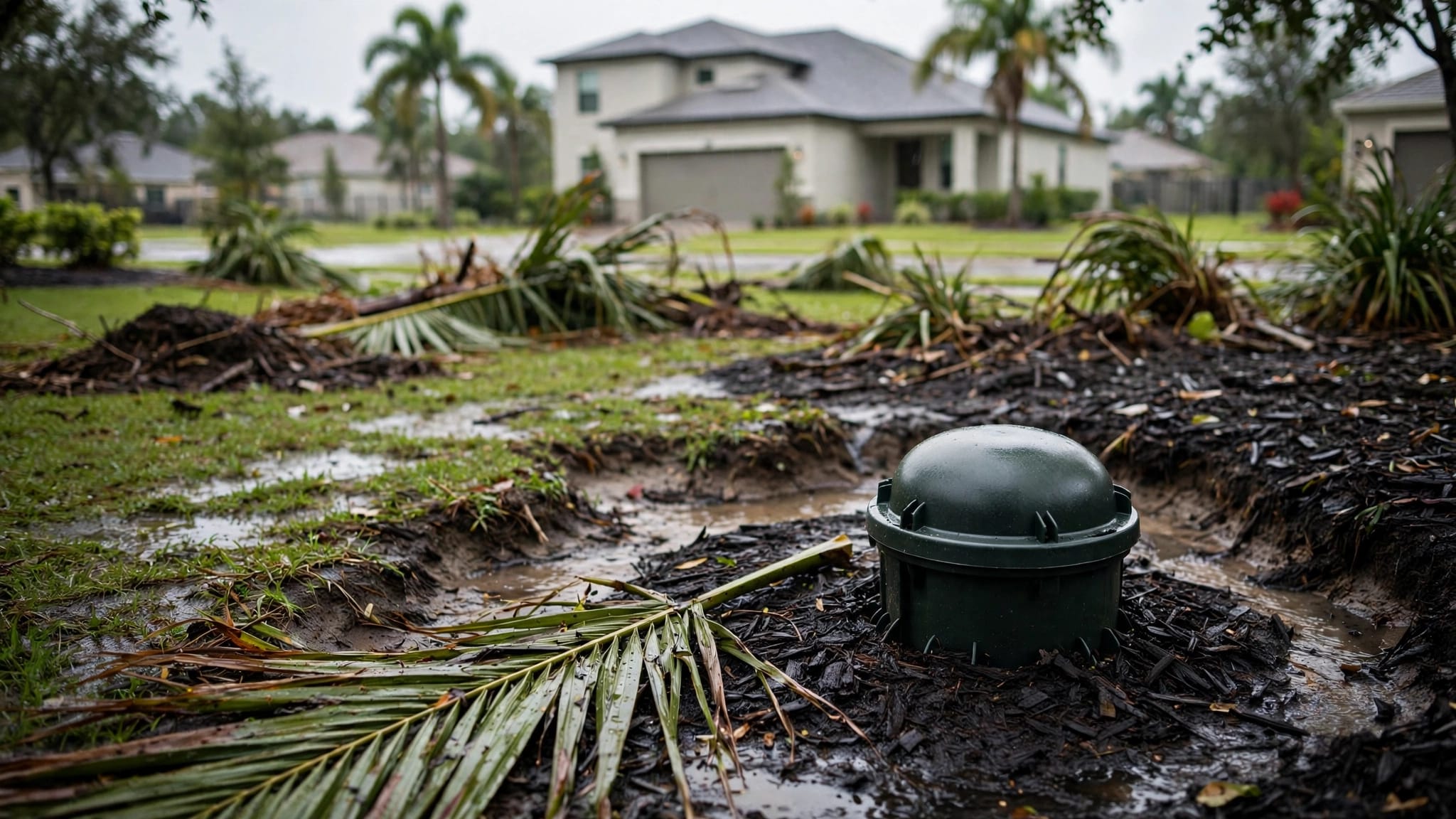
Cape Coral weather gives ants plenty of warm, protected places to hide. Mulch holds moisture, blocks sunlight, and gives them cover from foot traffic. When irrigation keeps that mulch damp, the bed becomes even more inviting.
Potted palms can be just as attractive. The soil stays sheltered, the pot rim creates shade, and saucers or standing water can keep the area moist for days. If a palm sits on a patio, lanai, or pool deck, the pot may also stay cooler than the surrounding concrete. Ants like that.
Landscape beds with thick bark, fallen fronds, and dead leaves create even more cover. So do spots with poor drainage, overwatered drip lines, and heavy shade. In other words, a bed that looks neat on top can still hold a perfect ant habitat underneath.
Asian needle ants also use the space around roots and container edges. That includes the tight gap between a nursery pot and the decorative outer pot. It also includes the top few inches of soil where moisture lingers after watering.
If you keep seeing activity in the same damp corner, the issue is usually the habitat, not just the visible ants. Dry, open, and clean spaces are harder for them to use.
What to Look for During an Inspection
A good inspection starts with moisture. Walk the bed after watering or after a rain, because ants often become easier to spot when they start foraging. Check the edges of mulch beds first, then look closer at the base of potted palms and other containers.
Look for these signs:
- Small ants moving through damp mulch near the surface
- Activity under pot saucers, nursery pots, or decorative containers
- Ants along irrigation lines, emitters, or drip points
- Loose soil or debris around the base of a palm or shrub
- Repeated stings when you move pots, pull weeds, or kneel in a bed
Early morning and evening are good times to check. The ants may be more active when the sun is lower and the mulch still holds moisture. A flashlight helps, especially under pot rims and along shaded bed edges.
You should also inspect where water collects. That can mean low spots in the landscape, the corner of a patio, or the area around an overwatered palm. Even a small leak can keep one section of the yard attractive to ants for weeks.
If you see activity in more than one container, compare the moisture level between them. Often the wetter pot has the bigger problem. That makes the next step easier, because it points to the source instead of the symptom.
How to Reduce the Conditions They Like
The best control starts with moisture management. Dry mulch, better airflow, and cleaner beds make a big difference. Ants don't need standing water to thrive, only a protected spot that stays damp long enough.
Here are the most useful changes to make:
- Let the top layer of mulch dry between waterings.
- Keep mulch 2 to 3 inches deep, not piled high.
- Pull mulch back from palm trunks, stems, and pot rims.
- Empty saucers and lift pots on feet or risers.
- Remove fallen fronds, weeds, and spilled potting mix.
- Fix leaks and reduce overspray from irrigation heads.
- Water early in the day so beds dry faster.
That list sounds simple, but it matters. A thick, wet mulch bed gives ants moisture, cover, and food debris all in one place. A cleaner, drier bed breaks that pattern.
Potted palms need extra attention. Check the drainage holes, too, because clogged holes can hold water near the root ball. If a pot stays wet for days, repotting or changing the placement may help. A container that drains well is much less attractive than one that stays soggy.
Moisture is the invitation. Sanitation and airflow are the answer.
Sanitation matters as much as watering habits. Sweep up spilled soil, remove old plant tags, and keep organic debris out of the bed. Those small habits cut down on hiding places and food sources.
When Professional Help Makes Sense
Some ant problems keep coming back even after the yard dries out. That usually means the nest is tucked deeper than it looks, or there are several nesting spots nearby. Asian needle ants can hide under landscape edging, inside dense mulch, and around container bases where a quick spray won't reach the source.
A professional inspection is worth it when ants keep stinging, when they return after watering changes, or when they spread from beds into multiple potted plants. A good technician starts by identifying the ant correctly, because treatment choices depend on the species and the nesting pattern.
If the ants keep returning after cleanup, a residential pest control in Cape Coral inspection can help find hidden nests and treat the right areas. That matters more than chasing visible ants across the top of the mulch.
Professional treatment also helps when the problem involves several containers or a large landscape bed. In those cases, the visible trail is only part of the story. The real issue often sits under the mulch, under the pot, or deep in a moist corner of the yard.
Keep Mulch Beds and Palms Less Hospitable
Asian needle ants are a problem because they fit into the places people overlook. Damp mulch, potted palms, and shaded beds give them exactly what they want. Once you know that, the fix becomes more practical.
Keep the beds drier, thin out heavy mulch, and inspect containers before the problem spreads. In Cape Coral, those small changes can make a big difference in how often ants show up, sting, and settle back in.
Schedule a Free Inspection: