Powderpost Beetles in Cape Coral: Protect Your Hardwood Floors and Baseboards
You notice a fine, white powder dusting your hardwood floors. Small holes dot the baseboards. These signs point to powderpost beetles in Cape Coral homes. Don't panic. Many homeowners spot these issues early and handle them well.
High humidity in Southwest Florida favors these pests. They target unfinished or seasoned hardwoods common in local floors and trim. You can identify problems quickly and take smart steps to protect your investment.
Let's start by understanding what these beetles do to your home.
What Powderpost Beetles Look Like and How They Infest Homes
Powderpost beetles bore into wood as larvae. Adults emerge through tiny round holes. These pests measure 1/8 inch or less. Their bodies shine reddish-brown to black.
They thrive on hardwoods like oak, maple, or ash. In Cape Coral, beetle powder often appears talc-like and light-colored. Females lay eggs in wood cracks. Larvae then tunnel inside for years.
Humidity above 60% speeds their growth here. So does uncoated wood in floors or baseboards. Older homes with reclaimed lumber face higher risks. New builds use treated wood, but not always.
Spot them by checking attics or crawlspaces too. Beetles spread from infested furniture. They weaken structures over time. Early knowledge helps you act.
Common Signs of Powderpost Beetles on Hardwood Floors and Baseboards
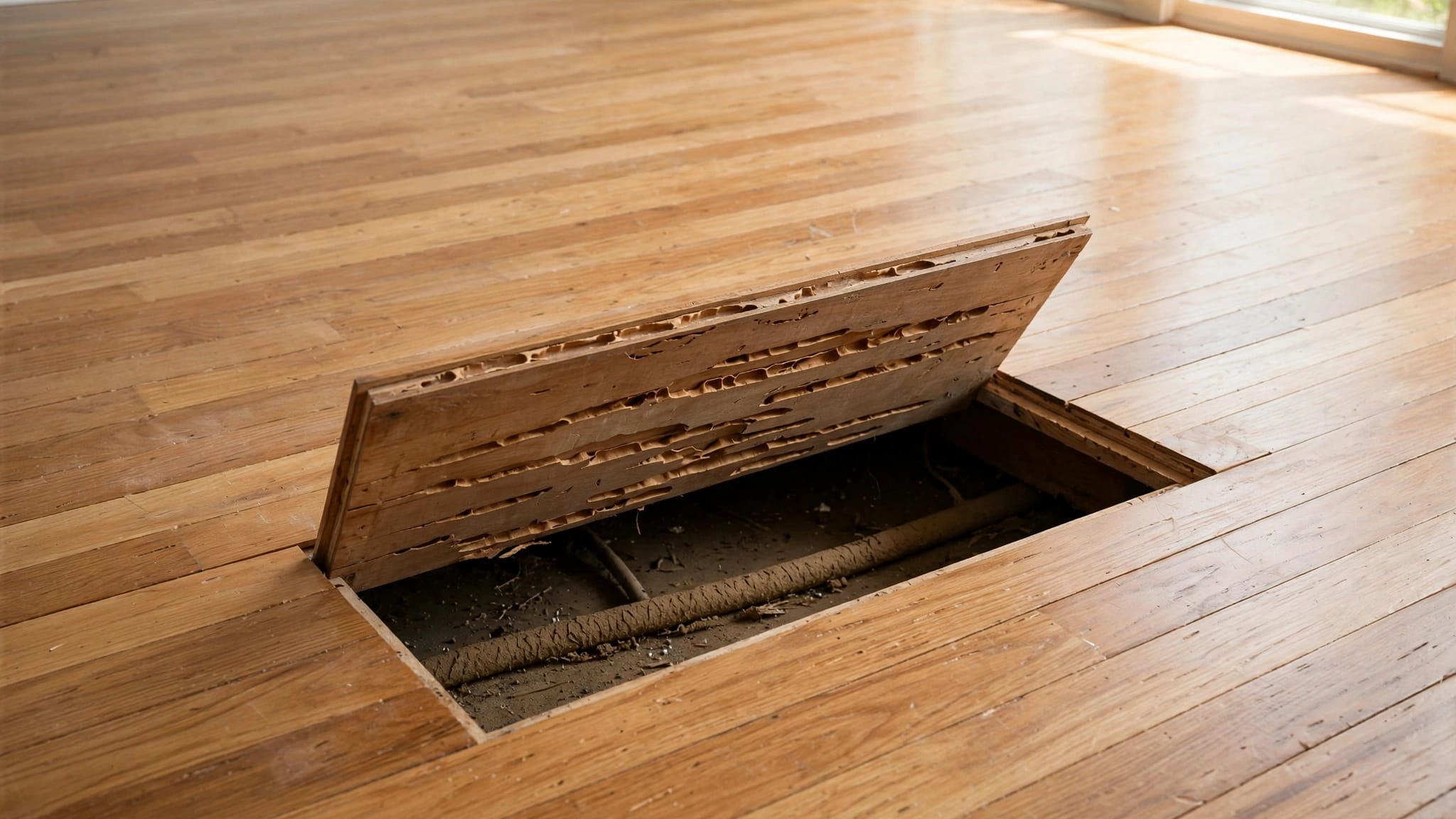
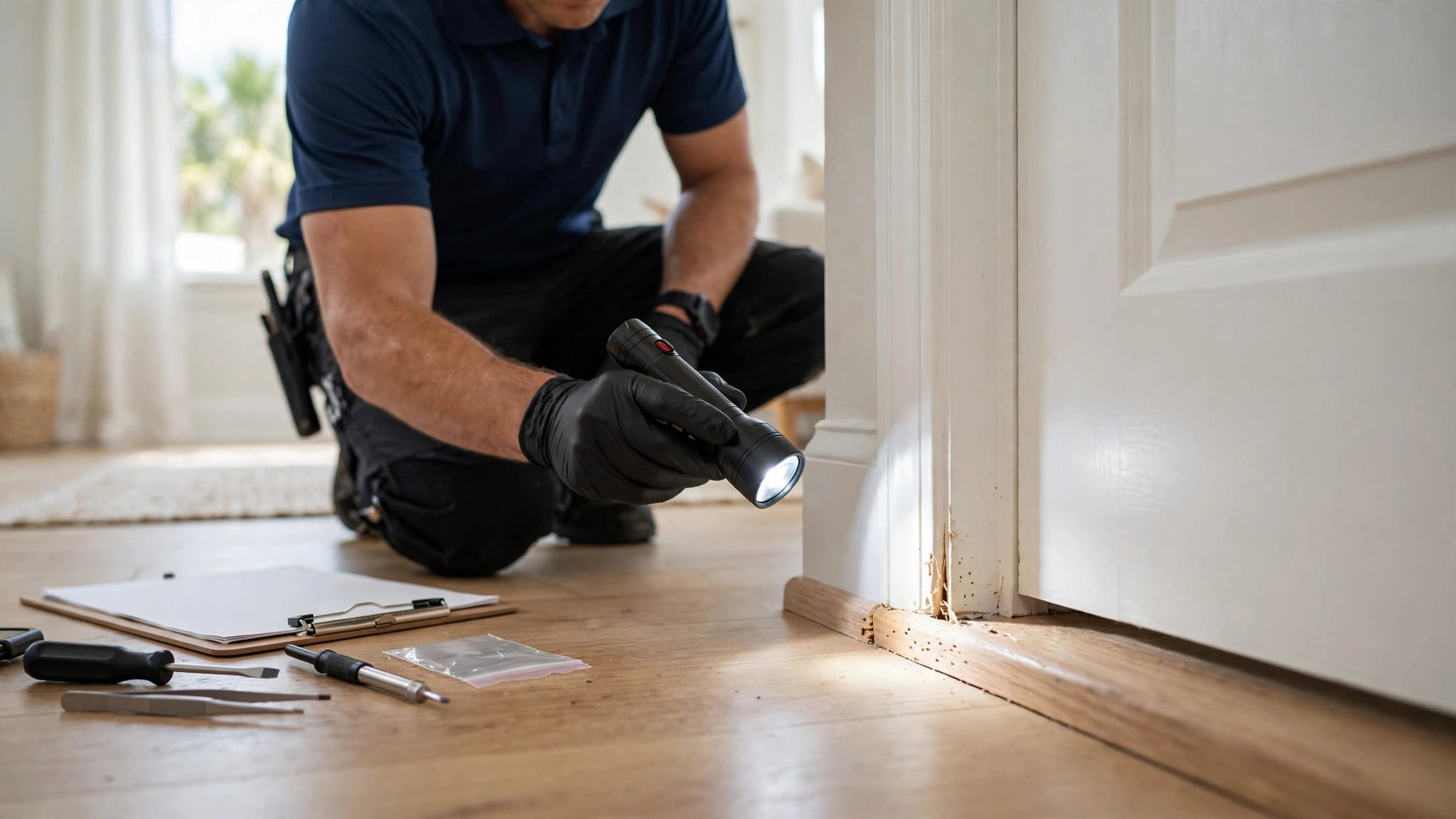
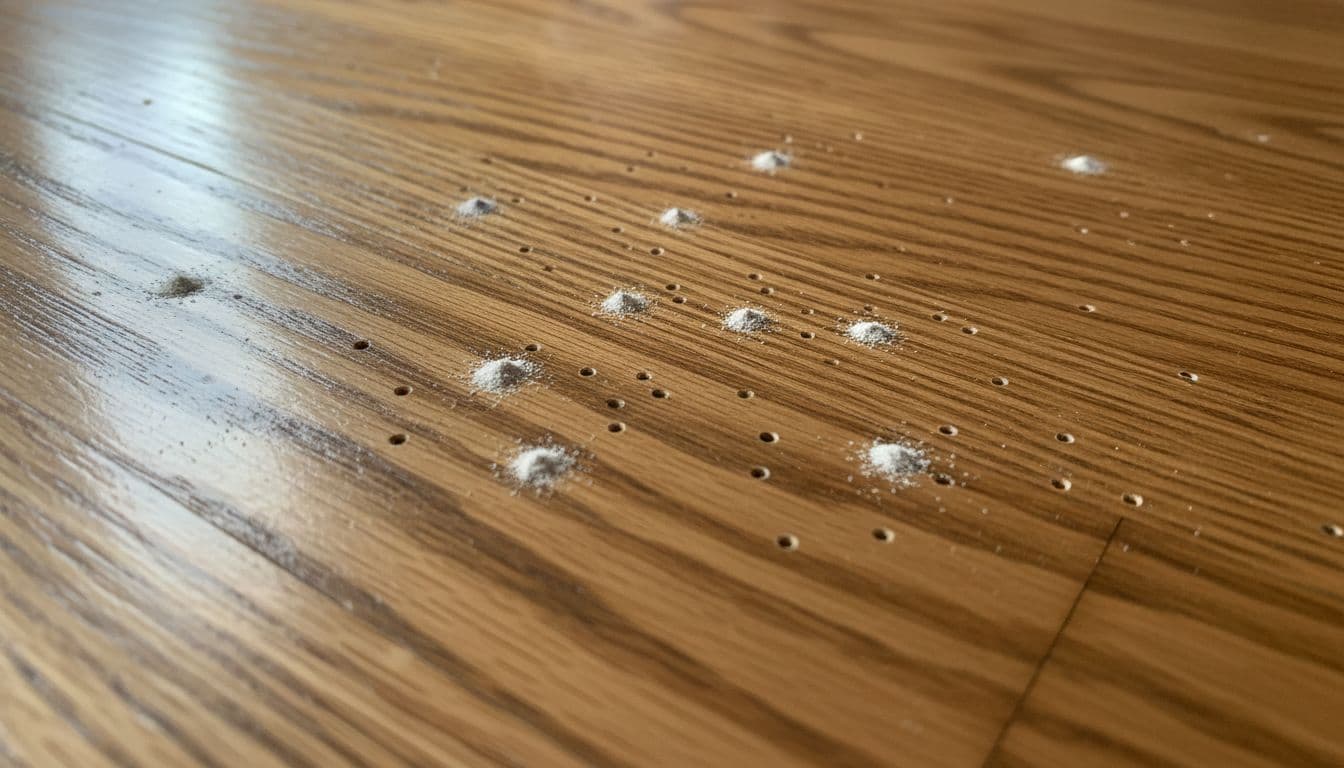
Look for tiny exit holes first. These measure 1/32 to 1/8 inch across. They scatter along wood grain. Fresh holes show clean edges.
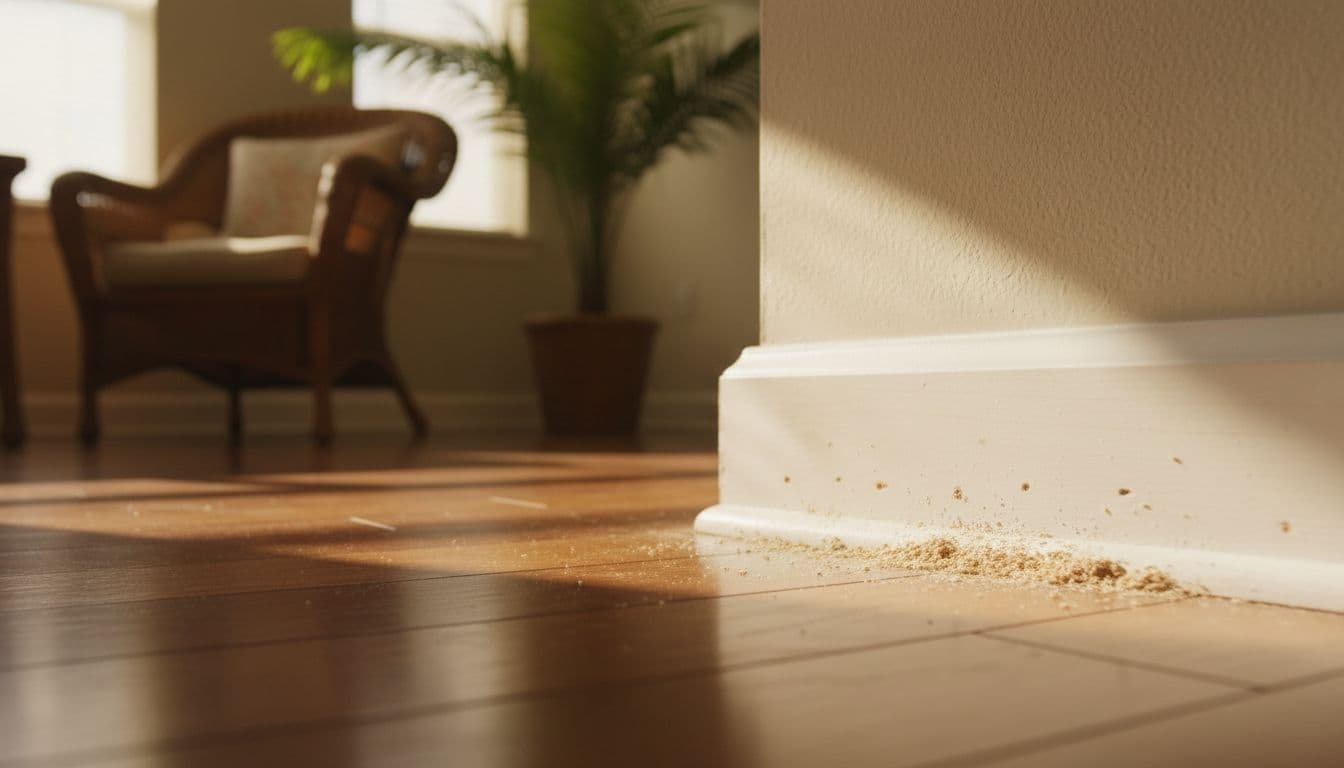
Fine frass piles below. This powder feels like flour. Active infestations leave it loose and bright. Brush it; more falls out.
Tap suspect wood. It sounds hollow if tunnels run deep. Check baseboards near damp areas. Kitchens and bathrooms often show issues first.
Discoloration hints at trouble. Wood turns grayish where larvae feed. Adults swarm in spring or fall. You might see them near windows.
Test frass easily. Active powder clumps when wet. Old stuff stays dry. These clues confirm powderpost beetles in Cape Coral .
Why Cape Coral Homes Face Higher Risks in Floors and Baseboards
Our humid climate boosts beetle activity. Average rainfall keeps wood moist. Hardwoods in floors absorb it easily.
Baseboards sit low. They touch cooler walls. Condensation builds there. Beetles love that setup.
Unfinished edges invite eggs. Many Cape Coral floors use solid hardwoods. They season over time and weaken. Imported furniture adds risks too.
Soil near slabs holds moisture. Beetles hitch rides on firewood stacks. Keep piles away from your house. Trim plants back two feet.
In short, local weather and wood choices make floors prime targets.
Active Infestations Versus Old Beetle Damage
Fresh signs scream active pests. New holes lack cobwebs. Frass looks fresh and sifts easily.
Old damage shows filled holes. Powder hardens or vanishes. No new frass appears over months.
Probe wood gently. Active tunnels yield easily. Old ones feel solid.
Adults signal now. You see live beetles or fresh wings. Distinguish these to avoid needless worry.
Practical Steps for Cape Coral Homeowners Before Pros Arrive
Vacuum frass right away. It stops spread. Seal holes with wood putty after confirming.
Reduce humidity. Run dehumidifiers below 50%. Fix leaks promptly.
Sand and refinish floors if damage stays surface-level. Use borate sprays on bare wood. They deter larvae safely.
Store firewood outside, far from home. Inspect secondhand furniture closely.
Check related areas. Attics hold hidden nests. These steps buy time.
For termite-like wood destroyers, see this Cape Coral termite prevention guide.
When Professional Help Makes Sense for Powderpost Beetles
Call experts if frass keeps falling. Or if holes multiply. They confirm activity with tools.
Pros use heat or fumigation for bad cases. Borate injections work deep. Inspections spot hidden damage.
In Cape Coral, licensed teams know local patterns. They offer warranties too.
Skip DIY chemicals. They miss nests. A free inspection starts things right.
Safeguard Your Home from Powderpost Beetles Today
Powderpost beetles target Cape Coral hardwoods, but you spot signs early: tiny holes, fine powder. Distinguish active from old damage. Simple steps like vacuuming and dehumidifying help first.
Professionals handle the rest safely. Your floors and baseboards stay strong.
Ready to check? Request a free inspection from local pros. Protect your home now. What signs have you seen lately?
Schedule a Free Inspection: