Carpenter Bees In Cape Coral Fascia Boards And Soffits: Identification, Treatment, And Prevention
That loud, low buzz under your roofline can feel like a tiny helicopter parked at your eaves. If you're seeing neat, round holes in trim, you may be dealing with carpenter bees Cape Coral homeowners run into every spring.
The good news: carpenter bee damage usually starts small. If you catch it early, you can stop the nesting cycle, repair the wood, and prevent repeat visits without soaking your home in chemicals.
Below is a homeowner-friendly plan focused on fascia boards and soffits, with safe timing, ladder basics, and repairs that actually hold up in Southwest Florida weather.
Why carpenter bees go after fascia boards and soffits in Cape Coral
Carpenter bees don't eat wood. Instead, they drill nesting tunnels to lay eggs. Fascia boards and soffits are prime targets because they stay dry, shaded, and protected from rain. In Cape Coral, sun and salt air can also break down paint faster, leaving bare wood exposed longer than you'd expect.
You'll often notice activity most in spring (roughly March through May) , although warm weather can stretch the season. Males may hover and act aggressive, but they don't sting. Females can sting, yet they usually focus on guarding the tunnel opening and won't bother you unless handled.
The real issue is the repeat cycle. If last year's holes stay open, new bees treat them like an open rental sign. Over time, tunnels can branch inside the board. Then other problems show up, such as moisture intrusion, peeling paint, and even woodpecker damage when birds try to grab larvae.
Carpenter bees are also pollinators. If they're cruising your yard and not drilling your house, leaving them alone can be a fair, eco-minded choice. Once they start boring into fascia or soffits, though, the best approach is targeted control plus solid exclusion.
Signs carpenter bees are nesting in fascia boards and soffits
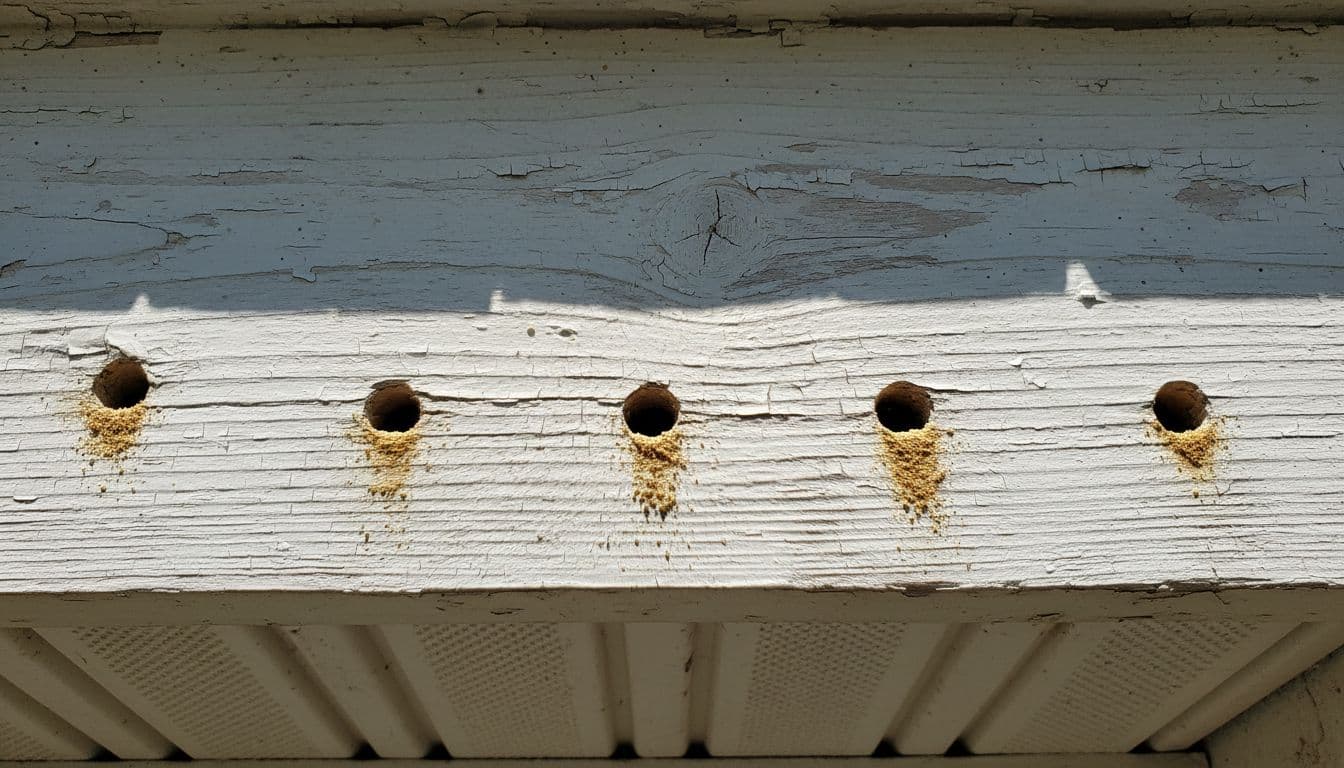
Carpenter bee entry holes look almost "machine-made." Most are round and clean, often about the width of a pencil eraser to your pinky tip (commonly around 3/8 to 1/2 inch). You'll typically find them on the underside of soffits, the face of fascia, porch ceilings, and other protected wood.
Also watch for fine sawdust (often called frass) below the hole. Sometimes it's dry and yellowish. Other times it clumps after humidity or rain. You may also see light staining under the opening, especially on painted trim where water carries debris.
During a quick inspection, look and listen for:
- A hovering bee that keeps returning to one spot under the eave
- Multiple holes lined up in the same board
- Old holes that look dark inside (a sign they've been used before)
- Tapping sounds or extra bird activity near the roof edge
Before you climb, try binoculars from the ground. If you do use a ladder, set it on firm, level ground and keep your body centered. Most falls happen during "just a quick look."
Here's a fast way to tell carpenter bees apart from other common wood pests:
| What you see | Carpenter bees | Termites | Paper wasps |
|---|---|---|---|
| Entrance | Clean, round drilled hole | Mud tubes, hidden entry points | Papery nest, no drilled holes |
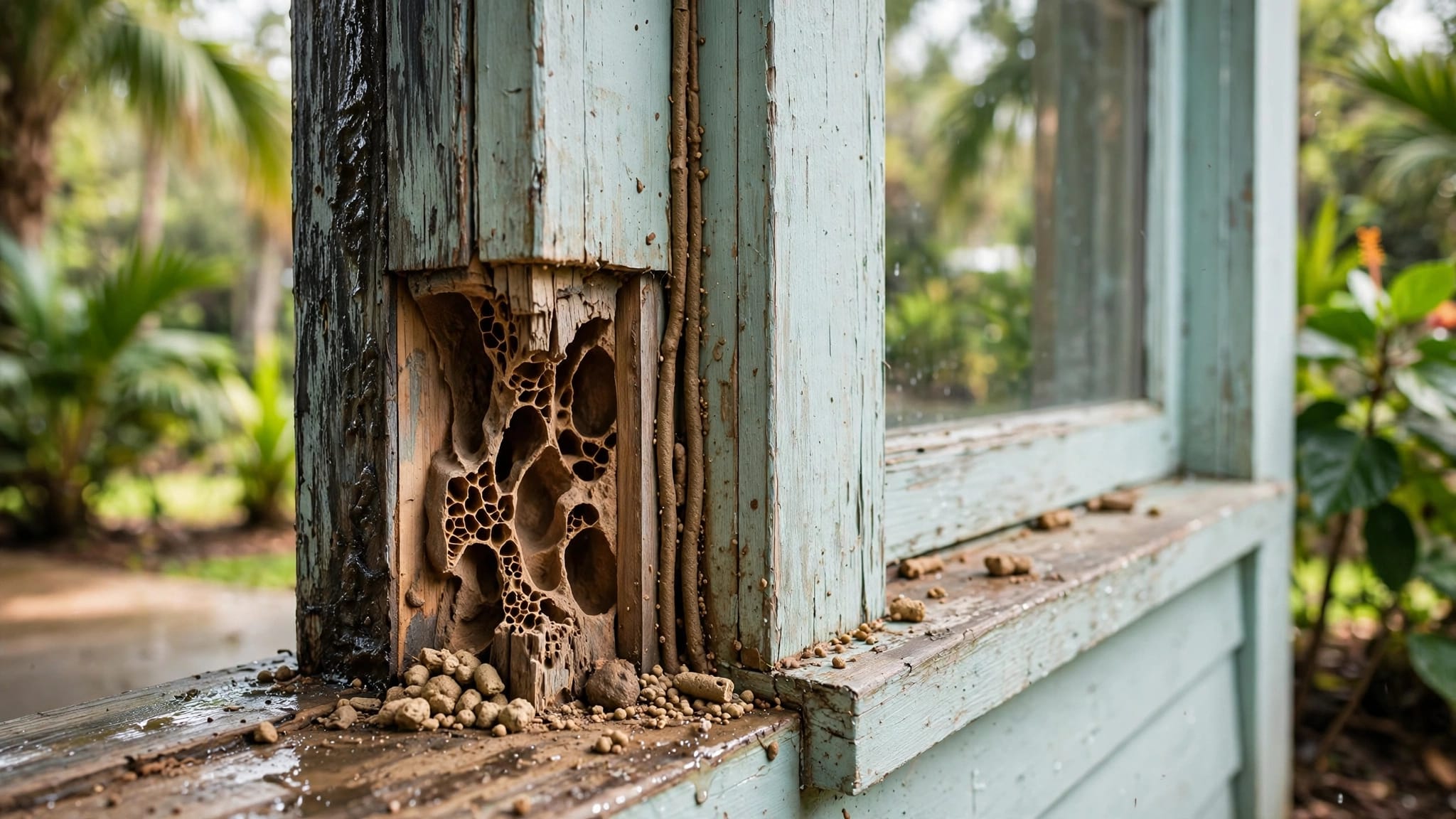
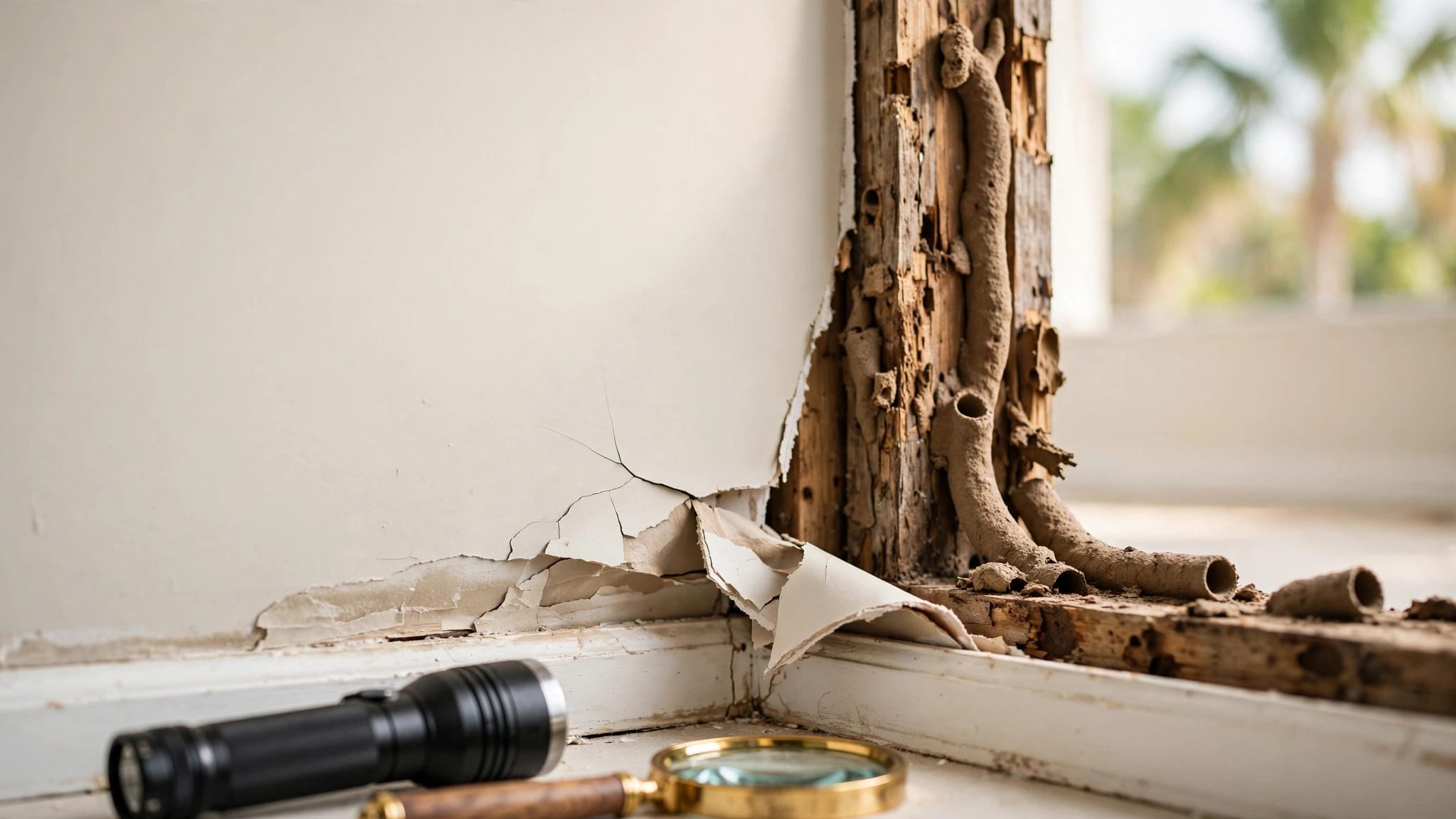
| Debris | Sawdust-like frass | Pellet-like frass (drywood) or mud | Little to none |
| Where | Exposed or weathered wood | Inside wood, walls, or soil contact | Under eaves, corners |
If you're unsure, avoid poking holes with a screwdriver from a ladder. A quick photo zoomed in often tells the story.
Step-by-step: safe treatment and repair for soffit and fascia holes
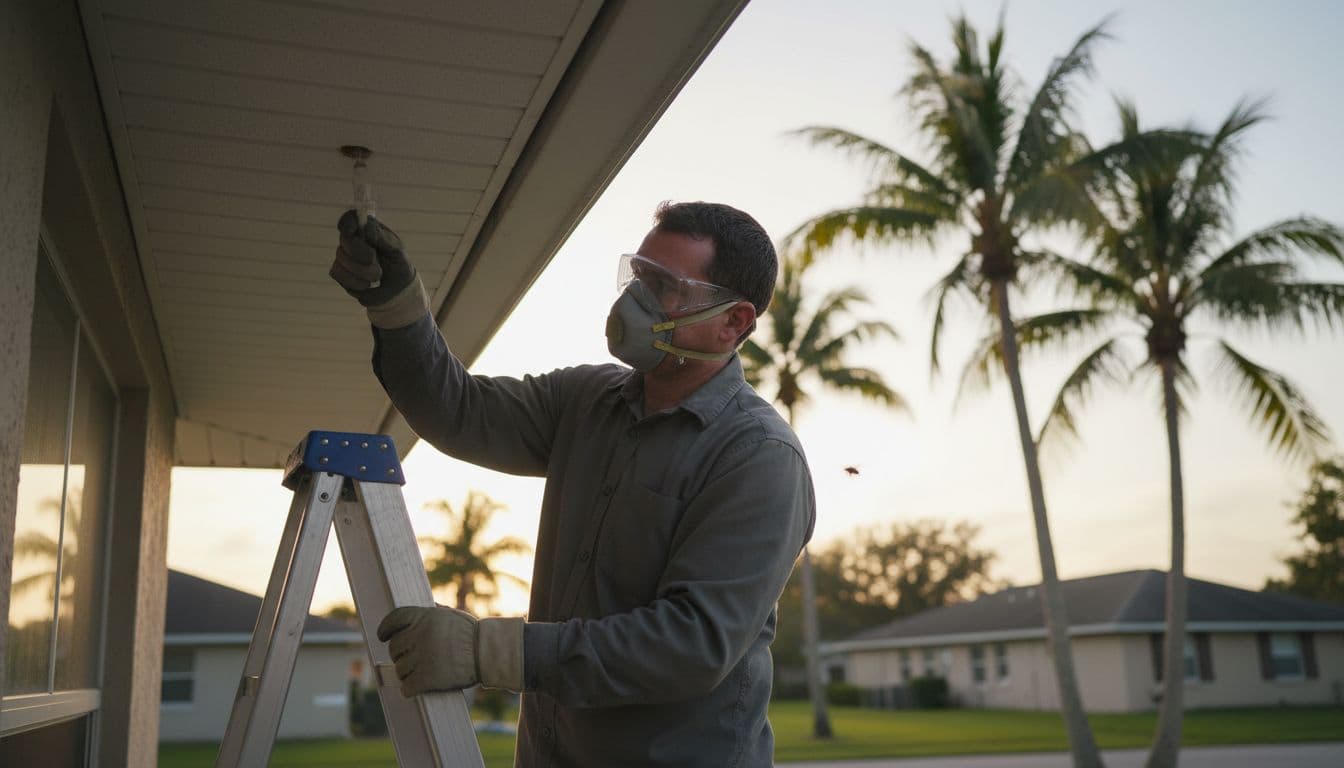
Timing matters. Treat at dusk when carpenter bees are more likely inside the tunnel and less active around the entrance. That makes the job safer and more effective.
Before you start, gather the basics:
- PPE : safety glasses, gloves, long sleeves, closed-toe shoes (a dust mask helps with overhead work)
- A stable ladder (or better, an extension ladder with a helper)
- A labeled insecticide product intended for carpenter bees (many pros use dusts for voids because they stay in the gallery longer)
- Wood filler or exterior epoxy, a short wood dowel (optional), sandpaper
- Primer and exterior paint
Now follow this order:
- Plan a calm evening. Skip windy conditions. Keep kids and pets inside.
- Set the ladder safely. Use the 4-to-1 rule (about 1 foot out for every 4 feet up). Don't overreach.
- Apply product exactly per the label. Aim the applicator into the hole, use only the amount directed, and avoid drifting dust. The label is not a suggestion, it's the law.
- Wait before sealing. Give the treatment time to work (often 24 to 48 hours, depending on the product).
- Seal the hole. Pack with a dowel if it's deep, then use exterior filler or epoxy. Sand smooth once cured.
- Prime and paint. A sealed, painted surface removes the "easy nesting" cue.
Don't seal an active hole first. Trapped bees may chew a new exit, which adds more damage.
When DIY isn't the safe move
If holes are high over a driveway, above a steep roofline, or spread across multiple sides of the home, it's smart to hand it off. Also step back if anyone in the home has a sting allergy. Professional help can also matter when carpenter bees return every year, even after repairs.
For pesticide questions in Florida, stick to trusted sources like UF/IFAS Extension and FDACS guidance, especially on safe, legal use.
Preventing carpenter bees from coming back to Cape Coral soffits and trim
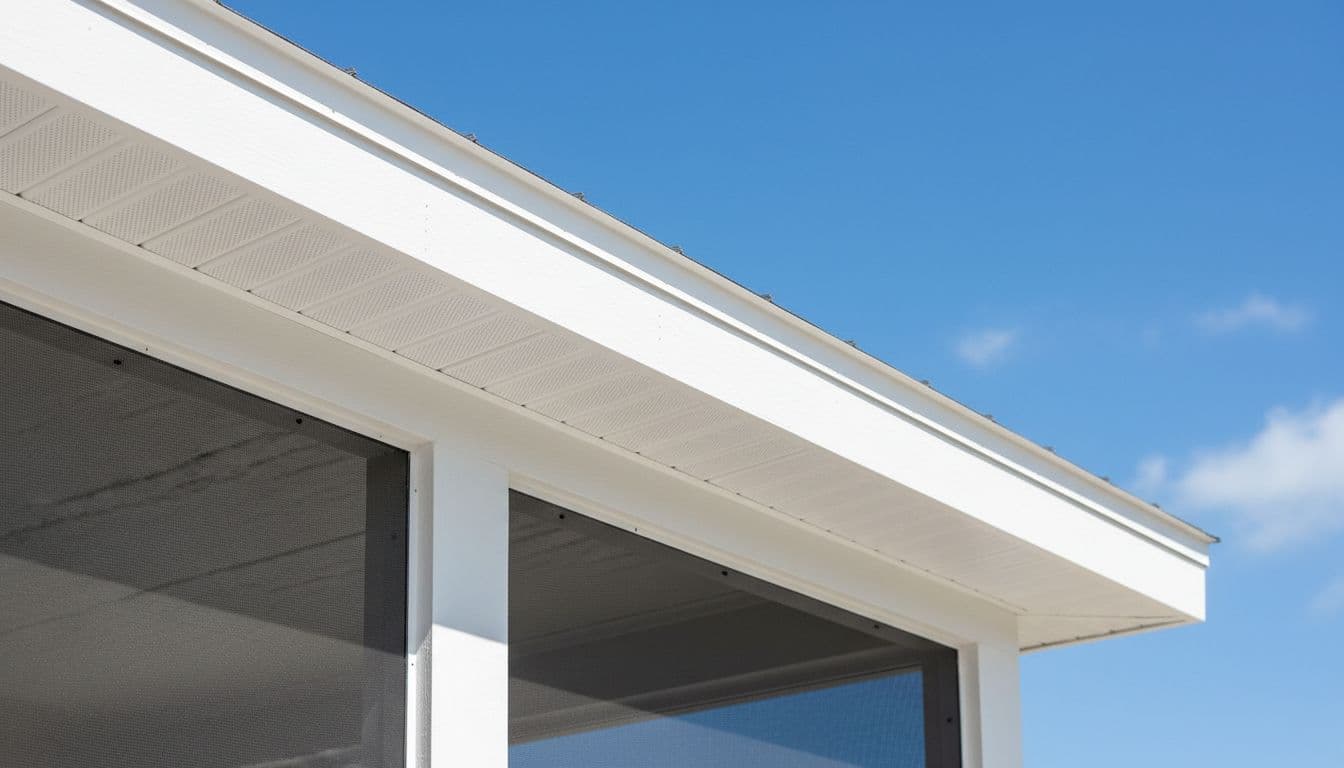
Prevention is mostly about surface protection and maintenance . Bare or weathered wood invites drilling, especially along sunny roof edges where paint fails first.
Start with these high-payoff fixes:
Paint or seal exposed wood. Bees prefer unfinished surfaces, so a good primer and exterior paint can make a big difference. Focus on fascia edges, soffit returns, porch ceilings, and any decorative trim.
Repair moisture problems early. Soft or rotted wood is easier to excavate. Fix drip lines from gutters, flashing gaps, and chronic condensation spots near vents.
Replace problem boards when needed. If a fascia board is riddled with old tunnels, patching can become a losing battle. Many Cape Coral homeowners also choose composite or wrapped trim in high-risk areas.
If you remember one thing, remember this: treat, then seal, then paint . Skipping the paint often leads to repeat holes.
Finally, mark your calendar for a quick check starting in mid-March. A five-minute walk-around can stop a full season of nesting.
Quick FAQ for Cape Coral homeowners
Are carpenter bees dangerous?
They're more annoying than dangerous. Males can't sting, and females usually sting only if handled or trapped. Still, treat them with respect, especially around kids.
Will sealing the holes solve it?
Sealing helps, but timing matters. Seal after treatment so you don't force bees to chew new exits. Then paint to reduce future interest.
What's the best time of day to treat carpenter bee holes?
Dusk is usually best because more bees are inside the tunnel and activity is lower. That also reduces your ladder time with bees flying around your face.
Can carpenter bees cause real damage?
Yes, mostly over time. One tunnel won't drop a roof, but repeat nesting can weaken fascia and soffit boards and invite moisture problems.
Conclusion
Carpenter bees in fascia boards and soffits start as small, tidy holes, but they rarely stay small. With the right timing at dusk, basic PPE, and careful repairs, most carpenter bees Cape Coral homeowners see can be stopped before they turn into yearly visitors. If the work puts you high on a ladder or the holes keep multiplying, professional treatment is the safer choice. What would it feel like to look up at your roofline and see clean, solid trim again?
Schedule a Free Inspection: