Carpenter Ants In Cape Coral How To Spot Frass And Stop Damage
If you've found a little pile of "sawdust" under a baseboard or windowsill, don't ignore it. In Cape Coral, that debris often points to carpenter ant frass , a clear clue that ants may be tunneling in damp, weakened wood.
The good news is you can usually stop the worst damage by acting early. The key is simple: carpenter ants don't eat wood like termites, they excavate it to build nests. That means moisture problems almost always come first.
Why carpenter ants target damp wood in Cape Coral
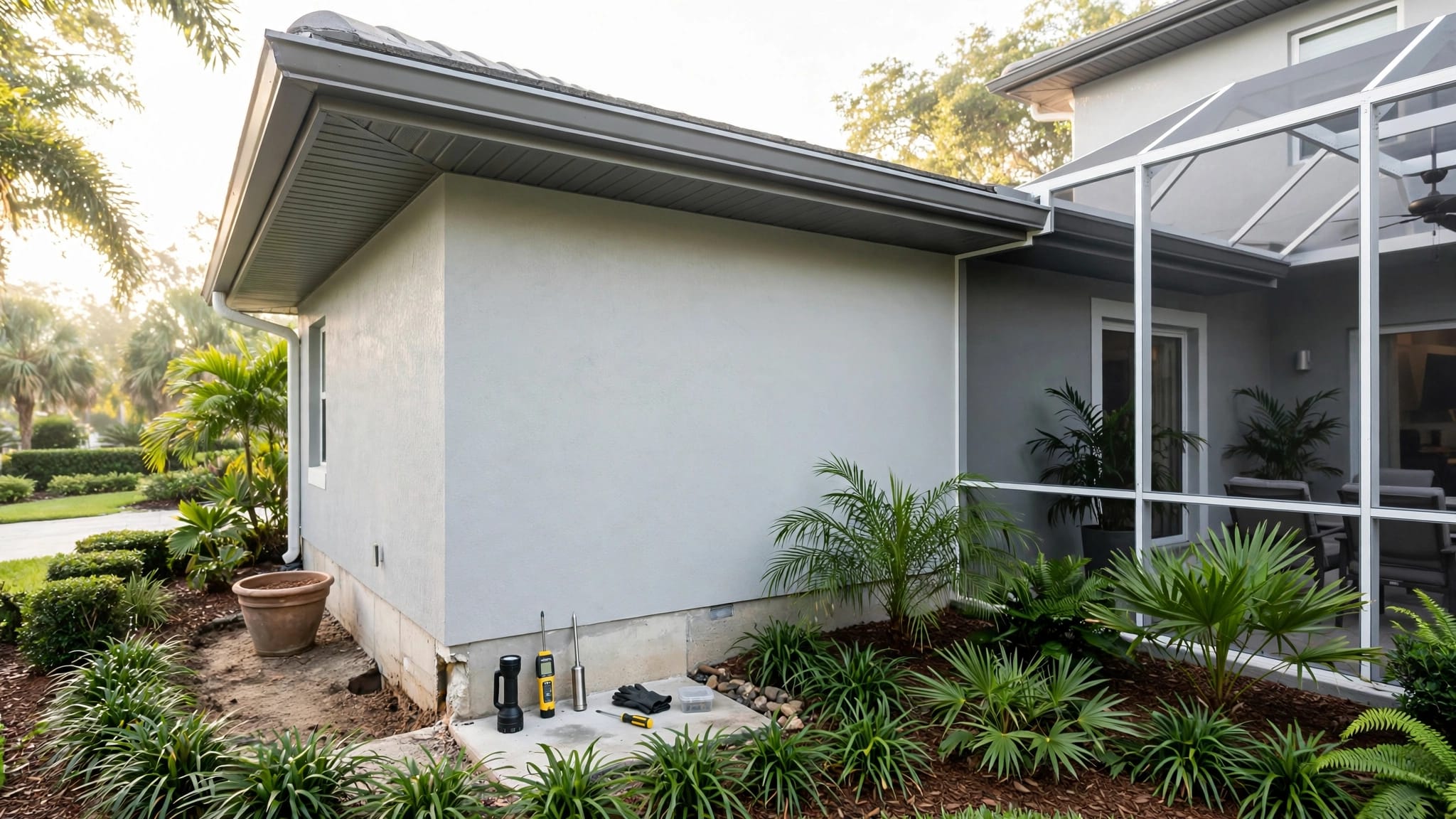
Cape Coral homes deal with moisture almost year-round. High humidity, windy rain, and storm season repairs can leave wood slightly compromised, even when everything looks "fine" from the ground.
Carpenter ants prefer wood that's already softened by moisture or decay. Think of it like scooping ice cream versus chipping rock. Damp wood is easier to hollow out, so it becomes prime real estate for nesting.
Common local triggers include:
- Small roof leaks around flashing after heavy storms
- Window and door trim that stays wet after sideways rain
- HVAC sweat and condensation lines near air handlers
- Patio and lanai transitions where water sneaks in
- Fascia, soffit, and exterior trim with peeling paint
In Southwest Florida, you might also see "satellite nests." One colony can spread into multiple areas of a structure, especially when damp spots pop up in different places.
For more background on local warning signs, see these signs of carpenter ant infestation Cape Coral.
If you only kill the ants you see, but leave the moisture, the home stays attractive. Moisture control is what makes the fix stick.
Spot carpenter ant frass before the colony spreads
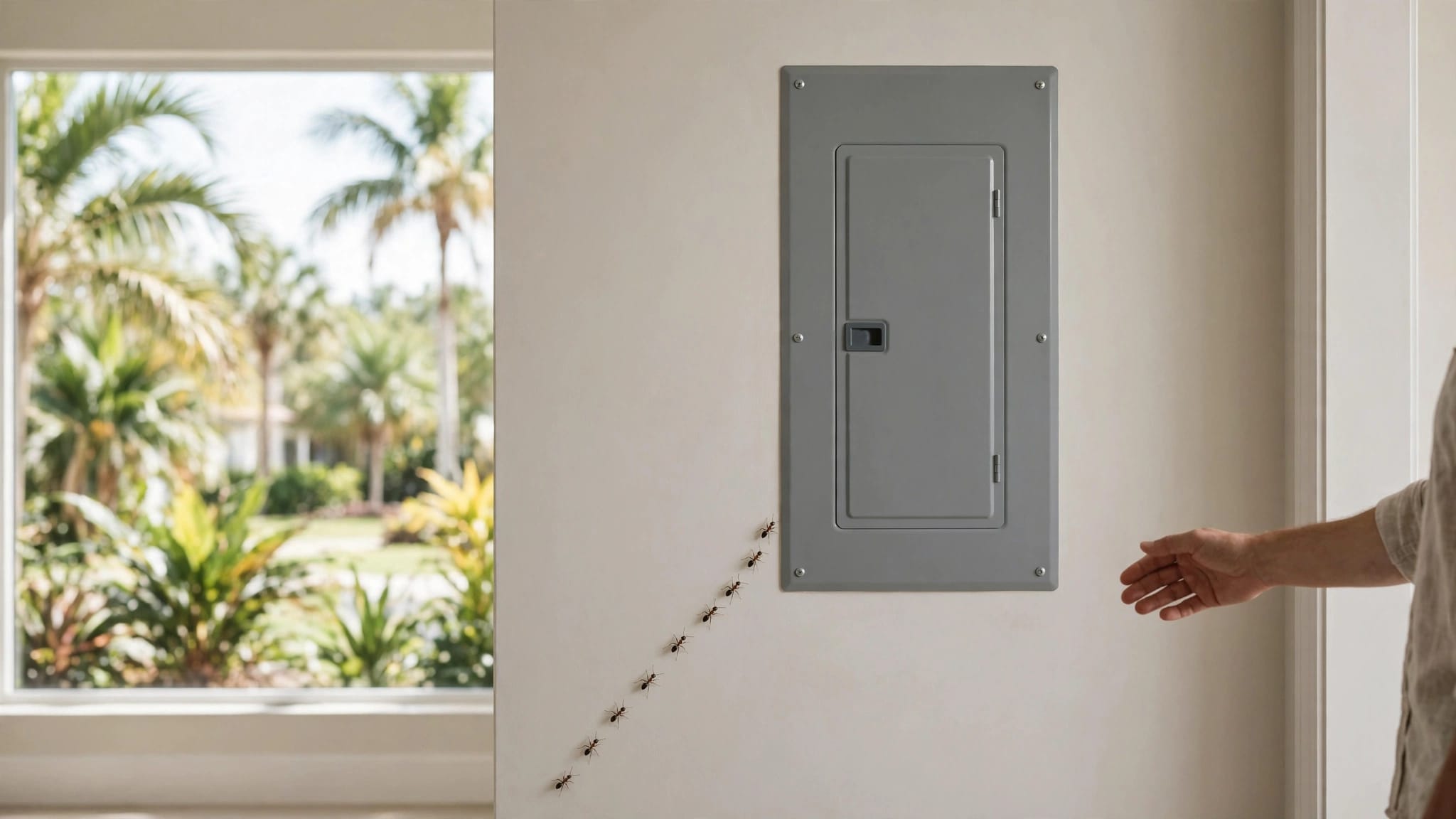
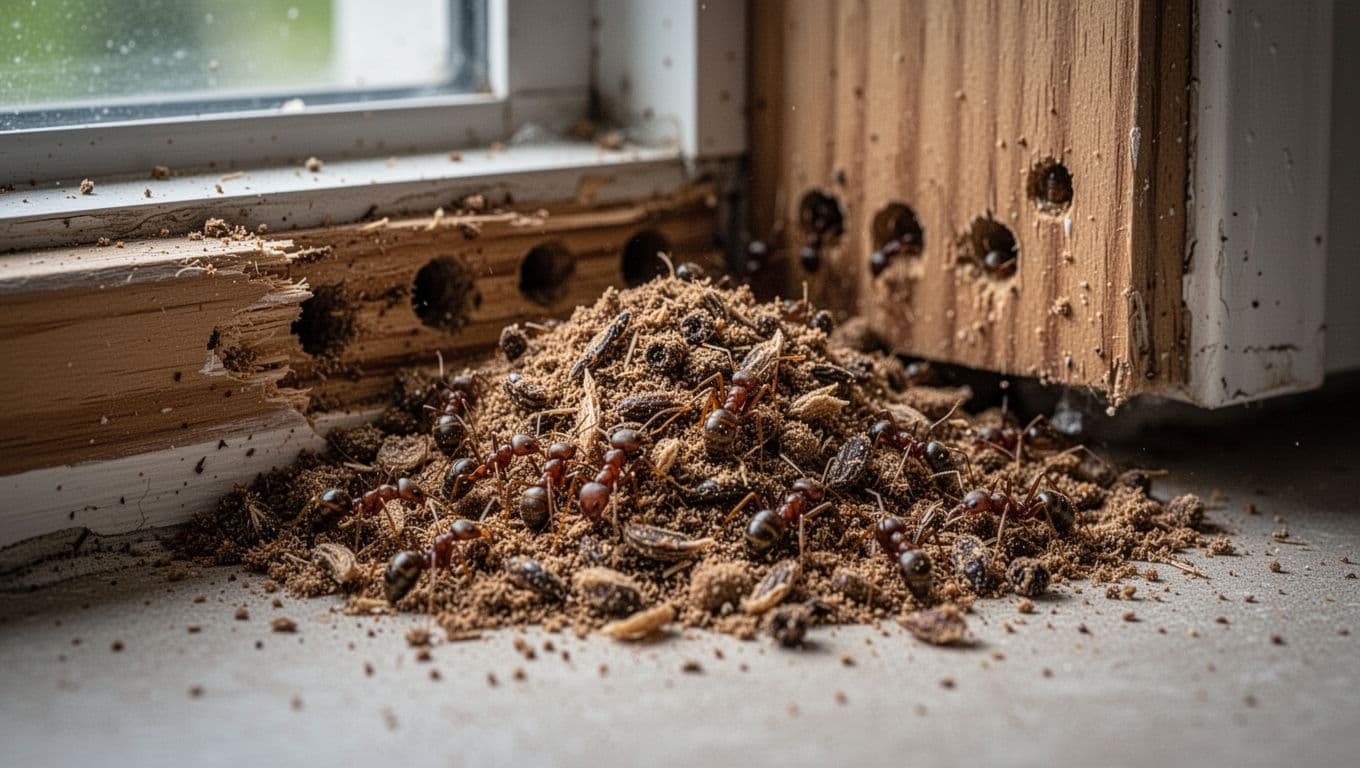 Carpenter ant frass piled beneath interior trim, created with AI.
Carpenter ant frass is the debris ants push out as they carve smooth tunnels (galleries) inside wood. It often looks like sawdust, but there's a catch. Because the ants clean house, frass can include insect body parts and bits of insulation or dirt.
You'll usually find carpenter ant frass in "drop zones" below activity, such as beneath window trim, along baseboards, under kitchen sinks, or in garage corners near exterior walls.
For a detailed description and photos of frass characteristics, the UC IPM carpenter ant frass reference is a helpful visual check.
Spot Frass Fast
- Look for a small pile , not an even dusting across the floor.
- Check for texture , frass is often fibrous, like shaved wood.
- Scan for fragments , tiny dark pieces can be ant parts or other debris.
- Follow gravity , the nest is often above or behind the pile.
- Note nearby moisture , staining, soft wood, or peeling paint matters.
If you vacuum the pile and it returns in a day or two, that's strong evidence of active excavation.
Frass vs termite pellets vs powderpost beetle (quick ID table)
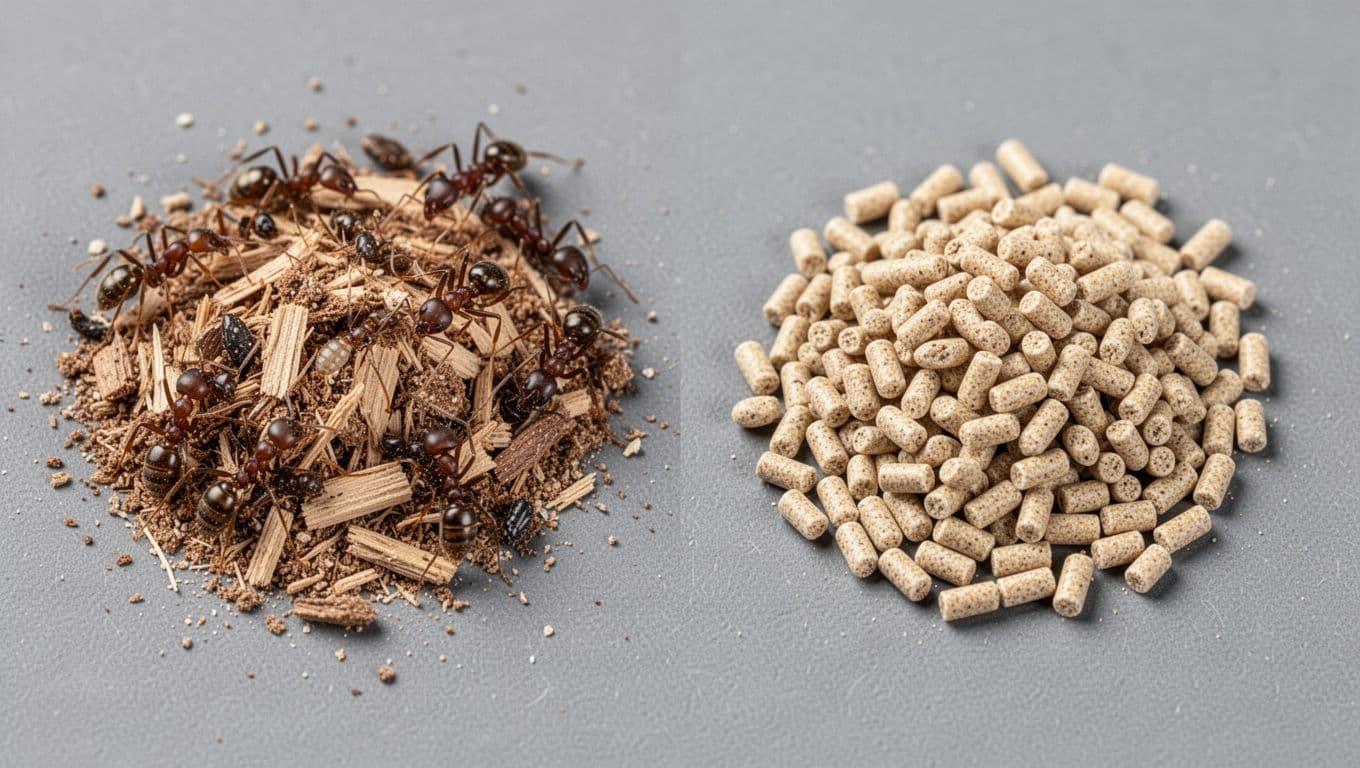 Side-by-side debris comparison for quick identification, created with AI.
Not all "wood dust" is the same. Use this quick table to narrow it down before you call for help.
| What you see | Usually looks like | What it suggests | Common spots in Cape Coral homes |
|---|---|---|---|
| Carpenter ant frass | Fibrous sawdust, mixed debris, may include insect parts | Ants are excavating damp or compromised wood | Window/door trim, soffits, behind baseboards, near leaks |
| Drywood termite pellets (frass) | Uniform, tiny oval pellets, sand-like, often in small piles | Drywood termites are pushing pellets from kick-out holes | Window frames, attic wood, exposed trim, garage rafters |
| Powderpost beetle frass | Very fine powder, flour-like, sifts easily | Beetle larvae bored within wood (often hardwood) | Furniture, trim, stored lumber, occasionally framing |
If you're unsure, don't guess. A correct ID changes the treatment plan. For Florida-specific carpenter ant details, UF/IFAS Florida carpenter ants guidance is a solid reference.
Safe inspection areas: where moisture hides in SW Florida homes
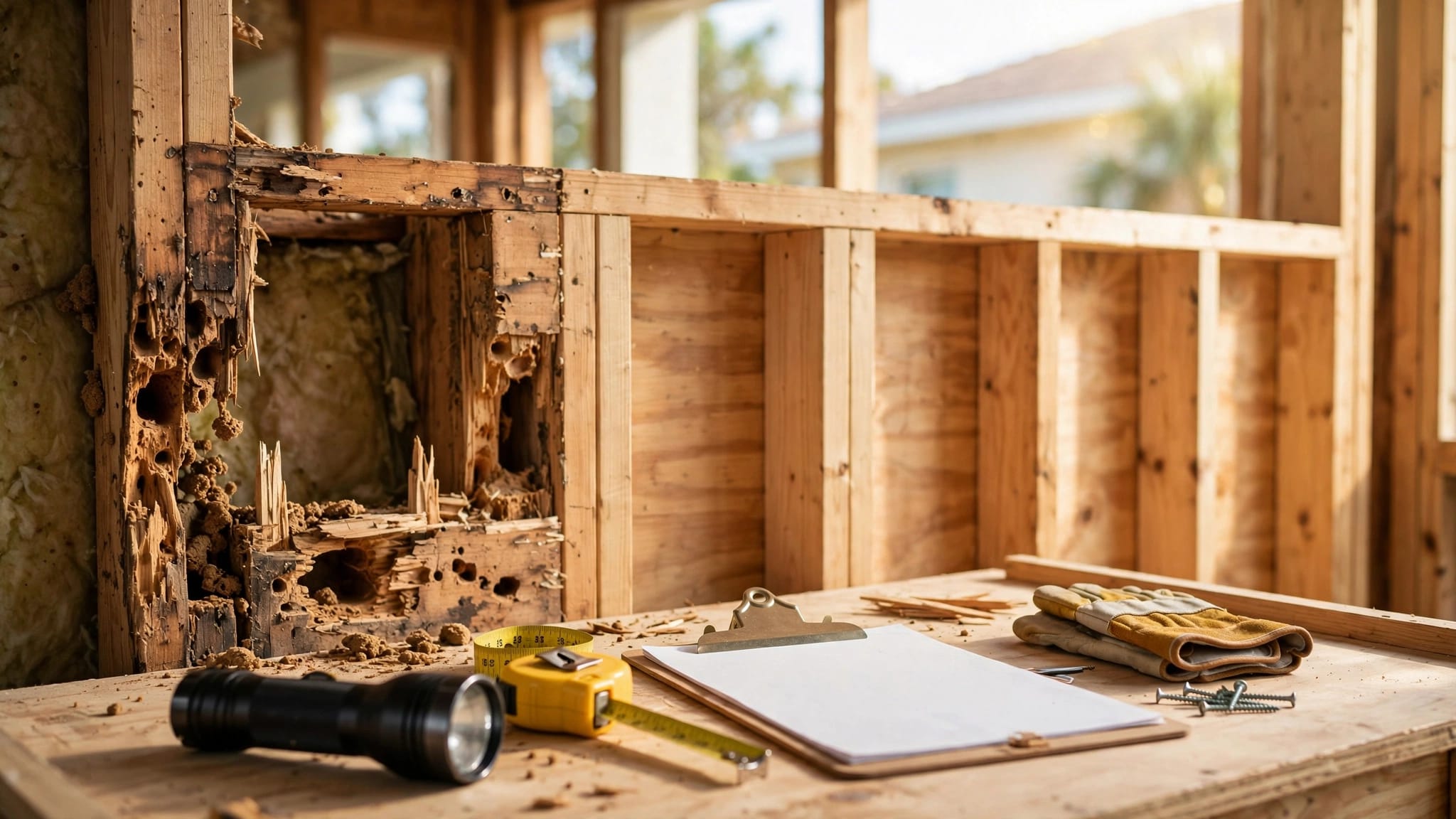
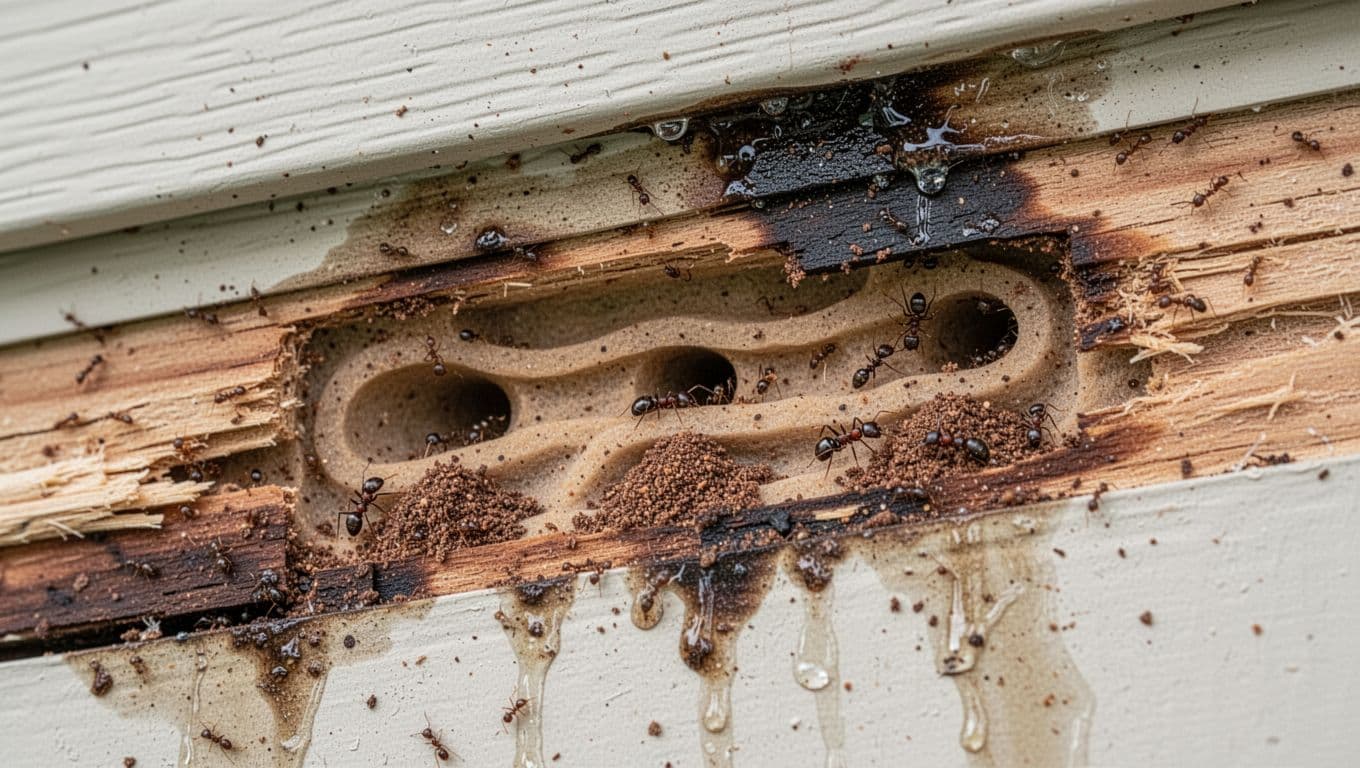 Example of smooth galleries carved into damp wood near a moisture stain, created with AI.
You don't need to tear into walls to start getting answers. Instead, inspect smart "moisture-first" zones, then track back toward the likely source.
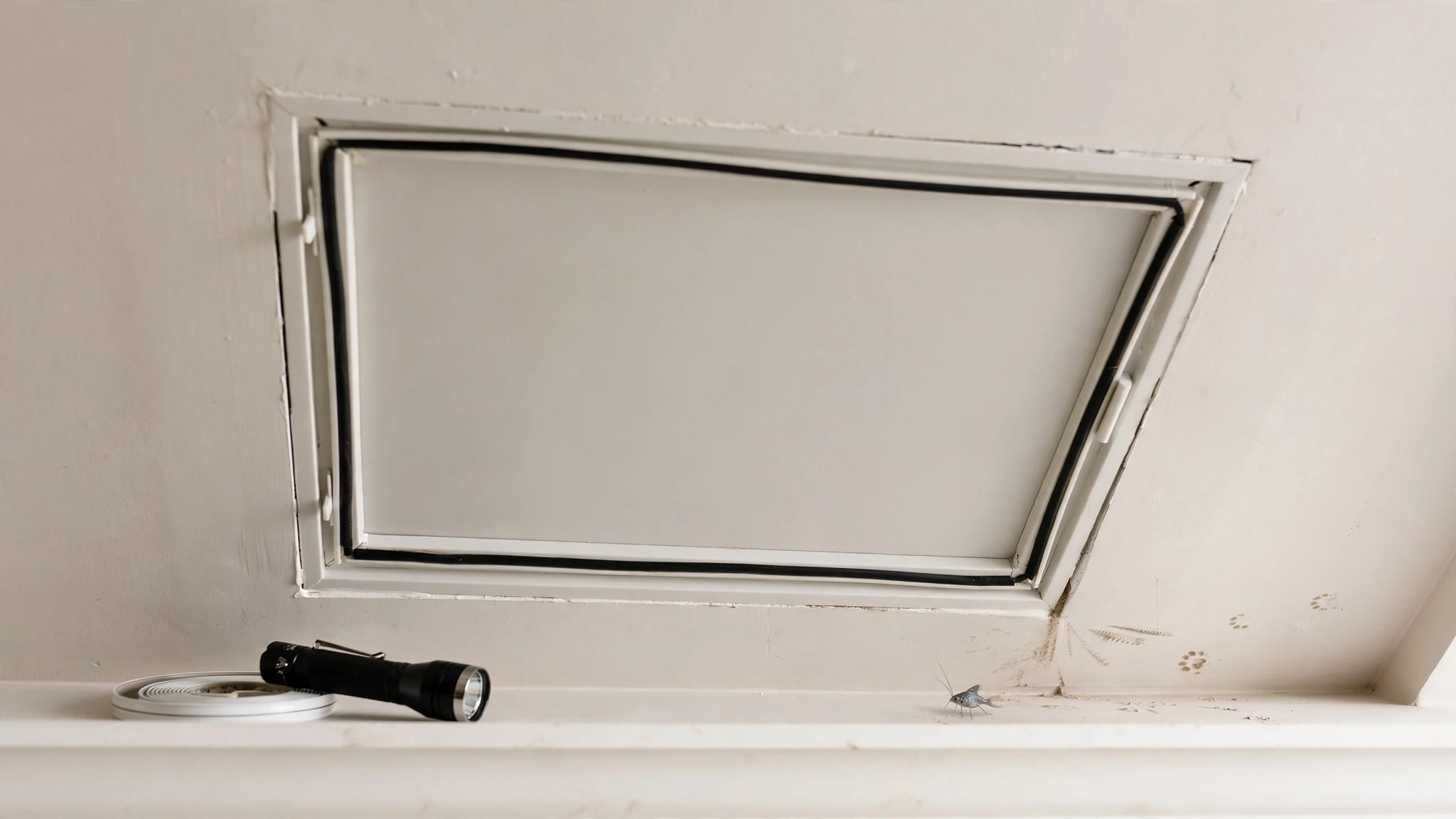
Start indoors where water is common: under sinks, around dishwashers, behind toilets, near laundry hookups, and around AC closets. Next, check window sills and sliding door trim, especially after a hard rain.
In the attic, look for roof stains, wet insulation, and darkened wood near vents. Outside, pay attention to fascia boards, soffits, and any wood touching vegetation.
Safety note: Attics and garages can hide electrical hazards, nails, and low clearance. Use stable ladders, wear eye protection, and don't disturb wiring or plumbing.
If you see soft wood, staining, or repeating piles of carpenter ant frass, it's time to bring in a Florida-licensed pest control company to confirm the nest location and plan safe treatment.
Do This Today: reduce moisture and limit damage
You'll get the best results by pairing moisture fixes with professional advice. Here's a practical same-day list that doesn't rely on spraying chemicals.
- Take a photo and bag a sample of the debris for identification (don't bring it onto carpets).
- Vacuum frass , then mark the spot with painter's tape to see if it returns.
- Check for active moisture : feel for damp trim, look for stains, and sniff for musty odor.
- Fix obvious water sources : tighten a loose trap, dry a drip, clear a clogged AC drain line (if you can do it safely).
- Reduce humidity : run exhaust fans, keep AC filters clean, and aim for steady indoor airflow.
- Trim vegetation off the house so branches and vines don't hold moisture against siding and trim.
- Schedule a professional inspection if frass returns or you see winged ants indoors.
If you want help setting up a plan that fits Cape Coral conditions, start with Cape Coral residential pest control services. For broader prevention habits that also help with ants and roaches, this bug prevention guide for Florida homes is a useful next read.
Conclusion
Carpenter ants can cause real damage, but they usually need moisture-compromised wood to get established. When you spot carpenter ant frass, treat it like a smoke alarm, a warning that something hidden needs attention. Start by confirming what the debris is, then chase the moisture source before the tunnels grow. If the frass keeps coming back, a Florida-licensed professional can pinpoint the nest and recommend the safest next step.
Schedule a Free Inspection: