Cape Coral Caddisflies Around Canal Lights and Pool Screens
If your patio light seems to glow with tiny moth-like specks at night, caddisflies may be the reason. For many Cape Coral homeowners near canals, lakes, and ponds, this shows up fast after sunset.
The good news is simple. Cape Coral caddisflies are usually a nuisance, not a dangerous pest. They gather near water, drift toward bright lights, and cling to pool screens and lanais like they own the place.
That can still be frustrating when you want to enjoy your pool cage or keep the screens clean. The best fixes usually start with light, timing, and a few small changes around the home.
Why Cape Coral canal homes see more caddisflies
Caddisflies spend most of their lives near water. Their young develop in freshwater, so homes near canals and other wet areas sit close to their source.
That matters in Cape Coral. Waterfront neighborhoods give these insects the moisture they need, then evening lights pull the adults toward homes. A bright porch light can act like a beacon on a dark street.
You may notice the heaviest activity after warm, humid days. Rain can push insect numbers up, and calm evenings make the swarm feel thicker. When that happens, the insects often gather near the brightest part of the property.
Pool cages make the problem more visible. Screens catch the insects, and white frames show every speck. As a result, a home that is otherwise clean can look covered in bugs overnight.
Caddisflies around the home usually signal nearby water and bright light, not a dangerous infestation.
If you are seeing more than one pest issue at once, professional pest control services can help sort out what is seasonal and what needs a closer look.
Why porch lights and pool screens draw them in
Bright exterior lights are one of the biggest reasons caddisflies gather near homes. White bulbs, unshielded fixtures, and light that spills across the yard all make the property easier to find after dark.
Pool screens add another layer. The mesh gives insects a place to land, and the frame reflects light in a way that makes the swarm look worse than it may be. In other words, the screen does not create the problem. It just puts it on display.
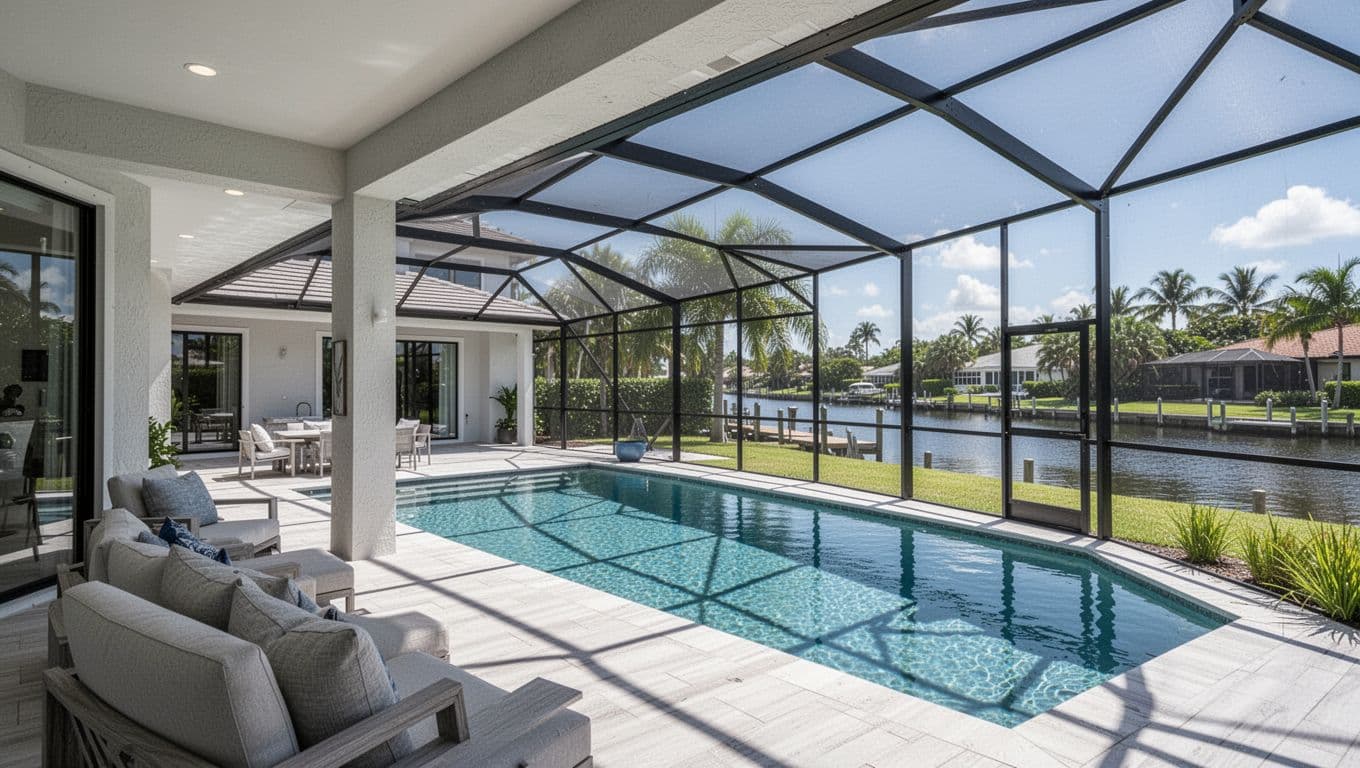
A lit lanai can also create a path toward the living space. If a door is open for a minute, insects can move inside. That is why people near water often notice the most activity around sliding doors, patio fans, and pool cage corners.
The pattern is easy to miss at first. One light on the side yard may seem harmless. Then the bugs gather, the screen catches them, and the whole back patio feels busy.
For homeowners who want a more hands-on review of recurring insect pressure, residential pest control in Cape Coral can help assess the property and the outdoor areas around it.
Lighting changes that calm the swarms
Small lighting changes often make a bigger difference than people expect. You do not need to darken the whole yard. You only need to stop giving insects an easy target.
Start with the lights closest to the pool cage and lanai. Warm-colored bulbs usually draw fewer flying insects than bright white ones. Shielded fixtures help too, because they keep the light pointed down instead of out across the yard.
A few useful changes are simple to try:
- Switch to warmer bulbs near doors, patios, and pool enclosures. Softer light is less attractive to many flying insects.
- Use shielded fixtures that aim light downward. This keeps the glow off the screens and away from the water.
- Turn off unused lights after dark. If a side yard or dock light is not needed, leave it off.
- Close blinds and curtains near bright windows. Indoor light can also pull insects toward the house.
- Use timers or motion sensors on exterior lights. That keeps the glow limited to the times you need it.
Timing matters too. Caddisflies are often most noticeable around dusk and shortly after dark. If you are grilling, swimming, or sitting outside, earlier evening hours may be easier than the first long stretch after sunset.
Fans can help around the lanai as well. A steady breeze makes it harder for small insects to settle on screens and furniture. That does not remove the source, but it makes the space more comfortable.
The goal is to reduce light spill near the water and the cage. Once the glow drops, the swarm often follows.
How to clean screens and keep the patio usable
Even with better lighting, screens still need care. Caddisflies can pile up fast, and dead insects can leave the cage looking dirty.
A gentle rinse with a hose often handles the worst buildup. For stubborn spots, use a soft brush and a mild cleaner that is safe for screen material. Heavy pressure can damage mesh or loosen edges, so it is better to stay light with the cleaning.
Pay attention to the lower sections of the screen and the corners near lights. Those areas catch the most debris. If you keep patio furniture close to the cage, move it out before cleaning so the rinse does not splatter onto cushions.
It also helps to check for gaps. Small openings around doors, torn screen panels, or loose door sweeps can let insects slip inside when the swarm is active. A quick repair now is easier than chasing bugs indoors later.
Outdoor timing matters here too. If you know a heavy night is coming, use the pool area before dusk, then close up the space once activity rises. That keeps the patio usable without making the lights work against you.
A clean screen will not stop every insect. It does, however, make the space easier to enjoy and easier to inspect. When the mesh is clear, you can spot real damage faster and stay ahead of small problems.
When local pest help makes sense
Most caddisfly problems do not need aggressive treatment. These insects are usually tied to water and light, so property changes often solve the worst of it. Still, some homes stay busy night after night.
That is where a local inspection can help. A technician can look at the lights, the screen enclosure, nearby water, and other pest activity around the property. Sometimes the caddisflies are part of a broader nuisance insect issue, and sometimes the lights are simply too bright for the setting.
If swarms are heavy enough to keep you off the lanai, or if bugs are getting into the house, a service visit may be worth it. The same goes for homes with repeated pest pressure in the yard, because the full picture matters more than one insect type.
A good pest plan focuses on the source first. That means checking what is attracting insects, where they are entering, and how the outdoor setup can change. It also keeps expectations realistic. You are usually looking for less activity, not a perfectly empty screen.
For Cape Coral homeowners who want help with repeated nuisance insects and the outdoor conditions that attract them, local service can save time and frustration. It is a practical step when small changes are not enough.
Conclusion
Caddisflies near Cape Coral canal lights and pool screens are common, especially in waterfront neighborhoods. They usually show up because of water, brightness, and the way screened lanais collect the evidence.
Once you reduce light spill, clean the screens, and plan outdoor time around peak activity, the problem often feels much smaller. The insects may still arrive, but they no longer take over the whole patio.
For most homes, the fix starts with light control and a few smart outdoor habits. That is usually enough to make the evening outside feel calm again.
Schedule a Free Inspection: